Record Number of Columbia School of Social Work Students and Graduates Selected as 2019-2020 CSWE Minority Fellows

Columbia School of Social is Work is thrilled to have a record number of students and graduates selected for the Council on Social Work Education (CSWE) Minority Fellowship Program this year for both the Masters and Doctoral Program!

CSWE’s Minority Fellowship Program (MFP) serves to “…reduce the effects of substance abuse and mental illness on America’s communities by increasing the number of individuals trained to work with underrepresented and underserved racial/ethnic minority persons with or at risk for mental health and/or substance abuse disorders.”

Congratulations to all our MFP Fellows!

Master’s Fellows

  • Victoria Draper ’20
  • Victoria Guen ’20
  • Yajaira Hernandez Trejo ’20
  • Joya Joseph ’20
  • Kyra Russell ’20
  • James Sampson ’20

Doctoral Fellows

  • Gilbert Nick ’14
  • Luis Ramirez ’13
  • Mariama Diallo ’11
  • Matt Ignacio ’08

Student Spotlight: Nancy Gershman ’20

Tell us about how your experience led you to your interests in dreamscaping and social work?

Social work has been my life’s calling, only I didn’t know it until I met Maureen, a social worker with three decades of experience in hospice and palliative care. It was while volunteering at a 25-bed hospice run by Visiting Nurse Service of NY that Maureen taught me how to take the temperature of the room to gauge whether a patient wants to share their emotional truth privately or within the family group.   

It was also in this New York City hospice where I did my first clinical work as a memory artist and bereavement volunteer. My work with hundreds of end-of-life patients and their families became the basis for my book, “Prescriptive Memories in Grief and Loss: The Art of Dreamscaping” (Routledge, 2019), co-authored with psychotherapist Barbara E. Thompson. 

What is dreamscaping?

Dreamscaping is a breakthrough intervention that is rooted in how the emotional brain encodes new memories.  Imagine one organizing principle—”bring me your favorite or good-enough memory” fulfilling an intention, wish, dream or longing. 

Here’s a story from the book to give you an idea:

Jane is a photographer, unable to work after the death of her mother, with whom she was very close. As I got Jane to focus on fun memories of Sylvia, she began to remember how much the two of them loved Christmas, despite being “atheist and Jewish.” During our exchange, I heard that rare bird of a memory that suddenly got Jane laughing. She recalled that as Sylvia lay dying in hospice on Christmas Day, she had this fleeting fantasy of Santa coming back for Sylvia so they could go off together on his sled. Before dreamscaping, Jane had never breathed a word of this to anyone, and yet here was a perfect example of a hidden resource that translated beautifully into a prescriptive memory, making it more available for use in coping with the loss of her mother. Later, when we constructed it as a tangible dreamscape, Jane was able to change her perception of a white marble sculpture by Sylvia (who was a sculptor) that seemed to be waving goodbye to one that was now waving hello. In Jane’s words, “…my feelings changed,” and dreamscaping “showed me you can make yourself believe different things.” (From Chapter 3, “Elicitation of Humor, Positive Emotion and Play in Dreamscaping.”)

What was your inspiration for writing this book?

I wrote this book knowing there was a community of learners out there, a wide range of therapists, end of life practitioners, and even spiritual care counselors drawn to short-term, novel, strengths-based interventions. These included art therapists who longed to work more collaboratively with clients and clinicians who wished to investigate what happens when you invite a memory artist into the therapeutic dyad. 

My goal in pursuing my MSW in Advanced Clinical Practice at a prestigious university like Columbia University was to be able to teach and practice dreamscaping, globally, and on a deeper level.

It sounds like you’ve already made a significant impact in the field. In what ways has your experience here at CSSW impacted you?

In my first year of field at FDNY Counseling Service Unit, I was dropped into group work with firefighters and EMTs —journaling, anger management, relapse prevention. Some days there would be up to 20 men and women around the table. I had stage fright at first until I learned that the “group does the group’s work.” In the same way that social workers learn not to fix people, I learned how to let things roll, intervening only when I felt a pearl had dropped and not marking that moment would be a lost opportunity.

As someone who entered the program with prior professional experience, what insights or advice would you like to share with other students?

Success can mean many things, but for me it was the opportunity to be taken seriously by my peers who were credentialed and spoke the identical language of advanced clinical practice. And if you have to do your life backwards as I have—proposing a job description to a Director of Bereavement Services that no one had ever heard of (“memory artist”), getting bereavement volunteer training at that hospice before being assigned to a floor, authoring a book based on clinical experiences with end-of-life patients and their families on that floor, going to graduate school, and requesting field placement with a population I never worked with before—DO IT. You can never be too young or too old to venture into the brilliant unknown and test yourself.

Managing Your Personal Brand

Whether you know it or not, you have a brand.

For better or for worse, how you communicate and engage with others, whether in person, online, or on paper, shape the reputation of who you are and what you bring to the table. It can be as simple as an email you sent to a supervisor, a brief interaction you had with a peer, or a status you posted on your social media page — people will judge:

Do you communicate clearly and concisely? Are you respectful? Do you have a positive attitude? What do you stand for? Would I want to work with you?

Regardless of whether these perceptions ring true, they don’t always represent how you may see yourself or hope to be seen. However, you have the power to change this.

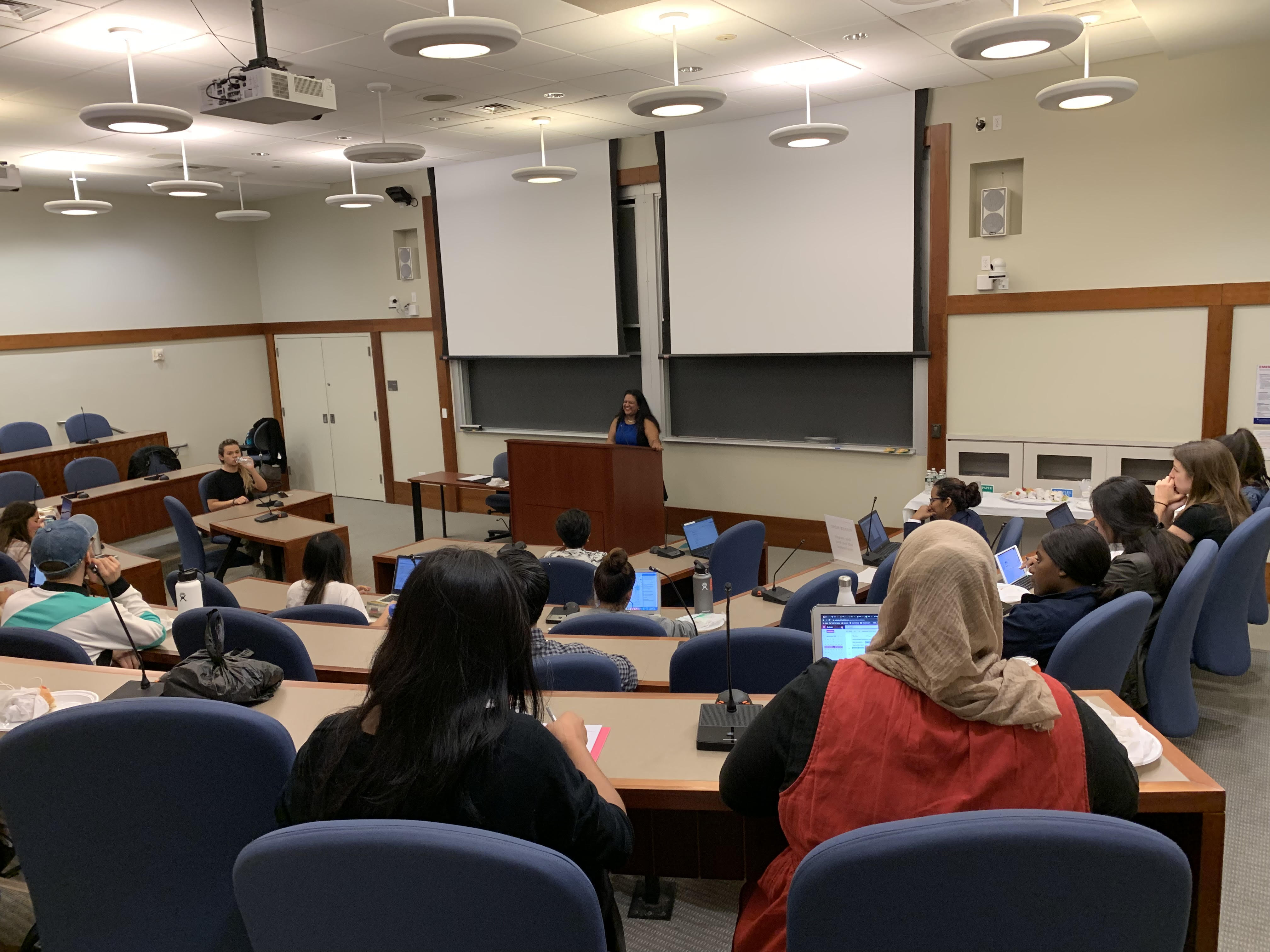
Personal branding is the practice of developing and managing your reputation based on the value you bring to the world. If you take ownership of this process and do it well, it may not only improve your image but also raise your visibility and access to new opportunities.

A good starting point is determining what you want your brand to be, auditing your existing brand, and refining it to better showcase your strengths and personality. A few questions you can ask yourself are:

  • Who are you? What’s important to you, and what makes you unique?
  • Are these aspects of you accurately reflected in your professional interactions? Social media profile? Resume?
  • Do they come across authentically and credibly?

Read additional tips on personal branding on Idealist Careers and/or attend our upcoming workshop on Wednesday, October 16 with Josie Rosario ’19 to learn more about how you can build your brand and enhance your marketability.

Build Your Brand with Josie Rosario ’19 | Wednesday, October 16

Join us for an exciting workshop led by CSSW Alumna, Josie Rosario ’19!

Building Your Brand: Strategies to Enhance Your Marketability While in School
Wednesday, October 16, 12:30 – 1:30 PM
CSSW Room 301

Register

This is a great opportunity to learn how to effectively define and communicate your personal brand and increase your marketability for future opportunities.

About the Presenter

Josie M. Rosario, LMSW ’19, MSEd is an NYC-based therapist, who helps individuals and couples improve their self and relational awareness while supporting their journey towards feeling whole and being well. As the founder of the Healing Strategy, a brand and marketing consultancy for therapists, she supports private practice clinicians increase their visibility and impact. Josie splits her time between private practice, leading the Healing Strategy, and a mental health clinic.

Josie earned a bachelor’s degree from Columbia University, a master’s degree in education from Hunter College, and graduated with distinction from Columbia University’s School of Social Work. Josie was an early participant of Business Essentials at Harvard Business School and the Columbia Entrepreneurship Design Studio. She is also a trainee in family and couples therapy at the Ackerman Institute for the Family.

Josie is a native New Yorker, a proud Black Dominican-American woman, a die-hard Golden Girls fan, and deeply committed to continuing to manifest her ancestors’ wildest, most fiercest dreams.

Presidential Management Fellows (PMF) Program Webinars

The PMF Program Office will be leading a number of informational webinars for prospective candidates on the following dates:

  • Wednesday, September 25, 2019, from 1:00 – 2:00 PM (Eastern Time)
    • This session is open to all disciplines, and will be co-hosted by The Lab at OPM with a specific focus on Design
  • Wednesday, September 25, 2019, from 3:00 – 4:00 PM (Eastern Time)
    • This session is open to all disciplines, with a specific focus on Scientific, Technical, Engineering, and Mathematics (STEM)
  • Friday, September 27, 2019, from 2:00 – 3:00 PM (Eastern Time)
    • This session is open to all disciplines
  • Monday, September 30, 2019, from 2:00 – 3:00 PM (Eastern Time)
    • This is session is open to all disciplines, with a specific focus on Cybersecurity and Information Technology (IT)
  • Wednesday, October 2, 2019, from 4:00 – 5:00 PM (Eastern Time)
    • This session is open to all disciplines, with a specific focus on diversity and inclusion

Here is the link to their webinar and an Adobe Connect Quick Start Guide on how to connect, conduct a connection test, and troubleshoot, as well as a copy of their presentation slides. Note that these webinars are limited to 500 participants. For more information, see their news and events page.

As a reminder, the 2020 PMF application will open at noon Eastern Time, October 3, and close at noon Eastern Time on October 17.

Make sure to check the PMF site for the latest updates and resources, including their Application Tips and Assessment Preparation Guide.

Careers in Development with Angelie Singla ’06

Last Wednesday, we had the pleasure of learning about careers in development from Angelie Singla ’06, who spoke about her own journey in the field and how she leveraged her social work background to secure funding for her organizations. Many social work skills and attributes were discussed, including the ability to:

  • Understand the needs, goals, and mission of an organization;
  • Build and cultivate relationships with both donors and internal stakeholders across the organization; and
  • Persuasively communicate and advocate for a cause and inspire others to invest in the issues, whether through grant proposals or other fundraising campaigns.

Thank you, Angelie, for sharing your story, insights, and tips on this career path!

Want to learn more about careers in development? Conduct informational interviews with professionals in the field and explore resources and associations such as Association of Fundraising Professionals (AFPNET), Chronicle of Philanthropy, and Candid (merge of the Foundation Center and GuideStar).

Coalition of Social Workers for the Defense (CSWD) Conference: Decolonizing Social Work: Can It Be Done Working From Within? | Monday, October 21

The Coalition of Social Workers for the Defense (CSWD) is excited to announce its third annual conference: “Decolonizing Social Work: Can it be done working from within?” Each year CSWD organizes a full-day conference for the growing number of professionals in the defense-based social practices across the country.

This day long training organized by the Coalition of Social Workers for the Defense (CSWD) in collaboration with The Legal Aid Society, The Federal Defenders of New York, and The Columbia University School of Social Work, will create a space for dialogue about the impact of various legal systems on individuals and communities, centering the voices of those directly impacted.

  • Identify the impact and experiencesof individuals and families in the criminal legal and child protection systems,
  • Describe howthose with with direct experience advocate forjustice-impacted individuals and their families,
  • Deconstruct the roles and responsibilities of social workers and advocates in variousorganizationsrepresenting individuals and families in the criminal legal and family court systems, considering the perspective of those directly impacted,
  • Learn aboutavenues for systemic reform in coalitions seeking to center the voices of those directly impacted
  • Introduce the use of restorative justice circles and how to incorporate these practices into defense-based practice, and
  • Build connections among social workers and advocates working in defense-based settings.

This training is recommended for new social workers, social workers new to the field of defense-based social work, as well as experienced social workers interested in learning more about the role of social work in defense-based settings and gaining skills for working with individuals impacted by various legal systems.

Participants will be provided with resource materials and references and links to more detailed information and specific contacts.

This training is provided without charge to the staff of the Legal Aid Society, other social workers and advocates employed in defense-based settings, and current social work students.

REGISTER HERE. Space is limited!

Agenda

9:30 – 10:00 AM: Registration and breakfast (provided)

10:00 AM – 12:00 PM: Opening statements and keynote address

  • Welcome from representatives from the Eastern District of New York
  • Welcome and introductions from CSWD, Rosa Jaffe, LMSW
  • Keynote address jointly delivered by:
    • Brittany Smith, Director of Education, Fortune Society
    • Marlon Peterson, Writer, host of the Decarcerated Podcast, & founder of The Precedential Group

12:00 – 1:00 PM: Lunch on your own

1:15 – 3:15 PM: Afternoon breakout sessions

A- Systemic Reform in the Child Protection System

  • Panel facilitated by: Caitlin Becker, MSW
  • Panelists: Joyce McMillan & Jeanette Vega (PLAN Coalition)
  • Goals for this session include:
    • Introduce participants to the ways in which systemic reform has been led by parents affected by the child protection system
    • Highlight recent success with statewide legislative advocacy
    • Discuss challenges in forming a coalition of parents affected by child protection, and legal professionals representing parents and children
    • Learn ways in which

B- Transformative Practices: The Use of Peacemaking Circles in Defense-Based Social Work

  • Presented by: Vivianne Guevara, LMSW
  • Larry Williams

C- Neighbors in Action

  • Panel facilitated by: Ron Schneider, LMSW
  • Panelists: staff from Neighbors in Action

D- Deconstructing Mandated Reporting

  • Panel facilitated by: Noemi Cotto, LMSW
  • Panelists: Tiffany McFadden, MSW & Eva Santiago (CWOP)

3:15 – 4:00 PM: Closing remarks by Hope House

  • Vivianne Guevara, LMSW
  • Vanee Sykes & Chastity Michel, Hope House

4:15 PM: Offsite networking event: Park Plaza Diner (220 Bar and Grill), 220 Cadman Plaza West