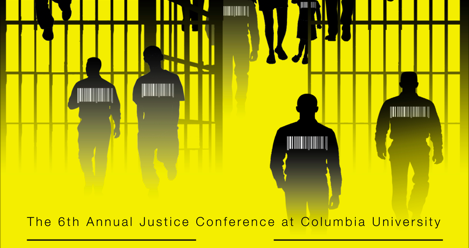
Beyond the Bars 2016 Save the Date: March 4-6

IMPORTANT NOTE for REGISTRATION

There is a ticket for each day of the conference.  We ask that you please only register for the day(s) that you intend to come.  While we fully intend to acommodate everyone who registers, registration does not guarantee you a seat. Space at all events will be first come first seated for all registered attendees.

RSVP: https://beyondthebars2016.eventbrite.com

BEYOND THE BARS: CONNECTING THE STRUGGLES 

Beyond the Bars: Connecting the Struggles is the sixth annual student-driven interdisciplinary conference on mass incarceration held at Columbia University. Given the greater consciousness of mass incarceration in the US, this conference brings people from different spaces and places to dig deeper in the work of ending mass incarceration, building justice and engaging in action beyond the weekend.

This year’s conference, Connecting the Struggles, aims to connect the many ways in which mass incarceration has impacted individuals, families and communities across the U.S, and beyond, as well as build connections across diverse struggles for social justice.

Albert Einstein stated that imagination is more powerful than knowledge ––Our comrade and sister Angela Davis, challenged us to imagine a world without prison. Join us as we honor the spirit of the struggle – join in solidarity with impacted people, and with academics, activists, practitioners and community members as we continue to connect the struggles to eradicate mass incarceration and to build justice and equity.

CONFERENCE SCHEDULE 

FRIDAY NIGHT KICK-OFF EVENT (Doors at 6:45 – Event Starts at 7:30)

Angela Davis
Virtual remarks from Mumia Abu-Jamal and Alicia Garza
Panel discussion with Abraham Paulos, Cory Greene, Delaine Powerful and Danielle Sered, moderated by Michelle Fine
Performance from Impact Repertory Theatre
Hosted by Malik Yoba

SATURDAY – CONNECTING THE STRUGGLES – MORNING PLENARIES AND AFTERNOON PANELS

Morning Plenaries (10 -1:15) 

The Roots of Mass incarceration and the History of Resistance to it (10 – 11:30)
Challenging Reform Efforts that Exclude People Convicted of Violent Offenses (11:45 – 1:15)

Lunch (1:15 – 2:15pm) 

Afternoon Panels (2:15 – 5:30pm) 

Block 1 (2:15-3:45pm) 

Deconstructing the Calls to End Mass Incarceration: Examining  Solutions, Strategies, Values, and Visions
Youth Activism: Mobilizing Communities for Social Change
Shaping Public Opinion: The Role of Journalism and Media in Defining Justice
Examining Surveillance and Technology in the Struggles for Justice
Mental Health: Across the Justice Continuum
Reducing the Number of People Incarcerated: Exploring Mechanisms and Strategies for Release
Ending State Violence Among Police and Corrections: Looking at Solutions
Equitable Access to Education Across the Carceral Continuum

Block 2

Electoral Politics and Legislative Reform: What’s Possible?
Solitary Confinement: An Area Where Efforts Have Made a Difference
Removing Barriers: Knowing, Enforcing, & Protecting Your Civil Rights After Justice System Involvement
Revisiting the 1996 Immigration Law: The Birth of Mass Deportations and Its Impact on Mass Incarceration
Responding to Violence Among Community Members:  Beyond Police and Incarceration
Arts and Activism: The impact That Cultural organizing Has on the Movement to End Mass
Incarceration
The Power of the Student: Organizing for Justice on the College Campus
Women on the Rise: Emerging as Leaders for Criminal Justice Reform
Challenging the Punishment Paradigm: International and Domestic Models for Justice and Accountability

SUNDAY – BUILDING THE GRASSROOTS – ORGANIZING WORKSHOPS

Opening (11-11:30) 

Block 1 (11:30-1) 

How Social Workers are Connecting the Struggles
Methods Matter: Participatory Strategies for Planning, Action Research and Coalition Building
Mass Incarceration, Trauma, & Healing Strategies
The Mindful Activist
The Deal with Divestment: Organizing Prison Divestment in CUNY
We are All Prisoners
Abolishing THE BOX At The Neoliberal American University

Lunch (1-2)

Block 2 (2-3:30) 

Respecting Differences: Reducing Volatile Interactions between Youth and Law Enforcement on the Street
The Blueprint: Building Fortified Cities of Reentry
Change from the Inside Out: Rehabilitation Through the Arts,
From Correction Officer to Prison Advocate
The “Ex”: Simulating the Life of a Returning Citizen
Behind Enemy Lines: From Slavery to Mass Imprisonment
Connecting the Struggles, Challenging Incarceration
The Great Expulsion: ICE Raids/Criminalization of Immigrants in the US

Block 3 (3:45 – 5:15)

The Second Prison: Unlocking Second Chances
Formally Incarcerated Included
The Impact of the Prison Nation on Young Women and Girls
No Borders No Prisons: U.S. Immigration Jail and the Israeli Occupation of Palestine
Peacemaking Circles: Repairing Harm One Circle at a Time
SpreadMassLOVE: A Creative Approach to Healing Relationships and Repairing Harm Caused by Mass Incarceration
Reintegration Not Reentry
Multi-Racial Coalitions for Prison Divestment: Building Unity Against Mass Incarceration and Detention
Criminal Justice and Child Protection: Examining Intersections of Systemic Abuses

Location Information 

March 4th – Friday Night Kick Off Event 
Lerner Hall, Columbia University
2920 Broadway, New York, NY 10027
(Broadway at 116th)
1 Train to 116th Street

March 5th & 6th – Saturday Panels and Sunday Workshops

Columbia University School of Social Work 1255 Amsterdam Avenue, New York, NY 10027

(Amsterdam between 122nd and 121st)

1 Train or AC/BD to 125th Street, walk to Amsterdam and head South

Conference Co-Sponsors

The conference is organized with support from the Columbia University School of Social Work, the Institute for Research in African American Studies, Latin@ Caucus, the Policy Caucus and the Queer Caucus at Columbia School of Social Work.

Important Information and FAQs

For Saturday Morning, there are 180 seats for the two plenaries. After we reach capacity there will be seats available in overflow rooms.

Are there ID requirements or an age limit to enter the event? — ID is required, but all ages are welcome at this event and we strongly encourage young people to attend.

Will the event be livestreamed? — Yes. Friday night will be livestreamed and the two Saturday morning plenaries as well as the two featured Saturday afternoon sessions will also be livestreamed. Livestreaming can be viewed here: http://new.livestream.com/CenterforJusticeatCU

Where can I contact the organizer with any questions? — Please email [email protected] with any questions.
Why Education Matters – Center Director Dr. Geraldine Downey on Talks at Columbia

Why Education Matters

In the inaugural series of Talks@Columbia, Dr. Geraldine Downey discusses the importance of education for incarcerated people. While the student identity centers on hope, the criminal identity focuses on history – past mistakes and failures. Adopting a student identity while inside prison has profound effects on people inside. Education in prison psychologically empowers students by affirming their belief in themselves and provides skills necessary for securing jobs upon release. Prison education programs also have been shown to reduce recidivism rates. Work by the Justice-in-Education initiative provides educational opportunities to people behind bars.

Why Education Matters can be viewed HERE

For more from Talks at Columbia click HERE

For more information on the Justice In Education Initiative click HERE

The Justice Forum – “From Juvenile Justice to Young Adult Justice: An Emerging Framework for Policy and Practice.”

DSC_0336


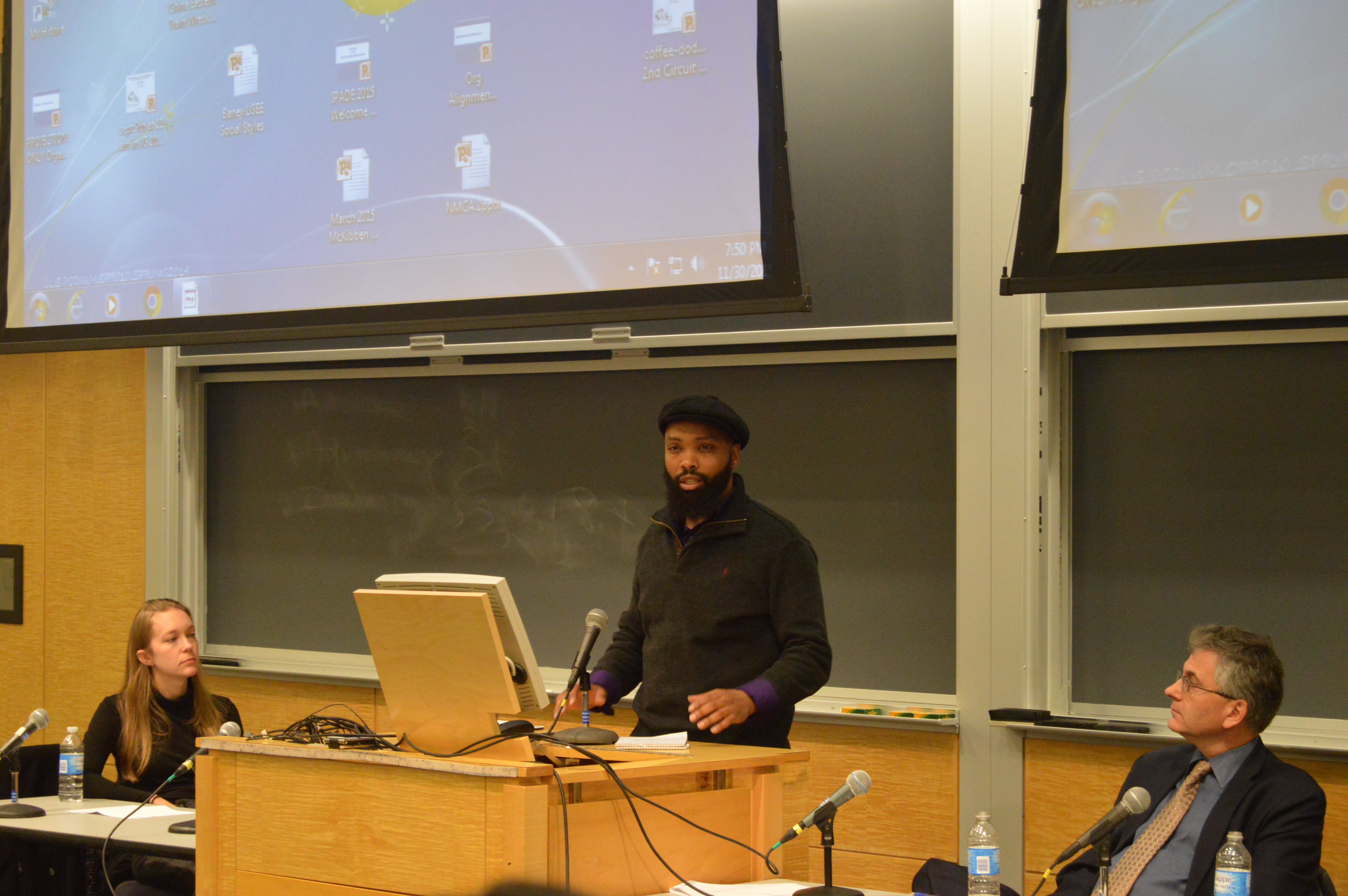
On November 30, 2015 the Center for Justice at Columbia University, in collaboration with the Heyman Center for the Humanities Public Humanities Initiative, the Center for the Study of Law and Culture, and the Columbia University Population Research Center, hosted a panel discussion regarding an emerging framework for policy, practice and programs to support young adults in the justice system.

The discussion was moderated by Judy Yu, Director, Juvenile Justice Project, the Correctional Association. A varied and experienced panel spoke to issues ranging from the history of the development of systems of juvenile justice in the U.S., to current innovations being implemented by police and the District Attorney’s Office, to the developmental (neurobiological) factors that ought to be considered when attempting to shape realistic solutions to the needs of young adults in the justice system.

Video of the evening can be found HERE.

The speakers at the Justice Forum were as follows:

Vincent SchiraldiSenior Research Fellow, Harvard Kennedy School, Program in Criminal Justice Policy and Management, Harvard University.

Karen Friedman-Agnifilo, Chief Assistant District Attorney, New York County District Attorney’s Office.

Richard Roderick, Program Coordinator, Justice-in-Education Initiative, Columbia University, featured in “Cooler Bandits” documentary and incarcerated at 18 for 20 years.

Jennifer A. Silvers, Ph.D., developmental psychologist specializing in the neural basis of self-regulation, Department of Psychology.

After the speakers provided instructive initial comments and presentations, the floor was opened to allow for audience participation and specific questions to be asked of panel members. The night was a great success and provided a vital snapshot of the changing landscape of youth justice with an emerging focus on young adults and with a clear view towards reform.

Vincent Schiraldi has kindly shared his slides from the evening and they can be found here. Young Adults and the Justice System – Columbia 11.30

Young Adults and the Justice System – Columbia 11.30

To stay up to date on future Justice Forum and other Center for Justice events you can sign up for our newsletter HERE.

The Confined Arts 3rd Edition

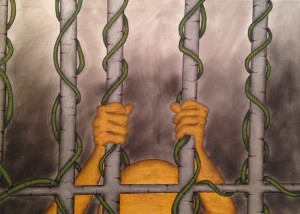
Behind bars

If you missed the 3rd Edition of The Confined Arts, here’s what you missed!

In it’s third edition, The Confined Arts proved to many that the arts has the power to change perceptions because it can convey humanity and transformation. It has the capacity to elicit an empathic connection from the viewer and the kind of response needed to affect the necessary shift in the contemporary narrative about people with a criminal conviction.

Opportunities and Change and the Justice and Education Initiative at Columbia University hosted The Confined Arts (TCA) 3rd edition. TCA held many in awe over the weekend as it showcased the opening of yet another impactful exhibition. Over 100 pieces of artwork were installed with the intentions of spreading public awareness. Art was created using many mediums and was displayed in several creative ways. Some artwork was displayed on commissary paper and some of the art hung from the ceiling to expose the harsh realities of solitary confinement that so many americans wake up to each day. Artists’ used oils, acrylics, graphite, ballpoint pens, computers, and more to tell the story that many are unaware of. Poets from diverse backgrounds and many parts of  the country who are dedicated to public awareness came together for what turned out to be a very informative and impactful weekend. Creative voices who never expected to be released from prison spoke intimately about the possibility of a second chance including  poetry written from a man in solitary confinement who told the story of a troubled young man being sentenced to death at 18 years old.
The creative voices at TCA told a different story from the one that summarizes them in terms of the crimes they’ve been convicted of. A story of transformation was told, encouraging all to remember that those who break the law (violently or nonviolently) are people first and that collateral consequences of a criminal conviction are incredibly damaging and should should be ended.  The artists highlighted the need for equal opportunities to live productively after experiencing incarceration for people across the country. 
CLICK HERE TO LISTEN TO THE CONFINED ARTS LIVE ON THE AIR

RikersBot Featured in Fast Company

Our ongoing coding project, RikersBot, was featured in Fast Company. 

RikersBot is a coding and digital storytelling project created Group for the Experimental Methods in the Humanities and Center for Justice. The project brings Columbia students and Rikers students together to learn coding by creating an Twitter Bot and  write stories be shared via the Twitter Bot. We are currently in our second cycle of the project, with future iterations planned for each semester.

How Rikers Students and Columbia Students Built a Twitter Bot – with no Internet

By Steven Melendez

Not long ago, a team from Columbia University set out to build an automated Twitter bot in a place with no Internet access—part of a 12-hour class for people with no prior programming experience. They held the class at New York’s Rikers Island in an ongoing effort by Columbia’s Center for Justice to provide educational programs for young people incarcerated at the jail complex. Teenage inmates worked alongside Columbia students to learn the basics of Python, put together tweets about their personal experiences, and contributed code to Rikers Story Bot, which randomly selects and posts a tweet from the group every day.

“A good portion of the code that made it into the bot was written in that class,” says Dennis Tenen, a software engineer turned English professor and one of the course instructors.

Since Rikers doesn’t provide Internet access to inmates, the instructors couldn’t stick to a standard coding school curriculum. The class relied a lot more on physical materials than most introductory programming classes. For example, instructors brought in printed tweets—including tweets by musicians Drake and Meek Mill, and from President Obama and the New York City Department of Correction—for students to study before they wrote their own. And with fewer computers than students, the classes included physical demonstrations of programming tasks, like looping and sorting papers.

“Everybody kind of gets into it, and really what they’re learning is the basics of algorithmic thinking and the basics of control structure,” says Tenen.

The goal wasn’t to turn the students into professional-grade programmers in just a few classes, Tenen emphasizes, but to introduce them to the basics of programming and reasoning about algorithms and code.

“It’s really to give people a taste, to get people excited about coding, in hopes that when they come out, they continue,” says Tenen.

Each member of the class also got a title, like developer or editor, that they’d be able to use on a job or school application, he says. And when they did sit down at the computer, Tenen says the Rikers inmates were often more willing to experiment than the slightly older Columbia students.

“In many ways, they seemed like kids that were just very eager to learn to put into this system where their voices weren’t being heard,” says Thomas Brown III, a Columbia senior who participated in the class.

The full article in Fast Company can be seen HERE.

RikersBot Featured by Data Science Institute

Our ongoing coding project, RikersBot, was featured on the Data Science Institute’s blog. A special thanks to all those from all over Columbia Universityprofessors, students and facultywho partnered with us on this initiative.

RikersBot is a coding and digital storytelling project created Group for the Experimental Methods in the Humanities and Center for Justice. The project brings Columbia students and Rikers students together to learn coding by creating an Twitter Bot and  write stories be shared via the Twitter Bot. We are currently in our second cycle of the project, with future iterations planned for each semester.

Stories from Rikers, in 140 Characters or Less

The New York City tech world is a long way from Rikers, the Bronx jail where those accused of crimes await trial. A team of Columbia professors wants to bridge the two with a project aimed at teaching teenagers on Rikers Island how to code and tell stories in a digital age.

Their finished product, RikersBot, launched last week on Twitter. At noon each day, the bot sends out a story, drawing, music or historic tidbit about the jail that was produced and edited over the summer by teens at the jail and a team of Columbia students and professors. The bot will continue tweeting until it runs out of content.

rikers_400

RikersBot is one of several programs offered by the Rikers Education Project, a collaboration of the Columbia Center for Justice and Heyman Center for the Humanities, and funded by the Mellon and Tow foundations. RikersBot got its start when the director of the Center for Justice approached a group of digital activists in the humanities to give programming classes at Rikers. The Center already taught classes in digital music production and writing a business plan, among other subjects, and wanted to expand their offerings.

It sounded like fun to software engineer-turned-Columbia English professorDennis Tenen, who is a member of the Data Science Institute. Joined by history professors Manan Ahmed at Columbia and Durba Mitra at Fordham, Tenen came up with a plan to teach enough Python that students could build an automated Twitter feed in four classes.

“Instead of the vague, ‘Let’s learn to code’, we thought ‘Let’s tell a story–an algorithmically-told story using Twitter as the medium,’’’ he said.

The first session took place over four weekends in August and included Columbia students with no coding experience. “The classes are set up so that everyone is learning together and exchanging ideas, stories and experiences,” said Cameron Rasmussen, program manager at the Center for Justice and lecturer at the Columbia School of Social Work.

In addition to learning how to declare variables and concatenate strings, the group focused on the writing and editing skills needed to curate tweets for RikersBot. “On the first day of class, the atmosphere was tense,” said Tenen. “By the second class, everyone was mixing, talking and laughing.”

After the last class in August, parents were invited to an informal graduation party at Rikers. “It connects the families back again with the kids and the promise they have,” said Geraldine Downey, a psychology professor at Columbia who directs the Center for Justice.

The organizers are realistic in their expectations for the RikersBot project. It takes time to become proficient at coding. Their hope is that some teens may choose to pursue it when they get out. Technology companies, after all, are more forgiving than most of job candidates without a college degree.  At the very least, the classes will give the teenagers skills to list on their resumes and an experience to talk about during an interview, said Tenen.

The New York Consortium for Higher Education in Prison Applauds Announcement to Reinstate Pell Grant Eligibility

The New York Consortium for Higher Education in Prison Applauds
the Obama Administration Announcement to Reinstate Pell Grant Eligibility for
Incarcerated Students as Part of a Pilot Program

Contact Information

Bryonn Bain, Lyrics From Lockdown, 917-453-9767
Geraldine Downey, Center for Justice, Columbia University, 212-854-4223
Baz Dreisinger, John Jay College of Criminal Justice, 212-237-8197
Eileen Gillooly, Heyman Center for the Humanities, Columbia University, 212-854-9031
Rachael Hudak, New York University Prison Education Program, 212-992-8673
Doran Larson, Attica-Genesee and Mohawk Consortium Programs, 315-790-2550
Sean Pica, Hudson Link for Higher Education in Prison, 914-941-0794
Divine Pryor, Center for NuLeadership on Urban Solutions, 347-869-6821
Rob Scott, Cornell Prison Education Program, 217-328-3228

FOR IMMEDIATE RELEASE: July 31, 2015…The newly formed New York Consortium for Higher Education in Prison (NYCHEP) applauds the Obama Administration announcement this week of the reinstatement of Pell Grant eligibility for incarcerated students, as part of a limited pilot program.

Secretary of Education Arne Duncan states, “the administration wants to develop experimental sites that will make Pell grants available to inmates to help them get job training and secure productive life after they are released.”

Legislative supporters of this program have said that incarcerated individuals who participate in correctional education programs are 43 percent less likely to return to prison and 13 percent more likely to secure employment after finishing their sentence.

NYCHEP is a consortium of colleges, universities, and non-profit organizations offering pathways to postsecondary education for incarcerated people in the state of New York. This growing consortium includes (listed alphabetically):

NYCHEP’s collective goal is to increase access to higher education for those impacted by the criminal justice system, and to pool resources in order to create seamless access to quality education inside prison and beyond. We aim to generate opportunities for criminal justice-affected individuals to achieve success in all arenas of their lives and stand ready to amplify our ongoing work towards increasing access to higher education for all.

Read more about Obama Administration announcement at: http://www.washingtonpost.com/news/grade-point/wp/2015/07/31/feds-announce-new-experiment-pell-grants-for-prisoners/?tid=HP_local?tid=HP_local

The 2015-16 Beyond the Bars Fellowship – APPLY NOW

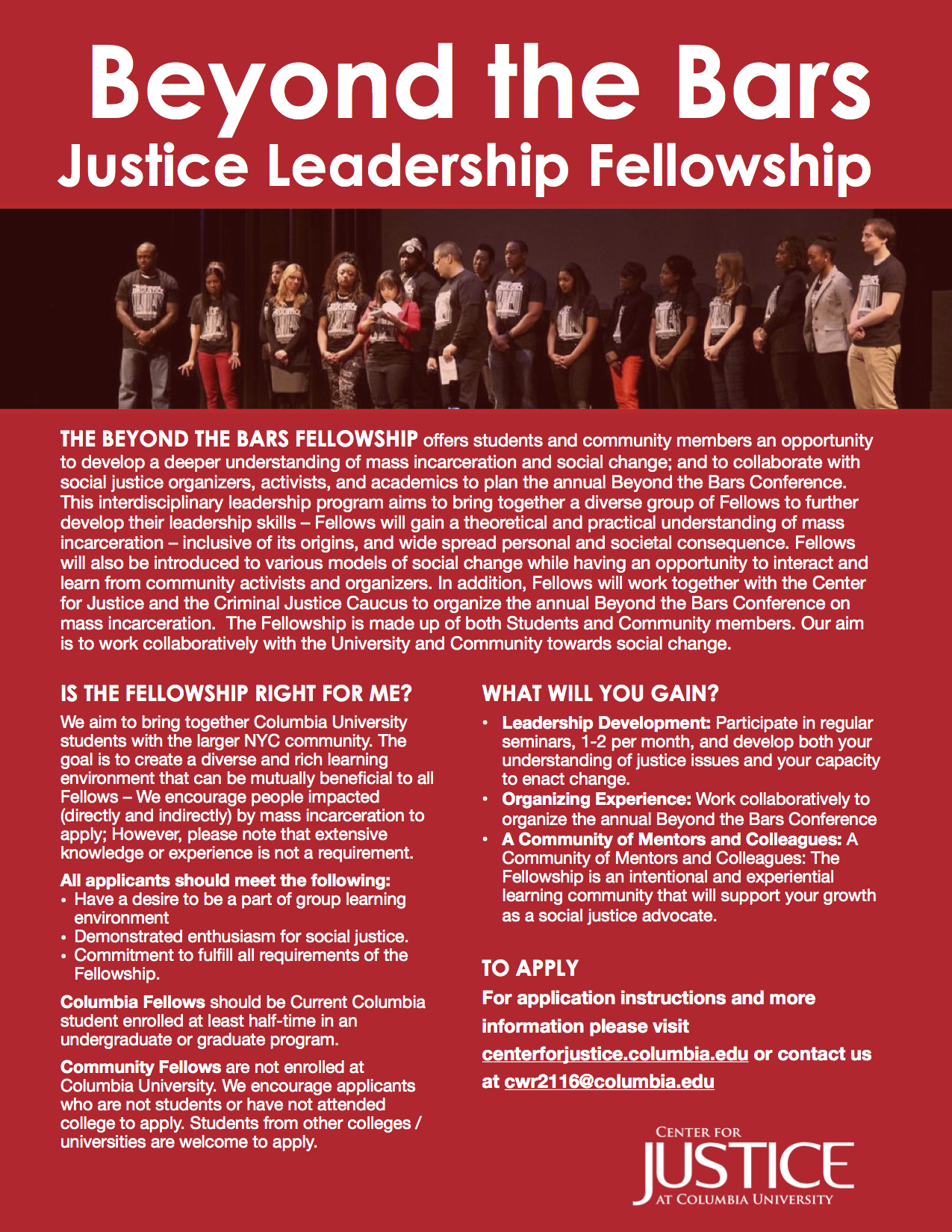
BTB Fellowship 15-16 - Recuirtment Flyer

THE BEYOND THE BARS FELLOWSHIP offers students and community members an opportunity to develop a deeper understanding of mass incarceration and social change; and to collaborate with social justice organizers, activists, and academics to plan the annual Beyond the Bars Conference. This interdisciplinary leadership program aims to bring together a diverse group of Fellows to further develop their leadership skills – Fellows will gain a theoretical and practical understanding of mass incarceration – inclusive of its origins, and wide spread personal and societal consequence. Fellows will also be introduced to various models of social change while having an opportunity to interact and learn from community activists and organizers. In addition, Fellows will work together with the Center for Justice and the Criminal Justice Caucus to organize the annual Beyond the Bars Conference on mass incarceration.  The Fellowship is made up of both Student and Community members. Our aim is to work collaboratively with the University and Community towards social change.

IS THE FELLOWSHIP RIGHT FOR ME? We aim to bring together Columbia University students with the larger NYC community. The goal is to create a diverse and rich learning environment that can be mutually beneficial to all Fellows – We encourage people impacted (directly and indirectly) by mass incarceration to apply; However, please note that extensive knowledge or experience is not a requirement.

All applicants should meet the following:

  • Have a desire to be a part of group learning environment           
  • Demonstrated enthusiasm for social justice.
  • Commitment to fulfill all requirements of the Fellowship.

Columbia Fellows should be Current Columbia student enrolled at least half-time in an undergraduate or graduate program.

Community Fellows are not enrolled at Columbia University. Students from other colleges / universities are welcome to apply.   We encourage applicants who are not students or have not attended college to apply as well.

WHAT WILL YOU GAIN?

  • Leadership Development: Participate in regular seminars, 1-2 per month, and develop both your understanding of justice issues and your capacity to enact change.
  • Organizing Experience: Work collaboratively to organize the annual Beyond the Bars Conference
  • A Community of Mentors and Colleagues: A Community of Mentors and Colleagues: The Fellowship is an intentional and experiential learning community that will support your growth as a social justice advocate.

Selection Process

Applications for the Fellowship will be reviewed by a selection committee including Center for Justice faculty and staff.

TO APPLY

Application Period and Timeline

The priority application deadline is August 20th.  Applications will be accepted on a rolling basis through 9pm August 27th. Interviews with potential Fellows will be held the weeks of August 31st and Sept 7th.  Selected Fellows will be notified by September 10th.  The Fellowship will begin September 22nd.

Application Materials

  • A 1 page cover letter including; why you are interested in becoming a Beyond the Bars Fellow, what you hope to gain from the Fellowship, and an assessment of your strengths and challenges.
  • A resume

Send application materials to Leyla Martinez at [email protected]

Tentative Fellowship Calendar 

Application Process

July 31st: Application Period Opens

August 20th: Priority Application Deadline

August 27th: Application Period Closes

August 20th- Sept 7th – Interviews

September 10th: Accepted Applicants are Notified

Fellowship

Fall

September 22nd: Seminar 1 – Intro to the Fellowship

September 29th: First Conference Planning Meeting

October 3rd and 4th: 2 Day Retreat (One day in NYC, One Day outside of the City)

October 13th: Seminar 2 – Starting with Self

October 20th: Conference Planning Meeting

October 27th: Dinner with Leaders

November 3rd: Seminar 3 – Understanding Mass Incarceration Pt 1

November 10th: Conference Planning Meeting

November 17th: Seminar 4 – Understanding Mass Incarceration Pt 2

December 8th: Conference Planning Meeting

December 15th: Seminar 5 – Social Justice and Leadership Pt 1

Spring

January 23rd: Half Day Conference Planning Meeting

January 26th: Seminar 6 – Social Justice and Leadership Pt 2

February 2nd: Conference Planning Meeting

February 9th: Seminar 7 – Organizing and Advocacy Look Like in the 21st Pt 1

February 16th: Seminar 8 – Organizing and Advocacy Look Like in the 21st Pt 2

February 23rd: Conference Planning Meeting

March 1st: Conference Planning Meeting

March 4th – 6th: Beyond the Bars Conference

March 15th: Closing and Reflections

Columbia to Become First University to Divest from Private Prisons

The Center for Justice commends the University for voting to divest from private prisons and recognizes and values the work of the student organizers that brought this to the attention of not only Columbia University, but now to universities across the country. Below are statements from the University and Columbia Prison Divest, the student campaign led by Students Against Mass Incarceration.

From Columbia University

Trustee Action On Prison Divestment Issue

The University Trustees have voted to support a policy of divestment in companies engaged in the operation of private prisons and to refrain from making new investments in such companies.

The decision follows a recommendation by the University’s Advisory Committee on Socially Responsible Investing (ACSRI) and thoughtful analysis and deliberation by our faculty, students and alumni. This action occurs within the larger, ongoing discussion of the issue of mass incarceration that concerns citizens from across the ideological spectrum. We are proud that many Columbia faculty and students will continue their scholarly examination and civic engagement of the underlying social issues that have led to and result from mass incarceration. One of many examples of the University’s efforts in this arena is the work of Columbia’s Center for Justice.

In partnership with the Heyman Center for the Humanities, the Center for Justice recently received generous support from the Mellon and Tow foundations to help educate incarcerated and formerly incarcerated persons, and to integrate the study of justice more fully into Columbia’s curriculum.

http://finance.columbia.edu/content/trustee-action-prison-divestment-issue

From Columbia Prison Divest

We are pleased to announce that after 16 months of research, protest, presentations, and countless hours of organizing, the organizers of the Columbia Prison Divest campaign have just been notified of the Columbia University Board of Trustees’ decision to ‪#‎DIVEST‬ from the private prison industry and to institute a policy banning reinvestment in companies that operate prisons! This will make Columbia the very FIRST university in the country to divest from the private prison industry.

As the student organizers of the Columbia Prison Divest campaign, we have embraced the collaborative spirit of prison divestment as a strategy born out of Black/Brown solidarity and organizers who came together in the common struggle against criminalization. While this campaign is primarily an effort born out of Students Against Mass Incarceration (SAMI), a Black-led prison abolitionist group, our strategy in targeting private prison companies specifically has been in effort to call out the ways in which these companies exploit the intimate ties between anti-Black racism, criminalization of immigrant communities, gender policing, and settler colonialism. CCA, GEO Group, and G4S (the main targets of our campaign) make money from anti-Black drug laws, mass deportation of immigrants, and mass incarceration, policing, and surveillance in occupied Palestine. Not only reaping profits from existing systems of oppression, these companies have played major, active political roles in the creation of policies that further criminalize marginalized communities through participation in conservative organizations like the American Legislative Exchange Council (ALEC) and lobbying for racist policies like harsh sentencing and ID laws.

Prison divestment has been our demand not because we see private prisons as the primary problem or because we see financial investment as the only (or even primary) way that universities like Columbia participate in systems of criminalization and control. For us, prison divestment has been an entry point for addressing the ways in which students at elite colleges and universities are directly and specifically in the privileged positions that we are because of systems of inequality. The racist, classist images of “criminals deserving of punishment” are created in tandem with images of “hard-working college students deserving of opportunity,” and each is defined in relation to the other. Through prison divestment, we have worked to challenge these narratives and structures. We refuse to buy into false narratives that justify our privilege at the expense of the suffering of others and refuse to be the brown faces in college brochures that mask institutionalized racism within our education and criminal justice system(s) under the guise of exceptionalism and diversity. It should not be socially acceptable for an educational institution to invest in prisons. We hope that Columbia’s divestment contributes to the larger antiprison movement in effort to weaken mainstream notions that prisons = justice and prevent private prison companies and other institutions from upholding punitive frameworks of justice.

We hope this victory opens doors to more campaigns, to more organizing, to more victories. This is not the end. This is a beginning. We want to see more schools divest. We want to see Columbia have to continue to respond to the pressure of students and members of the West Harlem community who will not stand for the university’s extensive and active participation in systems of racist, classist criminalization and punishment. ‪#‎PrisonDivest‬ ‪#‎BlackLivesMatter‬ ‪#‎FreePalestine‬ ‪#‎NoOneIsIllegal‬ ‪#‎Decriminalize‬ ‪#‎Decarcerate‬ ‪#‎Decolonize‬ ‪#‎Reparate‬ ‪#‎Abolish‬ ‪#‎TheStruggleContinues‬

https://www.facebook.com/columbiaprisondivest/posts/1602317203370652

President Bollinger Issues Statement Supporting Divestment from Private Prisons

On Friday May 15th, Columbia University President Lee Bollinger issued a statement on divestment from both companies that operate private prisons and from fossil fuels.  President Bollinger wrote the following:

“On March 31, 2015, ACSRI resolved to recommend to the Trustees that the University divest any direct stock ownership interests in companies engaged in the operation of private prisons and refrain from making subsequent investments in such companies.  I support this recommendation, which represents the culmination of thoughtful analysis and hard work by ACSRI and by our students, faculty, and alumni.  The recommendation will be taken up by the University’s Trustees at their next scheduled meeting in June.”

Columbia Prison Divest, a student led group, has been campaigning to get the University to divest from private prison companies for more than a year.  They have organized a number of town halls, teach-ins, sit-ins and week long periods of engagement to galvanize the student body, the administration and the broader public.

The full statement is below and can also be read on the Columbia home page.

Statement on Divestment

May 15, 2015

Dear fellow members of the Columbia community:

I am writing to provide an update on the progress of two pending proposals regarding Columbia University’s investments: divestment from companies engaged in the operation of private prisons and divestment from fossil fuels.

The issue of mass incarceration in America weighs heavily on our country, our city, and our University community.  The student group Columbia Prison Divest has been a vocal and valued champion for private prison divestment and the Advisory Committee on Socially Responsible Investing (ACSRI), led this year by Jeffrey Gordon, Richard Paul Richman Professor of Law, has been examining this issue.

On March 31, 2015, ACSRI resolved to recommend to the Trustees that the University divest any direct stock ownership interests in companies engaged in the operation of private prisons and refrain from making subsequent investments in such companies.  I support this recommendation, which represents the culmination of thoughtful analysis and hard work by ACSRI and by our students, faculty, and alumni.  The recommendation will be taken up by the University’s Trustees at their next scheduled meeting in June.

Climate change is one of the most important issues of our time.  Columbia is home to some of the foremost scholars in this field and our University community is engaged meaningfully in this issue in a number of ways, one being the ongoing discussion regarding divesting University funds from fossil fuels.

Since 2013, a subcommittee of ACSRI has been working diligently to address this complicated subject.  The student group Columbia Divest for Climate Justice has petitioned for fossil fuel divestment and has kept this issue at the forefront of campus conversation, exactly where it belongs.  I anticipate that at an appropriate time during the next academic year, this matter also will come before our Trustees.  In the near term, I will arrange for the Trustees to hear directly from student leaders on this subject.  There is more work to be done, but I support the ongoing deliberations of the ACSRI subcommittee and it is my hope to see a resolution to this complex but vitally important issue within the year.

I deeply appreciate the thoughtful and substantive work of ACSRI, and of all students, faculty, alumni, and administrators who are committed to these efforts.

Sincerely,

Lee C. Bollinger