Columbia Joins White House in the Fair Chance Higher Education Pledge

Columbia Joins White House in the Fair Chance Higher Education Pledge

June 10, 2016

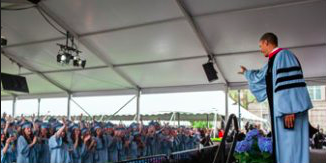
Today, Columbia University announced that it has joined with the Obama administration and colleges and universities from across the country as a founding partner for the launch of the Fair Chance Higher Education Pledge—a call to action for all institutions of higher education to improve their communities by eliminating barriers for those with a criminal record.

Click Here to view Full Article

Screen Shot 2016-06-23 at 11.20.14 AM


Beats, Rhymes & Justice at Carnegie Hall featured on NY1

Queens Based Producers Collaborate with Columbia University Teach Music to Young adults at Rikers Island and Trains Them at Carnegie Hall After They Are Released

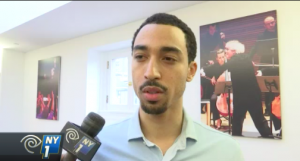
Beats, Rhymes & Justice, a collaboration with Ryan Burvick and Darnell Hannon from Audio Pictures was recently featured on NY1.

Click here to view full interview with NY1 News

Screen Shot 2016-06-23 at 11.26.48 AM


You can learn more about Beats, Rhymes & Justice and the Rikers Education Program HERE.  

Columbia Economists Show Consequences of Money Bail


Columbia PhD Candidates Chris Hansman, (Economics) and Arpit Gupta, PhD (Finance and Economics) have co-authored a paper with Maryland Public Defender Ethan Frenchman titled “The Heavy Costs of High Bail: Evidence from Judge Randomization” showing the consequences for public safety and justice from the practice of money bail.

The research was funded in part by our Investing in Justice Pilot Project Funding Program and we are excited to watch the impact of their work unfold as discussions of money bail and changing policy continue to grow.

Their work was highlighted by the Atlantic today in an article titled “Is Bail Causing Convictions?” Below is an excerpt and you can read the entire article HERE.


Is Bail Causing Convictions?

Bail is supposed to encourage defendants to show up for trials, but it also increases the likelihood of conviction and recidivism.

Bourree Lam 

Of the many surprising statistics about America’s money bail system, this one may be the most astounding: More than 60 percent of people in America’s overcrowded jails are there because they can’t afford to pay their bail amount. That works out to roughly 450,000 Americans in jail daily, and how long they stay there can vary with waiting times for trials potentially lasting months (or sometimes, years).

The American money-bail system, which has been around since 1789, has ripple effect. Some reformers argue that poor defendants might plead guilty in order to be released. Others say that there are more effective alternatives to money bail, such as using a risk score or supervising defendants before trial. Concerns aboutthe use of money in the bail system and the bail bond industry have also raised questions about America’s pretrial system and the way it affects the lives of unconvicted people…….

……Now, two economists from Columbia University and a public defender from Maryland have co-authored a study showing the size of the impact on assigning money bail on the likelihood of a guilty plea and recidivism. The experiment uses criminal data from the arraignment system in Philadelphia from 2010 to 2015, where the assignment of defendants to bail magistrates is close to random. This randomness is ideal for what economists call a natural experiment, where defendants are exposed to different conditions (in this case, different magistrates with different predispositions to assigning bail) at random.

Chris Hansman, a PhD candidate in economics at Columbia University and a co-author of the paper, says that he and his fellow researchers found that being assigned money bail increases the probability of conviction by about 6 percentage points and also causes a 4 percentage point increase in the risk that someone would go on to commit another crime.


Congratulations to our Center for Justice Graduating Students

Congratulations to our Center for Justice Graduating Students

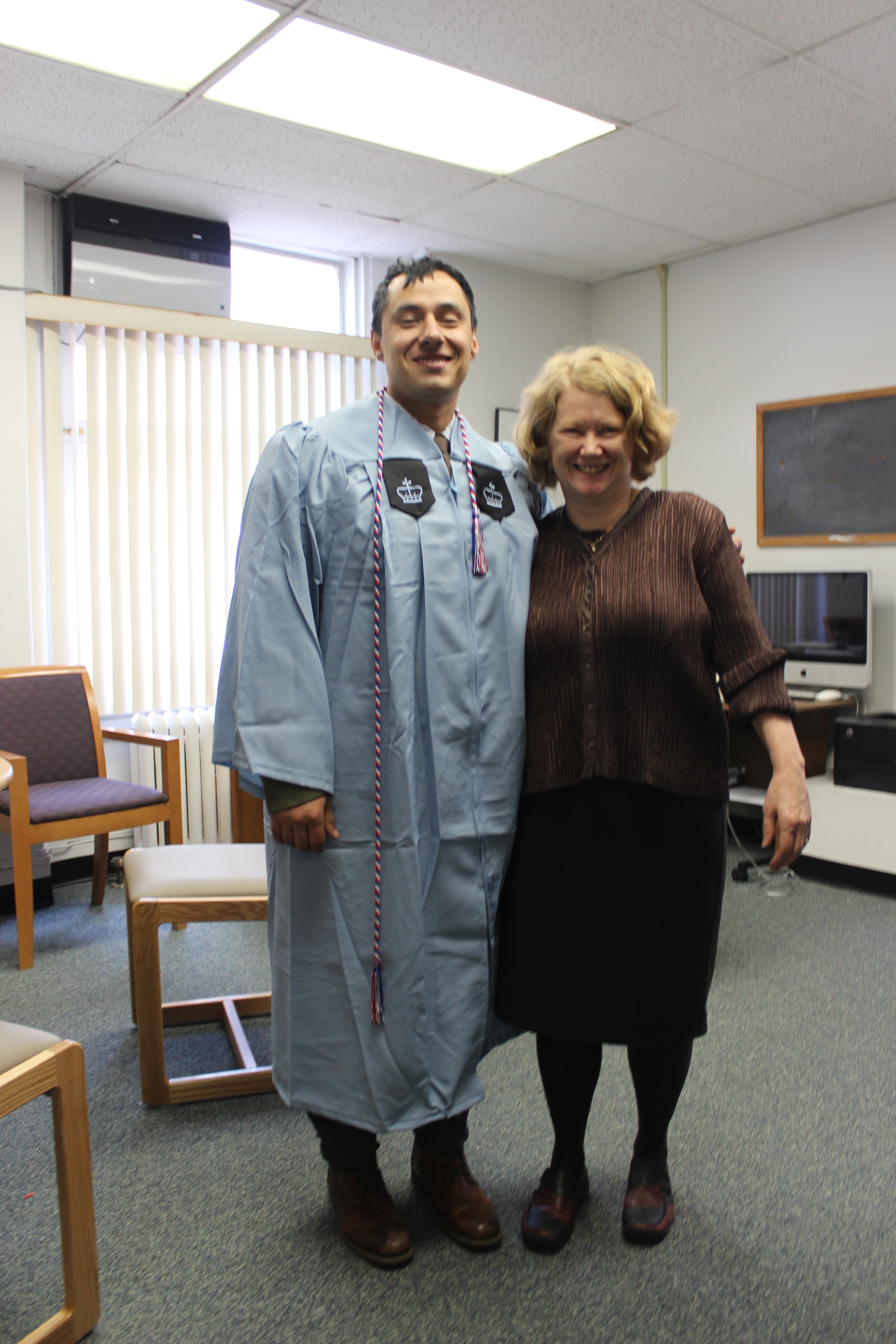
Congratulations to Marcos Rocha GS ’16 and Elijah Strauss, CSSW ’16 on their graduations.  Both Marcos and Eli have done remarkable work with the Center for Justice and we are proud of their accomplishments and grateful for their contributions.

IMG_6390
Marcos was instrumental in helping launch the Rikers Education Program and later went on to lead Project Identity, a student led program that fosters connection and exchange between Columbia University students and young adults in our community impacted by the criminal justice system.  Marcos has also been involved in several research projects connected to the Center for Justice.  Marcos was featured in an article on graduating seniors featured in the Columbia Record.
Eli spent this year with the Center as a Social Work Intern and Program Coordinator of the Rikers Education Program.  Eli has been critical in the development and implementation of several programs at Rikers including our most recent program, Rikers Studio in Architecture and Urban Design.We thank both of you for your dedication and work towards justice.

Beyond the Box Report: Beyond the Bars Fellows’ Student Spotlights

2015-16 Beyond the Bars Fellows and Columbia Students Leyla Martinez (GS) and Christopher Medina-Kirchner (Bridge to PhD Program in the Natural Sciences) were featured in a new report released yesterday from the U.S. Department of Education, Beyond the Box: Increasing Access to Higher Education for Justice-Involved Individuals, encouraging “alternatives to inquiring about criminal histories during college admissions and provides recommendations to support a holistic review of applicants.”  The report included student spotlights from both Ms. Martinez and Mr. Medina-Kirchner, marking the first time the Department included students spotlights in their reports.   Both also gave input to Department officials throughout the development of the report, as did several other Beyond the Bars Fellows.  In addition they were invited to speak at the release of the report at UCLA.  A fact sheet from the report can be accessed here.


Student Spotlight Excerpt from Leyla Martinez

“I thought to myself, ‘why apply?’ They are just going to reject me. I felt like the goal I set to show my son—it was worth trying—was unrealistic…so I stopped my application.

Fortunately, I had shared what I was doing with my friends who insisted that I finish the application. I did, but did not reply in the way they were asking. They wanted to know about my crime, but I told them about my accomplishments since being home. I told them about the struggles of being a single mom and a victim of domestic violence. I told them about how I earned a 3.9 GPA at the small public college I was attending after a ten year hiatus from school. I told them about my work with my state senators and local assemblymen as an advocate for continued funding for low-income individuals to continue their pursuit of higher education.”

Student Spotlight Excerpt from Christopher Medina-Kirchner

“My life is really an amazing story about persistence, motivation, and overcoming adversity. Unfortunately, the process made me not only keep the story out of my personal statement, but also out of any conversation for fear of the consequence and stigma associated with having a criminal record.”

The full spotlights and transcripts are available in the report.


“Life Outside” Video Series Launched to Spotlight the Aging Prison Population Crisis

Watch Video Below

In collaboration with the Media and Idea Lab (MIL) at Columbia University, we are excited to launch “Life Outside: Rosalie Comes Home,” the first in a series of videos featuring formerly incarcerated people over the age of 60 who are released from prison after having served lengthy sentences.

The series accompanies the Center’s recently published whitepaper, “Aging in Prison: Reducing Elder Incarceration and Promoting Public Safety.” According to the report, more than 17% of New York State’s prison population is age 50 or older. The number of incarcerated individuals of age 50 and older increased 81% over the past decade. From 2007 to 2010, the number of state and federal prisoners over 65 grew 94 times faster than the general population nationwide. As of 2012, there were almost 125,000 prisoners aged 55 and older in the United States. This pace is projected to continue escalating fast for the next decades: By 2030, more than 400,000 older people are expected to be in prison, a staggering 4,400 percent increase from 1981 when there were only 8,853.


Shot entirely in New York, Life Outside’s first episode tells the story of Rosalie Cutting as she navigates the world at age 71 after serving a 27-year sentence. Throughout the video, Rosalie narrates her journey grappling with her time inside the prison walls of Bedford Hills and Taconic, where she ultimately received her GED, bachelor’s and master’s degrees, whilst developing educational programs to help other women who are incarcerated to achieve the same. “People do change,” said Cutting. “And they change because it’s a choice.”

The series is the first collaboration between the Center for Justice and MIL. “The Lab is thrilled to collaborate in this important series,” adds Frances Negrón-Muntaner, director of the Lab and the series. “Through these stories, we aim to amplify the voices of formerly incarcerated people as part of a larger dialogue about the necessity of shifting from a punitive to a transformative paradigm of justice. Coming home should not be this hard. ”

Columbia Prison Education Program x Hudson Link featured in Reuters

Last week, Reuters’ Barbara Goldberg visited a class taught by Columbia University Professor Laura Ciolkowski at Taconic Correctional Facility on the classics.  The course is one of several taught each semester through our Prison Education Program at two New York State Correctional Facilities, Taconic and Sing Sing.   The program is a collaboration with Hudson Link for Higher Education in Prison, an organization that provides college education, life skills and re-entry support to incarcerated and formerly incarcerated men and women.

Homer, Virgil hauled to New York prison for Ivy League class

By Barbara Goldberg

….Homer, Euripides and Virgil are all doing weekly stints at a New York women’s prison this spring. Their classic works are being read by inmates enrolled in a Columbia University course organized by the non-profit Hudson Link for Higher Education in Prison, which aims to boost employment for convicts upon release and reduce recidivism.

About half of the 700,000 inmates who leave U.S. federal and state prisons each year in the world’s biggest penal system will be re-incarcerated within three years, according to the U.S. Department of Justice. But those who have taken classes offered by a consortium of colleges through Hudson Link over 16 years – including in the infamous Sing Sing penitentiary – have a recidivism rate of less than 2 percent.

You can read the full story here: Homer, Virgil hauled to New York prison for Ivy League class

Beats, Rhymes & Justice Featured in VICE

Beats, Rhymes, and Justice @ Rikers Island - NY, NY - 02/26/2016 - Photographed by Jason Bergman for VICE / jbergs.com / jbergs@jbergs.com

Beats, Rhymes, and Justice @ Rikers Island – Photographed by Jason Bergman for VICE

Beats, Rhymes & Justice (BRJ), a collaboration with our partners at Audio Pictures LLC., was recently featured in VICE.  BRJ is a part of the larger Rikers Education Program that brings social justice oriented project based education programming to young people ages 16-22 at Rikers Island.

BRJ uses digital music production, lyric writing and media literacy to engage young people in producing and recording songs at Rikers Island.  Students learn to create and record songs using iPads and music production software as well as critically examine a variety of works from hip-hop artists including Tupac, Nas and Kendrick Lamar.

The program was created in March 2015 in partnership with Audio Pictures LLC., a Queens-based production and sound design company that also develops hip hop education programming. Audio Pictures LLC. has been instrumental in developing the program, the curriculum and working with us to deliver and expand the program.  Over the last year we have run the program more than six times in two different facilities at Rikers Island with a great deal of success, with the young people who are incarcerated, with the Columbia students who participate in the program as well as the correctional officers and staff at the Department of Corrections.


Friday Night Hip-Hop on Rikers Island

By John Surico

Our seats are arranged in a circle around a laptop connected to speakers. The track is “Dear Mama” by Tupac—a poignant love letter from the late rapper to his mother, apologizing for the jail cells she had to visit him in. Everyone sits quietly, reading the lyrics as the song plays through.

One of the first lines resonates here: “When I was young, me and my mama had beef / 17 years old, kicked out on the streets.”
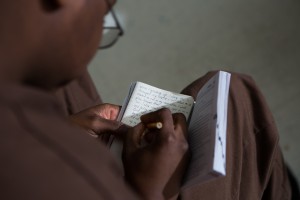
Beats, Rhymes, and Justice @ Rikers Island - NY, NY - 02/26/2016 - Photographed by Jason Bergman for VICE / jbergs.com / jbergs@jbergs.com

Beats, Rhymes, and Justice @ Rikers Island – Photographed by Jason Bergman for VICE

“I feel him, like…” one teenager, quickly wiping away tears, says into a microphone after the song ends. “I got kicked out when I was 17, and my mom wanted nothing to do with me. And my dad, I don’t even fuck with him.”

The mic gets passed around, as the other members of the circle—all dressed in their brown jumpsuits, with white socks and black velcro shoes—react to the 1995 ballad. Some don’t say much; others open up. The mic eventually makes its way back to another teenager who refused to talk the first time around.

You can find the full article here: Friday Night Hip-Hop on Rikers Island

Beyond the Bars 2016 Recap – Videos, Photos and More

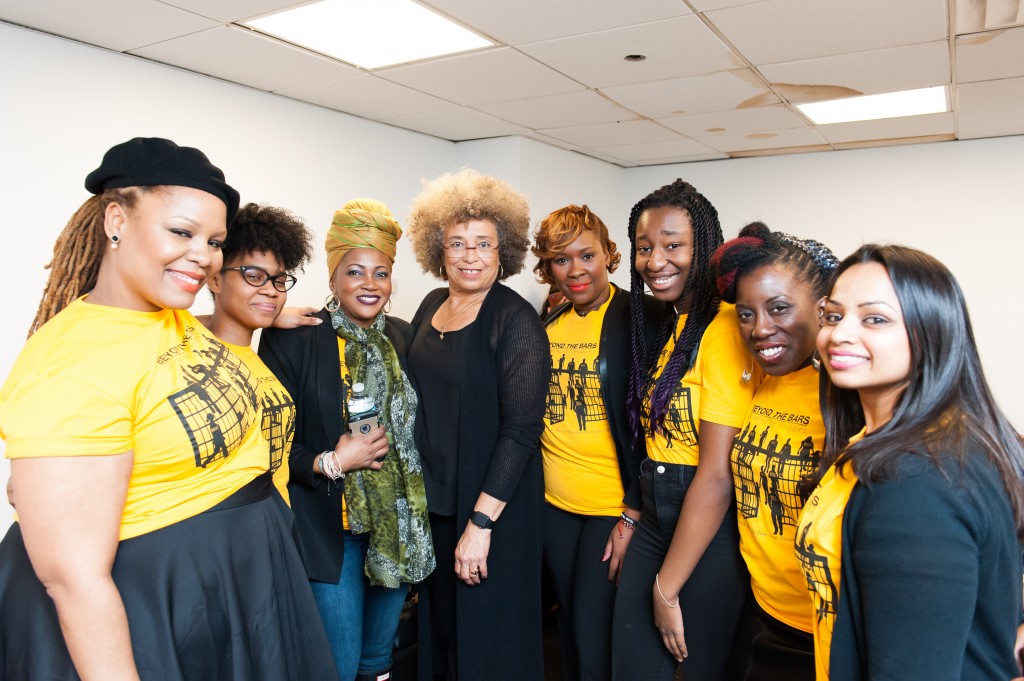
We’d like to extend a huge thank you to everyone who joined us over the three days, all of the amazing speakers, the more than 1600 attendees, the many organizations, the Columbia Staff and all of those who worked to make this year’s conference the success that it was.  We are immensely grateful for everyone’s participation and support.


Did you miss the conference? 

Friday night’s Kick-Off Event with Angela Davis, the two Saturday morning plenaries as well as the two featured breakout panels on Saturday afternoon can all be viewed by clicking the link below: Beyond the Bars 2016 Video Archives 


Click below to view the program for the entire weekend

Friday Kick-Off Event with Keynote Speaker Angela Davis

Saturday Morning Plenaries and Afternoon Panels

Building the Grassroots: Organizing Workshops


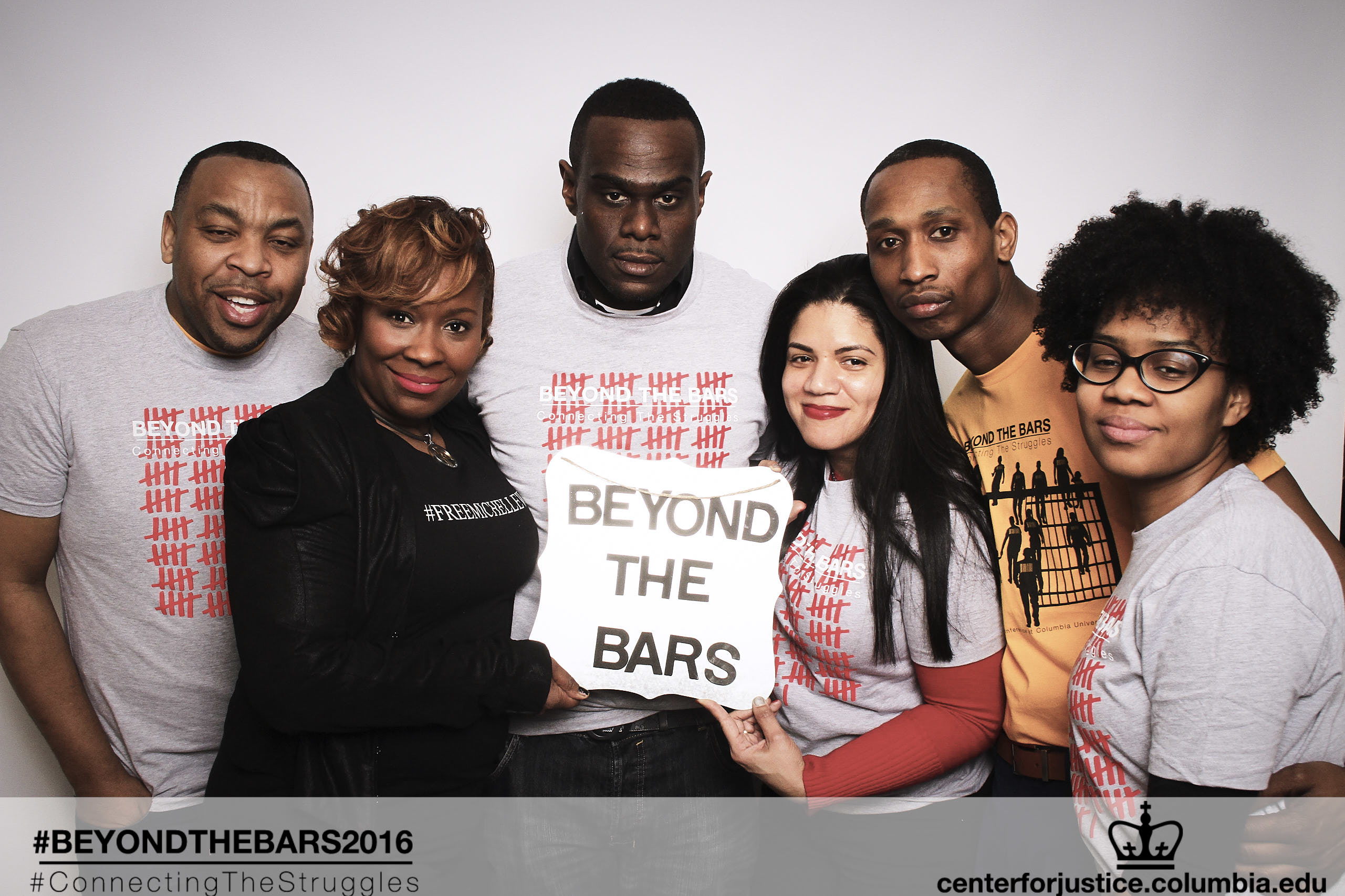
Columbia_045Beyond the Bars 20016 Photobooth 

Leaders, supporters and those directly impacted by mass incarceration took turns highlighting their message. Click here to view photos on Facebook


_ROG6141-7

Conference Evaluation 

For those who attended, we’d love to hear about your conference experience; what you loved, what you thought could be improved and any thoughts for next year.  Please take a few minutes to fill out this brief questionnaire. Beyond the Bars Evaluation 


Stay in Touch

If you want to sign up for all upcoming events, news and updates from the Center for Justice, please sign up for our newsletter and or follow us on social media.

Newsletter Sign up 

Follow us on Twitter 

Like us on Facebook

Beyond the Bars 2016 Recap


Meet the 2015-16 Beyond the Bars Fellows

15-16 Fellows

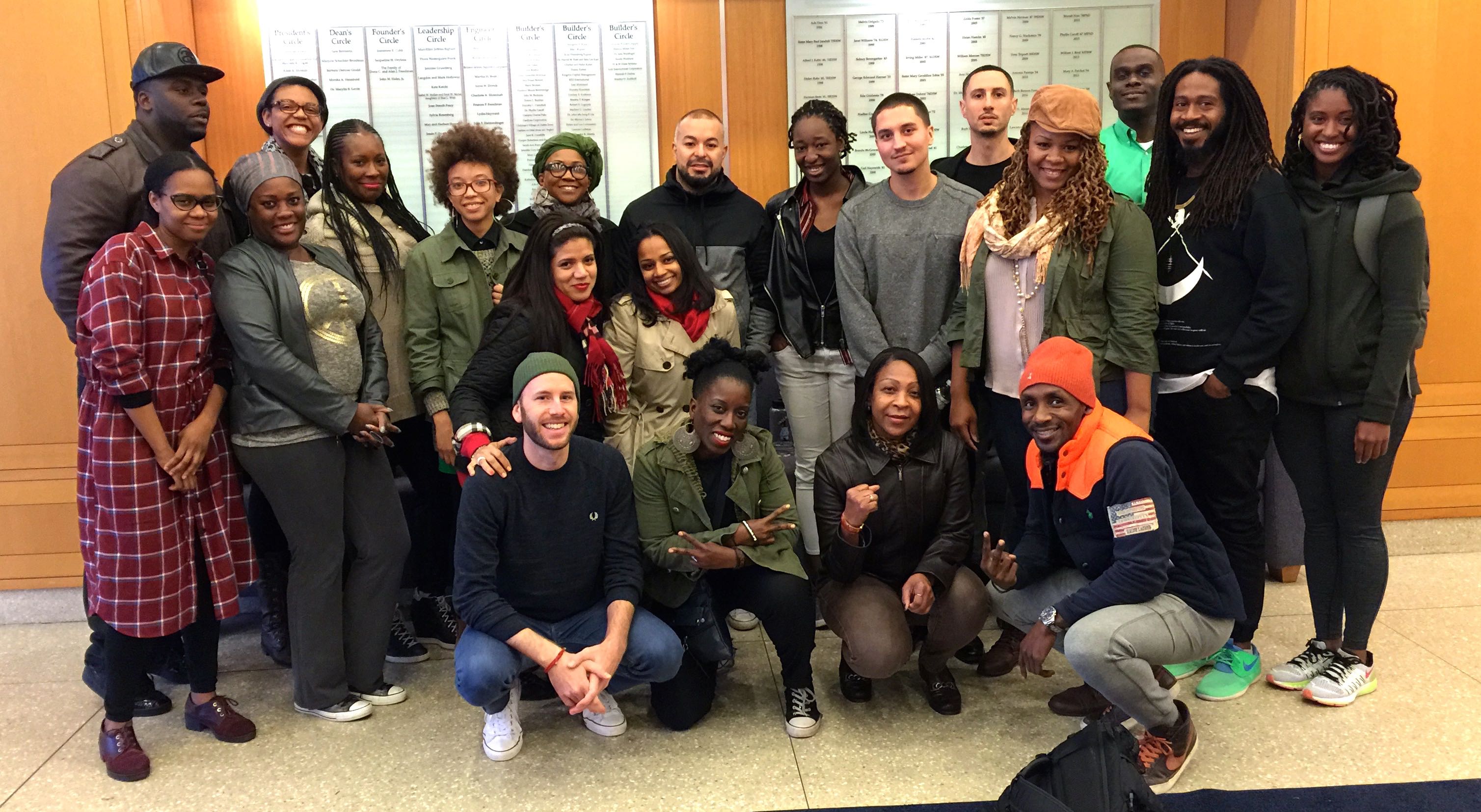
Our current Fellows come from many schools across Columbia (Social Work, Teachers College, Columbia College and the School of Professional Studies), other colleges (John Jay College of Criminal Justice, New York Theological Seminary, Hunter College, SUNY Downstate, Fairleigh Dickinson University) and a variety of different community and government organizations (Brooklyn Academy of Music, Brennan Center for Justice, Opportunities and Change, New York City Department of Small Business Services, CUNY Institute for State and Local Governance, the Ladies of Hope Ministries and the New York State Senate).  We are honored to be working with such a powerful group of people and look forward to seeing the work of the Fellowship continue to grow.

Learn more about the Fellows here.