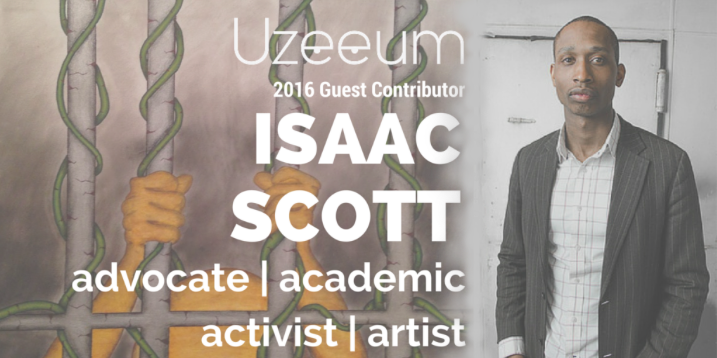
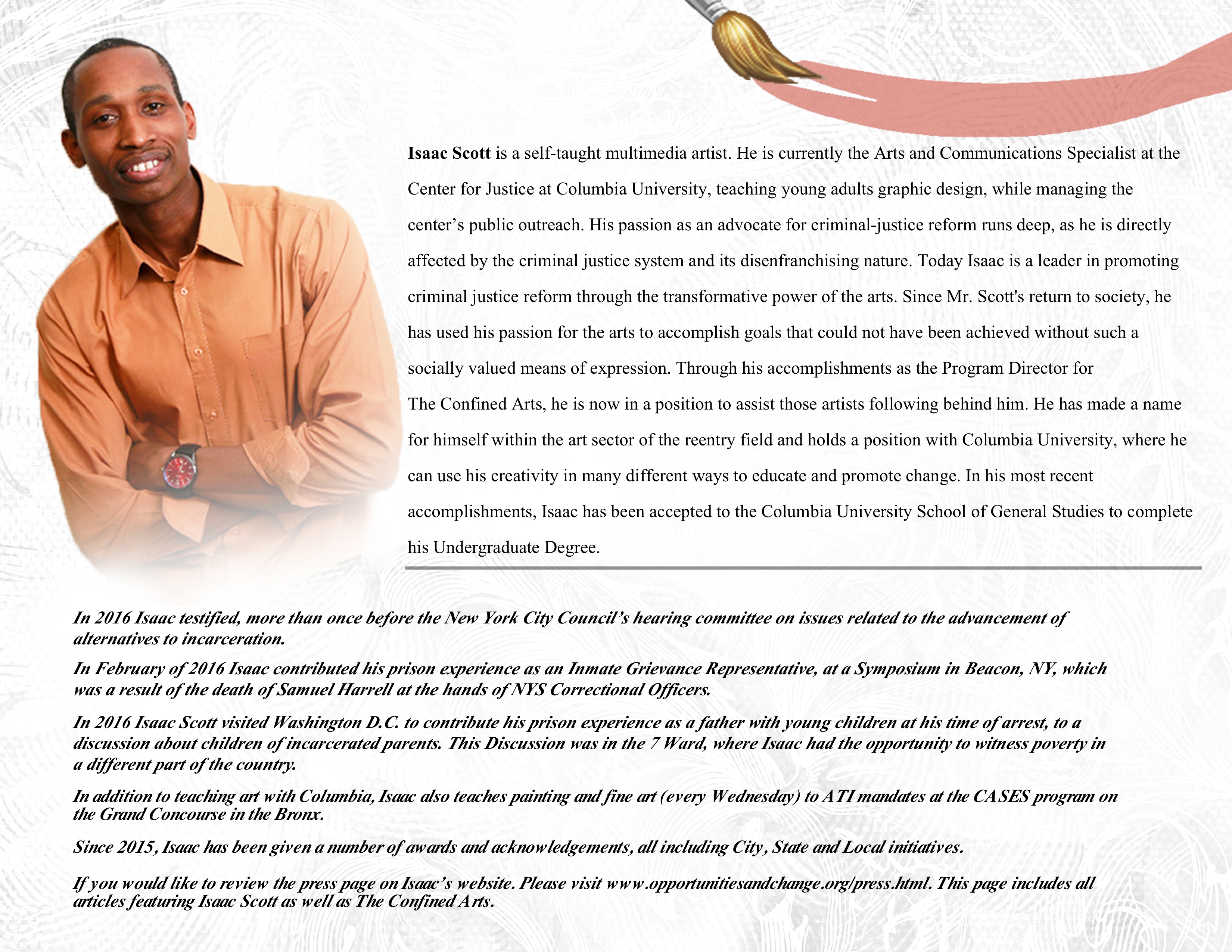
Justice in Education Scholar Isaac Scott 2016 Guest Contributor in Uzeeum

Uzeeum 2016 Guest Contributor: Isaac Scott


WHO: Isaac Scott, Program Director, The Confined Arts & Arts and Communications Specialist, Center for Justice at Columbia University

By Olivia Mason

O: Hello Isaac.  You met Chrissy, Uzeeum’s founder, at the opening of the Visions of Confinement exhibit and she invited you to participate in our Guest Contributors series, can you tell us a little bit about the projects you are currently working on?


CLICK HERE TO READ FULL INTERVIEW

Uzeeum Graphic

Center For Justice at the Annual Convention of the Association for Psychological Science in Chicago

On May 27th, at the Annual Convention of the Association for Psychological Science in Chicago, Dr. Geraldine Downey chaired a symposium presenting new psychological research examining perceptions and experiences of the currently and formerly incarcerated, and related implications for social policy.


Michael J. Naft, a doctoral candidate in the Department of Psychology at Columbia, presented findings from studies examining psychological and behavioral effects of disclosure of one’s criminal identity in the employment-seeking context. This research sheds light on how the formerly incarcerated experience stigma in one of the most common, and consequential, situations faced by individuals coming home from prison.


Christopher Medina-Kirchner presented on the background, development, and validation of a scale used to measure individual differences to rejection based on the stigma that arises from being incarcerated and/or having a record. He found that there is individual variability in how people may anxiously expect, perceive or react to this rejection, but that it is important to address the systems that create these experiences of rejection rather than those on the receiving end of it. Towards this end, he encouraged the audience to take the “Fair Chance Pledge” and support the “Ban the Box” campaign in order to eliminate barriers and provide alternate pathways to success for people who have been incarcerated and/or have a record.


Larisa Heiphetz, an Assistant Professor of Psychology at Columbia, presented findings from studies examining perceptions of those who have been convicted of crimes. She discussed evidence of the extent to which American adults endorse essentialist views of criminality — views conceptualizing criminality as biologically based, innate, and immutable — and of links between essentialist views and endorsement of harsh punishment. This work highlights potential consequences of essentialism, shedding light on conditions that give rise to punitive judgments.

2016-17 BEYOND THE BARS FELLOWSHIP – APPLY NOW

2016-17 Beyond the Bars Fellowship – Apply NowColumbia_031
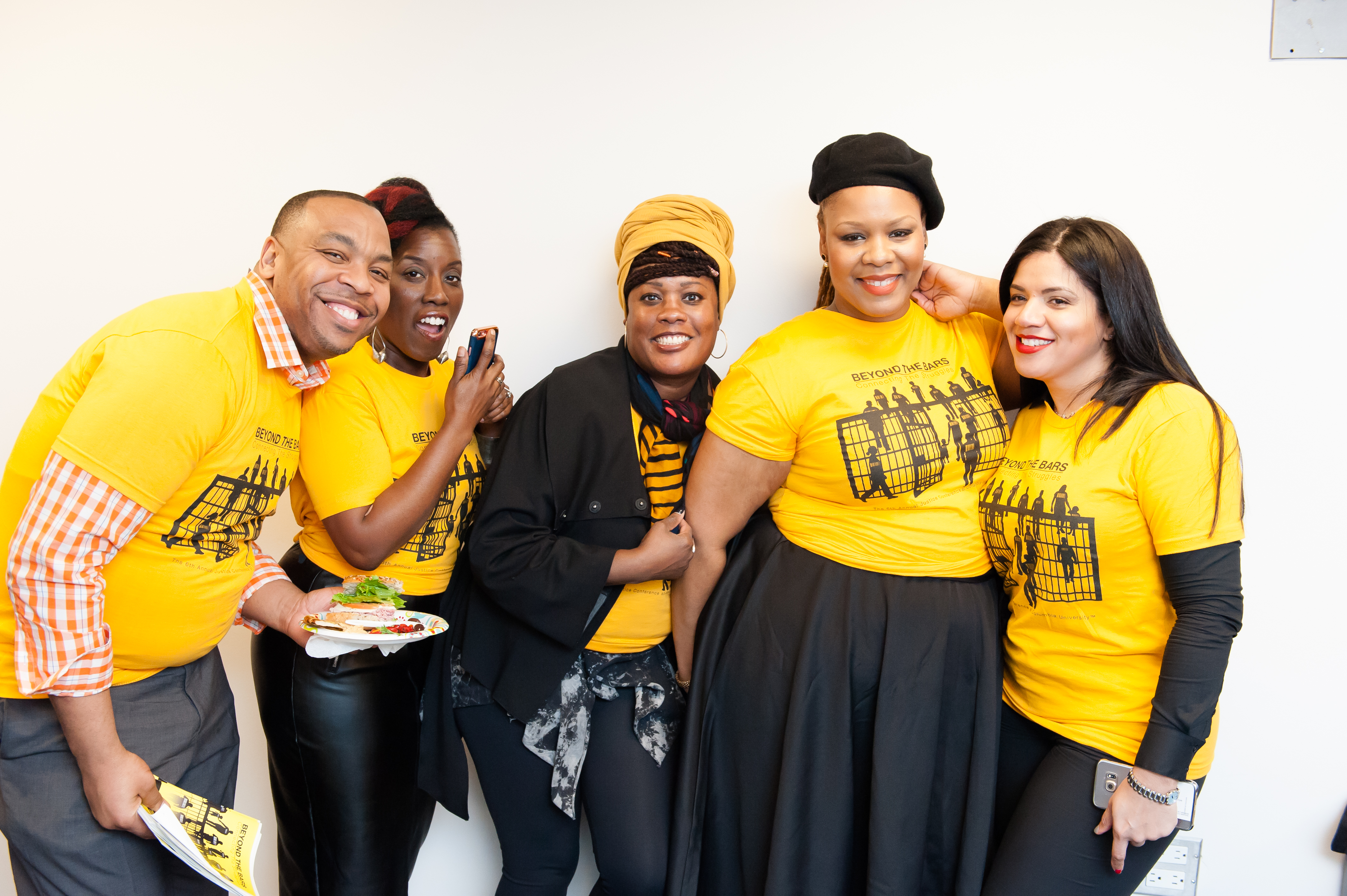
The Beyond the Bars Fellowship offers students and community members an opportunity to develop a deeper understanding of mass incarceration and social change; and to collaborate with social justice organizers, activists, and academics to organize the annual Beyond the Bars Conference. This interdisciplinary leadership program aims to bring together a diverse group of Fellows to further develop their leadership skills – Fellows will gain a theoretical and practical understanding of mass incarceration – inclusive of its origins, and wide spread personal and societal consequence. Fellows will also be introduced to various models of social change while having an opportunity to interact and learn from community activists, organizers, academics and more. In addition, Fellows will work together with the Center for Justice and the Criminal Justice Caucus to organize the annual Beyond the Bars Conference on mass incarceration and social justice. The Fellowship is made up of both Students and Community members and our aim is to work collaboratively with the University and Community towards social change.


Is the Fellowship Right for me?

We aim to bring together Columbia University students with the larger NYC community to create a diverse and rich learning environment that can be mutually beneficial to all Fellows – We encourage people impacted (directly and indirectly) by mass incarceration to apply; However, please note that extensive experience is not a requirement.

All applicants should meet the following:

  • Have a desire to be a part of group learning environment
  • Demonstrated enthusiasm for social justice.
  • Commitment to fulfill all requirements of the Fellowship.

Columbia Fellows should be Current Columbia student enrolled at least half-time in an undergraduate or graduate program.

Community Fellows are not enrolled at Columbia University. We encourage applicants who are not students or have not attended college to apply. Students from other colleges / universities are welcome to apply.

What will you gain?

  • Leadership Development: Participate in regular seminars, 1-2 per month, and develop both your understanding of incarceration related justice issues and your capacity to enact change.
  • Organizing Experience: Work collaboratively to help organize the annual Beyond the Bars Conference
  • A Community of Mentors and Colleagues: A Community of Mentors and Colleagues: The Fellowship is an intentional and experiential learning community that will support your growth as a social justice advocate.

An Evening with Angela Davis @ Columbia Univ. 2016

An Evening with Angela Davis @ Columbia Univ. 2016

Time Commitment

The Fellowship will meet most Tuesday evenings from 6:30-8:30pm starting September 20th through the end of March 2017.  The Fellowship will not meet during holidays and will break from mid December to mid January.  In addition to Tuesday nights, there will be light reading for seminars and some work related to conference planning will be expected.


Application Materials

  • 1 page cover letter including; why you are interested in becoming a Beyond the Bars Fellow, what you hope to gain from the Fellowship, and an assessment of your strengths and challenges.
  • Resume/CV

To Apply

Email your application materials to [email protected]

Deadlines

The priority application deadline is Friday August 19th.  After that we will be accepting applications on a rolling basis until Friday August 26th.


Application Process  

July 28th: Application Period Opens
August 19th: Priority Application Deadline
August 26th: Application Period Closes
August 29th- Sept 2nd – Interviews
September 9th: Accepted Applicants are Notified

Columbia’s Prison Education Program featured on CBS

Why NY is expanding top tier higher education in prisons

JULY 9, 2016, 8:11 AM|President Obama became the first sitting president to visit a federal prison last year as he sought to build support for criminal justice reform. While it seemed to have bipartisan support in Congress this year, it now appears to be stalled amid the intensifying election campaign. But one state is moving ahead with a controversial plan to expand a rehabilitation program for some of its prison inmates. Mark Albert reports. -CBS News

Click here to watch full article 

Screen Shot 2016-07-10 at 4.18.08 PM

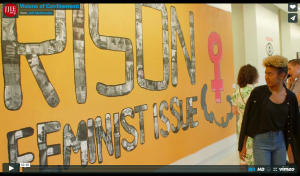
Visions of Confinement featured in Untapped Cities

Visions of Confinement at Hunter East Harlem Gallery Explores Female Imprisonment in America

Posted In Arts & CultureNew York

by AFineLyne


Just in time for the return of Orange is the New Black on Netflix, Visions of Confinement: A Lens on Women in the United States Prison System is the summer exhibit for Hunter East Harlem


CLICK HERE TO READ FULL ARTICLE

she_was_1


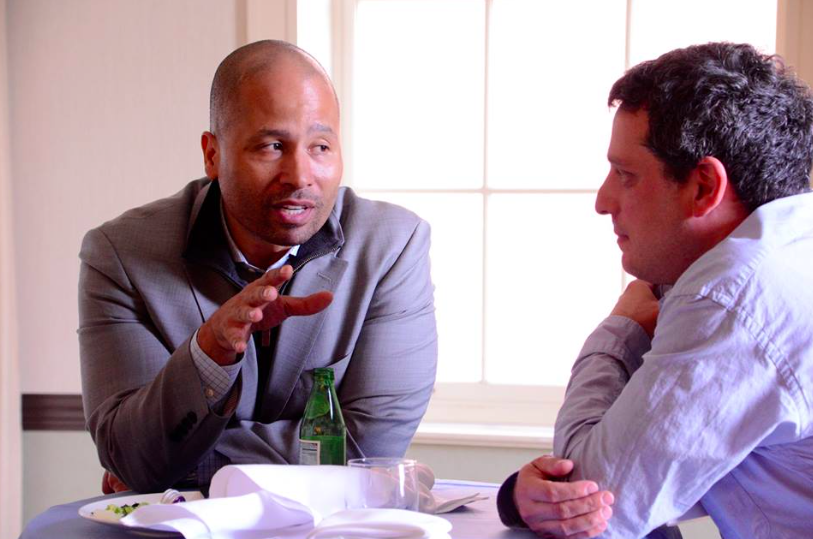
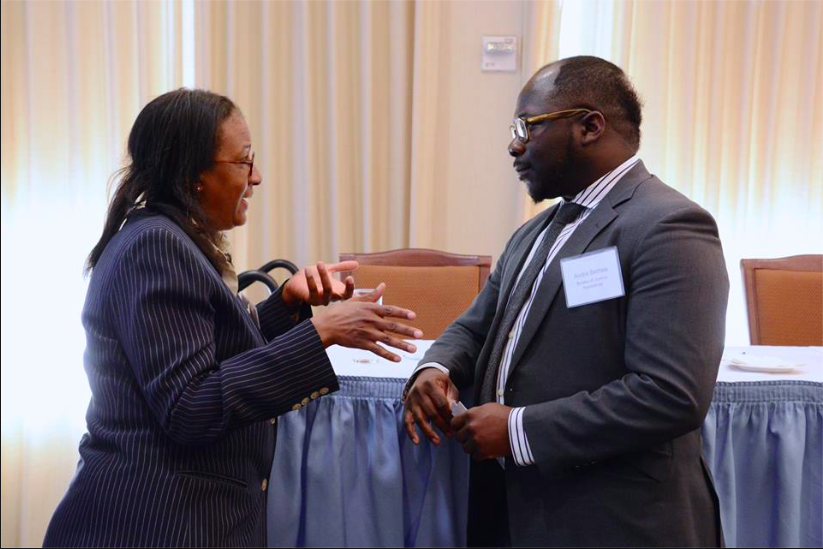
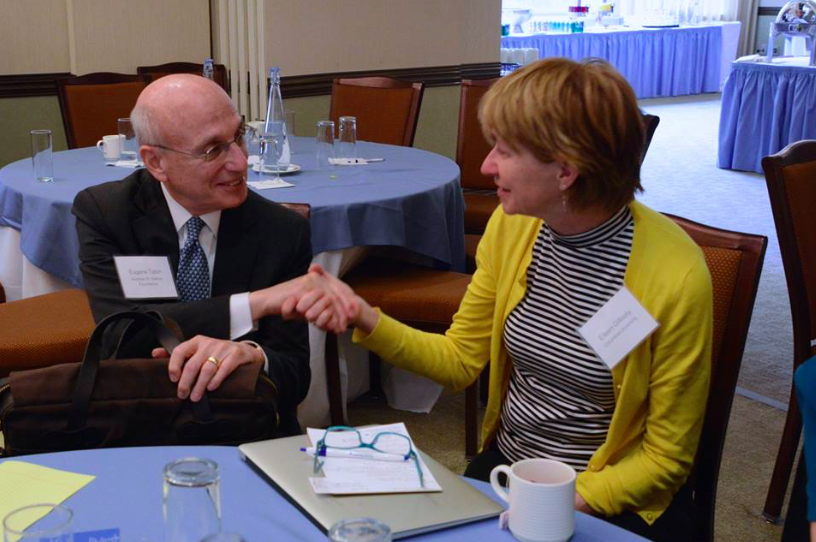
Thank you for attending the Solutions to Post-Incarceration Employment and Entrepreneurship Forum

Thank you for attending this year’s Social Enterprise Leadership Forum, entitled “Solutions to Post-Incarceration Employment and Entrepreneurship: The Role of Businesses and Universities.”

This forum—a joint effort by the Tamer Center for Social Enterprise at Columbia Business School and the Center for Justice at Columbia University—was an unprecedented event that sought to address the critical issues around post-incarceration employment.

Screen Shot 2016-06-23 at 11.05.07 AM

As part of a day that convened scholars, policy-makers, nonprofits, business leaders and people directly affected by incarceration, the discussion revolved around the ways businesses can bolster successful reentry and ultimately decrease the prison population.

The discussion emphasized the role of universities to convene both businesses and academic insights to address the challenges and opportunities for employing the formerly incarcerated. Jeremy Travis, president of John Jay College of Criminal Justice, opened the event with his keynote Reversing the Realities of Mass Incarceration: The Role of American Business. Professor Devah Pager of Harvard University shared her research that formerly incarcerated people performed well at their jobs within the military. This research highlighted a potential opportunity that businesses may miss in the hiring process. Bill Keller of the Marshall Project convened a business panel that included representatives from the Partnership for New York City, Autodesk, Pigeon.ly and Skillsmart. Glenn Martin shared his personal and professional journey with JustLeadership.

13241309_10153543697676867_5395084527603138095_n

Geraldine Downey, Director of the Center for Justice, closed the event with a panel that included Ronald Day from the Fortune Society that discussed ways in which the nonprofit sector and government support post-incarceration employment, such as through developing legal protections against employment discrimination.

Due to the overwhelming interest in this forum, we plan additional follow-on initiatives including a multi-media experience (podcasts and videos) that will be available soon for broader distribution that will add to the presentation materials found on our website. We welcome your feedback and any additional suggestions for programming around this topic.

Thank you for your attendance and contribution to 2016 Social Enterprise Leadership Conference.
​Regards,


Geraldine Downey
Professor of Psychology
Director of the Center for Justice
Columbia University

Damon J. Phillips
Lambert Family Professor of Social Enterprise and
Co-Director of The Tamer Center for Social Enterprise
Columbia Business School

Click Here to See More Photos

Screen Shot 2016-06-23 at 11.03.50 AMScreen Shot 2016-06-23 at 11.05.31 AM13221565_10153543701906867_7425488194913348689_n

FACT SHEET: White House Launches the Fair Chance Higher Education Pledge

FACT SHEET: White House Launches the Fair Chance Higher Education Pledge

June 10, 2016 the White House, Domestic Policy Council Director Cecilia Muñoz and Education Secretary John King will host 15 higher education public and private institutions from across the country who are standing with the Obama Administration as founding partners in launching the Fair Chance Higher Education Pledge.

Click here to read entire factsheet

Screen Shot 2016-06-23 at 11.16.56 AM