Formerly Incarcerated Post-baccalaureate Scholar Featured in The Milwaukee Courier

Letter to the editor by Christopher Medina-Kirchner

Recently, there has been a tremendous amount of media coverage attesting to a heroin “epidemic.” There is not, and never has been a heroin epidemic. The term epidemic has a specific meaning: a rapidly spreading outbreak of contagious disease, by extension– any rapid spread, growth, or development of a problem.

Heroin use can be measured in multiple ways, but perhaps the most common manner in which use of the drug is measured is by examining data from the National Survey on Drug Use and Health (NSDUH)…


CLICK HERE TO VIEW FULL ARTICLE

ProfilePic 1

Ivy League professor: ‘I would much rather my own children interact with drugs than with the police’

 October 5 at 7:00 AM

Carl L. Hart was surprised when a student in one of his classes at Columbia University wrote an essay for The Washington Post about the effect of having him speak frankly about his past and the importance of having non-white faculty members.

Hart took the opportunity to respond with his thoughts on race and higher education, in the midst of the national debate over police violence….


CLICK HERE TO READ FULL ARTICLE IN THE WASHINGTON POST 

Carl Hart Post


Formerly incarcerated students seek support at GSSC town hall

BY AARON HOLMES | SPECTATOR SENIOR STAFF WRITER | OCTOBER 5, 2016, 1:14 AM

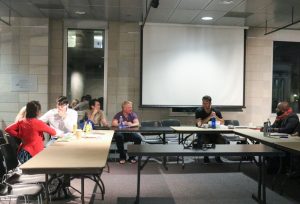
Citing prejudice and institutional barriers to education, two students asked General Studies Student Council to provide support for formerly incarcerated students at a GSSC town hall meeting on Tuesday night.

In an exchange that lasted for the majority of the town hall, Leyla Martinez, GS ’17, and Sarah Zarba, Social Work ’19, requested that the council back an initiative to remove questions about criminal history from the School of General Studies application and co-sponsor an upcoming panel on the experiences of formerly incarcerated students like themselves…

CLICK HERE TO VIEW FULL ARTICLE

GSSC_Tso-2

Justice in Education Initiative featured in Columbia Spectator

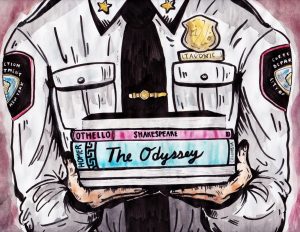
A Liberal Arts Education in Prison

BY ANA ESPINOZA | SEPTEMBER 26, 2016, 11:13 PM


Isaac Scott, a student at the School of General Studies, grew up 10 blocks away from Columbia, on West 104th Street. As a child, he would walk by the Morningside campus with his mother regularly, “either going up Broadway or coming down Amsterdam.” Even so, he never actually passed through Columbia’s (imposing, but generally open) gates or walked down College Walk. He was well into adulthood when he visited campus for the first time, with nearly eight years as an inmate in the New York State prison system behind him…

CLICK HERE TO READ FULL ARTICLE

Spectator Article

Gender, Class and Incarceration OP-ED by Christia Mercer Featured in Ms. Magazine

It’s September and thousands of young women are settling into institutions of higher learning, committed to making the best possible lives for themselves. Since the 1970s, women have increasingly outnumbered men on college campuses. The present female-male ratio is 55 percent to 45 percent. At Columbia University where I’ve taught for over 20 years, more and more women are the academic stars.

There’s a very different sort of institution in which women have also been outperforming men. It’s an institution fueled by gender inequality in which women are ignored and mistreated and any hope they have for self-improvement withers and dies.

The reality is that more and more women with economic and social advantages attend institutions of high learning, and women without those advantages increasingly find themselves in penal institutions….

CLICK HERE TO READ FULL ARTICLE

Screen Shot 2016-09-20 at 2.58.28 PM

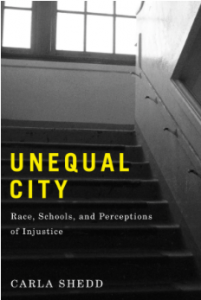
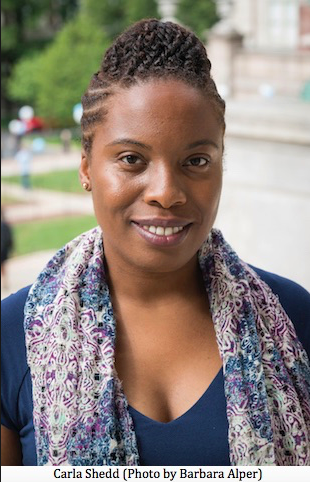
Congratulations to Carla Shedd for winning the C. Wright Mills Book Prize for “Unequal City”

Unequal City

by

Carla Shedd
Screen Shot 2016-09-14 at 12.26.23 PM

Chicago has long struggled with racial residential segregation, high rates of poverty, and deepening class stratification, and it can be a challenging place for adolescents to grow up. Unequal City examines the ways in which Chicago’s most vulnerable residents navigate their neighborhoods, life opportunities, and encounters with the law. In this pioneering analysis of the intersection of race, place, and opportunity, sociologist and criminal justice expert Carla Shedd illuminates how schools either reinforce or ameliorate the social inequalities that shape the worlds of these adolescents. Shedd draws from an array of data and in-depth interviews with Chicago youth to offer new insight into this understudied group. Focusing on four public high schools with differing student bodies, Shedd reveals how the predominantly low-income African American students at one school encounter obstacles their more affluent, white counterparts on the other side of the city do not face. Teens often travel long distances to attend school which, due to Chicago’s segregated and highly unequal neighborhoods, can involve crossing class, race, and gang lines. As Shedd explains, the disadvantaged teens who traverse these boundaries daily develop a keen “perception of injustice,” or the recognition that their economic and educational opportunities are restricted by their place in the social hierarchy. Adolescents’ worldviews are also influenced by encounters with law enforcement while traveling to school and during school hours. Shedd tracks the rise of metal detectors, surveillance cameras, and pat-downs at certain Chicago schools. Along with police procedures like stop-and-frisk, these prison-like practices lead to distrust of authority and feelings of powerlessness among the adolescents who experience mistreatment either firsthand or vicariously. Shedd finds that the racial composition of the student body profoundly shapes students’ perceptions of injustice. The more diverse a school is, the more likely its students of color will recognize whether they are subject to discriminatory treatment. By contrast, African American and Hispanic youth whose schools and neighborhoods are both highly segregated and highly policed are less likely to understand their individual and group disadvantage due to their lack of exposure to youth of differing backgrounds.


CARLA SHEDD is assistant professor of sociology and African American studies at Columbia University.

Screen Shot 2016-09-14 at 12.39.30 PM

Unequal City also is the co-winner of the Distinguished Book Award of the American Sociological Association’s Section of Race, Gender, and Class. 

Paperback
$35.00
6.00 x 9.00 in.
244 pages
October, 2015
ISBN: 978-0-87154-796-5

“Aging in Prison” OP-ED Featured in NY Times

Jailing Old Folks Makes No Sense


John MacKenzie and the Importance of the Release of Aging People in Prison

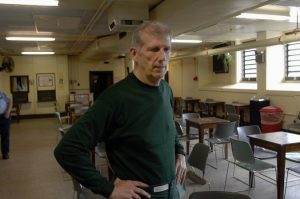
13mon3web-master675On Thursday, August 4th, our community learned of the death of John MacKenzie at Fishkill Correctional Facility in upstate New York. John committed suicide after being denied parole on Wednesday. He appeared before the parole board ten times over the last sixteen years. He had spent the last 41 years incarcerated in New York State prisons following his fatal shooting of a police officer in the midst of a burglary. While behind bars, John proved himself to be a model prisoner, earning three degrees, as well as securing $10,000 in funding to create a program to enable victims of violent crimes to speak directly to currently incarcerated people about the impact of their crimes. John was given a 15-life sentence by the judge and went to his first parole board at the end of the minimum sentence of 15 years. However, the parole board ignored John’s rehabilitation and the assessment of the legally required Compass Instrument that found he is not a risk to public safety and turned him down for parole 15 years beyond the minimum sentence given by the judge because of their assessment of the seriousness of the crime he committed.


The policy of the parole board has been to repeatedly turn down people who have been convicted of murder, and especially those convicted of the death of a police officer. They are in violation of the parole executive law in continuing to deny people simply because of the crime they committed, and ignoring public safety assessment, and the who the person is today. Dutchess County judge Maria Rosa found the Parole Board in contempt for their repeated, improper denial of John’s petition and fined them $500 per day, and the parole board appealed her decision. The Board scheduled a new hearing once again for the tenth time, however, the Board still rejected John’s release. In despair, he tragically took his own life. The past week has seen demonstrations both here in New York City as well as upstate.


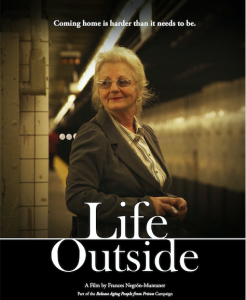
While we mourn the loss of John MacKenzie at the hands of an unjust system, this moment only underscores the necessity and the urgency of our work to release aging people from prison. Individuals like MacKenzie and thousands of others, languish behind bars convicted of violent crimes but have continually demonstrated time and time again that they pose no threat to society. Parole was specifically created for people like John, who have demonstrated remorse and responsibility for their crimes and who deserve a second chance at freedom. The Center has published a white paper on aging incarcerated populations as well as released a short film on this topic to educate both policymakers and the general public. Links to other organizations doing similar advocacy are included at the end of this post. The Center continues to conduct research and to advocate for the release of aging populations from prison, collaborating with RAPP (Release Aging People in Prison), the Osborne Association, and others, in the hopes of preventing more deaths like John Mackenzie’s. We call on the public to seize this moment as a chance to push for reform and to further expand education around this issue. We honor John’s memory and keep him, his family and all those who still remain behind bars in our thoughts.


For more on this story: Suicide of 70-Year-Old John Mackenzie After Tenth Parole Denial Illustrates Broken System , After Being Denied Parole 10 Times, Elderly Prisoner Allegedly Commits Suicide at Fishkill Prison, Calls Grow for NY Gov Cuomo to Reform Parole Board That Denies Release of Eligible Prisoners

Resources: Parole Justice NY Coalition, Campaign to Shut Down Rikers, the New York State Prisoners Justice Network, Release Aging People in Prison Campaign, Osborne Association, Urban Justice Center, Candles for Clemency


 

Visions of Confinement early recap- WATCH NOW

After an inspiring opening reception  and an informative and educational 3-Day Justice Forum at Visions of Confinement, the rest of the summer will continue to function as an educational laboratory and flex space inside the gallery, and is aimed at fostering conversations around female incarceration. In its two week of being open this exhibition has included the voices, experiences, and the expertise of currently and formerly incarcerated artist, poets, speakers, and advocates.

Discussions have included topics such as aging in prison, experiences of reentry, legislative intervention, mental health, art and its role in mass incarceration, and clemency. For the rest of the summer the exhibit will continue to function as an educational laboratory and flex space inside the gallery, and is aimed at fostering conversations around female incarceration. This exhibition was Organized by Isaac Scott of The Confined Arts and Arden Sherman, Curator with Alana Hernandez, Lazarus Curatorial Fellow, Hunter East Harlem Gallery