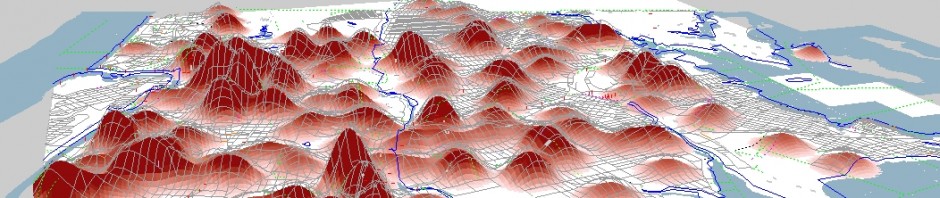
A Mosquito’s Eye View of Rio das Pedras, Brazil using Mobile Image Collection

In Brazil, residents of informal communities are disproportionately affected by the Zika epidemic and ongoing threats from other mosquito-borne illnesses.  Underdeveloped sanitation systems and poorly maintained streets are some of the many factors that contribute to mosquito reproduction and increase risk of infection among residents of informal communities.  So what can be done to help this public health problem?
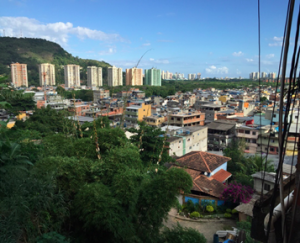
The Rio das Pedras, community in Rio de Janeiro, Brazil.

The Rio das Pedras, community in Rio de Janeiro, Brazil.

Under the leadership of Dr. Gina Lovasi, the Built Environment and Health Research Group (BEH) completed a Community Needs Assessment for Rio das Pedras, home of the third largest informal community in Rio de Janeiro, Brazil.  Along with interviews, collection of water and saliva samples, and Global Positioning System based mobility monitoring, the BEH study team conducted a field study of neighborhood environmental conditions using a structured neighborhood audit tool and collected more than 4,000 geotagged photos.
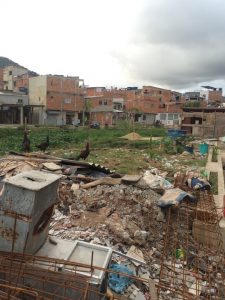
Mosquito breeding heaven -

Mosquito breeding heaven – construction debris and garbage and litter make for abundent mosquito breeding and resting locations

Now, BEH has teamed up with the Data Science Institute at Columbia University and the Oswaldo Cruz Foundation in Rio de Janeiro, Brazil to lay a foundation for creating and disseminating knowledge and technologies with the potential to strengthen the Brazilian response to the ongoing Zika Virus crisis.  Using the images collected from the Community Needs Assessment, trained auditors are taking a look at the photos from a  ‘mosquito’s eye view’ to identify objects that serve as suitable mosquito breeding sites.  These annotated photos will be used to train a machine learning image analysis algorithm built by the Data Science Institute to identify areas that represent a high, moderate/indeterminate, or low level of concern for mosquito breeding sites.
 

Posted in Global Health, Neighborhood Disadvantage, Neighborhood Environments, Urban Health | Leave a comment

Demand-Side Efficiency in Global Health

In a recent paper published  in Health Policy and Planning, cluster faculty member Elizabeth Radin and her colleagues develop the concept of demand-side efficiency–or the efficiency with which health system users convert public health resources into health outcomes. They also propose methods to analyze it and apply them to understand how efficiently pregnant women in Northern Vietnam convert health system resources into the outcome of appropriate maternal care as defined by national policy. Most importantly, they assess whether some social groups are more likely to be efficient than others.

In this context, Radin and her colleagues find that the women who are most likely to achieve the best health outcomes are not necessarily the most likely to do so efficiently. Women who live in non-mountainous geographies and who are formally employed are both more likely to achieve appropriate care and to do so efficiently. Yet ethnic minority women, who do not systematically achieve better care overall, are more likely to be efficient, meaning they achieve optimal care when compared to those with an equal endowment of public health resources.

This finding suggests that if ethnic minority women do not achieve equally good care, the gap likely lies in the resources available to them rather than their use of those resources. It also begs the question why? Why are ethnic minority women significantly more likely to achieve appropriate care than their peers with equal resources?

One potential answer may lie in their choice of where to seek care. Vietnam has an extensive public health system that reaches to the community level. Though far from perfect, it has driven substantial improvements in health access and basic health indicators. With a rapidly developing economy, Vietnam also has a mushrooming private sector health care industry. With little regulation or oversight, the private sector has been found to deliver uneven care. Based on evidence that ethnic minority women are more likely to seek care in the public sector, and that seeking care in the public sector is associated with a greater likelihood of achieving appropriate care, Radin and her colleagues suggest that ethnic minorities may be more likely to be efficient because they are choosing to access care where it is more likely to be comprehensive.

This pilot suggests that analyzing demand side efficiency can be useful in two key ways: first, it begins to untangle whether the groups who systematically achieve better outcomes do so because they have more resources or because they are able to make more effective use of the resources they have; and second, by highlighting which groups are more likely to be efficient—and in turn how and why– it has the potential to inform policies that promote the drivers of efficiency.

Posted in Ethnicity, Gender, Global Health, Health Disparities | Leave a comment

Steve Mooney receives Poster Award at Epidemiology Congress of the Americas 2016

Home

Steve Mooney, one of our recently minted PhD’s, won a best poster presentation award at the 2016 Epidemiology Congress of the Americas for his work on the “Neighborhood Environment-Wide Association Study” design.

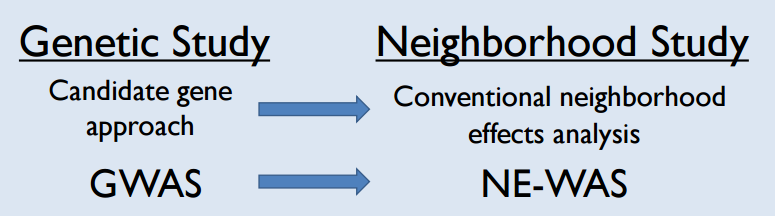
New spatial tools and the expanding availability of spatially referenced data allow researchers to characterize study subjects’ neighborhood environments more completely in terms of social, built, compositional, business and economic factors. Furthermore, through GIS tools and spatial analytic approaches, researchers are moving beyond zip codes and Census geometries and are defining neighborhoods in creative new ways.  With more data, at more spatial resolutions, and with a myriad ways to define neighborhood, researchers can characterize study subjects’ residential, work and activity space environments in high-dimensional space, efficiently creating 1,000s of variables that describe aspects of the neighborhood environment. Drawing an analogy with genomic research, Dr. Mooney and colleagues proposed the ‘Neighborhood Environment-Wide Association Study’ (or NE-WAS) as one approach to address this richness and complexity of data.  His original writing on this idea is here.

The GWAS to NE-WAS analogy

The GWAS to NE-WAS analogy

Dr. Mooney’s poster, available as a PDF here, explored the potential to apply theory-agnostic empirical data analysis approaches (NE-WAS, LASSO and Random Forest analyses) to finding the neighborhood characteristics most predictive of physical activity among older adults in the NYCNAMES-II cohort.

Posted in Conference, Economic, Methods, Neighborhood Disadvantage, Neighborhood Environments, Physical Disorder, Social Environments, Socioeconomic Status, Urban Health | Leave a comment

Cluster Faculty and Students at 2016 Epidemiology Congress of the Americas

Home

Sessions:

Kerry Keyes “How similar are survey respondents and the general population? Using survey-linked death records to compare mortality” Wednesday, 10-11:30am, in session “Putting Prior Information to Work” chaired by Tim Lash.

Seth Prins “Identifying sensitive periods for the role of individual and environmental factors in adolescent marijuana use” Wednesday 10:00-11:30am, in session “Recent Trends in Substance Use Epidemiology: What’s the Role of Socio-Demographic and Environmental Factors?” chaired by Silvia Martins.

Stephen Mooney “A parametric g-formula approach to simulate alcohol interventions in the context of time-dependent confounding” Wednesday, 1:300-3pm, in session “Agent-Based Models and the G-Formula: Comparable Approaches for Evaluating Population Intervention Effects?”, chaired by Magdalena Cerdá and Brandon Marshall.

Kerry Keyes “Agent-Based models and the G-Formula: Comparable Approaches for Evaluating Population Intervention Effects? Wednesday, 1:30-3pm (session discussant).

Jonathan Platt “Efficiency or equity? Simulating the impact of high-risk and population intervention strategies for the prevention of disease” on Wednesday 3:30-5pm in session “Understanding Health Disparities”, chaired by Harold Feldman.

Kerry Keyes “The impact of traumatic experiences across diverse populations: causes, consequences, and correlates” Thursday, 10-11:30 (session chair).


Posters:

Kerry Keyes  “Time trends in adolescent attitudes towards overpopulation and “population control” from 1976 to 2013” Wednesday, 5pm.

David Fink “Deployment and alcohol trajectories in a military cohort: Use of propensity score techniques to account for exposure-related covariates” Wednesday, 5pm.

John Pamplin “Black-White differences in alcohol and tobacco use from adolescence to adulthood” Wednesday, 5pm.

Stephen Mooney “Neighborhood Food Environment, Dietary Fatty Acid Biomarkers, and Out-of-Hospital Cardiac Arrest” Wednesday at 5pm.

Ava Hamilton “Innovative use of social networks in an agent based model”  Wednesday, 5pm

Julian Santaella-Tenorio “Adolescent handgun carrying in the US – what have changed since 2002?” Thursday at 5:45pm.

Ava Hamilton  “Mental health and firearm violence: from evidence to action”  Thursday, 5:45pm

Stephen Mooney “Applying the Neighborhood Environment-Wide Association Study (NE-WAS) Approach to Neighborhood Influences on Physical Activity among Older Adults” Thursday, 5:45pm

Posted in Conference | Leave a comment

Population Health Science, by Keyes and Galea

Keyes_book_coverThe book, Population Health Sciences, by Katherine Keyes and Sandro Galea will be coming out soon and will be available at the 2016 EpiCongress in Miami Florida. It is available for pre-order at the Oxford University Press website with a 30% discount if you use the code AMPROMD9.

The book formalizes an emerging discipline at the crossroads of social and medical sciences, demography, and economics–an emerging approach to population studies that represents a seismic shift in how traditional health sciences measure and observe health events.  Julie Gerberding, former Director of the U.S. CDC writes about the book:

Improving the health of populations is an urgent global social, economic, and humanitarian imperative for governments and health systems responsible for allocating increasingly scarce health resources.  Until recently, the population health science essential to understanding and prioritizing population health policies and interventions have not kept up with the accelerating demand for decision support.  In “Population Health Science”, Keyes and Galea have created  a major milestone in this emergent discipline, and the textbook should be required introductory reading for students in public health, health policy, health economics, behavioral sciences, and related fields.  This not a repackaging of traditional public health methodologies.  Rather, it is an emergent discussion of nine unifying theoretical principles of population health science, complete with excellent case studies, that will extend and inform the practice of both public health and preventative medicine.  By establishing a deeper understanding of the causality of population health and the trade-offs inherent in efforts to “shift the curve”, students and practitioners will have new tools for assessing, prioritizing, and predicting the outcome of health investments.

Posted in Book, Event | Leave a comment

New Course for the Fall of 2016: Stress and Health

We are excited to announce a new class being taught Dr. Shakira Suglia; Stress and Health which will be launching in the Fall of 2016 and is part of the Social Determinants of Health MPH certificate program.

This course will provide an introduction to the existing research on stress and health with a specific emphasis on the conceptualization of stress and issues related to the measurement of stress for epidemiological studies.  Through readings and group discussions we will cover issues related to the design of epidemiological studies that focus on different stress constructs (i.e., stressful experiences, perceptions of stress, biological responses to stress). In addition the course will review the stress and health literature as it pertains to group differences (i.e, race, sex), lifecourse exposure (i.e., sensitive periods, accumulation of stress) and potential protective factors.

The course will provide students with the opportunity to apply epidemiological principles and methods and develop basic tools necessary to critically evaluate the existing stress and health literature.

The course learning objectives are that students will be able to:

  • Define the construct of stress and its domains
  • Identify methodological challenges in measuring stress in epidemiological studies
  • Describe mechanisms hypothesized to explain the stress and health association
  • Describe approaches to studying stress and health across the lifecourse
  • Identify sources of heterogeneity (i.e., race, sex) that shape exposure to stress and modify the impact of stress on health
  • Critically read and interpret the literature on stress and health


Posted in Course, Stress | Leave a comment

Networks of Opportunity for Child Wellbeing (NOW) Convening

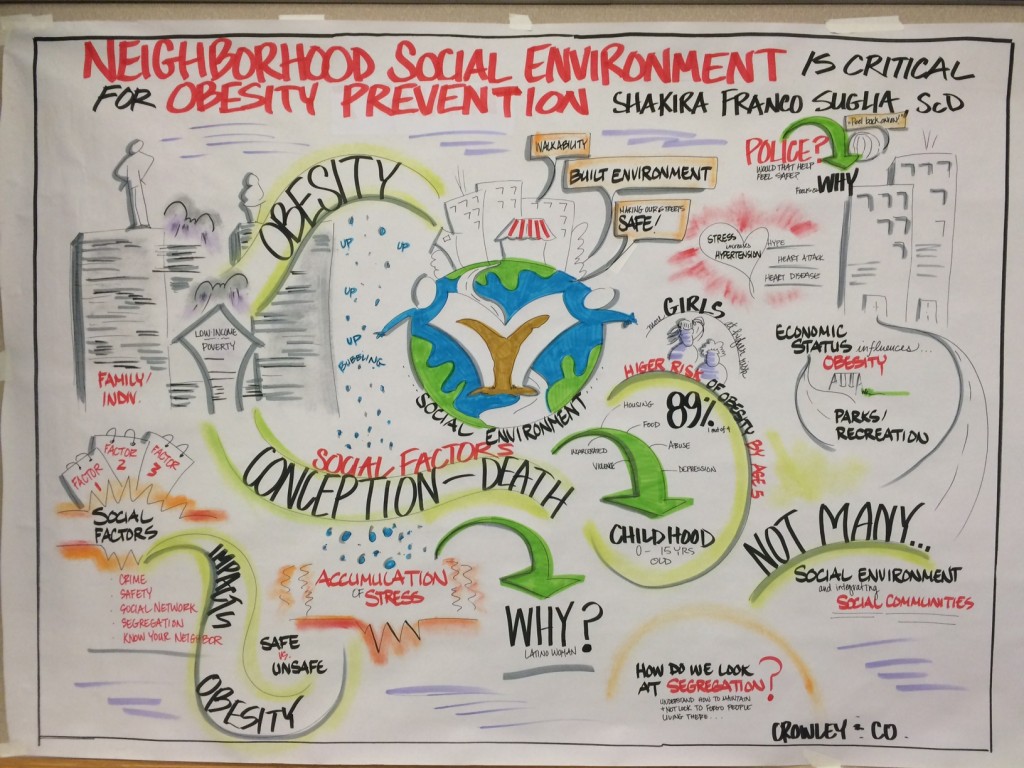
Dr. Suglia recently attended the Networks of Opportunity for Child Wellbeing (NOW) Convening, where she presented her work on the neighborhood social environment and obesity prevention. To effectively prevent obesity in the US, this work proposes that rather than continue to solely focus on the built environment, integrating constructs of the social environment into neighborhood health research would be a more fruitful approach for the prevention of obesity in the US.

NOW aims to develop an infrastructure to support all children entering kindergarten at a healthy weight, using a framework that considers the impact of childhood adversity on wellness and promoting strategies to cultivate community settings to optimally support child wellbeing. The convening, which brought together health care providers, breastfeeding advocates, pediatricians, nutritionists and epidemiologists among others was partly supported by the Robert Wood Johnson Foundation and the Vital Village Network at Boston Medical Center. In addition to discussing her work on the neighborhood social environment, Dr. Suglia also shared her work on childhood adversity and child obesity, which notes a differential gender effect of childhood adversities on childhood obesity.  Girls experiencing high levels of adversity in childhood are at increased risk of being obese by age 5, though the same effect is not noted among boys. The discussion was captured by a graphic artist from Crowley & Co.

Shakira_graphic_NOW

Illustration depicting Dr. Suglia’s talk, created by Crowley + Co


Posted in Childhood Adversity, Gender, Info-Graphix, Neighborhood Environments, Social Environments | Leave a comment

Neighborhood Social Environment Contributions to Supporting Walking

JAMA just published an editorial co-written by Cluster faculty member, Andrew Rundle, entitled “Can Walkable Urban Design Play a Role in Reducing the Incidence of Obesity-Related Conditions?”.  The editorial provides a perspective on a study published in JAMA by Creatore et al., that assessed the prevalence of obesity and incidence of diabetes from 2001 to 2012, by level neighborhood walkability across 15 municipalities in Canada.

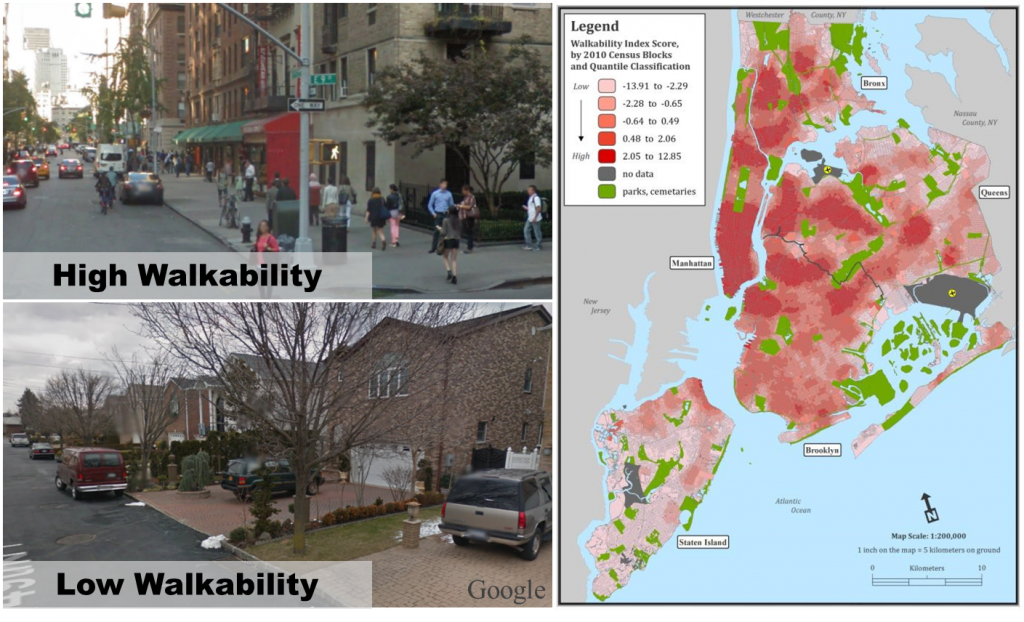
As in many earlier studies, neighborhood walkability was described from an urban form perspective and their neighborhood measures did not consider social environment issues such as pedestrian safety, crime, displeasing aesthetic conditions, and physical disorder as contributing to neighborhood environments that support pedestrian activity. These social characteristics may interact with, or perhaps trump, urban design features that support pedestrian activity. For instance, comparisons of high- and low-poverty neighborhoods in New York City that scored equally well for urban design characteristics that support walking found that high poverty neighborhoods had higher rates of crime and pedestrian injuries, streets with higher levels of noise, more events of hostile behavior, more signs of building and sidewalk disrepair, and more garbage on the sidewalk, characteristics expected to deter pedestrian activity. Earlier studies have reported that neighborhood poverty appears to nullify the effects of supportive built environments on physical activity and body size; associations between neighborhood walkability and body mass index and physical activity are often only observed among individuals living in higher-income neighborhoods. Thus, the built environment objectives in Healthy People 2020 and the interventions described in active design guidelines may be less effective in low income communities, the very communities typically at the highest risk for obesity and diabetes.

NHood_walkability

Neighborhood Walkability mapped for New York City. This scale only considers urban design features that support pedestrian activity.

Posted in Health Disparities, Neighborhood Disadvantage, Neighborhood Environments, Obesity, Physical Disorder, Social Environments, Socioeconomic Status | Leave a comment

In the Wrong Place with the Wrong SNP

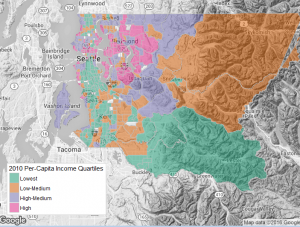
Per Capita Income in King County, WA.

Per Capita Income in King County, WA.

Social Epi Cluster members Stephen Mooney and Gina Lovasi recently led an investigation into neighborhood and genetic contributions to cardiac arrest risk, finding that about 75% more cardiac arrest cases who had a high-risk genetic variant lived in socioeconomically deprived neighborhoods than would be expected due to chance alone. This finding, recently published ahead-of-print in Epidemiology highlights a potentially underappreciated way that precision medicine can inform population health: by helping to discriminate between theories regarding the causes of disease rather than solely by identifying more vulnerable subgroups of a population.

Sudden cardiac arrest – when someone’s heart stops beating regularly — is usually fatal, for obvious reasons. Cardiac arrest causes nearly 300,000 deaths per year in the United States, more commonly among people living in lower income neighborhoods. There are several reasons this might be. For one, people who live in poorer neighborhoods are usually themselves poorer, and poverty makes it harder to have a healthy diet or be sufficiently physically active, both of which protect against cardiac arrest. But individual poverty isn’t the only thing: disadvantaged neighborhoods also often have more polluted air, and exposure to air pollution is another known risk factor for cardiac arrest. And neighborhood conditions are also typically more stressful in lower income neighborhoods, and stress has been implicated as a risk factor for cardiac arrest as well. So where should we focus our cardiac arrest prevention efforts?  It’s important to know which pathways are most implicated in cardiac arrest cases to know where to focus.

One way to identify the causes that can help focus population-based efforts is to study the most affected individuals. It turns out that cardiac arrest is somewhat more common among people with a common polymorphism in a gene called ADRB2, which produces proteins that help mediate responses to stress. Mr. Mooney and Dr. Lovasi hypothesized that if the stress pathway is a particularly important cause of cardiac arrest, then people with the higher-risk ADRB2 genetic variant should have even higher risk when living in lower income, disadvantaged neighborhoods (assuming disadvantaged neighborhoods had more stressful conditions owing to higher violence risks, less green space, etc.).

To explore this hypothesis, they examined neighborhood conditions and genetic variants using a case-only gene-environment interaction design with a dataset of adult cardiac arrest patients from King County, Washington, a large county whose core city is Seattle. They found that about 75% more cardiac arrest cases with the high-risk ADRB2 variant lived in the socioeconomically deprived neighborhoods than would be expected due to chance alone. Though preliminary, these findings nonetheless suggest that the stress pathway was an important cause of cardiac arrest in this population, and that there may be between-individual differences in vulnerability to stressful conditions.

To date, most discussions of the relationship between precision medicine and population health support using genetic data to identify particularly susceptible individuals. And indeed, that approach could be beneficial here, at least if there were appropriate interventions to apply those with the high risk ADRB2 variant. But the genetic data had another important use here in discriminating between theories regarding the causes of cardiac arrest. To understand this, consider that if air pollution were the primary cause of cardiac arrest in the subjects under study, then we would expect broadly higher risk among subjects living in disadvantaged neighborhoods, but not specifically disproportionately high risk among subjects with the high-risk ADRB2 variant.  The fact that Mr. Mooney and Dr. Lovasi did see that disproportionately high risk supports the stress hypothesis. More generally, as we learn more about the human genome, using genetic data to distinguish between hypothesized causal mechanisms may help to improve population health.

Posted in Cardiovascular Disease, Economic, Neighborhood Disadvantage, Neighborhood Environments | Leave a comment

Stigma toward mental illness in Latin America and the Caribbean

Larry Yang and colleagues recently published a systematic review of studies describing stigma toward mental illness in Latin America and the Caribbean.

The Declaration of Caracas in 1990 implemented a number of mental health reforms in countries of the region and represented a marked shift in mental health policy in Latin America. The main objectives of these reforms was to: 1) anchor mental health within primary care; 2) develop community mental health services; and 3) reduce the stigma associated with mental illness.  Brazil, Panama, and Chile are examples of countries with successful models that implement these reforms. However, a recent evaluation of mental health services in Latin America reported that stigma is still an important barrier to recovery in people with mental illness.

Yang and colleagues’ review found that stigma, in addition to having powerful forms that are shared across cultures, is expressed with important local differences that have meaning in particular Latin American contexts.  They conclude that to reduce mental illness-related stigma, the design of interventions in this region may benefit from considering cultural dynamics exhibited by Latino population.

Posted in Mental Health, Stigma | Leave a comment