The Fate of Afghan Women after the US Withdrawal: A Legal Analysis

The Fate of Afghan Women after the US Withdrawal: A Legal Analysis

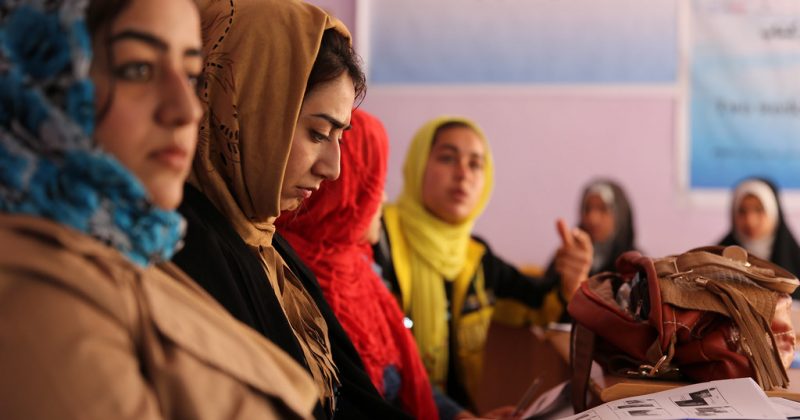
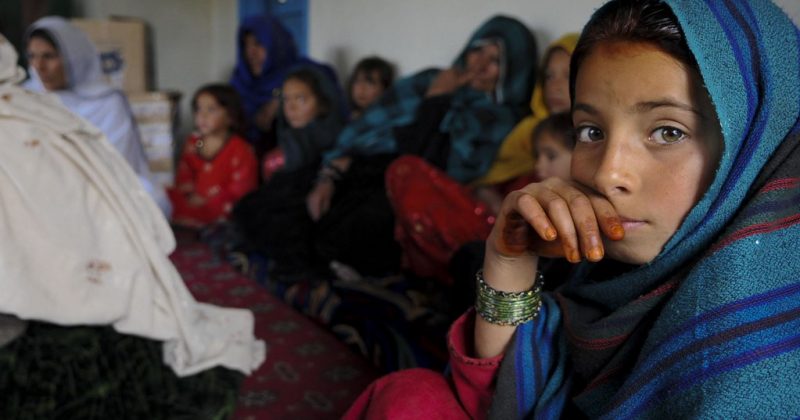
By guest contributors Ashutosh Anand* and Kaustubh Kumar**   INTRODUCTION The deal between the US and the Taliban signed in February 2020 stated that the US and its allies would withdraw all its troops from Afghanistan within 14 months. On August 31, 2021, all American forces have already withdrawn from Afghanistan, which has consequently unleashed havoc on the rights of Afghani women. When the US and its allies waged war on Afghanistan, the defense of women’s rights was one of their prime reasons to justify their invasion and subsequent occupation. The post-Taliban constitution, enacted in 2004, provided women with most of the basic human and civil rights. Moreover, under American troops’ presence, the post-Taliban regime followed a liberal policy towards women by providing access to healthcare, education, and work. For women’s empowerment in politics, the government also offered a 27 percent reservation of seats for women in Wolesi Jirga (House of People) of Afghanistan, which helped uproot the conservative mindset for women in Afghan...
Read More
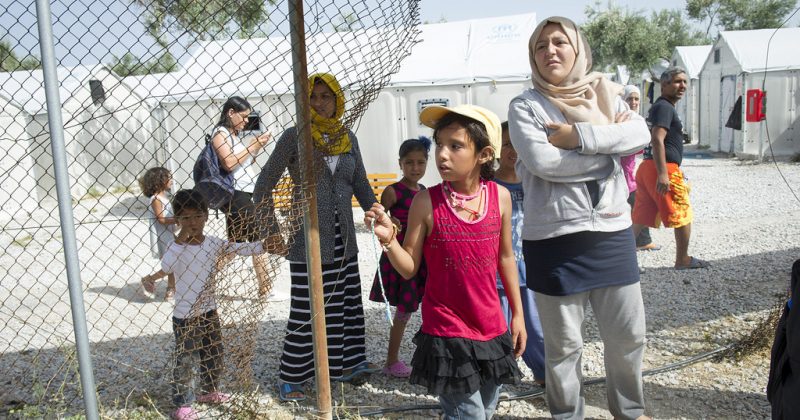
Finding Refuge: An NGOs Mission to End the Homelessness of Migrants, Refugees, & Asylum Seekers in Athens, Greece

Finding Refuge: An NGOs Mission to End the Homelessness of Migrants, Refugees, & Asylum Seekers in Athens, Greece

By: Noah Smith, staff writer.   In July 2020, there was a surge in homelessness for refugees and asylum seekers in Athens, Greece due to evictions by the Greek government. “Forcing people to leave their accommodation without a safety net and measures to ensure their self-reliance may push many into poverty and homelessness,” warned UNHCR spokesperson Andrej Mahecic. “Recognized refugees have to vacate much-needed accommodation for asylum seekers waiting in crowded reception facilities on the Greek Aegean islands. Over 31,000 women, men, and children live in five island reception centers with capacity for fewer than 6,000,” said Mahecic. However, the UNHCR has expressed their concerns that government aid for many recognized refugees is ending far too soon and before they have access to employment and social welfare programs. In total, the government of Greece has evicted 8,000 recognized refugees from camps and accommodations across the country. The first phase of evictions led to nearly 200 people sleeping in Victoria Square in Athens, where...
Read More
The Ongoing Battle of the Queer Community Against LGBTQ-Free Zones in Poland

The Ongoing Battle of the Queer Community Against LGBTQ-Free Zones in Poland

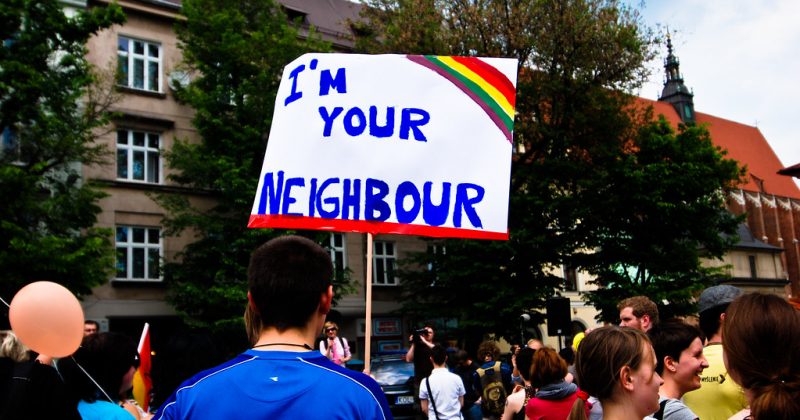
By guest contributor: Apurva Ambasth*   Discrimination and vilification of members of the LGBTQ+ community are not untoward or unheard of, rather it is, in fact, one of the most commonplace occurrences around the globe. The rights of the LGTBQ+ Community are in danger due to increasingly violent rhetoric in Poland. One-third of the country, around 100 municipalities have declared themselves “LGBTQ+ free zones.” This article discusses the situation of the LGBTQ+ community in Poland and provides an insight into the deteriorating relationship between Poland and the European Union due to its discriminatory policies. Political Homophobia in Poland The right-wing Law and Justice party (PiS), won the parliamentary election in October 2019 for a second term. One of the major themes of the election campaign of the party revolved around the opposition of civil partnerships, same-sex marriage, and adoption rights for same-sex couples. The party finds its ally in the Roman Catholic Church for promoting “traditional family values” and establishing Polish national values. A poignant...
Read More
Pegasus: A Clampdown on Global Democracy and Human Rights?

Pegasus: A Clampdown on Global Democracy and Human Rights?

By guest contributors: Shubhangi Verma* and Anushka Verma**   With new advancements in technology, we are on the cusp of a new age of revolution. New innovations keep on arriving in leaps and bounds, but these advancements carry with them some callous and fiendish predicaments. BACKGROUND In Greek mythology Pegasus refers to a white horse with wings, coming from heaven, which symbolizes peace and stability in life. In contrast to the real meaning enshrined in Greek mythology, Pegasus spyware, developed by Israeli cyber giant NSO Group Technologies is wreaking havoc internationally. Its most distressing role includes tracking human rights defenders, journalists, and government officials. Pegasus spyware has the ability to take full control of individuals’ mobile phones including accessing messages, phone numbers, videos, and locations. It even allows hackers to read encrypted messages. Pegasus developed zero-click installations in which attackers could enable the spyware in a mobile phone without any interaction by the phone’s owner. NSO earlier claimed that Pegasus is exclusively used by Government intelligence...
Read More
Hungarian Curtailment of LGBTQ Rights: A Critical Analysis

Hungarian Curtailment of LGBTQ Rights: A Critical Analysis

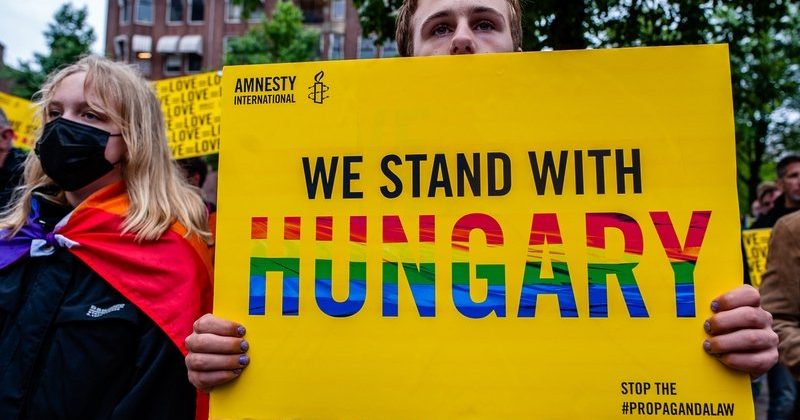
By guest contributor, Akshita Tiwary* Recently, Hungary has been in the news for adopting a slew of legislation in the past year that severely curbs the rights of the LGBTQ community. The Prime Minister of the country, Mr. Viktor Orban, and his right-wing political party ‘Fidesz’ have been accused of eroding democracy on several fronts, including attacking LGBTQ rights. This article aims to discuss three of these legislations and highlight how these laws contradict Hungary’s own Constitution and violate international human rights legal standards. Further, it also sheds light on certain legal precedents and measures that can be helpful in tackling this issue. THE CONTROVERSIAL LAWS On June 15, 2021, the National Assembly of Hungary passed Bill Number T/16365. This law prohibits children under 18 years of age from being exposed to any content (educational or otherwise) that promotes an understanding of sexual and gender diversity. This bill forms part of a broader law that seeks to restrict pedophilia and sexual crimes against...
Read More
Violation of International Laws and Women’s Rights: Afghanistan, the Taliban, and the Price of Peace

Violation of International Laws and Women’s Rights: Afghanistan, the Taliban, and the Price of Peace

By guest contributor Shelal Lodhi Rajput, a student at Symbiosis Law School.  Uncertain certainties: An eclipse on human rights A country torn apart by war, a country that has seen 40 years of war, a country often referred to as ‘graveyard of empires,’ a country with the shattered dream of peace and a country with a million dollar question i.e., ‘Will the war ever end’? The country is Afghanistan, where things are going from bad to worse with the withdrawal of United States Combat troops. Once again history is repeating itself as the return of the Taliban spell suggests an end to civil liberty, basic human rights, prominently rights of women, and once again the regime of Talibanned as it existed in Afghanistan from 1996-2001. Previously, the Taliban regime banned several innocuous activities including kite flying, makeup artists and musicians. The Taliban’s return to power is evident with every passing day, their insurgencies are increasing day by day and with the alarming rate...
Read More
Milieudefensie v. Shell: Anchoring Corporate Human Rights Obligation in Indian Jurisprudence

Milieudefensie v. Shell: Anchoring Corporate Human Rights Obligation in Indian Jurisprudence

By guest contributors Swetha Somu and Sanigdh Budhia, students at Gujarat National Law University.  INTRODUCTION The recent case of Milieudefensie et al. v Royal Dutch Shell has shifted the focus back to the dilemma of whether private corporations are outrightly liable for infringing human rights, as defined under the international laws and treaties, or whether only the state is liable for the actions of private corporations under its jurisdiction. The Hague District Court, in this case, ordered a private company, Royal Dutch Shell (RDS), to decrease its net emissions by 45%, in relation to the 2019 levels, by 2030 in line with the Paris Agreement.  Generally, states are held accountable for any violation of private corporations as corporations  aren’t recognized as legal subjects. However, there’s a recent shift in the view that corporations are also subjects of international law since they are also contributors to it, even though there is no “hard” law in the form of treaties or conventions that legally bind...
Read More
Plight of Sex Workers During COVID-19: A South Asian Perspective

Plight of Sex Workers During COVID-19: A South Asian Perspective

By Atika Chaturvedi, a third year law student at National University of Study and Research in Law at Ranchi, India.  As the world came to a standstill, the shock of the lockdown rippled through the various strata of society. The proliferation of COVID-19 in 2020 left the daily wage earners around the world scraping for money and struggling for survival. One such group was sex workers. Albeit, various South Asian governments formulated covid-relief packages, most of them left out sex workers out of the ambit of such packages. Article 1 of the Universal Declaration of Human Rights, which affirms that all human beings are born free and equal in dignity and rights, and Article 3, that guarantees everyone the right to life, liberty and security of person, were denied to the sex workers as they were not only curtailed from earning their livelihood, but were also rendered ineligible for the relief packages. They were stripped off of the chance of continuing...
Read More
Amnesty Philippines: Promoting Corporate Accountability and Indigenous Women’s Rights through Human Rights Education

Amnesty Philippines: Promoting Corporate Accountability and Indigenous Women’s Rights through Human Rights Education

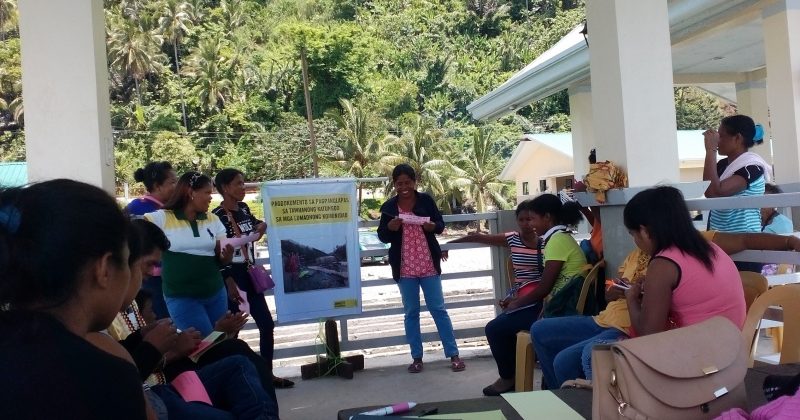
By Noah Smith, RightsViews staff writer. Promoting Corporate Accountability and Indigenous Women’s Rights was a five-year project implemented by Amnesty International (Amnesty) Philippines under the larger global Education, Empowerment, Justice (EEJ) Program, which ran from 2013 to December 2017. The EEJ program was coordinated by Amnesty Norway with the goal of reinforcing basic human rights of people across the world and contributing to greater justice for thousands of human beings through human rights education and empowerment initiatives. Since its inception in 2013, the project distinguished itself in such a way by coalescing women’s empowerment within a framework of corporate accountability; courageous in its attempts to change the balance of power in three exceedingly patriarchal indigenous communities; and undaunted in targeting governance structures to perform their state obligations to protect, respect, and fulfill indigenous communities’ rights.  The project was implemented in the Caraga Region which is an administrative region in the Philippines occupying the northeastern section of the island of Mindanao. It is...
Read More
The U.S.-EU Summit: Next Steps for Human Rights

The U.S.-EU Summit: Next Steps for Human Rights

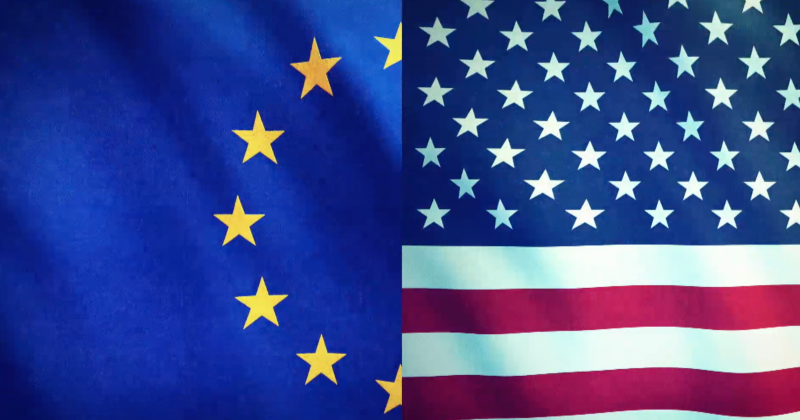
By Ali Cain, RightsViews staff writer. President Biden’s summit with European leaders on June 15, 2021, was an important step in rebuilding the United States-European alliance. Contrary to former President Trump’s belief that the European Union (EU) is a ‘foe,’ Europe remains one of the United States most important allies, especially in promoting human rights and democratization. Biden’s statement that “Europe is our natural partner…we are committed to the same democratic norms and institutions, and they are increasingly under attack” summarizes why the U.S. and Europe must persist in using their shared values as a platform for cooperation. Despite the summit’s optimism, many challenges lie ahead in a renewed transatlantic relationship, especially in promoting human rights.  The COVID-19 pandemic remains the most pressing issue for all countries. However, geopolitical concerns present the largest obstacle to an effective transatlantic response to human rights abuses. The U.S. and EU face a combative China that utilizes investments, technology, and trade as successful foreign policy carrots...
Read More