Populism Speaks to Young Men – Why Don’t Human Rights?

By Matilde Da Luz By now, most women recognize the script. Raise a point about sexism, feminism, or gender equality and the response is often predictable. You are “angry.” You are “too woke.” You have, somehow, made things awkward. The figure of the angry feminist woman has become so familiar that it no longer feels like an accusation so much as a reflex – a shorthand for dismissing political discomfort without engaging it. You become labelled, often unconsciously, as the “killjoy.” What is striking is that this stereotype persists at a moment when anger is hardly in short supply. Much of it belongs to men, and is increasingly confident, public, and political. It circulates online, where terms like incel and manosphere emerge in everyday vocabulary. It is surfacing in dating culture, classrooms, and family conversations, where feminism is framed less as a demand for equality than as a provocation. And it is showing up in electoral politics. According to a recent study that...
Read More

Dayak Women’s Wisdom as A Pathway to Indonesia’s Climate Resilience in Preserving Kalimantan Forests

By Devira Sari When the bulldozers came for Dijah’s land, she was not home to stop them. Dijah, a member of the indigenous Dayak people of West Kalimantan, returned from work to find her family’s ancestral forest being cleared for a palm oil plantation. The expansion has stripped communities of their forests, their traditional medicine, and a matrilineal way of life passed down through generations. When Dijah organized her community to resist the land clearing, she was met with state repression. Members of BRIMOB (The Mobile Brigade Corps) detained her, aiming to silence her defense of the communal lands. Dijah’s experience reflects the broader structural violence that underpins Indonesia’s palm oil industry where state-corporate collusion, gendered marginalization, and environmental destruction intersect. Yet despite intimidation, Dayak women continue to resist, embodying both ecological and cultural resilience against an economy that prioritizes profit over justice. Dijah’s story is not an isolated tragedy, it is a repeated experience of Dayak women who have long...
Read More

The Diavata Refugee Camp: Reflections on Humanitarian Work in ‘Fortress Europe’

By: Gracyn Elizabeth McGathy Every evening at 6:35 p.m., the iron bars of Diavata Refugee Camp glow orange. The sun sets fiercely over its weed-covered fields, illuminating a collection of discarded goods: a worn shoe, crushed soda cans, and ripped plastic. The bus to the nearest city, Thessaloniki, will have come and gone by now, completing its second of only two stops it does each day in Diavata.  The only piece of evidence left to prove that help was once there lies rotting by the side of the road. With faded letters barely legible now, a scrap of once-white tarp labeled “United Nations.” The 2015 refugee crisis, a consequence of the Syrian Civil War, drew many major humanitarian organizations to the desolate expanse of Diavata. Casa Base, a small local NGO, housed in a rusting warehouse adjacent to the camp. The only organization left of its kind, forced to be the main organization responsible for providing critical humanitarian aid to the refugees...
Read More

It’s Not Pop Culture—It’s Racism and Fetishizing Roma Women

By Mara Bulzan It’s 2024 and I could not stop staring in disbelief at the costumes worn by Columbia students at Halloween parties. Ostentatious reproductions of stereotypical Roma clothing (derogatorily referred to as “gypsies”) worn to frat parties by young, white, and highly educated women. And no one called them out for it. They were not Roma, so their smiles and dancing could not have been weighed down by a history of over 800 years of enslavement, genocide, forced displacement and eugenic policies. They were not stigmatized for “looking Roma,” so they could use it as a costume. When they looked in the mirror that night, the face of someone deemed a perpetual outsider did not glare back at them.  Contemporary popular culture has normalized the stereotypical depiction of Roma women to the point in which it has become an aesthetic with fetishistic tendencies. She is only allowed to be a free-spirited, sly seductress with fortune-telling abilities. It is preferable that she...
Read More

The Return of the ‘Perfect Soldier’: Why Ukraine’s Landmine Decision Matters for Civilians Everywhere

By Gracyn McGathy Ukraine’s recent decision to announce formal withdrawal from the Mine Ban Treaty should be a source of grave concern for the international human rights community. Their choice follows the scheduled exit of Lithuania, Latvia, Estonia, Finland, and Poland from the agreement later this year, all of which cited concerns over the Russio-Ukrainian war. Following two lengthy Russian invasions, Ukraine is now considered to be the most “mined country” in the world, with much of the forest terrain around the Kharkiv Oblast littered with trip-wire explosives, booby-trapped munition, and anti-personnel mines. The purpose of many anti-personnel mines is to “injure, rather than kill,” maximizing human suffering while attempting to create medical and evacuation burdens upon the enemy force. One of the defining characteristics of these mines is the little pressure required to explode, with some detonating at a mere 11 pounds of weight. Because of this, children around the globe are disproportionately at risk of threats posed by active minefields, and...
Read More

Beyond Saving Her: Toward a More Ethical Human Rights Aesthetic

By Matilde Da Luz  What do we see when we see suffering? In human rights campaigns, especially those addressing gender-based violence, the image of the suffering woman, often Muslim, veiled, and silent, has become almost inescapable. From post-9/11 “liberation” narratives about Afghanistan to humanitarian appeals that foreground school closures and barred windows, visual tropes have flattened incredibly multifaceted political scenarios into sentimental and victimizing stories. These images stir emotions. They drive donations. But at what cost? Feminist and decolonial thinkers have long argued that emotional appeals, despite their intuitive strength, obscure the structural and historical conditions of injustice surrounding victims of abuse. They do so by effectively depoliticizing harm, casting women as passive victims, and reinscribing colonial logics of moral superiority. Representation, in this view, is never neutral. And visibility, far from guaranteeing justice, may distort, contain, or even erase. The Sentimental Economy of Rights Human rights campaigns rely on what Professor Wendy Hesford calls “spectacular rhetorics”, which are visual and narrative forms that turn trauma...
Read More
A Life and Legacy, Unmatched: Remembering the Activism of Lois Curtis

A Life and Legacy, Unmatched: Remembering the Activism of Lois Curtis

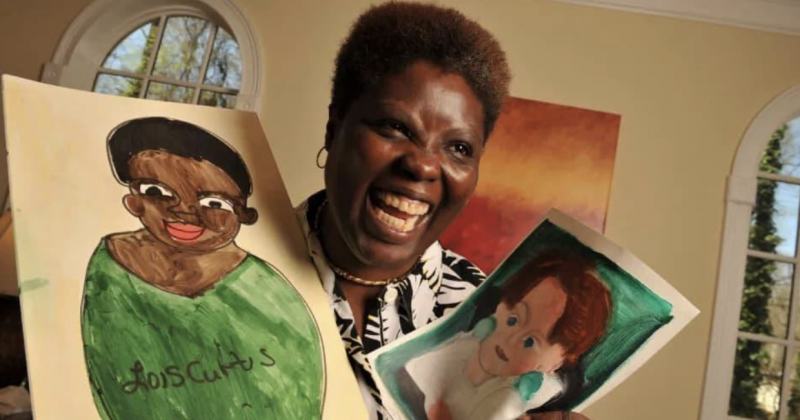
By Co-Editor Jess Gallagher   “Nobody’s free until we are all free.”  These are the words of Lois Curtis, the woman whose case determined the most influential court decision for people with disabilities in history. Ms. Curtis served as one of the plaintiffs in the landmark Supreme Court case, Olmstead v. L.C. (1999), which established the right of people with disabilities to live in the least restrictive settings possible under the Americans with Disabilities Act (ADA).  As the Disability Community mourns the loss of one of the nation’s greatest advocates, we reflect on her efforts to achieve justice for all. Her work secured the right of millions of people with disabilities to live within their own communities and away from the forced institutionalization that she faced throughout her life. Growing up in Atlanta, GA., Ms. Curtis was diagnosed with intellectual and developmental disabilities as a child and, due to a lack of support services for her family, she often wandered away from home. Missing person...
Read More
Ethiopia’s Year Long Tigray Conflict Advances to the Capital

Ethiopia’s Year Long Tigray Conflict Advances to the Capital

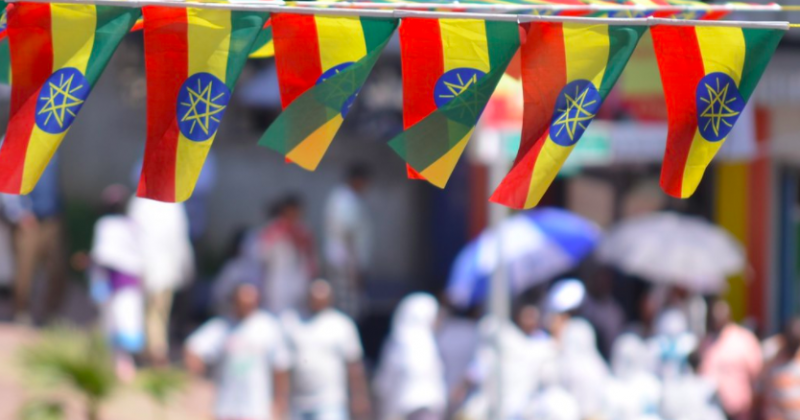
By RightsViews Staff Writer Emily Ekshian A year of conflict rages across the border in Ethiopia, constituting a genocidal war against the non-Oromo peoples of the region. The Ethiopian government launched a military offensive in the north, and is fighting opposition forces in Tigray, closing off the region. Ethiopia’s yearlong Tigray conflict threatens to tear the country apart. Tensions emerged between the Ethiopian Federal Government troops and the Tigray People’s Liberation Front (TPLF), where the Prime Minister of Ethiopia, Abiy Ahmed, executed a military offensive against the ruling faction in Tigray on November 4, 2020. Thus, in the north, Tigray rebels are fighting Ethiopian government forces and their allies. Tigray, where most of the fighting has been happening, is located in the North, where the government is called the Tigray People's Liberation Front. The government even has its own regional army - militias and special forces. The TPLF ran the country for almost 30 years, even though they made up a minority, only 6%....
Read More
How is Climate Change Affecting Southern Madagascar? The Climate Crisis and Extreme Drought

How is Climate Change Affecting Southern Madagascar? The Climate Crisis and Extreme Drought

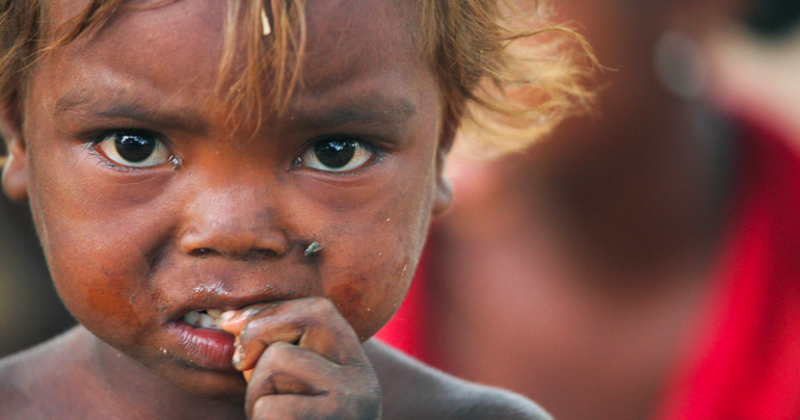
By RightsViews Staff Writer  Emily Ekshian MADAGASCAR - Four years of prolonged drought has taken a toll on Madagascar as the country is on the brink of the world’s first climate change-induced famine. Madagascar is an island-nation off the southeastern coast of Africa. Currently, the country is suffering from a destructive drought, where more than a million people are left food insecure and 400,000 people are confronted with a famine in the south, the epicenter of the crisis.  The drought poses an imminent threat to the right to life, and opportunities for health, access to clean water, sanitation and food of people in southern Madagascar. As the crisis intensifies , people in the south have been left with no other choice than to  migrate in search of food. Tens of thousands of people were already suffering from the catastrophic levels of hunger and food insecurity after four years without rain. The drought has played a role in isolating farming communities, generating water...
Read More
Courts and Global Norms on Freedom of Expression

Courts and Global Norms on Freedom of Expression

By RightsViews Staff Writer Carina Goebelbecker Is it fake news, fact, or some form of the truth? Freedom of expression holds space for all these possibilities. The “Courts and Global Norms on Freedom of Expression” two-part conference programmed by Columbia Global Freedom of Expression illuminated all these possibilities and their implications within a larger national and international setting. The streamed session on Thursday October 21st explored the cultural context of freedom of expression and how norms intersect with policy, practices, and beliefs. Columbia Global Freedom of Expression was founded in 2014 with the intention of connecting international professionals and activists with their communities and networks of support. The goals of the conference were for the speakers to share their experiences with courts to the public and to promote dialogue. Columbia University President and Founder of the Columbia Global Freedom of Expression Lee C. Bollinger delivered the opening remarks, noting how global norms of freedom of expression have been established and continue to...
Read More