Populism Speaks to Young Men – Why Don’t Human Rights?

By Matilde Da Luz By now, most women recognize the script. Raise a point about sexism, feminism, or gender equality and the response is often predictable. You are “angry.” You are “too woke.” You have, somehow, made things awkward. The figure of the angry feminist woman has become so familiar that it no longer feels like an accusation so much as a reflex – a shorthand for dismissing political discomfort without engaging it. You become labelled, often unconsciously, as the “killjoy.” What is striking is that this stereotype persists at a moment when anger is hardly in short supply. Much of it belongs to men, and is increasingly confident, public, and political. It circulates online, where terms like incel and manosphere emerge in everyday vocabulary. It is surfacing in dating culture, classrooms, and family conversations, where feminism is framed less as a demand for equality than as a provocation. And it is showing up in electoral politics. According to a recent study that...

Read More

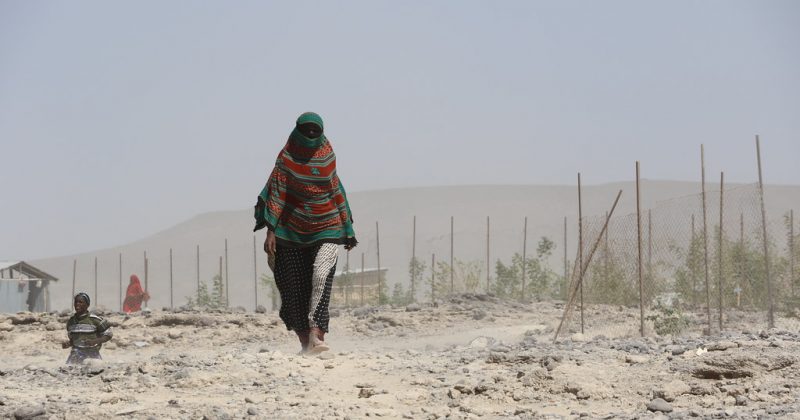
The Diavata Refugee Camp: Reflections on Humanitarian Work in ‘Fortress Europe’

By: Gracyn Elizabeth McGathy Every evening at 6:35 p.m., the iron bars of Diavata Refugee Camp glow orange. The sun sets fiercely over its weed-covered fields, illuminating a collection of discarded goods: a worn shoe, crushed soda cans, and ripped plastic. The bus to the nearest city, Thessaloniki, will have come and gone by now, completing its second of only two stops it does each day in Diavata.  The only piece of evidence left to prove that help was once there lies rotting by the side of the road. With faded letters barely legible now, a scrap of once-white tarp labeled “United Nations.” The 2015 refugee crisis, a consequence of the Syrian Civil War, drew many major humanitarian organizations to the desolate expanse of Diavata. Casa Base, a small local NGO, housed in a rusting warehouse adjacent to the camp. The only organization left of its kind, forced to be the main organization responsible for providing critical humanitarian aid to the refugees...
Read More

Beyond Saving Her: Toward a More Ethical Human Rights Aesthetic

By Matilde Da Luz  What do we see when we see suffering? In human rights campaigns, especially those addressing gender-based violence, the image of the suffering woman, often Muslim, veiled, and silent, has become almost inescapable. From post-9/11 “liberation” narratives about Afghanistan to humanitarian appeals that foreground school closures and barred windows, visual tropes have flattened incredibly multifaceted political scenarios into sentimental and victimizing stories. These images stir emotions. They drive donations. But at what cost? Feminist and decolonial thinkers have long argued that emotional appeals, despite their intuitive strength, obscure the structural and historical conditions of injustice surrounding victims of abuse. They do so by effectively depoliticizing harm, casting women as passive victims, and reinscribing colonial logics of moral superiority. Representation, in this view, is never neutral. And visibility, far from guaranteeing justice, may distort, contain, or even erase. The Sentimental Economy of Rights Human rights campaigns rely on what Professor Wendy Hesford calls “spectacular rhetorics”, which are visual and narrative forms that turn trauma...
Read More
The CESCR Committee Champions the Right to Access Sports

The CESCR Committee Champions the Right to Access Sports

By Guest Writer Aleydis Nissen The United Nations (UN) Committee on Social, Economic and Cultural Rights has historically sidestepped the right to access sports in its concluding observations. Yet, the Committee's latest  recommendations to Palestine and France mark a significant milestone in recognizing the intersection of sports and human rights. As the global landscape evolves, this development challenges traditional notions of sports autonomy, signaling a crucial step towards ensuring inclusivity and the right to access sports.   A Right to Access Sports for All Unlike other UN core human rights conventions, such as those dedicated to the rights of women and people with disabilities, the Covenant on Social, Economic and Cultural Rights (CESCR) (adopted in 1966) does not explicitly include the right to access sports. Nevertheless, the Committee that monitors this covenant recognizes this right as a derivative of the right to cultural life (as outlined in Article 15 of CESCR), particularly highlighted in General Comment 21 (2009). Monitoring the Right to Access Sports Up till...
Read More
The Role of Gendered Perspectives in the Context of Crimes Against Humanity

The Role of Gendered Perspectives in the Context of Crimes Against Humanity

By Guest Writer Shagnik Mukherjea Image by the EU Civil Protection and Humanitarian Aid In April 2023, the Sixth Committee of the United Nations initiated a two-year process to deliberate and negotiate the draft articles on the prevention and punishment of crimes against humanity. At the forefront of the multitude of issues being tackled by the International Law Commission (ILC) and numerous States are gender-based issues, with a particular emphasis on reinforcing legal obligations and ensuring safeguards for victims of sex and gender-based violence. Over the past few decades, significant strides have been made in achieving justice for gender-based crimes. However, most of these legal frameworks have required incorporating gender-specific concerns into existing structures that were not originally designed to address these issues. For instance, the International Criminal Tribunal for the former Yugoslavia (ICTY) investigated and prosecuted individuals for wartime sexual violence, considering rape and sexual enslavement as crimes against humanity in the Kunarac et al. Case. Furthermore, the Furundžija Case emphasized that instances...
Read More

Sexual Violence in Ukraine

By Staff Writer Sydney Smith Content Warning: sexual violence On March 9, 2022, Russian soldier Mikhail Romanov barged into the home of a mother in the Kyiv region of Ukraine where brutally he took the life of her husband, forcibly undressed her, and gang raped her with a pistol to her head. The raping took place over three separate occasions while her child bore witness. This horrific story is just one account of conflict-related sexual violence (CRSV) that has been documented thus far in the Russian invasion of Ukraine. A report from the OHCHR identifies 108 allegations of CRSV against women, girls, men and boys from February 24 to May 15, 2022 in eleven Ukrainian cities and in a detention facility in the Russian Federation. Although rape and gang rape are the highest reported allegations, at seventy-eight, CRSV takes on many forms and this report alone includes seven attempted rapes, fifteen forced public strippings, and eight other accounts of sexual torture, sexual...
Read More

Legalized Masculinity, Human Rights and Male Rape in Bangladesh

By Guest Writer Arifur Rahman* The conception that a man needs to be virile, powerful, tough and impenetrable is dominant in a country like Bangladesh. Being a male rape victim, therefore, is considered a flagrant violation of the code of heterosexuality– such an individual no longer belongs to the sphere of masculinity. In effect, most male rape cases in Bangladesh remain under-reported. However, in recent years, the country has witnessed a notable spike in male rape cases. Data from a leading human rights organization reveal that, in the year 2021, a number of 31 male rape cases were reported. Recently, a madrasah teacher was arrested for the alleged rape of his 12 year old male student. Despite the presence of male rape in Bangladesh, the legal redress for male rape victims stands somewhat as a legal quandary and reflects the societal expectation of ideal masculinity. The Penal Code 1860, for instance, blatantly affirms hegemonic masculinity. The 100-year-old legal instrument bears a colonial...
Read More

Australia can Advance Justice for People with Disabilities in Papua New Guinean Prisons

By Guest Contributor Rachel Sadoff* [John Sikowel, age 36] was brutalized, beaten and forced to walk although he is disabled. He had to crawl into his cell. […] He received some medication, but no proper medical treatment. He is locked in his cell most of the time. – Manfred Nowak, United Nations (UN) Special Rapporteur on Torture.   *** Globally, people with disabilities (PWDs) are “more likely to experience victimization, be arrested, be charged with a crime, and serve longer prison sentences once convicted, than those without disabilities,” reports the US National Center on Criminal Justice and Disability. This group includes people with intellectual and developmental conditions like Down Syndrome and blindness, as well as psychological ones like schizophrenia and bipolar disorder. In Papua New Guinea (PNG), this structural violence is enabled by legal neglect, torpid reform, and a lack of enforcement of disability policies. As PNG’s largest source of aid and investment – constituting 80% of its foreign development assistance – Australia is uniquely...
Read More
Rights in Conflict: Competing Claims for Housing and Property in Brazil

Rights in Conflict: Competing Claims for Housing and Property in Brazil

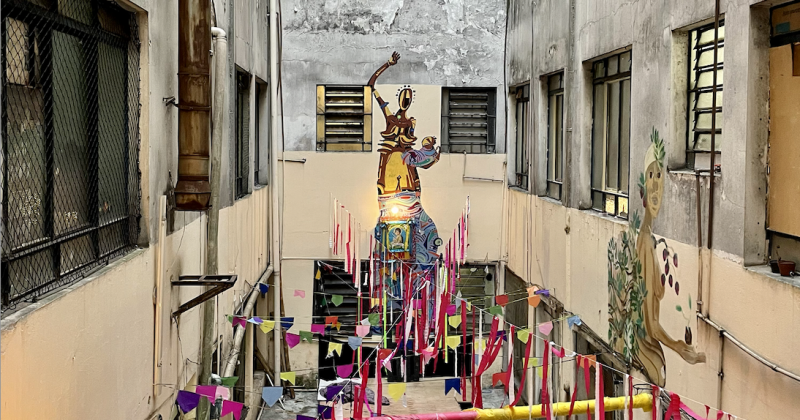
By Co-Editor Winston Ardoin Written during the period of redemocratization after the repressive military dictatorship, the 1988 Constitution of the Federative Republic of Brazil is among the most progressive in the world. After the preamble and a short list of foundational principles, Title II explicitly describes all the fundamental rights and guarantees granted to every citizen by the State. One of the longest and most detailed declarations of rights in any national constitution, the drafters’ progressive and inclusive goals created a difficult problem for the Brazilian state: the potential for conflicts of rights. Like the American court system, Brazilian courts must choose which right to uphold and defend when competing groups bring opposing claims citing different constitutional rights. In a deeply unequal country where political and legal structures remain controlled by the elite, the question often also becomes whose rights matter more: those of the powerful or those of the marginalized? One collision of rights , especially present in major cities such...
Read More
Reimagining Governance: The Visionary Potential of Chile’s Rewritten Constitution

Reimagining Governance: The Visionary Potential of Chile’s Rewritten Constitution

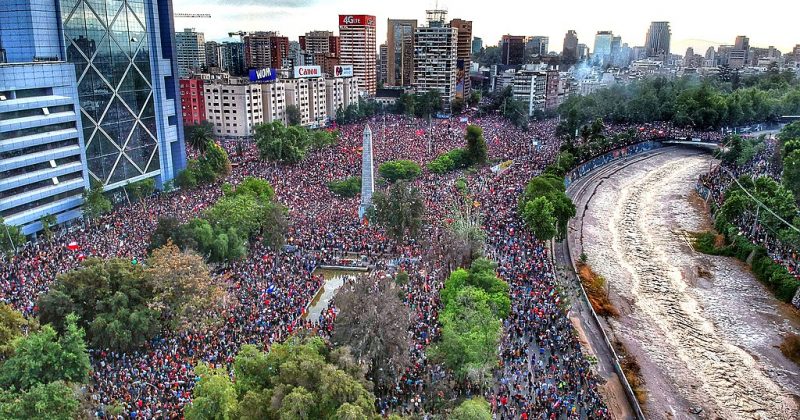
By Co-Editor Varsha Vijayakumar. This coming Sunday, September 4, every Chilean citizen above the age of eighteen will vote to “approve” or “reject” a brand-new national constitution.  Chile’s existing constitution was established during the brutal dictatorship of Augusto Pinochet, which lasted from 1973 to 1990. On September 11, 1973, the military general led a U.S.-backed coup d’etat that ousted Salvador Allende, the first Marxist in the world to have been democratically-elected to power. Today, the histories and lives of the murdered and disappeared are intentionally documented by organizations such as the Museum of Memory & Human Rights in Chile’s capital city.*  A national plebiscite is nothing new in Chile. In fact, the formal end of Pinochet’s dictatorship was brought about by a 1988 referendum in which 56% of Chileans voted “no” on the question of extending his regime. Critics have long argued that the current constitution prioritizes the neoliberal economic model that was established under Pinochet’s rule and generally enshrines the stark inequalities of...
Read More