The Future of Queer and Trans Rights

The Future of Queer and Trans Rights

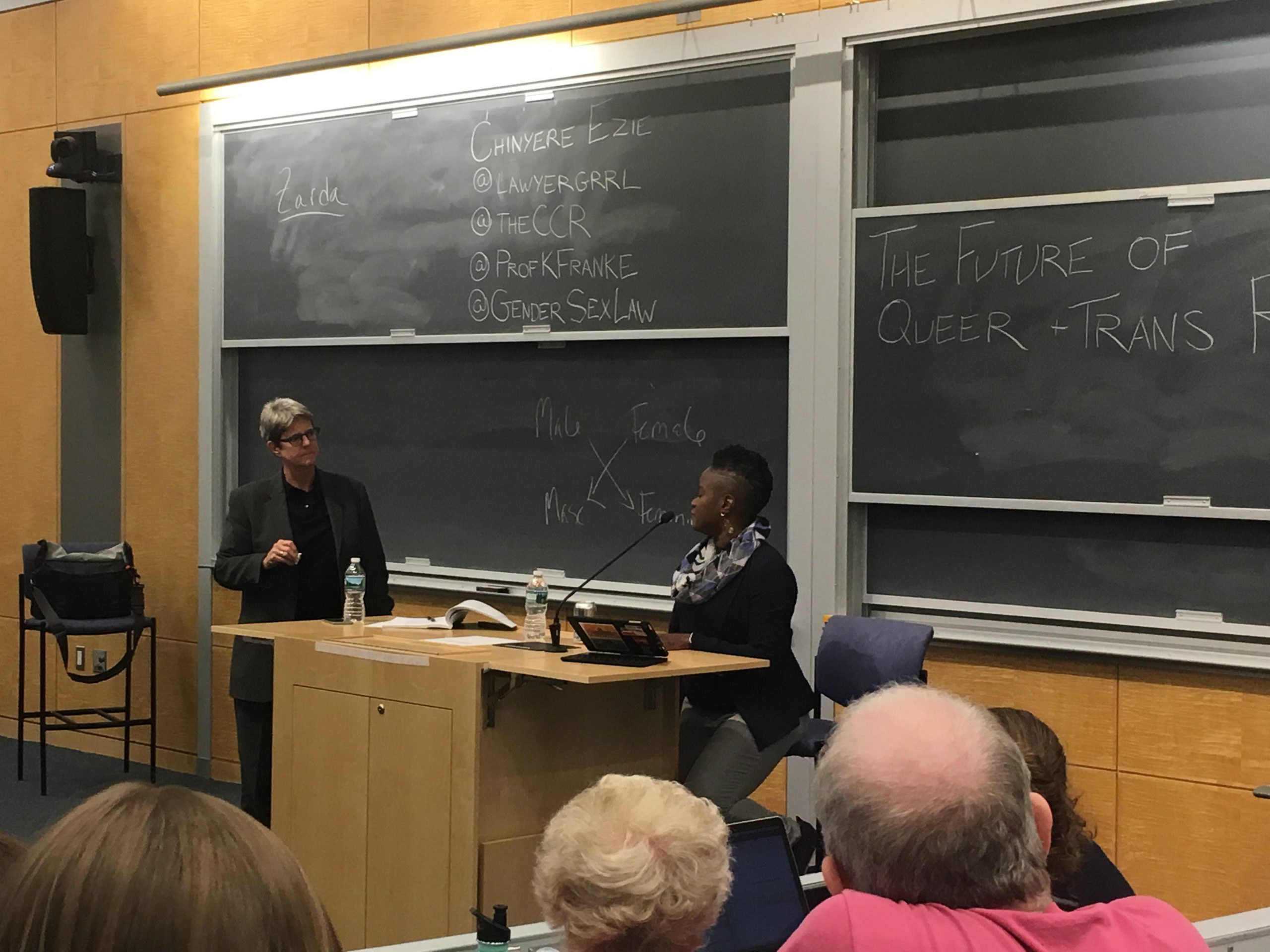
Aimee Stephens worked at a funeral home in Detroit for nearly six years when she wrote a letter telling her boss that she was transgender. Two weeks after, the Christian owned and operated funeral home terminated her job: not on the basis of job performance, but explicitly because she is transgender. Aimee took her case to the Equal Employment Opportunity Commission (EEOC), which sued the funeral home for firing Aimee on the grounds of sex discrimination. Five years later, in March 2018, the Court of Appeals for the Sixth Circuit issued a resounding victory for Aimee, stating that discriminating against transgender people is a form of sex discrimination that violates Title VII of the Civil Rights Act, which prohibits employment discrimination based on “race, color, religion, sex, and national origin.” The lawyers representing the funeral home from the Alliance Defending Freedom (ADF) accused the court of expanding the definition of “sex” and argued for the word’s strict protectionism. They petitioned that the...
Read More
LGBTQ Rights in a Global Perspective

LGBTQ Rights in a Global Perspective

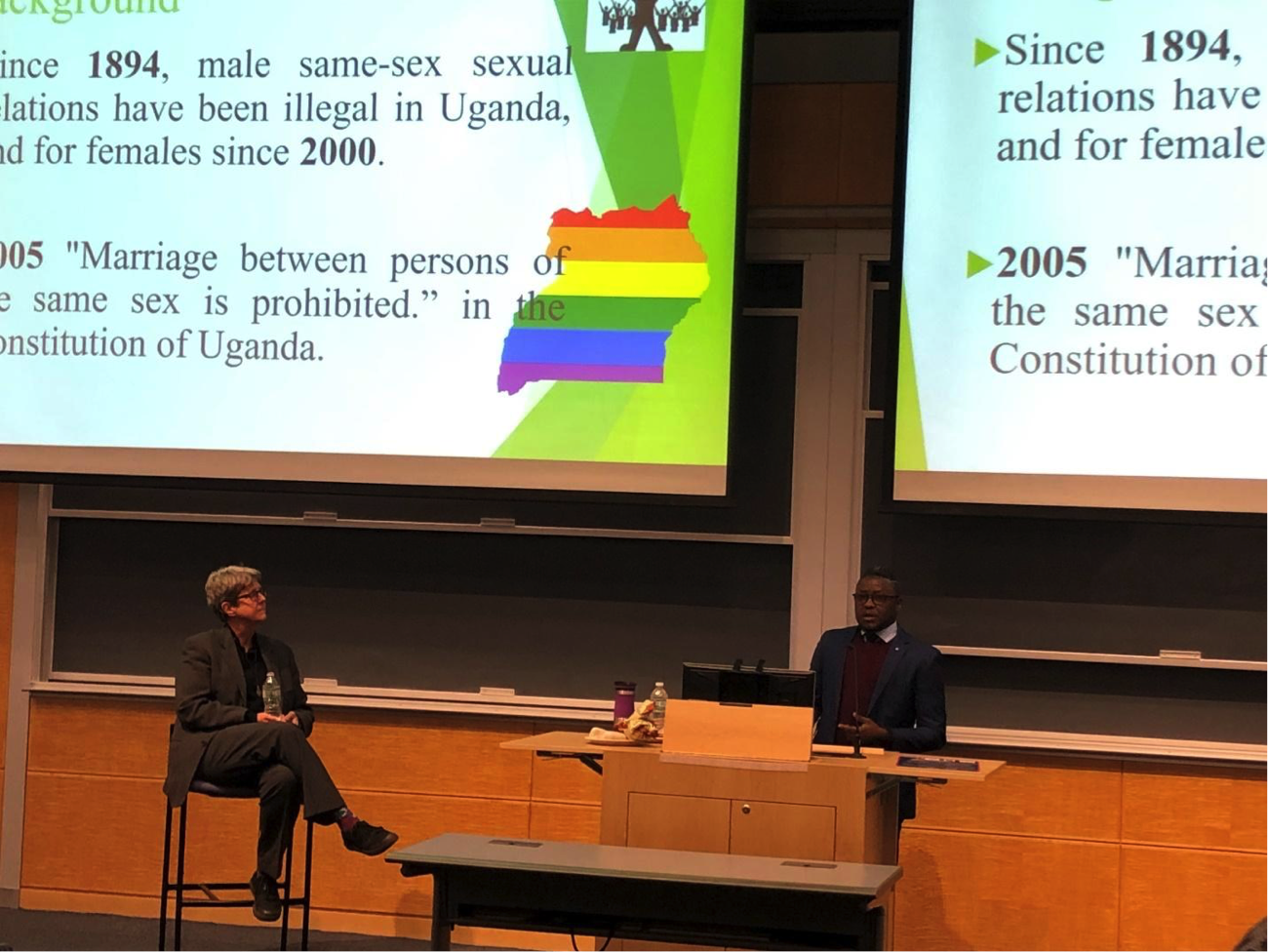
On November 12, Pepe Julian Onziema spoke to attendees of an event focusing on “LGBTQ+ Rights in a Global Perspective,” moderated by Professor Katherine Franke of Columbia Law School and the Center for Gender and Sexuality Law. Onziema, who is from Uganda, is currently a Fellow at the Institute for the Study of Human Rights at Columbia. He is an outspoken activist for LGBTQ Rights in Uganda and is the Programs Director of the non-profit organization “Sexual Minorites Uganda” (SMUG). His talk was centered around the history of LGBTQ persecution, as well as activism, in Uganda and the role that SMUG has played in making changes for acceptance and policy change. Giving some initial background on Ugandan LGBTQ history, Onziema explained that Uganda was colonized by the British and since 1894 male same-sex relations have been illegal—for females, it was made illegal more recently, in 2000. Further entrenching the criminalization of LGBTQ identity, the Uganda Constitution was amended in 2005 to...
Read More

Righting Victim Participation in Transitional Justice

On Wednesday, November 14, 2018, Dr. Inga Winkler, a prominent figure in the human rights community at Columbia, began the event “Righting Victim Participation in Transitional Justice” by introducing Tine Destrooper. Destrooper is the director of the Flemish Peace Institute and an associate professor at Ghent University. Previously, she has been the managing director of the Center for Human Rights and Global Justice at NYU’s School of Law and a fellow at the Wissenschaft-Kolleg, Berlin. The event’s focus: a new research project, focused on victim participation in transitional justice which is set to begin next year, and to be completed in five years. The project was created due to the ever-growing influence of transitional justice around the world. Effectively, this greater influence has engendered a rapid implementation of transitional justice frameworks. Such a rapid implementation can oftentimes lead to problems such as uniformity which fails to recognize country-specific conditions. To set the stage, Destrooper made sure that everyone in the audience understood...
Read More
P.C. Chang and the Universal Declaration of Human Rights

P.C. Chang and the Universal Declaration of Human Rights

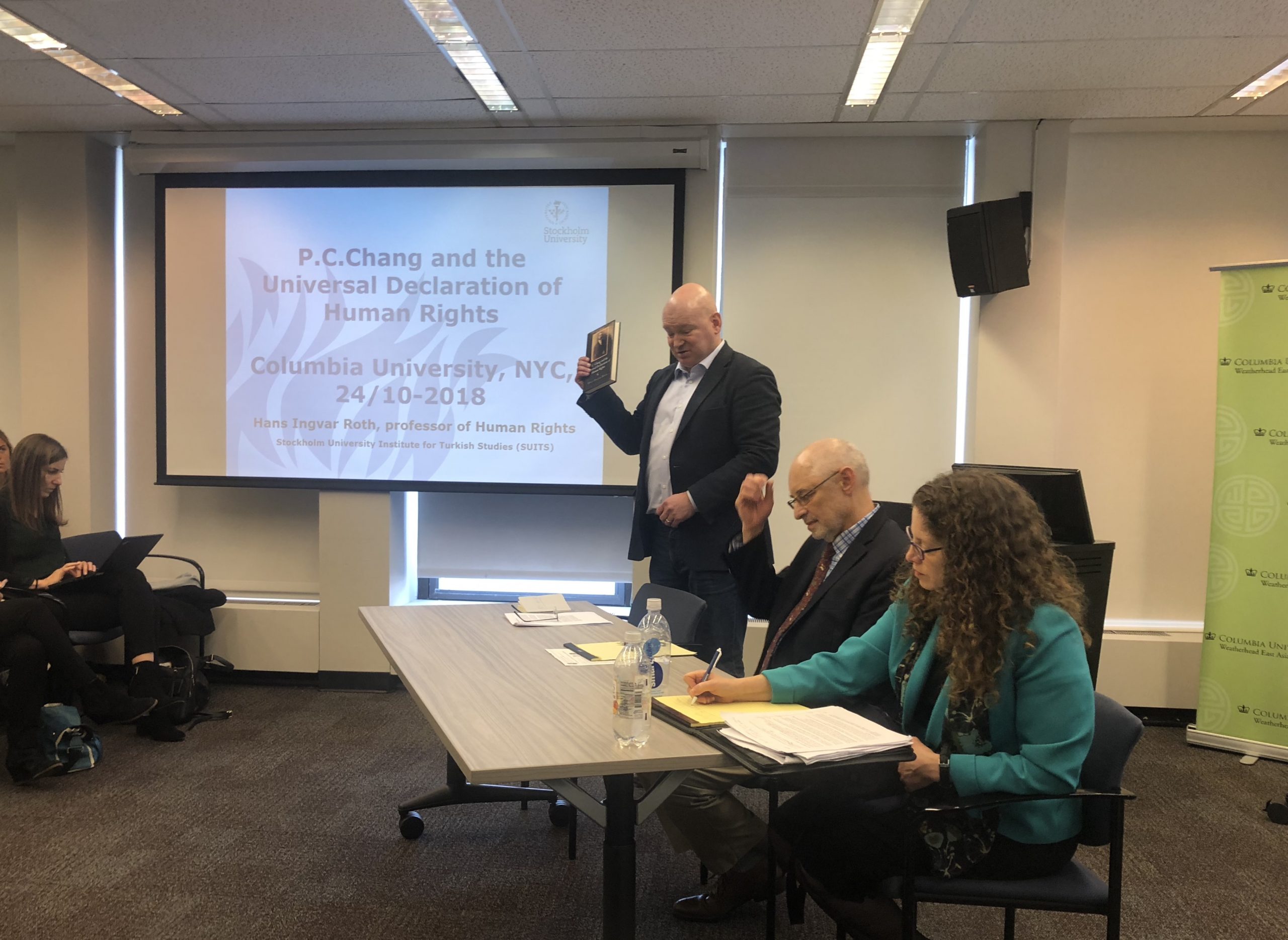
On October 24, 2018, United Nations Special Rapporteur in the field of Cultural Rights, Professor Karima Bennoune joined Professor Hans Ingvar Roth to celebrate his new book P.C. Chang and The Universal Declaration of Human Rights, marking the 70th anniversary of the UDHR. Roth has dedicated over four years to create the first intellectual biography of Peng Chun Chang, a “multifaceted talent and one of the most important drafters of the UDHR.” Chang is a Columbia University alumni and Roth acknowledged that “we are at Columbia University, where Chang studied, and this year is the 70th anniversary of the UDHR, and I think never before has it been more important to celebrate this great book in history.” Event moderator Professor Andrew Nathan introduced both speakers to a full room of fifty like-minded academics.   With only thirty minutes, Roth delivered an exceptional speech on the role of P.C. Chang in drafting the UDHR and Chang’s influence, making it a truly intercultural...
Read More
Human Rights Internship Panel

Human Rights Internship Panel

On October 11, graduate and undergraduate students interested in internships related to Human Rights gathered at the Institute for the Study of Human Rights to hear four students speak about their summer internship experiences. The panelists brought different advice from their internship experiences both abroad and in the United States on how to identify the right position, going about the interview process, and learning on the job. They all stressed the importance of staying flexible, and using the internship experience to explore interests cultivated in the classroom in the field. Tanya Sattar is in her second year of her Masters of Arts in Human Rights Studies at the Graduate School of Arts and Sciences. She spent her summer in New York and London with Value for Women, a UK based organization that identifies and tests new solutions for women’s empowerment and gender and social inclusion with income generating activities. Tanya helped produce gender market assessments and ecosystem mapping of impact investing...
Read More
On International Day of Peace, A Celebration of Human Rights

On International Day of Peace, A Celebration of Human Rights

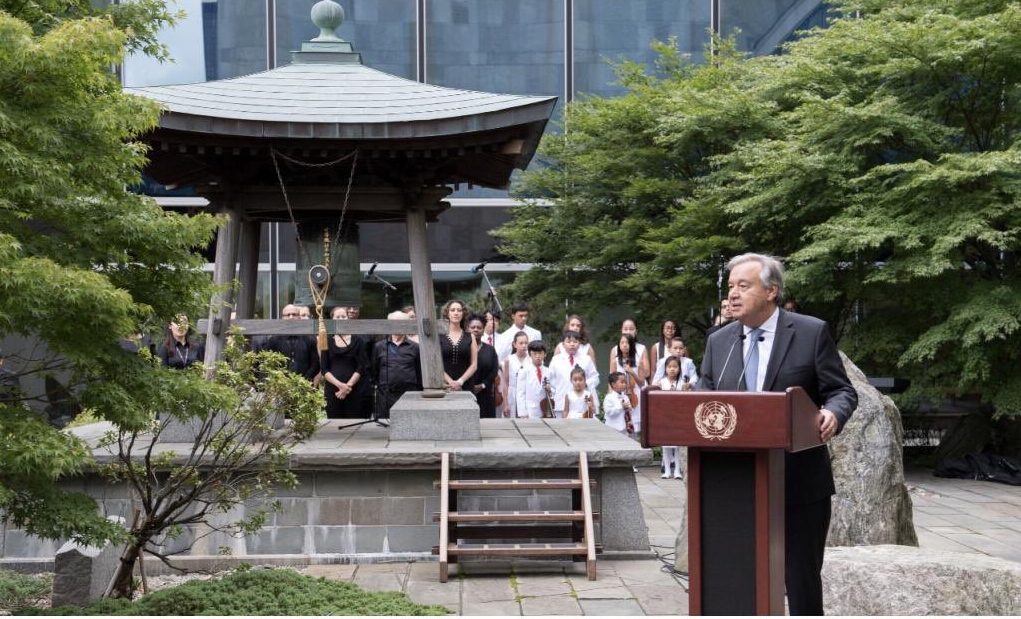
By Ashley E. Chappo, editor of RightsViews and a graduate of Columbia University School of International and Public Affairs and Columbia Journalism School Human rights, specifically the Universal Declaration of Human Rights (UDHR), are the focus of this year's International Day of Peace, or “Peace Day,” which takes place across the world each year on September 21. This UN-designated day of observance advocates peace action and education in spite of ongoing human conflict through peace-building activities, a global minute of silence, intercultural and interfaith dialogues, vigils, concerts, feasts, and marches. This year’s theme is "The Right to Peace - The Universal Declaration of Human Rights at 70." The timing for the theme is apropos: it comes at a period when the human condition is increasingly vulnerable, beset by global conflict and dependent on world leaders who have turned their backs on international cooperation. During this state of prolonged human suffering, the power and failings of a single document of 30 human rights ideals...
Read More
Columbia Students Stand in Solidarity with Jailed Reuters Journalists

Columbia Students Stand in Solidarity with Jailed Reuters Journalists

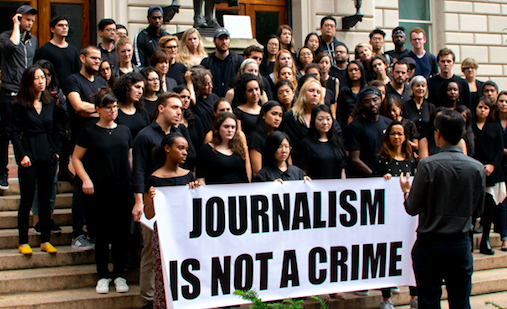
By Ashley E. Chappo, editor of RightsViews and a graduate of Columbia University School of International and Public Affairs and Columbia Journalism School Walk into Pulitzer Hall lobby at Columbia Journalism School today, and you might notice the students dressed in all black, holding signs that read “#FreeWaLoneKyawSoeOo” and "Journalism is not a crime." It’s a moment of advocacy and solidarity on Columbia’s Morningside campus on behalf of Reuters journalists Wa Lone, 32, and Kyaw Soe Oo, 28, who were sentenced to seven years in prison on September 3, 2018 by a Myanmar judge after being found guilty of violating a decades-old law on state secrets. The Burmese nationals had been investigating military crackdowns and human rights violations in Rakhine state, including the massacre of 10 Rohingya men in Rakhine's Inn Dinn village on September 2, 2017. The advocacy effort at the journalism school in New York City was organized mainly by students in professor Ann Cooper's reporting class. Beginning at 11 a.m. in Pulitzer...
Read More
Columbia’s First-Ever Indigenous Mother Tongues Book Fair

Columbia’s First-Ever Indigenous Mother Tongues Book Fair

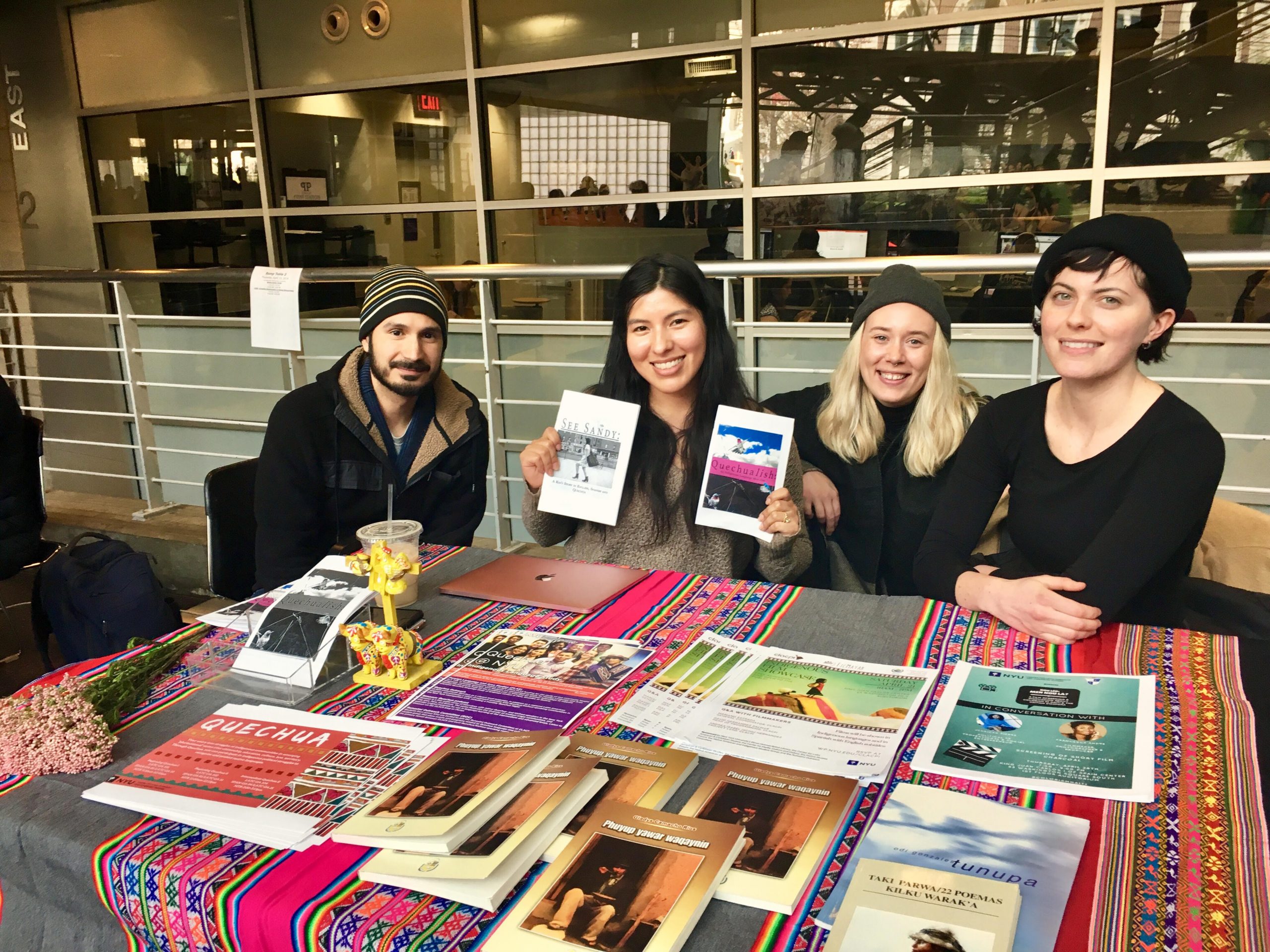
by Marial Quezada, an Indigenous ally and a 2018 graduate of the Human Rights Studies program at Columbia University In late April, the first-ever Mother Tongues Book Fair took place at Columbia University, organized by the Runasimi Outreach Committee at New York University and the New York-based Movimientos Indigenas Asociados in collaboration with the Institute for the Study of Human Rights and the Columbia Human Rights Graduate Group. Coinciding with the United Nations Permanent Forum on Indigenous Issues 2018, the fair celebrated written works in Indigenous mother tongues from various communities and geographic regions.  Languages represented at the fair included Amharic, Arikara, Crow, Hidatsa, Lakota, Mandan, Maya Mam, Mixteco, Nahuatl, Omaha-Ponca, Quechua, Tsou, and Zapoteca. Authors along with publishers displayed and sold a variety of mother tongue works including trilingual and bilingual children’s books, poetry anthologies, novels, zines, dictionaries, CDs, and more. The fair's goal was to raise awareness of Indigenous mother tongues and works as well as to connect authors and publishers with each other and the...
Read More
Taming the Bull: Can Global Finance ‘Save’ Human Rights?

Taming the Bull: Can Global Finance ‘Save’ Human Rights?

The global financial system has long had a public image problem. In the United States, Wall Street has become virtually synonymous with greed, power, and ruthlessness, a reputation turned into American lore by a long line of iconic films and insider tales. From the eponymous "Wall Street" starring Michael Douglas in 1987 to Leonardo DiCaprio’s 2013 role as Jordan Belfort in "The Wolf of Wall Street" and the dark story behind the 2008 financial collapse in "The Big Short," finance has been cast as the epicenter for the self-interested and corrupt.   David Kinley, chair in Human Rights Law at the University of Sydney, however, sees an opportunity to leverage Wall Street, and its international counterparts in London, Tokyo, Hong Kong and Geneva for the benefit of international human rights and social justice, a chance for finance to shed its bad reputation and become a positive force for socioeconomic impact. Kinley, an expert member of high-profile London law firm Doughty Street Chambers, spoke...
Read More
Rural Women’s Human Rights: Challenges and Opportunities

Rural Women’s Human Rights: Challenges and Opportunities

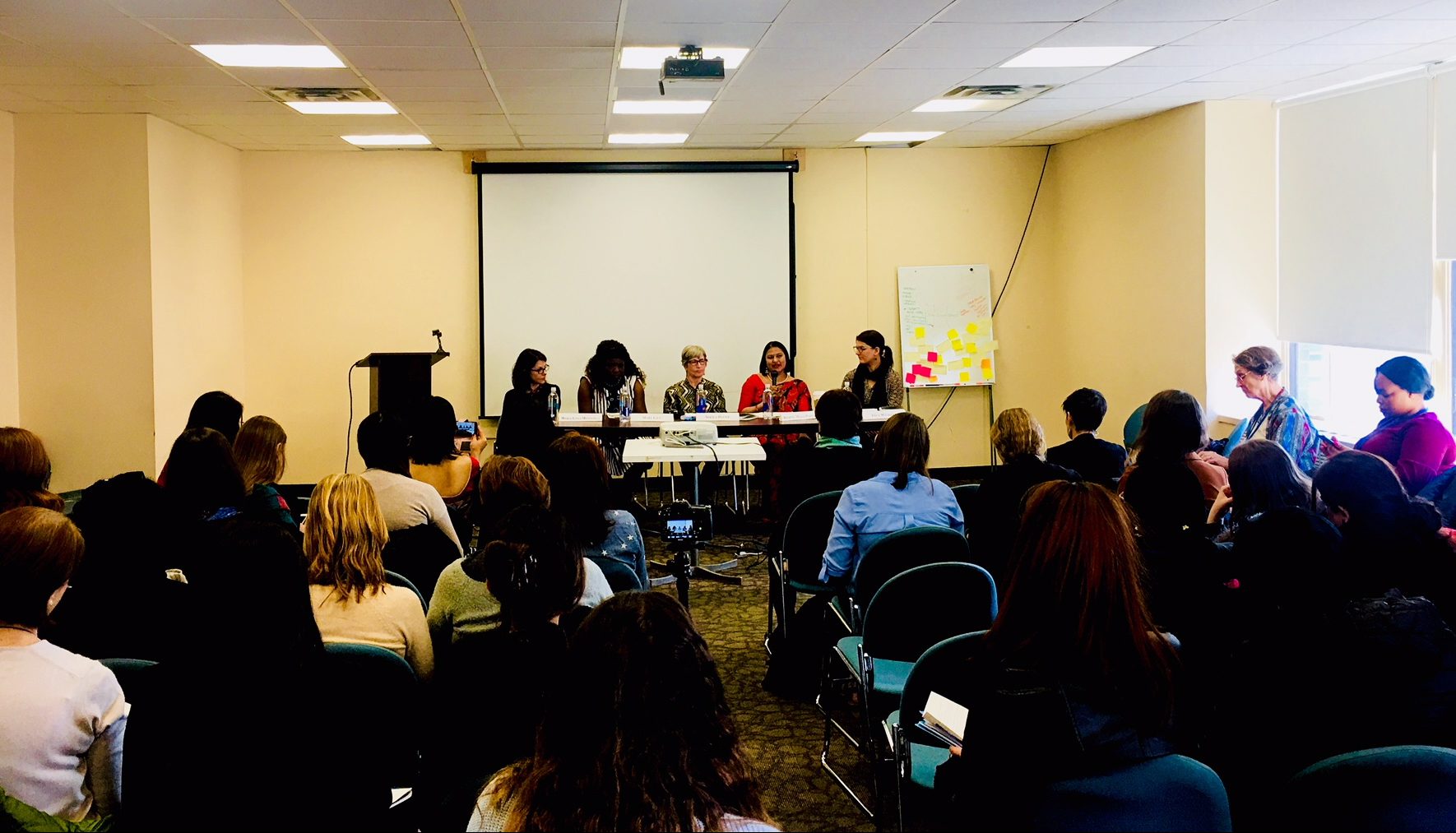
By Ashley E. Chappo, editor of RightsViews and a M.I.A. candidate at the School of International and Public Affairs at Columbia University The sixty-second session of the Commission on the Status of Women (CSW62), the largest UN gathering on gender equality, took place from 12 to 23 March at United Nations Headquarters in New York. The priority theme of this year’s session was rural women, specifically “challenges and opportunities in achieving gender equality and the empowerment of rural women and girls.” While global leaders, representatives from 170 member states, NGOs, and activists convened for two weeks of official meetings at headquarters, the conversation continued unofficially in panels and side events around the city. One of these side panels, sponsored by the International Women’s Anthropology Conference, took place at the UN Church Center as the official proceedings of the 62nd session came to a close on Friday, March 23. The panel’s focus was the importance of organizing rural grassroots women and the significance of the rural grassroots movement to achieve improvements for rural women and...
Read More