Categories
EDforSD

Seven Habits of Highly Effective (U.S.) CITIZENs

Building towards global citizenship virtues

by Nidhi Thakur

  1. They VOTE(as often as they can, but especially in the general election that everyone agrees is the election for the ‘soul’ of the world’s most developed country).
  2. They VOTE, even when the act of voting is just a choice, not a mandated duty like ‘jury duty’. No one will put them in jail for not voting, but they know that voting is the bedrock of democracy (unlike dictatorship and monarchy).
  3. They VOTE, despite a global pandemic, because, either they have a no-hassle mail-in ballot, or even if they have to physically stand in a line to vote, they vote, because they realise, and strongly cherish, their RIGHT TO VOTE, knowing fully well that this right is a privilege acquired after many a hardships. (They are amazed to learn that African Americans did not win the right to vote until the 15thAmendment to the U.S. constitution in 1870- approximately a 100 years after Independence, and that women were not granted this right up until the 19thAmendment in 1920!).
  4. They VOTE, because the right to vote is granted to only ‘special’ people– who are at least 18 years of age on voting day, have legal (and sometimes hard earned) citizenship of the U.S.A. and are eligible to vote as per the specific rules of the State they are registered to vote in. Being ‘special’ enough to be thus granted this right, is not something that they take lightly. (https://www.usa.gov/who-can-vote)
  5. They VOTE, because each vote matters way more than one imagines. Of the 240 million eligible voters this year, going by past trends, approximately 40% of these voters may NOT vote. This number would not be troubling, if elections were NOT as close as they have been in recent years. For example, the 2016 election went one way versus the other largely because of non-voters in the state of PA.
  6. They VOTE because voting record is public information! They know that their peers/employers/families (can) know whether they voted or not.

(Please note: WHO they voted for is ALWAYS confidential, but whether they voted or not is not.

Source: https://www.ncsl.org/research/elections-and-campaigns/access-to-and-use-of-voter-registration-lists.aspx)

  1. They Vote because all civic societies are formed by/around laws and laws are formed by elected officials. They know that their only shot at influencing the laws that are made, is by ELECTING the people who reflect their sense of basic/universal human value.


Dr Thakur can be contacted –[email protected]


Categories
EDforSD

Post COVID-19 demands Social Emotional Learning to be prioritized

Radhika Iyengar,

Earth Institute, Columbia University

Human beings, while capable of the worst, are also capable of rising above themselves, choosing again what is good, and making a new start, despite their mental and social conditioning. We are able to take an honest look at ourselves, to acknowledge our deep dissatisfaction, and to embark on new paths to authentic freedom.”Laudato Si, Pope Francis.

COVID-19 had led to mass destruction of lives and economies, but it has also shown us that humanity can come together in many unique ways. Among many lessons from the pandemic, we should not forget the lesson of empathy that COVID19 teaches us. Many ordinary citizens from across the globe have become #coronaheroes. Some are running community kitchens for migrants, others are organizing mass mask supplies for frontline workers. What can we learn from each other and how do we integrate this in our curricula? Social Emotional Learning (SEL) has become even more important for the COVID-19 era and beyond.

The National Education Association in the United States has put out a statement that Social Emotional Learning should be the priority during and post-COVID-19 crisis[1].Many teachers and experts are calling to include SEL in all components of the current curricula. The World Bank education experts agree that the SEL component has been neglected thus far and given that millions of children are out-of-school and families continue to suffer financial, mental, emotional and health risks, SEL must be prioritized[2]. The World Bank report states that nearly half of the students surveyed in the United States reported feeling worried about the potential risk of a close relative getting infected, but they are also concerned about not learning enough at home to be ready for the next school year. The report also quotes a survey study by the University of Oregon, showing that children are experiencing difficulties in their socio-emotional development and present higher rates of disruptive behaviors than before the pandemic started. At the same time, families are experiencing household economic insecurity that limits their capacity to meet their basic needs. Given this need, the World Bank has started a youth skilling program in Kaduna State Nigeria that gives SEL the substantial treatment it deserves[3]. Therefore, there is ample evidence that SEL needs to expand much more than what was required before COVID-19.

With SEL being the immediate need in curricula across all levels, values such as empathy towards each other and towards the planet will help communities to recover from this pandemic and avoid future pandemics. Religious leaders like the Dalai Lama and Pope Francis have emphasized empathy towards each other and our environment. Pope Francis’s Laudato Si[4], or “On Care for Our Common Home,” urges us to be empathetic about our environment. This “Environmental encyclical” is a meeting point between the environment and spirituality. He delicately balances using scientific words such as “global warming” and “carbon emission” and puts it in a spiritual perspective. Pope Francis takes his inspiration from St Francis of Assisi and relates to nature as “sister earth”, “brother sun” and “sister moon”. He urges us to get connected with different aspects of the planet to cultivate the “ecological virtues”. A broadened understanding of SEL that incorporates empathy for our shared home on earth as an extension of empathy for each other, and that links individual and community resilience to environmental resilience, can help raise awareness of how issues like environmental degradation and biodiversity loss pave the way for spread of deadly pandemics like COVID-19, droughts that cause mass hunger, and other human challenges.

Pope calls for a “consciousness-raising” to prevent further all the health and environmental risks caused by humankind. An approach to SEL that incorporates empathy for each other and for environment will help us to be mindful of our own actions and will help us to look deeper within ourselves to break the “myths” of a modernity grounded in a utilitarian mindset (individualism, unlimited progress, competition, consumerism, the unregulated market).” This reflective practice will also help in “establishing harmony within ourselves, with others, with nature and other living creatures, and with God.”

The mass destruction has taught us about empathy in real-life, how can we take this lesson and integrate it into our schooling systems? Pope Francis thus explains the real purpose of environmental education, which can be incorporated into SEL, is to not teach facts, but an approach to question one’s own practices and meaning-making. He urges educators to encourage “ecological ethics” in developing “ecological citizenship.” Pope Francis gives examples of small, but essential practices that we could all learn from this form of education”…such as avoiding the use of plastic and paper, reducing water consumption, separating refuse, cooking only what can reasonably be consumed, showing care for other living beings, using public transport or car-pooling, planting trees, turning off unnecessary lights, or any number of other practices. “This could be such a profound way of “cultivating sound virtues” where people will be empowered to “..make a selfless ecological commitment”.

This pandemic has given us the time to reflect on our past, including the way we have mistreated sister earth. The sixth mass destruction is underway[5]. In order to reverse these catastrophic trends in human health and environmental degradation, it is time to revisit Laudato Si and bring humanity back to humans.

The SEL intervention that has been part of the SENSE activity should therefore be broadened to include supplemental teaching and learning materials that help teachers, pupils, and community education volunteers make links between foundational SEL concepts like self-awareness, empathy, and resilience with critical challenges of our time like COVID-19 and climate change. Stories, discussion questions, role-playing activities, and other SEL activities can be curated to align to the current curriculum, with key messages shared within school communities through the engagement of community education volunteers and school-based management committees. This broadened approach to SEL implementation will help young people, teachers, and communities build the critical consciousness that will enable understanding and mobilization around solutions to protect our shared environment and promote health and well-being.

[1]https://www.nea.org/advocating-for-change/new-from-nea/social-emotional-learning-should-be-priority-during-covid-19 [2]https://blogs.worldbank.org/education/importance-monitoring-impacts-covid-19-pandemic-young-children-and-their-families [3]https://blogs.worldbank.org/digital-development/new-skills-youth-succeed-post-covid-world [4]http://www.vatican.va/content/francesco/en/encyclicals/documents/papa-francesco_20150524_enciclica-laudato-si.html [5]https://www.theguardian.com/environment/2017/jul/10/earths-sixth-mass-extinction-event-already-underway-scientists-warn


Thank you to Tara Stafford Ocansey for her valuable inputs to this article.


Categories
EDforSD

Reimagining Education for SDG 4.7 and Sustainable Future

Anant Bhaskar Garg and Manisha Agarwal

Director, HaritaDhara Research Development and Education Foundation(HRDEF)

Abstract

As per data from various studies, quality, climate education, and 21stcentury skills are ignored in mainstream education. To bridge this gap, HRDEF provide quality skillful education, problem solving, creativity, communication, design and computing. Building capacity for citizenship, Climate Action, and Sustainable Development Goals (SDGs) among school students and youth so that they are able to tackle future challenges.

HRDEF is using games, project, and hands-on approach for interactive learning. HRDEF conduct teachers, student’s development programs for capacity building on ICT, SDGs, climate change, disasters, STEAM, andwork towards Sustainability, Green Swachh, (Hindi word for Clean) and Sustainable Campus/Living in government schools.

Students, youth of our after-school GOAL program become motivated, equipped with self-confidence to excel in life and creating sustainable future. As systemic changes required continuous working and time for visible performance. Change, transformation will come through working gradually taking a step-by-step approach.

Keywords

Climate Action, Education for Sustainable Development, Quality Education, Hands-on, Game, Project Based Learning

1 Introduction

Beginning with 21stcentury the United Nations (UN) started Millennium Development Goals (MDG) and decade of Education for Sustainable Development (ESD) (2005-2014) that highlighted vibrant role of education towards sustainable development for saving our planet as world witnessed extreme events due to climate change. Further, the UN adopted the 17 Sustainable Development Goals (SDGs) in September 2015 to advocates for SDG 4 that provide inclusive, equitable quality education and promotes lifelong learning opportunities for all to build sustainable, inclusive and resilient societies. SDG 4.7 targets that by 2030 all learners acquire the knowledge, skills needed to promote sustainable lifestyles, human rights, gender equality, peace, non-violence, global citizenship, and cultural diversity (UN, SDSN Reports).

Through education we transfer knowledge, values, and skills across generation to facilitate societies to build the foundation for sustainable future. But many barriers to education access, outcomes, and monitoring of progress are main challenges that need to be addressed for achieving SDG 4.7. The global climate educationand the concept of ESD are unable to provide radical transformation of education systems needed to guard against climate change. Five roadblocks identified in a Brookings report needed to resolve in a time of climate change (Kwauk, 2020). India’s Philosophy of ‘One World’, Global Partnership, and culture of support is known for centuries. Uniting all stakeholders for their role in shaping the 2030 Agenda and the SDGs on three pillars of economy, social, environment with culture based on the principles of equality and humanity was very important for the global society.

2 Why need Transformative Learning for ESD, Climate Change Education

As per UNICEF study, 50 % of Indian Students don’t have 21st Century Skills required for Jobs and around 15 Crore school students lack job skills by 2030 published in 2019. ​21st century skills such as critical thinking, inquiry based learning, collaboration, communication, and SDGs, sustainability, and hands-on learning are missing in school educational institutions. School education system require maker spaces, DIY (Do it yourself), smartphone, tablets, relevant software, and computers for successfully implementing STEAM education.Yale University research on climate change communications pointed out that 65% of the Indian population is not aware of climate change published in 2016. Thus, everyone urgently needs to include climate change and ESD in a radical way to address future challenges.

3 Experiential, Embodied Learning for Sustainable Development

How do we learn? As a child we learn by exploring, by touching things, moving things and taking things apart. This is really an experiential way of learning i.e. learning by doing. But in school’s classroom, we sit down quietly, without moving, talking or playing. Making as a construction, DIY process provides various insights, knowledge about our surroundings, and actively participate in enjoying transformative learning. Playing games, making provide an entertaining, fulfilling experience of doing, creating new things, have many advantages for students, as it makes the player, a decision-maker, facts investigator, evaluating strategy, prioritizing their actions and abilities.

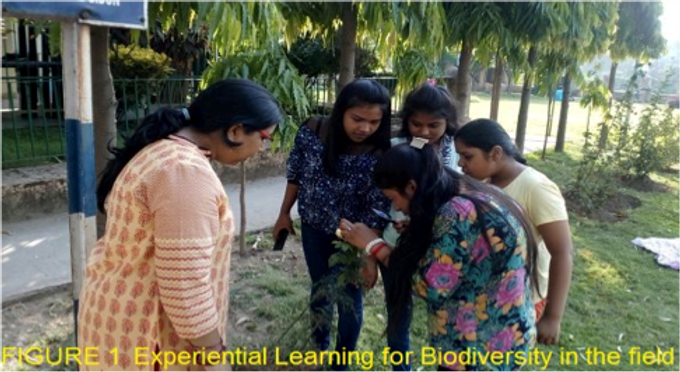
Integrated, hands-on, project, game-based learning that incorporates technology is crucial for the 21stCentury Skills. MAKER (Manufacturer, Author, Knowledge analyst, Exhibitor, Recycler), Project, Game-based learning provides a new emerging ways to understand difficult concepts and further it provides opportunities for students, learners to experience the phenomena. Therefore, it promotes interactive, experiential learning that helps the learner to develop curiosity, creativity, critical thinking, collaboration, and problem-solving that are essential for the 21stCentury skills. Thus, learning a concept, its understanding, and practice involve different steps such as exploration, curiosity, asking the question, discussion, create, design thinking, making model, games, role play, drama, story, and present (Scott, 2015). Students of our GyanDhara Opportunities for All with Learning (GOAL) worked, developed a miniature, presentations, played board games, card games for embodied, immersive learning related to climate change, and sustainability concepts as given below in the case study. Figure 1 describes experiential learning for biodiversity concepts in the field.
4 Quality Skillful Education: Games for SDGs, Sustainability

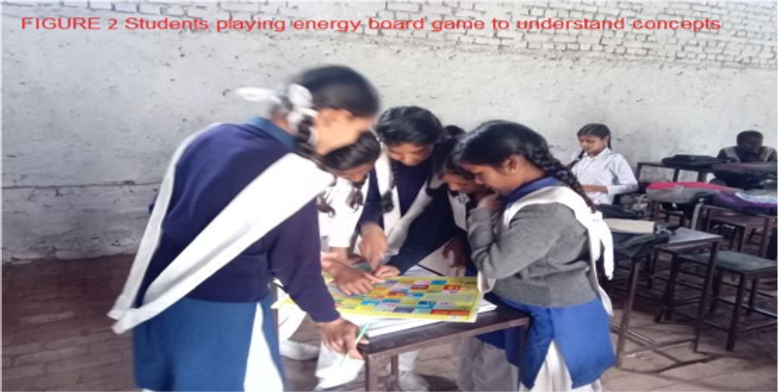
Games require players to think systemically and consider relationships instead of isolated events or facts for sustainability and sustainable development (Stommen et. al., 2016). Some games are externally designed while we designed games keeping in mind Human Work Interaction Design approach through studying work settings and embedding screenplays, rules for better understanding (Clemmensen et.al., 2005), (Campos et. al., 2009). Games need not be restricted to educating schools or colleges, but on learning new things, maybe cooking virtually, learning yoga, explaining and teaching complex problems such as climate change, and sustainable development (Katsaliaki et. al., 2012). In figure 2 students playing an energy board game to understand concepts such as electricity conservation, renewable energy.
The educational game is a form of social interaction, as learners tries to map out situations that will encourage solving compelling problems. For example, to learn about climate change and sustainability problems, learners team-up for gathering and discussing information in a project way (Garg et. al, 2017). Such games foster effective learning habits to change our lifestyle for sustainable living as described in fireworks example later on.

5 Transformation of Education to create “Sustainable Consciousness”

We need more focus on skill development, innovation, decision-making, and problem-solving through establishing Centre of Excellence with focus on 21stcentury skills. With the advent of sustainable consciousness, our GOAL program youth decided to reduce pollution during Diwali celebration, thus some children haven’t burn any crackers to save the environment and others burned 60 to 70% less firework as per previous years based on student and parents stories. Further, they saved Rs. 200 to Rs. 600 that made them very happy. Some senior students decided to devote time for providing quality education to poor students. Now, same students dream is to become a doctor, IAS, IPS, Judge, dancer, cricketer, banker, lawyer, army officer, and teacher (maximum girls dream) rather than focusing on their social background as most of them come from low income group.

Thus, we are doing capacity development programs for 21stcentury skills, STEAM, and Sustainability through:

– Teacher development programs designed to develop and teach students for SDGs, climate change, and 21stcentury skills

– Focusing on employability, skill development and entrepreneurship with industry orientation and linkages

– Learning science, technology, engineering, arts, mathematics (STEAM) linking with SDGs with hands-on, game and problem-based approach

– Establishing learning centers with the community to imbibe responsibility, accountability, global citizenship, gender equality, values

Therefore, ESD is crucial for the SDGs awareness and success for all. Education in school and higher education institution (HEI) play key role as prevalent in our golden time, e.g., Nalanda, Takshila Universities in India. Schools (Ashrams), universities happen to be not only seat of learning but also providers of solutions to humanity’s problems; however, modern schools, universities are not very well connected with their local communities and the environment.

6 Conclusion

Using games to teach a specific curriculum topic related to sustainability such as climate change, water cycle, energy, biodiversity, associated concepts such as light, plant identification, disaster management, and renewable energy increased players’ motivation towards science and sustainability. Besides this, learners showed interest in English, personality development, and improved their leadership skills.

Games and makerspaces can motivate students to turn to textbooks with the intention of understanding rather than memorizing. Learning occurs not just in the gameplay but other kinds of making activities, encourage collaboration among participants, thus provide a context for peer-to-peer teaching and for the emergence of communities of Learners. It will go a long way in nurturing a spirit of inquiry, fostering creativity, and developing a culture of innovation among students; equipping them with skills and competence to create an equitable and sustainable future.

References

Campos P., Campos A. (2009), An Educational Game Created through a Human-Work Interaction Design Approach. In: Gross T. et al. (eds) Human-Computer Interaction, INTERACT 2009. Vol 5726. Springer, Berlin, Heidelberg

Clemmensen, T., Orngreen, R. & Pejtersen, A. M. (2005). Describing Users in Contexts: Perspectives on Human-Work Interaction Design. Workshop Proceedings of Interact’05

Garg, A. B. & Agarwal, M. (2017). Educational Games for Learning Sustainability Concepts, INTERACT Workshop Human Work Interaction Design meets International Development, pg. 290-297

Katsaliaki, K. & Mustafee, N. (2012). A survey of serious games on sustainable development, Proceedings of IEEE Winter Simulation Conference

Kwauk, C. (2020). Roadblocks to quality education in a time of climate change, Centre for Universal Education, Brookings Institution

Scott, C. L. (2015). The Futures of Learning 2: What kind of learning for the 21st century? UNESCO Education Research and Foresight, Paris. [ERF Working Papers Series, No. 14]

Singer, N., Farahaty, E., Mahmoud, E. S. (2020). Motives of the Egyptian Education Future for Sustainable Development: A Comparative Analysis Between 2020 and 2030, Humanities & Social Sciences Reviews, Available at SSRN: https://ssrn.com/abstract=3585908

Stommen, S.M. & Farley, K. (2016). Games for Grownups: The Role of Gamification in Climate Change and Sustainability, Indicia Consulting LLC

https://sustainabledevelopment.un.org/content/documents/23669BN_SDG4.pdf

https://indicators.report/targets/47/#:~:text=Target%204.7%20by%202030%20ensure,%2Dviolence%2C%20global%20citizenship%2C%20and

https://www.unicef.org/press-releases/more-half-south-asian-youth-are-not-track-have-education-and-skills-necessary

https://environment.yale.edu/climate-communication-OFF/files/Climate-Change-Indian-Mind.pdf

About Authors

Anant Bhaskar Garg, Director, HRDEF, Engineer and Educator with 23 years of exp. in various capacities in academia, industries. Published two books, 53 papers in Intl. Journals, Seminars, 2 chapters in Springer’s book, Invited Speaker at 98th ISC, member of Prof. Societies IEI, ACM, CSI, ISCA, IETE, ISTE. Senior Member 2011 of ACM, USA. Climate Reality Leader, #MentorofChange, AIM, NITI Aayog, MIEE. Organized various seminars, faculty, and student development prog. Learned best practices on education, environment through visiting Denmark, Sweden, Switzerland, USA, involved in community services for computer, and sustainability.

Manisha Agarwal, Director, HRDEF, Educator having done M. Sc. (Botany), PhD (Forest Botany) Forest Research Institute University. MBA in Education Management. Sixteen years of research experience in the field of Botany, Wood Anatomy, medicinal plants, papers in international, national journals, member of Indian Botanical Society, ISCA, Climate Reality Leader, Society of Wood Science and Technology, USA – 2013-14, Involved in environment education, climate action, STEAM teaching, raising awareness and skills development

HRDEF established as non-profit social enterprise and in Special Consultative status with the United Nations Economic and Social Council (ECOSOC) since 2018. HRDEF established afterschool program, conducting workshops, and training on climate change, Sustainable Development Goals, and STEAM. HRDEF worked with school students, youth to develop their learning capacities for 21st Century Skills through game, project based interactive learning. Provide makerspace, hands-on experiments for school children to understand concepts, Climate Change, SDGs and Sustainability.
 

Categories
EDforSD

Event: Reaching the Hardest to Reach with Education Technology During COVID

Updated: Oct 26, 2020

Reaching the Hardest to Reach with Education Technology During COVID Co-Sponsored by The Center for Sustainable Development (CSD), Earth Institute, Columbia University & South Asia Special Interest Group (SIG) at the Comparative International Education Society (CIES).

Education has been disrupted during the COVID19 pandemic. Millions of children have trying different models of learning remotely with the help of parents, teachers, extended families and others. What have we learned so far from the ground? What has worked and what needs to be improved?

This panel will look at the Kerala model from India and learn from the governmental and NGO actions on the ground. Join us in discussing education in the COVID19 times with concrete examples from Kerala on the use of technology to ensure learning continuity.

Let us also learn the lessons for sustainable development and what we can infuse in the education systems to build back better.

Our esteemed panelists:

  • Anvar Sadath, CEO, Kerala Infrastructure and Technology for Education, Government of Kerala
  • Professor V.K. Damodaran, President Vakkom Moulavi Foundation Trust and Member, Governing Board and Executive Committee Kerala State Council for Science, Technology and Environment
  • Sajitha Bashir, Adviser, Office of the Global Director for Education, World Bank

Remarks

  • Tania Saeed, Assistant Professor-Tenure, Department of Humanities & Social Sciences, LUMS University, Pakistan
  • Yanis Ben Amor, Executive Director of Center for Sustainable Development, Earth Institute, Columbia University

Moderators

  • Radhika Iyengar, Director Education of Center for Sustainable Development, Earth Institute, Columbia University. Chair of the Environmental and Sustainability Special Interest Group at CIES
  • Haein Shin, Education Technical Adviser, Center for Sustainable Development, Earth Institute, Columbia University

Please see below documents and links shared by our speakers:

Facing Forward : Schooling for Learning in Africa. By Bashir, Sajitha; Lockheed, Marlaine; Ninan, Elizabeth; Tan, Jee-Peng.   World Bank regional flagship

https://openknowledge.worldbank.org/handle/10986/29377?CID=EDU_TT_Education_EN_EXT

TV Based Learning in Bangladesh : Is it Reaching Students?

https://openknowledge.worldbank.org/handle/10986/34138

Status Report – Government and Private Schools During COVID-19, India.  By Oxfam

https://www.oxfamindia.org/sites/default/files/2020-09/Status%20report%20Government%20and%20private%20schools%20during%20COVID%20-%2019.pdf

Survey on National Education Responses to COVID-19 School Closures  – UNESCO-  UNICEF- World Bank

https://datacatalog.worldbank.org/dataset/survey-national-education-responses-covid-19-school-closures

The effect of school closures on standardized student test outcomes.    Study about Belgium schools during COVID

https://feb.kuleuven.be/research/economics/ces/documents/DPS/2020/dps2017.pdf

National report at Times Of India published on 22nd October

https://timesofindia.indiatimes.com/india/what-kerala-did-that-others-could-not/articleshow/78783667.cms

Comparative and International Education Society (CIES)

https://www.cies.us/

South Asia Special Interest Group of CIES

http://sigs.cies.us/southasia/

Center for Sustainable Development

https://csd.columbia.edu/

Categories
EDforSD

Reducing Meat Consumption for Human and Planet Health


By Aalok Bhatt, 

Millburn Highschool


Watch Aalok Bhatt’s video here- 

https://youtu.be/vXFN6LPZzeM

My name is Aalok Bhatt and I am an Eco-Ambassador and a junior at Millburn High School. This summer, I decided to raise awareness in my community about the health and environmental benefits of reducing meat consumption. I chose this topic because last summer I attended a talk in NYC about sustainable development, where I was shocked to learn about the detrimental impact of increased meat consumption on our environment. The amount of water it takes to produce a pound of beef is equal to the amount of water used by an average person to shower over three years! Another reason why I picked this issue is that Covid-19, which has brought the entire world to a standstill, also originated in an unhygienic meat market in Wuhan.  I knew I had to do something to convince people that even if we abstain from eating meat for one day a week, it will have a huge impact on our health and the health of our planet.

      As I was researching this topic, I found that the entire public school district of New York City has adopted the Meatless Mondays initiative. A lot of hospitals like the New York Presbyterian and restaurants, too, have implemented this program. My goal is to launch this program in my community and then scale it up to include New Jersey public schools and hospitals.

      Given the fact that we are living through a global pandemic, I realized that I would need to take an unconventional approach for my project. With that in mind, I sent emails to various experts in the fields of health and nutrition, environmental protection, and animal rights. I was successfully able to host two talks. The first one was with Nutritionist Monika Mahajan on the health and environmental impact of meat consumption. The second talk was with Ms. Daniel Schwab of Illuminate Supply Chains about the importance of eating local and seasonal foods and setting up sustainable supply chains in communities. 

Unfortunately, I faced many roadblocks this year as compared to last summer, where I raised awareness on eliminating single-use plastic in my town through a poster campaign. Most of the people I contacted did not respond. For instance, I sent many emails to Monday Campaigns to organize a talk on Meatless Mondays for my community, but they were not very responsive. I also contacted faculty members from the Columbia School of Public health for guidance on implementing Meatless Mondays in hospitals in my area, just like they have done in NYC. However, I still haven’t heard from them. I am in talks with the Humane League, which works for animal rights and against factory farming for a one on one interview.  I hope to post it on this website soon. The talks that I did host so far had a limited number of participants and viewers.

In the middle of August, I realized that this was not going anywhere and I would have to do something else. I thought for a while about what I could do next, and then it hit me: I could create a short animated video in the form of a story. I created a google slides document and used pictures from a website called Freepik to create a short educational film. The story is based on a fictional cow, named Moodles, who talks about the drawbacks of eating too much meat. I had a lot of fun making this film and researching all the facts. In the coming weeks, I will ask the principals of Millburn Elementary Schools, Millburn Middle School, and Millburn High School to share this video with their students and parents. I also plan to put it up on my town Facebook group and other community platforms. I’m determined to continue spreading awareness on this issue throughout this year.


Categories
EDforSD

Call for research collaboration!

Dear Colleague,


Hope you are well during this UN Week.

From our Center for Sustainable Development, we are planning to bring together the various and diverse strands of SDG-related research and work around the world for a concrete collaboration that results in a consortium of research partners, highlighting the research that can guide policies, guidelines and curriculum across industries and sectors.

More specifically, the scope of this call is to convene interested partners for conducting and documenting research that validates the linkages among the 17 SDGs and SDG outcomes. SDG can be from any area/SDG that you and/or your affiliated organization are already working on.

  • Conduct research to validate the linkages among SDGs (outcomes).
  • Conduct community-based action research on the pathways and processes that drive these inter-linkages, and how communities perceive potential trade-offs between SDGs.
  • Learn from the grassroots initiatives on some of the key factors that help in cross-pollination of the SDGs.
  • Learn how SDG 4.7 could become the central factor that binds all the SDG learning together.

If you are interested in this joint work for the consortium, please let us know.

Looking forward to hearing from you.

Thank you,

Radhika Iyengar [email protected]

Tara Stafford Ocansey

Haein Shin

Education Sector – Center for Sustainable Development


Categories
EDforSD

Eco-education: Why we must prioritize environmental learning—before it’s too late

Ryan Cho

12th Grade

Choate Rosemary Hall

Barely half a year since it was first reported in Wuhan, the novel coronavirus has infected upwards of 12 million people worldwide. On top of the direct threat the virus poses to public health, COVID-19 has hobbled the global economy and transborder mobility. It has also jeopardized the livelihoods and mental health of millions of people around the world, who are currently coping with the economic downturn and with lockdown or stay-at-home orders. The ongoing COVID-19 pandemic provides a sobering example of how imprudent human actions that strain the environment can come back to haunt us. According to scientists from institutions such as Stanford University and the Johns Hopkins Bloomberg School of Public Health, prioritizing profits over the ecosystem and failing to stringently execute regulations can lead to environmental disasters, including deforestation. These disasters, in turn, facilitate the emergence of zoonotic diseases, such as COVID-19 (Stanford University, 2020; Wolfe et al., 2005).

Simply put, human activities have consequences. When we act without regard to our environment, the effects do not stop at harming Mother Nature. Ultimately, those actions and their environmental repercussions boomerang back to harm us, too. As demonstrated by the spread of COVID-19, our decisions affect the environment, and environmental consequences impact our society, our economy, and our public health. Thus, more prudent environmental decision-making is not only eco-friendly but also healthful for society in general.

Fortunately, many of the environmental issues plaguing our planet, including deforestation, climate change, and pollution, seem to be entering the realm of common knowledge. However, this increasing awareness is not enough to achieve sustainable development. Simply realizing that humans contribute to environmental issues does not necessarily mean people understand that the next step in the feedback cycle is negative impact on humans, nor does awareness equate to a willingness to make environmentally sustainable decisions (Iizuka, 2000; Postigo et al., 2007).

This is precisely why eco-education is important. Eco-education, also referred to as environmental education, does not stop at enhancing awareness of environmental issues. As a process, eco-education helps individuals cultivate a deeper understanding of the natural environment, environmental issues, and their impact. Its objective is to develop attitudes, behaviors, and critical thinking, problem-solving, and decision-making skills that encourage individuals to act more responsibly and contribute to resolving environmental challenges (EPA, n.d.). In other words, eco-education strives to support students in making informed, environmentally sustainable decisions. Such informed decision-making need not be constrained to pivotal, newsworthy moments. Environmentally responsible decisions in everyday situations matter, too. For instance, greater knowledge of environmental consequences prompts consumers to select eco-labeled products out of environmental concern (Göçer & Oflaç, 2017).

Eco-education can be implemented for all age groups, ranging from early childhood to those in tertiary education. While programs aimed at enhancing the eco-literacy of older students have considerable benefits, it is particularly advantageous to begin eco-education at a young age. First, spending time outdoors is beneficial to the cognitive development and physical and mental health of young children (Taylor et al., 2006; Wells & Evans, 2003). Participative eco-education may also enhance prosocial behavior in toddlers (Mizuuchi & Kim, 2013). Furthermore, research finds that childhood experiences in nature are positively linked with a propensity for environmentally protective attitudes in adults (Wells & Lekies, 2006). Time spent outdoors has also been shown to contribute to feelings of connectivity with nature and environmental stewardship (Andrejewski et al., 2011; Kals et al., 1999). The positive effects of eco-education for young children are not even limited to the children themselves. The parents of children receiving eco-education have also been found to exhibit greater eco-literacy, suggesting that child recipients of eco-education may act as agents in facilitating inter-generational learning (Istead & Shapiro, 2014; Vaughan et al., 2003). Thus, it is especially beneficial to encourage eco-education beginning in early childhood.

With the COVID-19 pandemic at the top of the list, the current suffering caused by harrowing global issues could have been ameliorated if more people were aware of environmental challenges and had been trained to help resolve them. The list of possibilities is extensive. Deforestation leads to flooding, drought, loss of water sources for drinking and agriculture, and climate change (Derouin, 2019). The effects of climate change are numerous, among them threats to our food supply and public health, floods, drought, rising sea levels, and loss of biodiversity(National Oceanic and Atmospheric Administration, 2019). Recent calamities caused in part by man-made environmental problems include the 2019-2020 Australian bushfires that killed one billion animals and the ongoing locust plague, which could threaten the livelihoods of a tenth of the world’s population, according to the UN (Baskar, 2020; The University of Sydney, 2020). Stronger implementation of eco-education could contribute to lessening the impact of, or perhaps even outright avoiding, similar problems in the future.

Governments are increasingly showing enthusiasm in supporting eco-education. In countries ranging from India to Italy, movements to integrate eco-education into formal education are a step towards a higher average of eco-literacy. Additionally, non-governmental institutions, such as the Foundation for Environmental Education and the National Wildlife Foundation, provide eco-school programs. Corporations such as EPSON also provide environmental education for employees. One way to further enhance the effectiveness of eco-education policies is to align national policies in other sectors, forming a holistic and cohesive policy structure that promotes sustainable decision-making (Iovan, 2014). In addition, utilizing new technologies may provide additional methods to enhance students’ learning experience in eco-education (Huang et al., 2016). Considering the inevitability of online teaching in the near future, now may be a good time to investigate how to effectively conduct eco-education online.

References

Andrejewski, R., Mowen, A. J., & Kerstetter, D. L. (2011). AN EXAMINATION OF CHILDREN’S OUTDOOR TIME, NATURE CONNECTION, AND ENVIRONMENTAL STEWARDSHIP. Proceedings of the Northeastern Recreation Research Symposium. https://scholarworks.umass.edu/cgi/viewcontent.cgi?article=1001&context=nerr

Baskar, P. (2020, June 14). Locusts Are A Plague Of Biblical Scope In 2020. Why? And … What Are They Exactly? NPR. https://www.npr.org/sections/goatsandsoda/2020/06/14/876002404/locusts-are-a-plague-of-biblical-scope-in-2020-why-and-what-are-they-exactly

Derouin, S. (2019, November 6). Deforestation: Facts, Causes & Effects. https://www.livescience.com/27692-deforestation.html

EPA. (n.d.). What is Environmental Education?https://www.epa.gov/education/what-environmental-education

Göçer, A., & Oflaç, B. S. (2017). Understanding young consumers’ tendencies regarding eco-labelled products. Asia Pacific Journal of Marketing and Logistics, 29(1). https://www.emerald.com/insight/content/doi/10.1108/APJML-03-2016-0036/full/html

Huang, T.-C., Chen, C.-C., & Chou, Y.-W. (2016). Animating eco-education: To see, feel, and discover in an augmented reality-based experiential learning environment. Computers & Education,96, 72–82. https://doi.org/10.1016/j.compedu.2016.02.008

Iizuka, M. (2000). Role of environmental awareness in achieving sustainable development(Enhancement of Citizen’s Awareness in Formulation of Pollution Control Policies in Major Latin American Cities). Environment and Human Settlements Division, ECLAC. http://biblioteca.cejamericas.org/bitstream/handle/2015/3375/Role_Environmental_Awareness_Achieving_Sustainable_Development.pdf?sequence=1&isAllowed=y

Iovan, M. (2014). Eco-Education: A Required Element of Public Policies for Sustainable Social and Economic Development. Academicus International Scientific Journal, 9, 14–28.

Istead, L., & Shapiro, B. (2014). Recognizing the Child as Knowledgeable Other: Intergenerational Learning Research to Consider Child-to-Adult Influence on Parent and Family Eco-Knowledge. Journal of Research in Childhood Education, 28(1), 115–127. https://doi.org/10.1080/02568543.2013.851751

Kals, E., Schumacher, D., & Montada, L. (1999). Emotional Affinity toward Nature as a Motivational Basis to Protect Nature. Environment and Behavior, 31(2), 178–202. https://doi.org/10.1177/00139169921972056

Mizuuchi, T., & Kim, G. (2013). The Effects of Eco-Education by Hands-on Natural Activities on the Prosocial Behavior of Toddlers. The Asian Journal of Disable Sociology, 13, 43–53.

National Oceanic and Atmospheric Administration. (2019, February). Climate change impacts. https://www.noaa.gov/education/resource-collections/climate/climate-change-impacts

Postigo, A., Haines, A., Neira, M., & Confalonieri, U. (2007). Will increased awareness of the health impacts of climate change help in achieving international collective action? Bulletin of the World Health Organization, 85(11), 826–828. https://doi.org/10.2471/blt.07.021107

Stanford University. (2020, April 15). Forest loss could make diseases like COVID-19 more likely, according to study. World Economic Forum. https://www.weforum.org/agenda/2020/04/forest-loss-diseases-covid19-coronavirus-deforestation-health/

Taylor, A. F., Kuo, F. E., Spencer, C., & Blades, M. (2006). Is contact with nature important for healthy child development? State of the evidence(Vol. 124). Cambridge University Press.

The University of Sydney. (2020, January 8). More than one billion animals killed in Australian bushfires. https://www.sydney.edu.au/news-opinion/news/2020/01/08/australian-bushfires-more-than-one-billion-animals-impacted.html

Vaughan, C., Gack, J., Solorazano, H., & Ray, R. (2003). The Effect of Environmental Education on Schoolchildren, Their Parents, and Community Members: A Study of Intergenerational and Intercommunity Learning. The Journal of Environmental Education, 34(3), 12–21. https://doi.org/10.1080/00958960309603489

Wells, N. M., & Evans, G. W. (2003). Nearby Nature: A Buffer of Life Stress among Rural Children. Environment and Behavior, 35(3), 311–330. https://doi.org/10.1177/0013916503035003001

Wells, N. M., & Lekies, K. S. (2006). Nature and the Life Course: Pathways from Childhood Nature Experiences to Adult Environmentalism. Children, Youth and Environments, 16(1), 1–24. JSTOR.

Wolfe, N. D., Daszak, P., Kilpatrick, A. M., & Burke, D. S. (2005). Bushmeat Hunting, Deforestation, and Prediction of Zoonotic Disease. Emerging Infectious Diseases, 11(12), 1822–1827. https://doi.org/10.3201/eid1112.040789


Categories
EDforSD

Victor Kobayashi Award for the Best Field-Based Initiative:

Sponsored by the Environmental and Sustainability Education Special Interest Group (ESE SIG) at CIES

The annual Victor Kobayashi Awards were instituted in 2020 to honor the legacy of Victor Nobuo Kobayashi (1932-2018) and his support for the Environmental and Sustainability Education Special Interest Group. A Professor Emeritus of Educational Foundations at the University of Hawaii, Dr. Kobayashi contributed to the field of comparative and international education for more than four decades. His presidential address at CIES in 2006 centers around the furies of human conflict and the devastation of the global environment that destruct our relationships with others and other creatures[1]. He calls for a revolution in comparative education that highlights the interconnectedness of life in the study and practice of education. The awards, therefore, are intended to encourage both research and field-based initiatives that advance the work in environmental and sustainability education.  Best field-based Initiative is an award given to the INGO/NGO/field-based organization, individual or group within an institution implementing an exemplary project in the area of environmental and sustainability education. The award acknowledges the critical field-based effort by any institution, individual or group within an institution working on a project on environmental and sustainability education. The winner of the award will be given an opportunity to give a brief presentation at the ESE SIG Business Meeting at the 2021 CIES Annual Conference. The Award Committee does not specify any particular field that will be given priority but preference will be given for an action-based project that has changed or has the potential for changing lives of disadvantaged and deprived sections of society. No special privileges will be given to any particular institution, gender, race/ethnicity or sexual orientation. Specific criteria for selection of the Organization/Group/Individual are: 1) Nominations/Submissions can be made by ESE SIG Members only. 2) The nominee must submit a specific project for consideration. The nomination should not detail an overall organization or multiple projects. 3) Eligible nominees need to be paid or volunteer workers of INGO, NGO or other field-based organizations. The nomination can be submitted by an individual, a group working on a project or an organization. The project should not be part of any corporate organization but might have availed of funds/support from such agency.  4) While not required, it is preferred that the project/innovation have an impact on a sizeable number of beneficiaries with evidence. Evidence that the project is easily replicable is also preferred but not required. 5) Nominees should submit a 3-5 page maximum, double spaced 12-point font summary of their work in English along with whatever evidence that supports their case (e.g. pictures, video-clippings, media coverage, snippets from a monitoring or evaluation report, brochure or project brief etc.) Supporting documents should not exceed 5 pages and video should not exceed three minutes. Videos and supporting documents need to be included as either attachments or links. No hard copies will be accepted. The summary should include information on the: a) nature/title of the project; b) motivation for the project; c) location of the project; d) duration of the project; e) approximate number of people impacted by the project; f) approximate cost involved in the project; and, g) sustainability of the project. Only electronically received copies will be considered. Submissions should include name(s), email ID(s) phone number(s), and a copy of the published article. Please email the article to [email protected] by December 15th, 2020. Please also copy Radhika Iyengar at [email protected] Carine Verschueren at [email protected]

[1]Kobayashi, V. (2007). Recursive patterns that engage and disengage: Comparative education, research and practice. Comparative Education Review, 51(3), pp. 261-280.

Categories
EDforSD

Victor Kobayashi Award for the Best Journal Article:

Sponsored by The Environmental and Sustainability Education Special Interest Group (ESE SIG) at CIES

The annual Victor Kobayashi Awards were instituted in 2020 to honor the legacy of Victor Nobuo Kobayashi (1932-2018) and his support for the Environmental and Sustainability Education Special Interest Group. A Professor Emeritus of Educational Foundations at the University of Hawaii, Dr. Kobayashi contributed to the field of comparative and international education for more than four decades. His presidential address at CIES in 2006 centers around the furies of human conflict and the devastation of the global environment that destruct our relationships with others and other creatures[1]. He calls for a revolution in comparative education that highlights the interconnectedness of life in the study and practice of education. The awards therefore are intended to encourage both research and field-based initiatives that advance the work in environmental and sustainability education.  The award acknowledges the academic work of scholars focusing on sustainability and environmental education issues globally. The winner of the award will be given an opportunity to give a brief presentation at the ESE SIG Business Meeting at the 2021 CIES Annual Conference. The Awards Committee does not specify any research topic or methodology that will be given priority. It will keep in mind the issues of environmental and social justice. No special privileges will be given to any particular institution, gender, race/ethnicity, or sexual orientation. Specific criteria for selection of the article are: 1) Submissions can be made by ESE SIG Members only  2) Article should have been published in a peer reviewed Journal between 2019 and the present. 3) The author(s) should have earned a Master’s Degree.  4) Article must focus on educational issues relevant to the field of sustainability and environment. 5) Article must clearly describe the empirical approach (if any) and be grounded in an appropriate theoretical/conceptual framework and methodology.

6) Article must make a contribution to the field of comparative and international education and show promise of a significant contribution towards existing theory, policy or practice of education.

7) The awardee is encouraged to participate at the 2021 ESE SIG Business Meeting at CIES. 8) The article must be submitted in English.  Only electronically received copies will be considered. Submissions should include name(s), email ID(s) phone number(s), and a copy of the published article. Please email the article to [email protected] by December 15th, 2020. Please also copy Radhika Iyengar at [email protected] Carine Verschueren at [email protected]

[1]Kobayashi, V. (2007). Recursive patterns that engage and disengage: Comparative education, research and practice. Comparative Education Review, 51(3), pp. 261-280.

Categories
EDforSD

Call for Proposals


Environmental and Sustainability Education SIG- CIES 2021

Theme: Our Moral and Social Responsibility to maintain Planetary Boundaries[1]

Radhika Iyengar, Chair, ESE SIG

Carine Verschueren, Program Chair ESE SIG

Please use the following platform for submissions and remember to choose the ESE SIG- https://cies2021.org/call-for-submissions/

Planet Earth is running a temperature: 2010-2019 was the warmest decade on record[2]. Moreover, the worst affected are the most vulnerable in the most marginalized settings across the globe[3]. On the heels of this climate crisis, we slipped into a pandemic. COVID-19 has taught us that humanity can be saved by our collective action to protect each other. The theme for CIES 2021 calls for recognizing the changing contexts and urges us to introspect our social responsibility. The ESE SIG invites practitioners, researchers and youth to share their research, voices and best practices at the SIG sessions. The SIG will consider all papers that discuss the interaction between the four pillars of sustainability-social, environmental, economic and good governance. We encourage the inter-disciplinary approaches and cross-sectoral approaches that use a social responsibility lens and its links to climate, environment and sustainability. ESE SIG will especially welcome research topics that include the following strands-

  • Formal education curricula and textbooks:

o Trends and analysis on current formal classroom-based curricula and textbooks that challenge the status quo on the treatment of environmental education and climate change education.

o How can the formal school system understand the larger eco-system to address the climate crises?

o What are some teacher education models and classroom teaching practices and challenges on the climate crises?

  • Policies:

o Analysis of the education policies at the global, national and state and local levels with the sustainability lens.

o How are the state and non-state actors influencing policies to drive the sustainability agenda?

  • Non-formal education:

o What are the innovative practices of Community-based organizations, NGOs and INGOs that have been pushing the environmental education agenda?

o What are some “best practices” evidence, cross-country case studies that we can learn from?

  • Theoretical perspectives:

o The SIG will encourage a well-thought through conceptual piece on the interaction of social responsibility with the climate crises as it relates to the context of the marginalized.

  • UN’s Agenda 2030 and its links to education:

o A critical analysis of Agenda 2030 with a plan forward.

o How can Agenda 2030 get the boost it requires from education? What are some of the inter-sectoral analyses and what can we learn from it?

  • Change agents in communities and institutions to bring about sustainability in lifestyles:

o What is our social responsibility towards our community members? How can social capital help revitalize our social responsibility towards our environment?

o How can we learn from our immediate environmental issues and participate as a collective?

  • Environmental justice and social justice issues:

o How can we learn from various education disciplines (e.g. peace education, environmental education, religious education and civic education) to create a framework that helps to bring a transformative change in education?

o What are some of the intersectionalities between social and environmental issues and where does social responsibility fit in?

o How does climate injustice interact with aspects of gender equality?

  • Ethics and morality as it related to the climate crises:

o What are the ethical and moral principles that should guide human behavior and make our lifestyles eco-friendly?

o What is our social responsibility towards our planet and our neighbor?

[1]https://www.stockholmresilience.org/research/planetary-boundaries/planetary-boundaries/about-the-research/the-nine-planetary-boundaries.html [2]https://public.wmo.int/en/media/press-release/multi-agency-report-highlights-increasing-signs-and-impacts-of-climate-change [3]https://www.nytimes.com/interactive/2020/08/06/climate/climate-change-inequality-heat.html