Classwork to Conference Presentation: Developing a Class Paper into a Conference-Ready Research Project

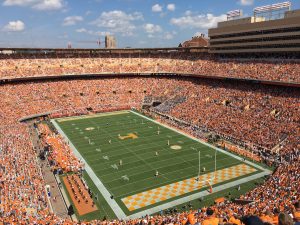
University of Tennessee Undergraduate Classics Conference Announcement.

If you’re reading this blog, you’re probably interested in research as an undergrad. Also, if you’re reading this blog, you may not know where to begin. In this post, I hope to demystify the process some by outlining how I prepared my first paper for presentation at a research conference, beginning with a paper I wrote for a class. This post will not be an explanation of how I got the chance to present at this conference (but that might be a later post!). Instead, I want to discuss the revision process and how I got to a “final product” ready for presentation. But, before I begin, I just want to say that the following is simply a process that worked for me, and I know that everyone’s method and timeline could look different.

Continue reading

Posted in courses, Senior Thesis, Summer Research, Uncategorized | Comments Off on Classwork to Conference Presentation: Developing a Class Paper into a Conference-Ready Research Project

Transferring into the Core

Library. Photo Credit: Stewart Butterfield

As the stars made themselves visible, Milkman tried to figure what was true and what part of what was true had anything to do with him.” 

Toni Morrison, Song of Solomon

As a transfer student, the arrival to Columbia can often be accompanied by a whole flurry of emotions––uncertainty as to where one might fit into the social fabric; anxieties related to life in New York City; confusion exacerbated by a new environment and the many wonderful quirks that make Columbia our collective home. With that said, one of the largest adjustments that comes with a transition into Columbia is enrollment in our proverbial academic tradition: the Core Curriculum. As a student who had only been introduced to the Core through admissions brochures and information sessions with members of the Undergraduate Recruitment Committee, my knowledge of this robust intellectual framework upon my arrival to Manhattan was limited. However, it is both a unique and beneficial aspect of the Core that students of all academic backgrounds are thrust into its arms in their first weeks on campus. 

Continue reading

Posted in Libraries, New York City, The Core, Uncategorized | Comments Off on Transferring into the Core

Putting It All Together: Tools for an Organized Project 

“What’s your work set-up like?” Photo Credit: Cecilia Guan

So your research project is finally underway: now what? For me, the natural next step is to get organized. I have compiled some of my favorite tips and tools for managing any type of project. For context, I am a visual learner who likes seeing the big picture and then structuring sub-components from there. Although these techniques work for me, my main mission is to help you think through what kinds of organizational frameworks apply to your situation, and if there is technology out there that can facilitate the way you work. 

Continue reading

Posted in Senior Thesis, STEM research, Summer Research, Uncategorized | Comments Off on Putting It All Together: Tools for an Organized Project 

“Useless” Research: Applying Research Skills to an Unrelated Summer Internship

A screenshot from Virginia’s museum tour. Photo Credit: Virginia Ignelzi.

In the spring of 2021, I attended a virtual undergraduate Classics conference and presented my research on Lucian of Samosata, a 2nd Century Greek satirist. In my paper, I focused on a text called On salaried posts in great houses, exploring the nuances and layers of Lucian’s social critique. At this point, the eyes of all non-Classics students might have already glazed over. In other words, this is a very esoteric topic that few would find interesting or relevant to their daily lives. In fact, even I initially struggled to connect this very niche research interest with the rest of my life. I certainly enjoyed the process of researching and writing and found the topic interesting, but would this research ever be used? For months, my recently-gained knowledge sat in the back of my mind, gathering figurative dust. I do not think I am alone in experiencing this frustration. Research topics are often incredibly specific. Sometimes, the “real world” application of a certain project is not immediately evident. In that case, it can be tempting to dismiss the whole endeavor as useless.

Continue reading

Posted in Archives, New York City, Summer Research, Uncategorized | Comments Off on “Useless” Research: Applying Research Skills to an Unrelated Summer Internship

Peer-to-Peer: The Core as Taught by Graduate Students

Old MIT Classroom.
Photo Credit: Ryan Tyler Smith

“The object of education is to teach us to love what is beautiful.

 Plato, The Republic

When the Core Curriculum is introduced to eager first-year students during their initial weeks on Columbia’s campus, or even earlier during a proverbial visit to Morningside Heights during their junior year of high school, it is often assumed that Columbia’s most renowned faculty will be present in the classroom when the first words of The Iliad are introduced. And, in many instances, this is exactly the case. Students pour into classrooms already reverberating with discussion and philosophies, sitting side by  side at desks positioned just slightly too close together. At the front of the room, they might find the Chair of the English department, or a former Nobel laureate. In my own experience, however, my first day of Literature Humanities found me addressed by a graduate student, adorned in a floral blazer and tweed pants.

Continue reading

Posted in The Core, Uncategorized | Comments Off on Peer-to-Peer: The Core as Taught by Graduate Students

A Research Assistant’s Summer

Columbia Business School. Photo Credit: Christian Flores

A few weeks ago, I wrapped up my summer research internship at Columbia Business School (CBS).  Their internship program provides students a paid opportunity to work on a summer project with CBS faculty across multiple quantitative social science disciplines: finance, economics, marketing, management, decision sciences, operations, accounting, or data analytics.  I worked on an economics project with Professor Cailin Slattery that analyzed governors’ decisions to invest in state level company incentive deals (e.g. Amazon HQ2 in New York City) versus other economic development programs like education. More specifically, for the bulk of the summer, I compiled a database of small business programs across different states and years. This entailed me manually sifting through state budgetary documents and putting the titles of the programs into a spreadsheet. Then, for the final few weeks, I worked with data from a survey that Professor Slattery commissioned. I compiled some descriptive statistics that I found interesting and produced some graphs that I think could motivate future research.

I hope that my following reflection will not only teach you something about my experience, but also give you insight into what you might want to be thinking about as you work on your own potential projects. Apart from the actual topic I worked on, I think I learned most about what full-time research entails and looks like.

Continue reading

Posted in Faculty Mentors, Summer Research, Uncategorized | Comments Off on A Research Assistant’s Summer

The Age-Old Question of Crafting A Research Question

Every project has a beginning, and every idea begins when you think it into existence. Photo Credit: Unsplash

So, it’s the first day of the semester, and your professor is going over the course syllabus with your class. You flip to the assignments section and see, ‘30 PAGE RESEARCH PAPER DUE’ on the last day of the course. Your heart stops. You’ve never written a research paper for this subject, let alone a paper this long. Where do you even start? 

The professor explains that the paper will be the culmination of planning, researching, and writing over the course of the semester. Most likely, professors will provide deadlines throughout the semester (e.g. first draft due, peer review due) that will help you pace your process and keep on track. In my experience, research projects are a challenge like no other, where a successful end result depends on the preparation and considerations done in advance of any kind of final paper content. I believe it is critical that before you start, you need to define a research question that entices and motivates your intellectual curiosities. 

First and foremost, breathe—you are so capable of this project, and you’re not alone in this process.

Continue reading

Posted in courses, Faculty Mentors, Uncategorized | Comments Off on The Age-Old Question of Crafting A Research Question

An Opera Through Time

Columbia Core Books. Photo Credit: Christian Flores

This past summer for Music Hum, our class was assigned to watch Mozart’s Don Giovanni. It is one of Mozart’s most seminal pieces and widely considered among the greatest operas ever composed. Watching this particular performance in 2021 was an eerie experience, however. Of course, I enjoyed the opera’s undeniable charm. From the music to the writing, it is clear why people continue to revisit the comedy centuries later. The performers’ solos, known as arias, wowed me, particularly the female sopranos. And yet, there is heavy baggage that comes along with any piece of art that is hundreds of years old. For example, I learned that Mozart was friends with other composers whose work was largely financed by companies heavily involved in the slave trade. A 21st century audience deals with these complications differently than Mozart’s contemporaries. But as I reflect a bit more on what exactly I watched, I am particularly interested in the fact that centuries before me, someone sat in an opera house and watched the same characters perform more or less the same music. The same dialogue, perhaps the same stage direction, everything that I witnessed has been shared by people of a different time. 

Continue reading

Posted in Uncategorized | Comments Off on An Opera Through Time

Humility and Hegel: The Value of a Broad CC Syllabus

An image of Alma Mater, viewed from below. Photo credit: Columbia University Photo Library

As I read through the CC syllabus in my sophomore year, I felt that I was riding along in a high-speed train, going too quickly to take in the scenery. The syllabus was so wide-ranging and fast-paced that I struggled to absorb it all. Adding the chaos of COVID to the already packed semester meant that the later authors were covered in only a class each. When it was time to read Hegel’s Introduction to the Philosophy of History, for example, we had a single class to cover it all. That’s one sub-two-hour session to explore the notoriously dense philosophy that continues to shape our discourse surrounding history to this day.

This breakneck pace can seem like a puzzling choice. Why did the creators of the CC syllabus choose to cover so much material in such a short amount of time, prioritizing breadth over depth? I, of course, can’t speak about their thought process with any certainty. However, I can say that I found an enormous amount of value in the wide-ranging nature of the course. In fact, it is precisely the broad knowledge that CC provides which I want to consider in this post, because this is the kind of knowledge that forms an excellent basis for research.  Continue reading

Posted in courses, COVID-19, The Core | Comments Off on Humility and Hegel: The Value of a Broad CC Syllabus

Literature as Local: Experiencing the Core through New York City

Yellow Car Running on the Street Between the Building During Daytime. Photo Credit: Robert Bye

“]

]you will remember

]for we in our youth

did these things

yes many and beautiful things

]

]” 

Sappho, If Not, Winter: Fragments of Sappho

It is a well-known fact that Columbia University exists as an extension of New York City. Student residence halls tower above the smog-engulfed traffic on Amsterdam Avenue; familiar scents of cooking gyro waft over the campus gates from the halal cart on 116th Street; and many Lions opt to take advantage of discounted tickets to museums, athletic events, and Broadway performances. To attend Columbia, even with its sprawling fields and historical architecture, is to live in the proverbial “City That Never Sleeps.” And, in many ways, this adage holds true.

Continue reading

Posted in Uncategorized | Comments Off on Literature as Local: Experiencing the Core through New York City