Using Psychology To Foster Beginner’s Mind 

Can you think of any times when you exhibited cognitive biases while learning?         Photo credit: Unsplash.


Beginner’s Mind: the idea of engaging the world without preconceptions, as if you’re seeing everything for the very first time.” 

Dean Valentini 

We make millions and millions of decisions each day. And with the many, many priorities we balance as students, developing adults, and human beings, sometimes it can be difficult to keep in perspective what it means to be an open-minded learner. To each incoming Columbia College class, Dean James Valentini (i.e. Deantini) introduces the Core Competency of Beginner’s Mind as a guiding principle for life-long development. I interpret Beginner’s Mind to be a growth mindset that encourages me to be infinitely curious, approaching each engagement with humility and without pre-determined judgment. Maintaining Beginner’s Mind is one method, albeit idealistic, through which we might be able to connect with those of different opinions in an increasingly partisan and polarized society. 

Continue reading

Posted in courses, major research, Uncategorized | Comments Off on Using Psychology To Foster Beginner’s Mind 

So You Want a PhD in a social science discipline?

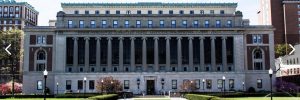
Outside of the International Affairs Building, which is home to the Political Science and Economics Departments. Also where Christian has probably spent most of his time at Columbia. Photo Credit: Christian Flores.

Phds were always mysterious to me. Growing up, I had no exposure to an academic, let alone my parents who were poor immigrants from a developing country. All I knew is that it was the highest degree one could get, and in a world where credentials carry so much weight, it was something that I presumed I wanted to attain. It was not until I came to Columbia and began interacting with faculty members that I learned about the doctorate, and subsequently what it takes to get one in the social sciences. These are some of the tidbits of advice that have resonated the most with me as a first-gen, low-income student. I should mention that the question about whether or not to pursue a PhD is related but deserves its own post. For now, given that application season just passed and decisions will be imminently released, I figured that I would write up some of the lessons I picked up from my professors over the years. I also want to emphasize that while there is great advice out there on getting into PhD programs, this is my own perspective and I hope that anyone who lacks the knowledge that I did before college finds these thoughts helpful.

Continue reading

Posted in Faculty Mentors, major research, postgraduation plans | Comments Off on So You Want a PhD in a social science discipline?

An Interview with Helen Ruger about the Laidlaw Scholars Program (Part 2)

Bust of Hippocrates; photo credit: Pixabay.

Last month, I spoke with a Laidlaw scholar about her introduction to the program, her experiences with faculty mentorship, and the topic she chose to research in her first summer. This month, we’ll be discussing her second summer with the program and the interdisciplinary nature of her work and the Laidlaw program as a whole.

Continue reading

Posted in major research, Summer Research | Comments Off on An Interview with Helen Ruger about the Laidlaw Scholars Program (Part 2)

An Interview with Helen Ruger about the Laidlaw Scholars Program (Part 1)

Helen Ruger winning the Beaumont Prize at the 2019 UTK Undergraduate Classics Conference. Photo credit: UTK Classics department.

This month, I spoke with a friend and fellow Classics major about her experiences with the Laidlaw Scholars program. Below is the first part of our conversation, in which we talk about how she was introduced to the program, her experiences with faculty mentorship, and the topic she chose to research in her first summer with the program. (This interview is lightly edited for clarity and length.)

Virginia: How did you hear about the program? Can you sketch out that story for me?

Helen: I found the program on the URF website my freshman year around December when all freshmen were thinking about internships over the summer. I was really interested in research. I had done independent research in high school in Classics. It seemed like such an incredible program. You get to design your own project, and you receive funding for two summers.

Continue reading

Posted in conference presentations, COVID-19, Faculty Mentors, major research, Summer Research | Comments Off on An Interview with Helen Ruger about the Laidlaw Scholars Program (Part 1)

Demystifying Office Hours 

I may not be a professor, but my office hours are also open to all! Photo credit, Unsplash.

Welcome to the start of a new semester! I am in a bit of disbelief that this is the last one of my undergraduate Columbia experiences. I thought I would start off my posts this new year by unpacking possibly one of the most mysterious parts of the academic experience: office hours. If you are nervous about approaching or meeting with a professor, read on. I hope I can share some insights and general recommendations about overcoming your initial hesitations about office hours and making the most of this wonderful resource.  Continue reading

Posted in courses, COVID-19, Faculty Mentors, major research, postgraduation plans, Senior Thesis, STEM research, Summer Research | Comments Off on Demystifying Office Hours 

Memory & Melody: The Core Curriculum and the Musical Imagination

Metropolitan Opera House. Photo Credit: Niall Kennedy, Creative Commons

“Wait, the best is yet to come: Don Basilio, my / singing teacher and his factotum,/ while giving me lessons/ repeats the same theme every day.” 

Wolfgang Amadeus Mozart, Le nozze di Figaro


While Columbia’s notable Core Curriculum  is particularly revered for its Literature Humanities and Contemporary Civilizations course offerings, having first introduced the latter in 1919 (just one year after the conclusion of World War I), there is a certain charm that colors its lesser known components. Art Humanities introduces students to the oil paintings of Rembrandt and the grinning Monroe of Andy Warhol, while the Foreign Language requirement offers burgeoning scholars the ability to conduct research in a region that transcends their vernacular. In a similar way, the Music Humanities curriculum––introduced in 1947 and focused on the many forms of Western musical imagination––provides students the chance to understand creation as a medium that can both be written, heard, and viscerally felt.

Continue reading

Posted in courses, The Core | Comments Off on Memory & Melody: The Core Curriculum and the Musical Imagination

Research Symposium!

Astrid Liden (Laidlaw ’20) and Ava Sanjabi (Laidlaw ’21) at Columbia’s Undergraduate Research Symposium, October 2021. Photo credit: Ariella Lang.

About two months ago, Columbia and URF hosted their annual Undergraduate Research Symposium, an event that allows students to showcase research projects they have been working on. It happened to coincide with Family Days Weekend, and I eagerly waited on line with parents who were excited to see their student’s research spanning the Humanities, Social Science, and STEM. As I walked in, the 150+ student presenters were well under way, chatting with visitors and sharing color copies of their posters. Full of positive energy, the symposium offers insight for students who are unaware of what undergraduate research looks like to get a sense of not only what each discipline aims to study, but also how to go about finding opportunities, funding, and an advisor. I interviewed four students about their projects and experiences within the research community with the goal of understanding what motivates students. Apart from asking about their individual projects, I posed four questions to each student about their respective fields, and surprisingly came away with distinct conversations. 

Continue reading

Posted in conference presentations, COVID-19, major research, Summer Research, Uncategorized | Comments Off on Research Symposium!

Reimagining Research during COVID-19

3D Painting, British Library. Photo credit: Plashing Vole.

“Comprehension, in short, means the unpremeditated, attentive facing up to, and resisting of, reality –– whatever it may be.” Hannah Arendt, The Origins of Totalitarianism

The COVID-19 pandemic, regardless of the declaration from many that it has reached some sort of official conclusion, has left in its wake a series of strains upon institutions of higher learning. As a student at Columbia, I have found myriad challenges emerge over the course of the last eighteen months, particularly manifest in the areas of library access and independent research. As a senior, the need to compile relevant data to supplement my thesis proposal has been a point of particular contention, as I attempt to access  resources that are still available only in limited physical or solely digital forms. However, in adapting to the conditions of the surrounding world––both in Manhattan and across the varied landscapes of universities throughout the United States––I have found that the confinement of my research to digital mediums has proven remarkably revelatory in my understanding of such resources.

Continue reading

Posted in Archives, COVID-19, New York City, Senior Thesis | Comments Off on Reimagining Research during COVID-19

A ‘Not To-Do’ Guide from Machiavelli: Being a Successful Columbia Student Leader

A scene from Columbia Chinese Students Club’s 2019 Night Market. Planning this event was an incredibly formative experience for me as a student leader. Photo credit: Cecilia Guan.

Throughout your year in Contemporary Civilizations (CC), you are exposed to, amongst other topics, perspectives on what ‘good’ civil society looks like, what ‘good’ government looks like, and what ‘good’ leaders look like. One of the main reasons why I enjoyed CC so much came from this ability to draw connections between the texts I engaged with and their relevance (or lack thereof) to everyday reality. This sentiment was abundantly clear for me after reading The Prince by Machiavelli. Colloquially, someone described as Machiavellian is manipulative, willing to cross moral boundaries in order to attain power. Reading the actual textual basis for these culturally significant ideas enabled me to refine my understanding of what kind of leader Machiavelli conceptualized. The conclusion I reached was that the traits of a Machiavellian leader were absolutely not the characteristics I would personally choose to embody. So, what can take away from this CC text to inform how we develop our leadership style and become stronger Columbia student leaders? 

Continue reading

Posted in New York City, The Core, Uncategorized | Comments Off on A ‘Not To-Do’ Guide from Machiavelli: Being a Successful Columbia Student Leader

Classics Conferences in the Time of COVID: My Experience Presenting Research in 2020

The University of Tennessee, Knoxville (where the conference would have been held, if not for a global pandemic). Photo credit: Unsplash.

It might be helpful to think of this post as a “Part 2” to what I wrote last month. If you haven’t had a chance to take a look, in that post I discussed how I developed a final paper for a class into a piece of work ready for presentation at a research conference. In this post, I want to explain what happened next. In other words, what was the conference itself like and how did I end up there? As opposed to October’s post which talked mostly about my writing process, this will be a little bit more logistics-focused. While some of this information might seem basic or obvious to those who have already participated in similar opportunities, I hope that this explanation will serve to demystify the process for those in the earlier stages of their research.

Continue reading

Posted in conference presentations, COVID-19, major research | Comments Off on Classics Conferences in the Time of COVID: My Experience Presenting Research in 2020