The Future of Queer and Trans Rights

The Future of Queer and Trans Rights

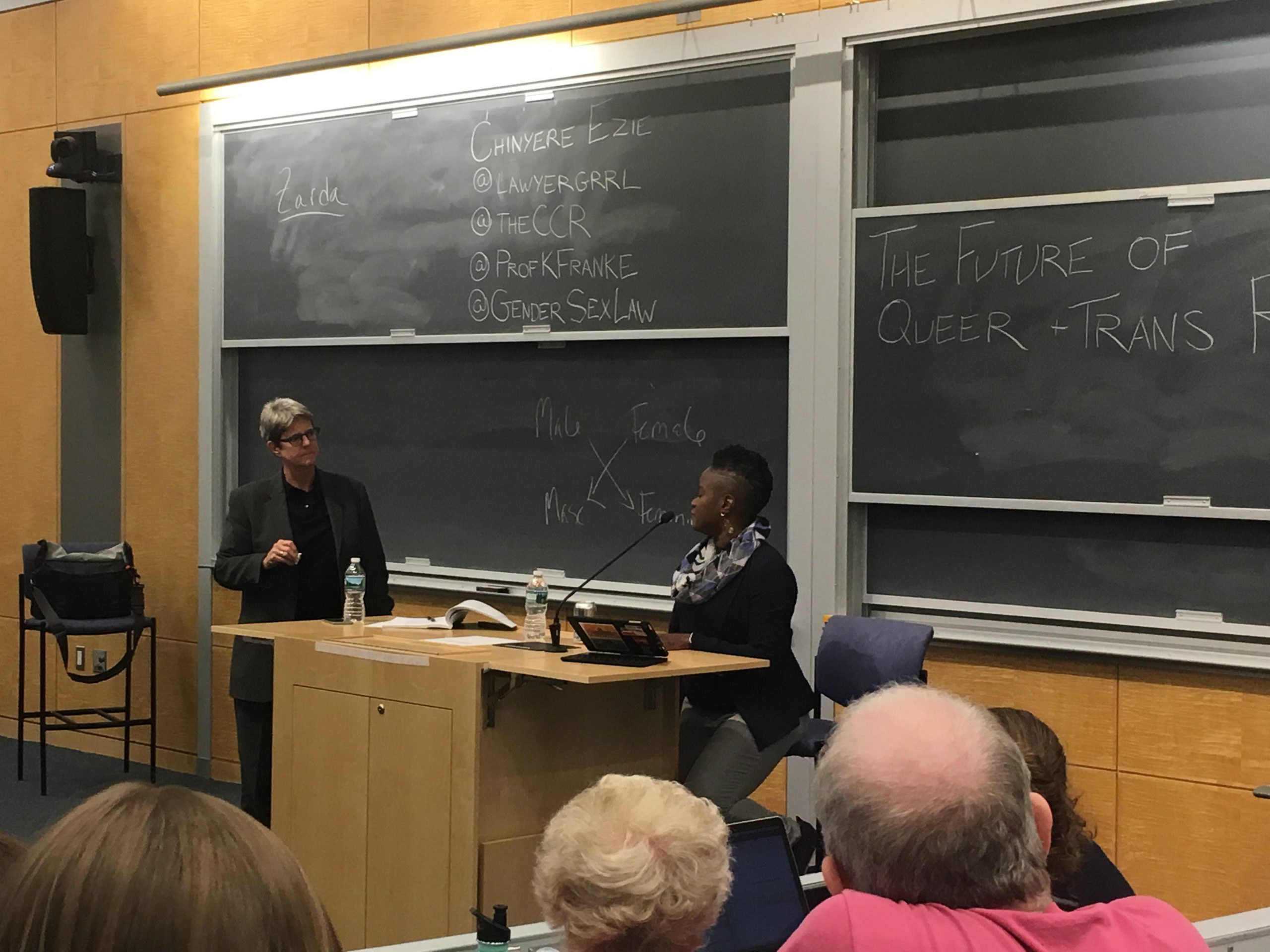
Aimee Stephens worked at a funeral home in Detroit for nearly six years when she wrote a letter telling her boss that she was transgender. Two weeks after, the Christian owned and operated funeral home terminated her job: not on the basis of job performance, but explicitly because she is transgender. Aimee took her case to the Equal Employment Opportunity Commission (EEOC), which sued the funeral home for firing Aimee on the grounds of sex discrimination. Five years later, in March 2018, the Court of Appeals for the Sixth Circuit issued a resounding victory for Aimee, stating that discriminating against transgender people is a form of sex discrimination that violates Title VII of the Civil Rights Act, which prohibits employment discrimination based on “race, color, religion, sex, and national origin.” The lawyers representing the funeral home from the Alliance Defending Freedom (ADF) accused the court of expanding the definition of “sex” and argued for the word’s strict protectionism. They petitioned that the...
Read More
LGBTQ Rights in a Global Perspective

LGBTQ Rights in a Global Perspective

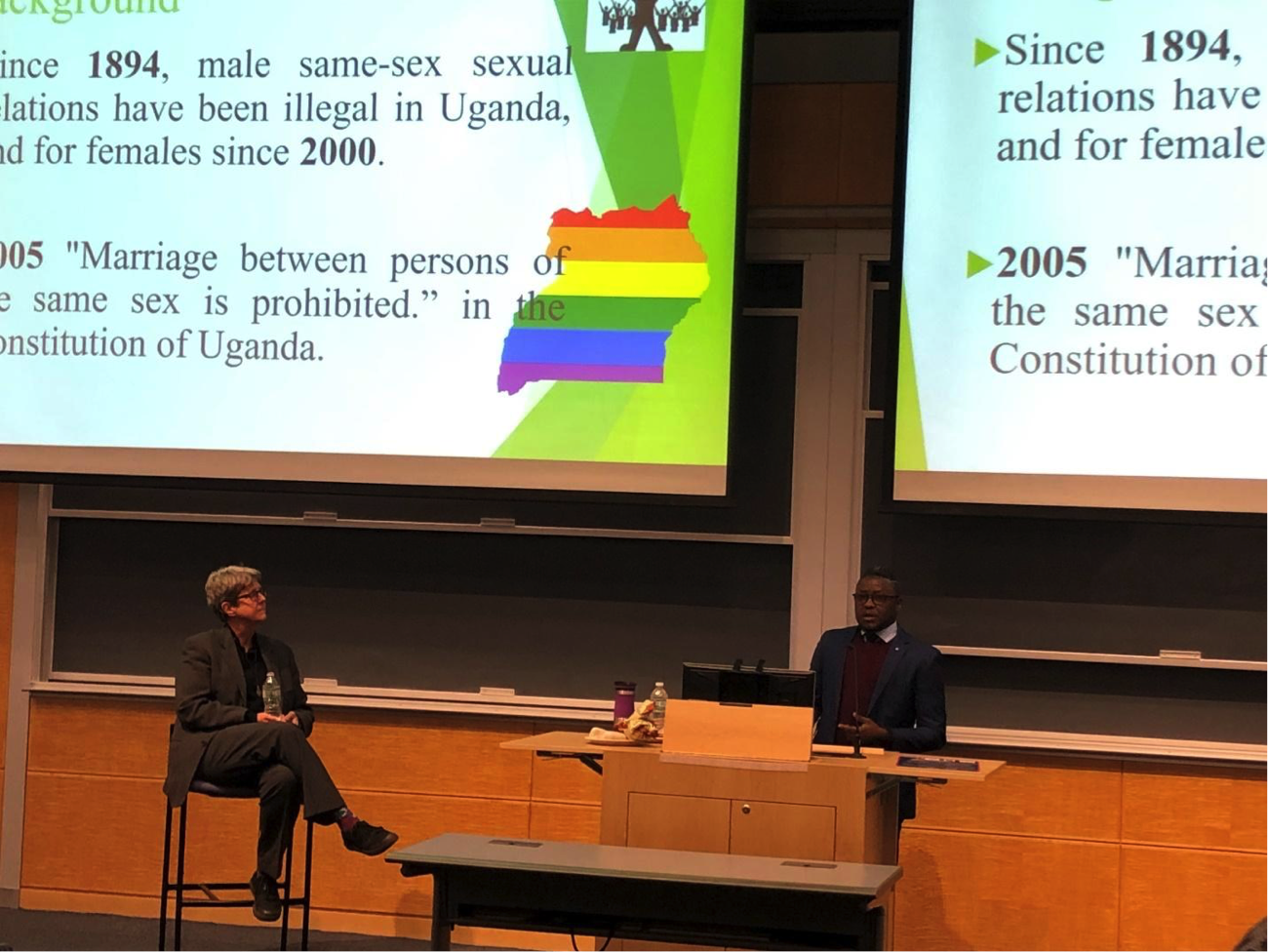
On November 12, Pepe Julian Onziema spoke to attendees of an event focusing on “LGBTQ+ Rights in a Global Perspective,” moderated by Professor Katherine Franke of Columbia Law School and the Center for Gender and Sexuality Law. Onziema, who is from Uganda, is currently a Fellow at the Institute for the Study of Human Rights at Columbia. He is an outspoken activist for LGBTQ Rights in Uganda and is the Programs Director of the non-profit organization “Sexual Minorites Uganda” (SMUG). His talk was centered around the history of LGBTQ persecution, as well as activism, in Uganda and the role that SMUG has played in making changes for acceptance and policy change. Giving some initial background on Ugandan LGBTQ history, Onziema explained that Uganda was colonized by the British and since 1894 male same-sex relations have been illegal—for females, it was made illegal more recently, in 2000. Further entrenching the criminalization of LGBTQ identity, the Uganda Constitution was amended in 2005 to...
Read More

Righting Victim Participation in Transitional Justice

On Wednesday, November 14, 2018, Dr. Inga Winkler, a prominent figure in the human rights community at Columbia, began the event “Righting Victim Participation in Transitional Justice” by introducing Tine Destrooper. Destrooper is the director of the Flemish Peace Institute and an associate professor at Ghent University. Previously, she has been the managing director of the Center for Human Rights and Global Justice at NYU’s School of Law and a fellow at the Wissenschaft-Kolleg, Berlin. The event’s focus: a new research project, focused on victim participation in transitional justice which is set to begin next year, and to be completed in five years. The project was created due to the ever-growing influence of transitional justice around the world. Effectively, this greater influence has engendered a rapid implementation of transitional justice frameworks. Such a rapid implementation can oftentimes lead to problems such as uniformity which fails to recognize country-specific conditions. To set the stage, Destrooper made sure that everyone in the audience understood...
Read More
Understanding Gender, Migration, and Transnational Advocacy: A Talk with Chaumtoli Huq

Understanding Gender, Migration, and Transnational Advocacy: A Talk with Chaumtoli Huq

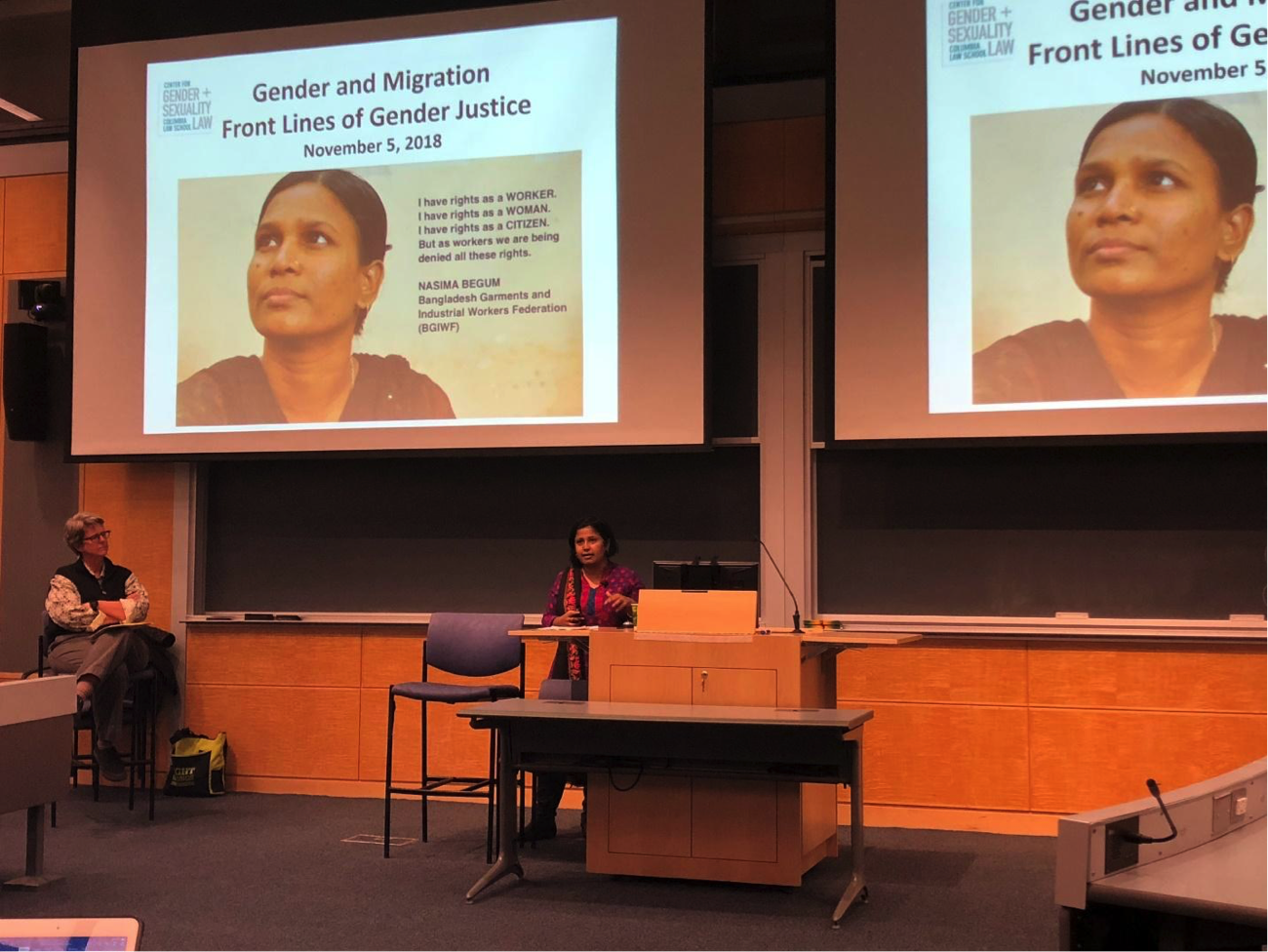
What is the connection between gender and migration? Between the garment industries in Bangladesh and the United States? And what advocacy strategies can we learn from these connections? These were some of the questions addressed by Chaumtoli Huq on Monday, November 5 in her talk on “Gender and Migration: The Front Lines of Gender Justice,” facilitated by Professor Katherine Franke of the Law School and the Center for Gender and Sexuality Law at Columbia. This discussion was part of a series of talks in Professor Franke’s Law class “Gender Justice” this semester. Chaumtoli Huq is an Associate Professor of Law at the CUNY Law School and the founder of non-profit organization Law at the Margins. Huq is a self-proclaimed “social justice lawyer,” interested in working not only top-down from elite institutions and courts to gain victories for clients and communities, but more importantly in working in and through the communities, she assists, taking the lead from those who would be...
Read More
P.C. Chang and the Universal Declaration of Human Rights

P.C. Chang and the Universal Declaration of Human Rights

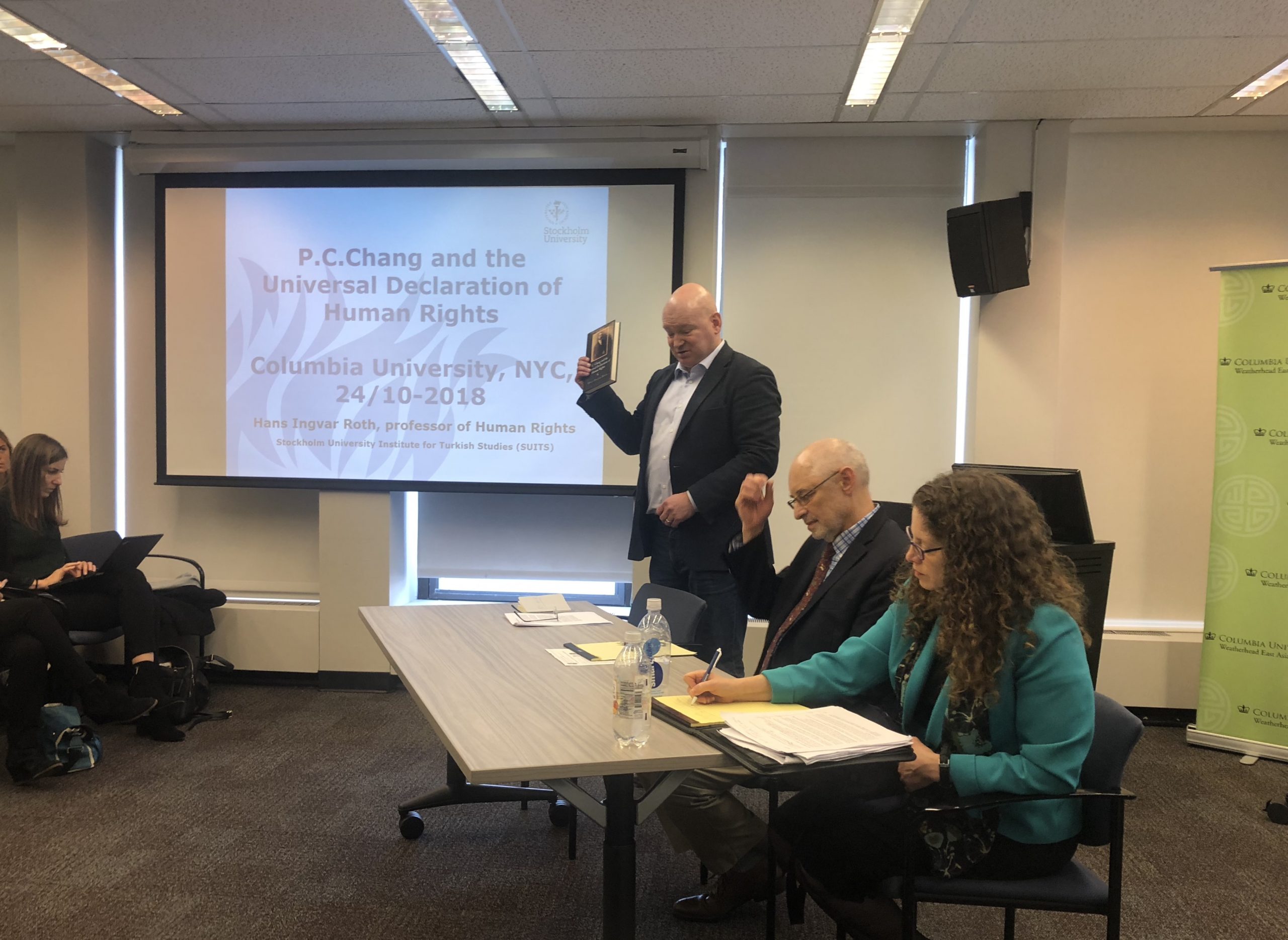
On October 24, 2018, United Nations Special Rapporteur in the field of Cultural Rights, Professor Karima Bennoune joined Professor Hans Ingvar Roth to celebrate his new book P.C. Chang and The Universal Declaration of Human Rights, marking the 70th anniversary of the UDHR. Roth has dedicated over four years to create the first intellectual biography of Peng Chun Chang, a “multifaceted talent and one of the most important drafters of the UDHR.” Chang is a Columbia University alumni and Roth acknowledged that “we are at Columbia University, where Chang studied, and this year is the 70th anniversary of the UDHR, and I think never before has it been more important to celebrate this great book in history.” Event moderator Professor Andrew Nathan introduced both speakers to a full room of fifty like-minded academics.   With only thirty minutes, Roth delivered an exceptional speech on the role of P.C. Chang in drafting the UDHR and Chang’s influence, making it a truly intercultural...
Read More
When Political Transitions Work: Reconciliation as Interdependence

When Political Transitions Work: Reconciliation as Interdependence

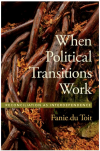
South Africa’s transition from apartheid to multi-racial democracy and subsequent Truth and Reconciliation Commission (TRC) are often held up as a gold standard to be replicated by countries emerging for civil war or dictatorship. While recognizing the importance of elections, forgiveness, and truth, Fanie du Toit, Executive Director of the Institute for Justice and Reconciliation in Cape Town, South Africa, and Virginie Ladisch, head of the Children and Youth program at the International Center for Transitional Justice, sought to challenge audience members to complicate our narrative of the political transition and reconciliation in South Africa and why and how it has and hasn’t worked. In the popular imagination South Africa’s racially segregationist apartheid regime was brought to an end by democratic elections in 1994. Following the seemingly superhuman leadership of Nelson Mandela, South Africans forgave each other for the crimes of the past and agreed to build a future together. Ever since the TRC’s mandate ended in 1998 other countries transitioning...
Read More

New Zealand’s Push for Sustainable Development

Prime Minister Jacinda Ardern’s Push for Sustainable Development The International Conference on Sustainable Development provided a forum for academia, government, civil society, UN agencies and the private sector to come together to share discussion on the Sustainable Development Goals (SDGs). This year, from September 26 to 28 2018, the Conference took place on multiple campuses around the world, making it a truly global event. On the second day of the 6th annual International Conference on Sustainable Development, Columbia University had the privilege of hearing Prime Minister Jacinda Ardern of New Zealand speak on the SDGs. Professor Jeffrey Sachs, the Director of the UN Sustainable Development Solutions Network, introduced Prime Minister Ardern to roaring applause in Alfred Lerner Hall. To begin her speech, Ardern discussed injustice and the impact of politics around the world. Ardern says, “if there is one thing we hate, it is injustice. We try to do it right by one another. Perhaps it comes from being a thousand miles from...
Read More
Human Rights Internship Panel

Human Rights Internship Panel

On October 11, graduate and undergraduate students interested in internships related to Human Rights gathered at the Institute for the Study of Human Rights to hear four students speak about their summer internship experiences. The panelists brought different advice from their internship experiences both abroad and in the United States on how to identify the right position, going about the interview process, and learning on the job. They all stressed the importance of staying flexible, and using the internship experience to explore interests cultivated in the classroom in the field. Tanya Sattar is in her second year of her Masters of Arts in Human Rights Studies at the Graduate School of Arts and Sciences. She spent her summer in New York and London with Value for Women, a UK based organization that identifies and tests new solutions for women’s empowerment and gender and social inclusion with income generating activities. Tanya helped produce gender market assessments and ecosystem mapping of impact investing...
Read More
As Spanish Government Turns a New Page, a Chance to  Lead EU on Migration

As Spanish Government Turns a New Page, a Chance to Lead EU on Migration

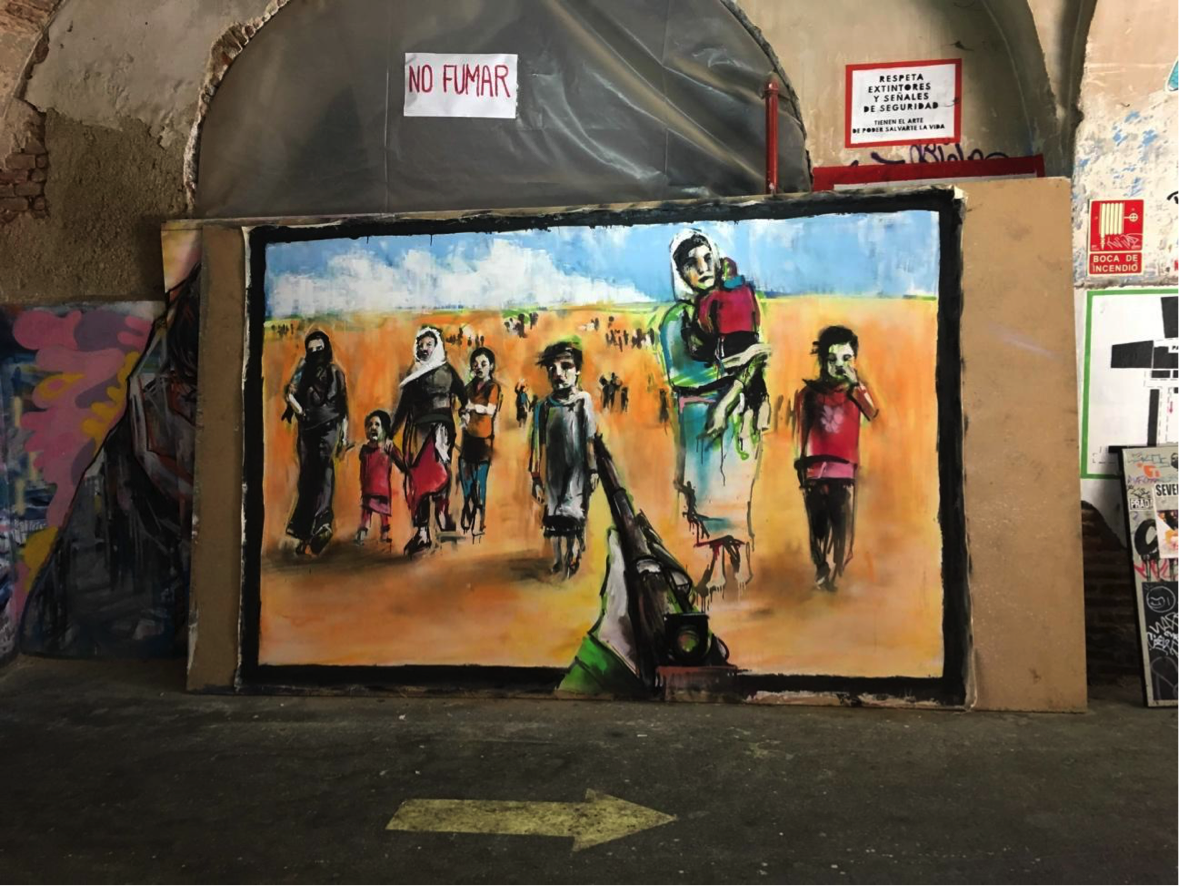
As Spanish Government Turns a New Page, a Chance to Lead EU on Migration Pedro Sanchez is the new Prime Minister of Spain after a stunning no-confidence vote. The refugee crisis deepens. The people want reform. Spain’s potential as a future EU trailblazer on migration policy rests in his hands. By Madison Chapman Part I  Madrid, Spain—Ndiogou spends the hottest part of the day—when many Spanish people take a siesta— with a group of fellow Senegalese men near the main plaza of Lavapiés, a lively migrant neighborhood in Madrid. When I met him one humid March afternoon, he was eager to chat, casually leaning on the wall of one of many nearby Lycra Mobile shops. Surrounded by the slight waft of tapas, it is hard to imagine that Ndiogou has had a tough life in Spain. Yet he spent his first decade in the country unable to obtain official paperwork—and with it, public assistance. His lack of work authorization forced him to...
Read More
On International Day of Peace, A Celebration of Human Rights

On International Day of Peace, A Celebration of Human Rights

By Ashley E. Chappo, editor of RightsViews and a graduate of Columbia University School of International and Public Affairs and Columbia Journalism School Human rights, specifically the Universal Declaration of Human Rights (UDHR), are the focus of this year's International Day of Peace, or “Peace Day,” which takes place across the world each year on September 21. This UN-designated day of observance advocates peace action and education in spite of ongoing human conflict through peace-building activities, a global minute of silence, intercultural and interfaith dialogues, vigils, concerts, feasts, and marches. This year’s theme is "The Right to Peace - The Universal Declaration of Human Rights at 70." The timing for the theme is apropos: it comes at a period when the human condition is increasingly vulnerable, beset by global conflict and dependent on world leaders who have turned their backs on international cooperation. During this state of prolonged human suffering, the power and failings of a single document of 30 human rights ideals...
Read More