Rerouted, Rerooted: Oral Histories of Syrian-Armenian Refugees

Rerouted, Rerooted: Oral Histories of Syrian-Armenian Refugees

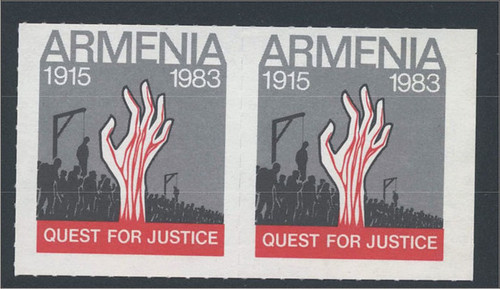
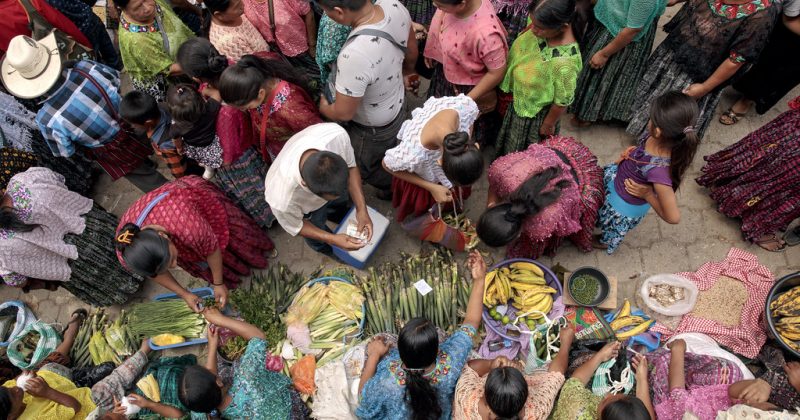
By Larissa Peltola, Editor, RightsViews.   The Armenian Genocide, which took place 106 years ago, today, claimed the lives of an estimated 1.5 million Armenians. While people around the world are now more aware of what occurred in 1915, following a global push for recognition of the genocide, few are aware of the lasting implications of the genocide which have carried on to this day. HRSMA alumna Anoush Baghdassarian (‘19) and Pomona College graduate Ani Schug (‘17) have undertaken the important and necessary work of collecting the oral histories of Syrian-Armenian refugees - the descendants of genocide survivors - to keep the memories of those who have perished alive. What was the Armenian Genocide?  Raphael Lemkin, the Polish-Jewish lawyer who coined the term genocide, was moved to do so after hearing about the systematic annihilation of Armenians in the Ottoman Empire in 1915. Before WWI, Armenians - in what is now Turkey - totaled over two million. But by 1922, there were fewer than...
Read More
The Neoliberalization of Academia: Why the Columbia University Graduate Workers Strike is a Human Rights Imperative

The Neoliberalization of Academia: Why the Columbia University Graduate Workers Strike is a Human Rights Imperative

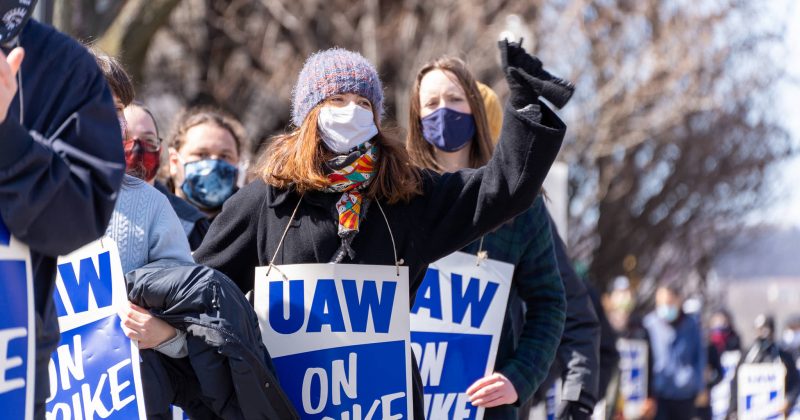
By Noah Smith, RightsViews staff writer and a graduate student in the human rights MA program. The opinions expressed in this article are Noah’s own and are not representative of the Institute for the Study of Human Rights (ISHR) or Columbia University.  Thousands of graduate students and student workers at Columbia University began striking on March 15, 2021 after many stalled negotiations with school administrators. A strong majority of student workers, 96%, voted  yes to authorize a strike and with a  deadline of March 15, 2021. The Graduate Workers of Columbia University (GWC) and all those in solidarity call on the university to agree to a fair contract. According to GWC bargaining committee members, the strike is a last resort after years of unsuccessful negotiations with university representatives, and assert that withholding their labor is the final means of forcing the university to recognize their demands. Columbia University has had a long and tumultuous history in regards to treating graduate workers as employees....
Read More
COVID-19 in Africa: Responses and Prospect for Recovery

COVID-19 in Africa: Responses and Prospect for Recovery

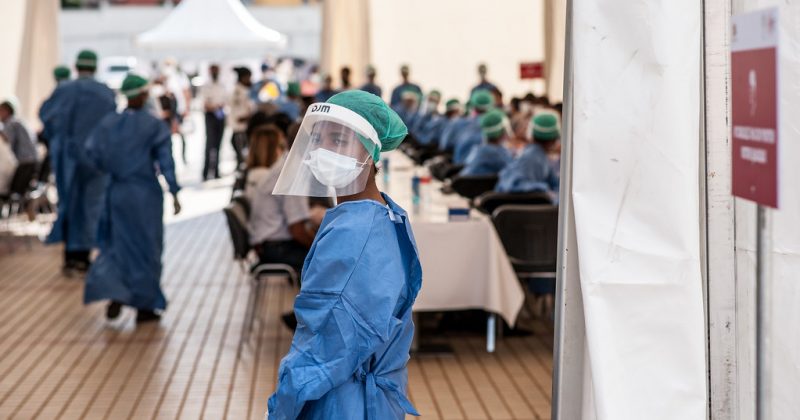
By Lindsey Alpaugh, staff writer, RightsViews, Human Rights MA student.  On Wednesday, January 27th, Columbia University held an event examining the impact of COVID-19 on the African continent. Panelists included Belinda Archibong, an Assistant Professor of Economics at Barnard College, Pedro Conceicao, the director of the Human Development Report Office and lead author of the Human Development Report, UNDP HDR office, and Dr. Wilmot James, Senior Research Scholar in the Institute for Social and Economic Research Policy. This event followed a series in the fall looking at COVID-19 in Latin America and was sponsored by the Economic and Political Development concentration at SIPA, the Institute for African Studies at Columbia University, Center for Development Economics and Policy, and SIPA Pan-African Network. African countries were able to have a significantly smaller first wave than predicted due to the dramatic measures that countries took to prevent the spread, such as closing schools and limiting travel. While this had a very successful impact on combatting the...
Read More
Myanmar’s Coup: Unearthing its Constitutional Roots

Myanmar’s Coup: Unearthing its Constitutional Roots

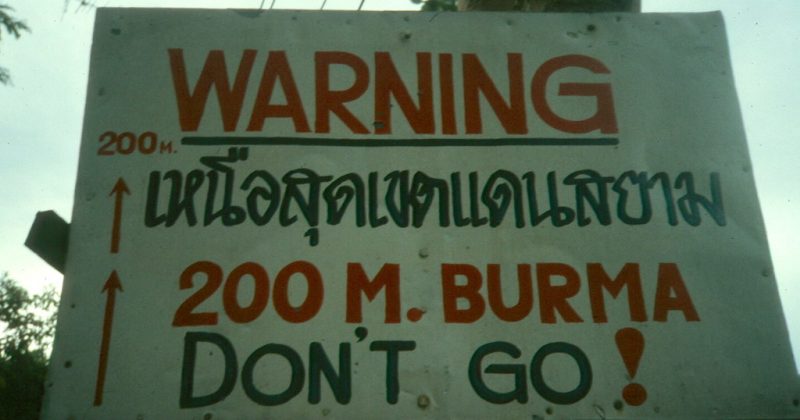
By guest contributors Namrata Rawat* and Rishav Devrani.* February 1, 2021, the world witnessed Myanmar succumbing to a military coup after a 5-year run of a democratically elected government. The coup happened on account of alleged fraud in the 2020 elections wherein the National League for Democracy (NLD) Party, headed by Aung San Suu Kyi saw a landslide victory with 83% votes in its favour. Myanmar, currently under a year-long state of emergency, would be under military rule. The coup d’état has been condemned by countries and international organisations across the globe, who have called it a serious blow to democratic reforms. However, this state of events is not unprecedented, a similar narrative presided over the 1990 election as well. The imposed state of emergency is provided for under Section 417 of the Constitution of Myanmar. It becomes pertinent to discuss this as a military rule can have unavoidable violations of human rights across the country. In this article, the authors...
Read More
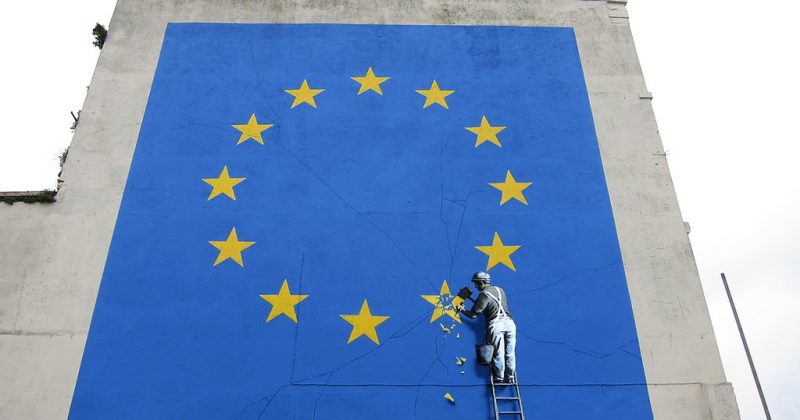
Brexit and its International Implications on Religious Communities in the United Kingdom

Brexit and its International Implications on Religious Communities in the United Kingdom

By guest contributor Dr. Ozgur H. Cinar.* The United Kingdom (UK) is frequently on the international agenda on account of Brexit. Finally, the European Union (EU)-UK Trade Agreement was signed on 31 December 2020. It came into force on 1 January 2021. Although the debate over the political, economic, social and cultural effects of Brexit continues to rage, its effects on the religious communities has not been explored. In particular, when considering the rise in hate crime following the EU Referendum of 23 June 2016, especially religious communities are wondering what is happening to the British lifestyle, traditionally founded as it is on tolerance and pluralism.  In a cosmopolitan country such as the UK where there are people of many different nations and beliefs, it is necessary for the state to take an active role in safeguarding. This freedom has a significant place in human rights in regard to the shaping of individual and social identity by enabling individuals to act in...
Read More
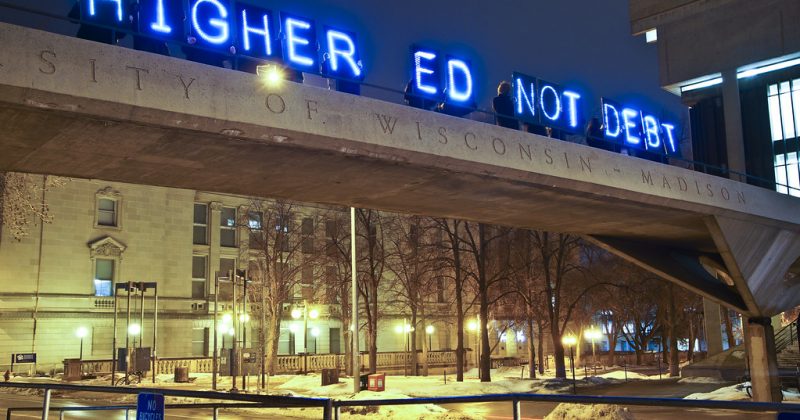
Student Debt Forgiveness is a Human Rights Issue

Student Debt Forgiveness is a Human Rights Issue

By Noah Smith, RightsViews staff writer and a graduate student in the human rights MA program. Americans owe over $1.7 trillion in student loan debt and the Federal Reserve projects that 31% of all U.S. adults have student loans. House and Senate Democrats have frequently implored President Biden to forgive up to $50,000 of federal debt through an Executive Order, an action Senate majority leader Chuck Schumer has articulated Biden should take during his first 100 days in office. During a recent CNN town hall, an audience member asked President Biden what actions his administration will take to forgive up to $50,000. He quickly responded by stating “I will not make that happen.” President Biden has given several reasons for why he does not support large student debt forgiveness, namely, he believes such action would disproportionately benefit students who go to “elite” private colleges. “It depends on whether or not you go to a private university or public university,” he said...
Read More
Understanding the LGBT Rights Movement in Indonesia

Understanding the LGBT Rights Movement in Indonesia

By guest contributors Harsh Mahaseth* and Ishita Goel*   Although homosexuality is legal in most parts of Indonesia, it is widely believed that the unitary state of the Republic of Indonesia is anti-lesbian, gay, bisexual, and transgender (LGBT), with government officials making the four-letter acronym a toxic symbol. In November, Indonesian police arrested Millen Cyrus, a trans-woman Instagram influencer, for alleged drug possession. Police placed her in a male detention cell at the Tanjung Priok Port Police Station, a move that received criticism from Indonesians and the international community. Millen Cyrus was arrested on November 22, 2020, after police raided her hotel room and discovered 0.36 grams of crystal methamphetamine in her possession. Police revealed later that Cyrus had been placed in a male detention cell because her I.D card identified her as a male. She was moved to a special cell following public outrage, not because police realised their mistake. They removed her from the male detention cell in order to “stifle anger,”...
Read More
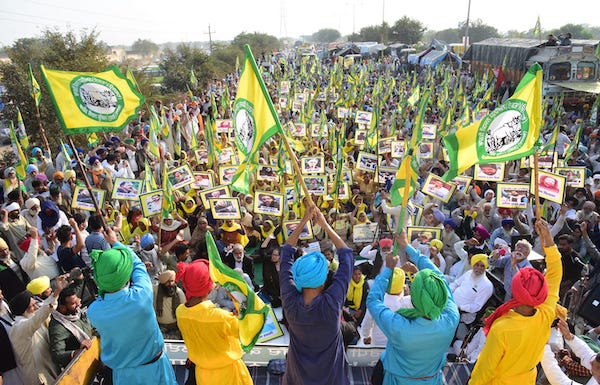
The State vs. The People: The Indian Government’s War Against Farmers and Dissent

The State vs. The People: The Indian Government’s War Against Farmers and Dissent

By guest contributors Saba Kohli Dave* and Namrata.*   In the wake of the historic farmer’s protests in India, on February 8th, India’s Prime Minister Narendra Modi, hailing from the country’s contentious Hindu nationalist Bharatiya Janta Party (BJP), compared protestors to parasites in Parliament. This politically motivated comparison comes as no surprise as there has been a steady state-led crackdown on those asserting civil rights and liberties through protest. However, the state made a miscalculation when it promulgated three agriculture-related ordinances in June 2020, which were passed in Parliament under controversial circumstances in September 2020. Since November, farmers across India have been the major voices of dissent, outraged at laws that were passed without their consultation. Why are the farmers protesting? The 3 farm laws were passed blurring legal and constitutional lines. The bills were arrived at without pre-legislative consultation, tabled without scrutiny, and passed through a dubious “voice vote.” They have been perceived by a majority of farmers as the government abrogating its...
Read More
The Will To Work: Women’s Labor Amid COVID-19 Pandemic

The Will To Work: Women’s Labor Amid COVID-19 Pandemic

By Kelly Dudine, a staff writer at RightsViews and a graduate student in the Human Rights MA Program   Globally, girls and women are simultaneously among the most overworked and most impoverished populations. Entire economies thrive due to the unrecognized and undervalued labor of women, including household work, care work, and informal and low-wage labor.  During the continuation of the COVID-19 pandemic, girls and women stand to lose even more. Women in varying levels of employment are now struggling to maintain dignified work, and many fear the loss of income more than the pandemic itself. “During the first lockdown, all the artisans were tense about not having enough orders to work and feared not getting paid,” said Rosna Kafle, Chair of the Kopila Valley Women’s Cooperative in Surkhet, Nepal.  The Cooperative employs some of the most vulnerable women in the community with work as tailors and weavers. Before the Cooperative, many of the artisans were unemployed, or performed hazardous work, like breaking stones or...
Read More
National Security Versus the Rights of Conscientious Objectors

National Security Versus the Rights of Conscientious Objectors

By Donggeun Lee, RightsViews Staff Writer and a junior majoring in Human Rights. When one serves their nation against their will, who would be responsible for the trauma that they might receive? Some might join the military to avoid social pressure or jail, believing that military service will not be too bad. The problem is that it could be. Surely, hazing in the military is one source of trauma, but there are more. The trauma that roots in the memory of those serving the nation. Throughout history, the military forces, at times, were used in crimes, such as genocide. Not only the Nazi-led holocaust, but also the Armenian Genocide, Irish Genocide, and even the Turkish army invading the Kurdish region in 2019 were all done by use of military forces. Those who serve the nation believing that they were protecting national security may later find out that they were actually involved in mass-killing with no moral reasons. They could have tremendous...
Read More