NeuroRights: The Need for Human Rights Guidelines for Neurotechnology & AI

NeuroRights: The Need for Human Rights Guidelines for Neurotechnology & AI

By Noah Smith, RightsViews staff writer and a graduate student in the human rights MA program.   On January 29, the Institute for the Study of Human Rights hosted Rafael Yuste, Professor of Biological Sciences at Columbia University, to discuss the proposal from the Morningside group led by Yuste (Yuste et al., Nature 2017) to add new human rights articles to the Universal Declaration of Human Rights (UDHR) to protect mental privacy, personal identity, personal agency, equal access to cognitive augmentation, and protection from algorithmic biases. The event commenced with moderator Lara J. Nettelfield, Senior Lecturer, Institute for the Study of Human Rights, introducing Rafael Yuste who began his presentation by discussing the fundamental biology of the brain as well as why we must study neuroscience in relation to human rights. The brain, which is composed of roughly 100 billion neurons, is what generates all of our cognitive and mental abilities. If we understood how this organ worked, we would recognize the mind...
Read More
Then They Came for Me: A Call for Jewish Support of #BlackLivesMatter

Then They Came for Me: A Call for Jewish Support of #BlackLivesMatter

By Anna Miller, a staff writer at RightsViews and a graduate student in ISHR’s Human Rights MA Program. Note: this piece addresses antisemitism in the United States only, though it exists worldwide. As a Jewish person born and living in the United States, my knowledge is primarily based in this country.  The Jewish people are no stranger to hatred and violence. Jewish history is marked by thousands of years of antisemitism, centuries of forced diaspora, and a boiling point of bigotry that led to the Holocaust. Today, antisemitic hate crimes and speech have reached a new high in the United States. In 2019, the Anti-Defamation League reported 2,107 antisemitic incidents, the highest number on record since ADL began tracking such incidents in 1979 (ADL).  Due to their acute familiarity with discrimination and injustice, Jews tend to be active in social justice movements and speak up about human rights issues. Notably, Jews marched in civil rights protests in the 1960s and were vocal about...
Read More
The Year of COVID-19 with Dr. Anthony Fauci

The Year of COVID-19 with Dr. Anthony Fauci

By Noah Smith, RightsViews staff writer and a graduate student in the human rights MA program  On December 10, the Dean's Grand Rounds on the Future of Public Health had the pleasure of hosting Dr. Anthony Fauci to discuss the year of COVID-19 and the future of public health. The COVID-19 pandemic has shown a sobering light on unequivocally broken, systematically racist and unequal health systems which have done little to support communities of color, the vulnerable and the elderly. It has also starkly illuminated our nation's absence of a public health system charged with protecting the health of all citizens. The Dean’s Grands Rounds sought to examine these challenges as well as deepen our understanding, research, teaching and action on this topic, through examining the year that changed everything and the very future of public health.     The Dean of the Mailman School of Public Health, Dr. Linda Fried, moderated the event and asked Dr. Fauci predetermined questions sent in by students...
Read More
  Sex Workers’ Rights are Human Rights: Repeal FOSTA-SESTA

  Sex Workers’ Rights are Human Rights: Repeal FOSTA-SESTA

By Noah Smith, RightsViews staff writer and a graduate student in the human rights MA program.  In 2017, President Trump signed into law two highly controversial bills projected to make it easier to reduce illegal sex trafficking online. The House bill known as FOSTA, the Fight Online Sex Trafficking Act, and the Senate bill, SESTA, the Stop Enabling Sex Traffickers Act, have garnered bipartisan support as well as praise from misguided celebrities and was hailed as a landmark victory for sex trafficking victims. However, since the FOSTA-SESTA’s conception it has done little to target and reduce online sex trafficking and conversely threatens to increase violence against the most vulnerable within society, specifically queer sex workers and sex workers of color.        Opponents as well as critics of the bill have articulated that it doesn’t appear to do anything concrete to target illegal sex trafficking, but rather targets a longstanding “safe harbor” rule of the internet: Section 230 of the 1996 Communications Decency Act....
Read More
A Refugee Crisis, Poetry, and a Camera: “Paris Stalingrad” Film Screening

A Refugee Crisis, Poetry, and a Camera: “Paris Stalingrad” Film Screening

By Rowena Kosher, co-editor of RightsViews Recently, ISHR hosted a virtual film screening of Paris Stalingrad, followed by a discussion with the film’s director, Hind Meddeb. Human Rights professor Lara Nettlefield moderated the conversation. Hind Meddeb is a French filmmaker whose work interrogates human rights issues of our time, and this film is no exception. Co-directed by filmmaker Thim Naccache, Paris Stalingrad is an intimate documentary portrait of the life of refugees living on the streets of the Stalingrad district of Paris. Many of these refugees come to France from Sudan, Ethiopia, Erythrea, Somalia, and Afghanistan to escape persecution and violence in their home countries. Yet, with everything from police violence to immigration bureaucracy to racism alike, Paris turns these refugees away, forcing them onto the streets. Meddeb approaches her documentary from the lens of community, depicting the everyday life of a refugee living on the Paris streets. In particular, the film follows a young man, Souleymane Mohammed, as he navigates the...
Read More
Sexual Terrorism and the Quest for Justice for Conflict-Related Sexual Violence: The Digital Dialogue Series 

Sexual Terrorism and the Quest for Justice for Conflict-Related Sexual Violence: The Digital Dialogue Series 

By Larissa Peltola, a Staff Writer at RightsViews and a graduate student in the Human Rights MA program. Sexual terrorism committed by militant groups like ISIS/ISIL, Boko Haram, and Al Shabaab has gone largely unacknowledged in domestic and international courts, despite its rampant use. Sexual violence is a widespread, endemic issue in all conflicts around the world, affecting individuals, communities, and societies as a whole.  The United Nations has identified that the extensive use of sexual violence perpetrated by terrorist groups globally has been used as an incentive for recruitment, a tool for financing, destroying, subjugating and controlling communities and societies, extracting information from detainees, forcing displacement, and as a means of controlling or suppressing women’s reproductive abilities. While the high numbers of sexual abuse have led to international calls to action by civil society, activists, the United Nations Security Council, and state governments, these crimes have still not been prosecuted before any national or international court.    What Can (and Should) Justice Look...
Read More
“Abort the Government”: Polish Citizens Challenge Poland’s Retreat to Autocracy

“Abort the Government”: Polish Citizens Challenge Poland’s Retreat to Autocracy

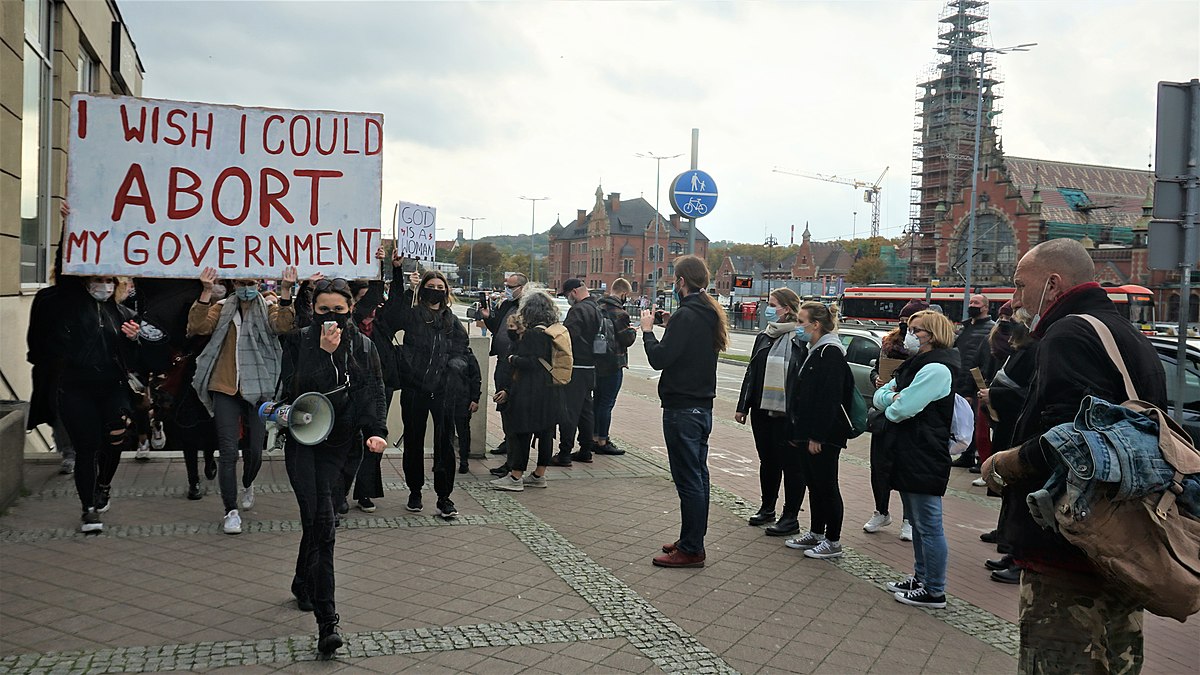
By Ali Cain, RightsViews staff writer and a graduate student in the European History, Politics, and Society  MA Program Over the last three weeks, Polish citizens have ignited the country’s biggest protests since the 1989 pro-democracy movement in response to the passing of a de facto abortion ban. Although Poland already had the most restrictive abortion laws in Europe, its highest court, the Constitutional Tribunal, concluded that performing abortions, even in situations where a baby would be born sick or disabled, violates the Constitution’s guarantee to the protection of life. This ruling poses immense infringements on women’s rights and pushes the country into deeper democratic backsliding.  Despite Polish President Andrzej Duda announcing that the ban would be delayed indefinitely, protests have developed into a larger retaliation against the ruling far-right Law and Justice Party (PiS). Since its rise to power in 2015, the Party maintains support by enflaming cultural tensions over LGBTQ+ rights, migration, and abortion. Prior to the Tribunal’s ruling, women...
Read More
Sudan: On the Path to Transition?

Sudan: On the Path to Transition?

By Reem Katrib, a RightsViews staff writer and a graduate student in the Human Rights MA Program. After a 30-year conflict over its autonomy, South Sudan gained its independence from Sudan through a referendum in 2011. The Enough Project explains that this secession “caused a severe economic shock in Sudan, as the country lost nearly 75 percent of its oil reserves and 95 percent of its foreign currency reserves.” Since then, the Sudanese government has repressed political opposition, often using violence against civil society and opposition groups who have expressed their dissent at the mismanagement of the economy.  Prior to secession, Sudan had been plagued by conflict with continuing human rights violations that has meant a distrust of the judiciary in the present. In April 2019, a military council replaced Omar al-Bashir when he was forced out of office. The military leaders and opposition members negotiated to form a “sovereign council” the following August. This council acts  as a transitional government and...
Read More
Deconstructing White Supremacy (in a workshop and real life)

Deconstructing White Supremacy (in a workshop and real life)

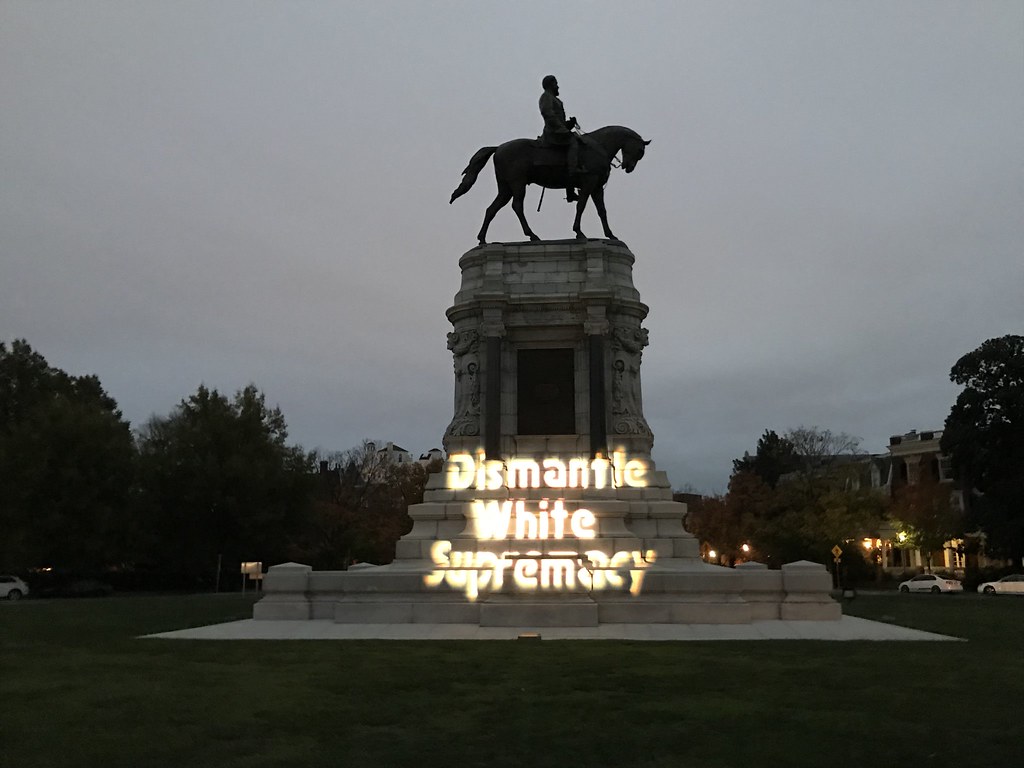
By Anna Miller, a staff writer at RightsViews and a graduate student in ISHR's Human Rights MA Program. Note: This blog post addresses white supremacy in the United States only, though the ideology is alive globally.  On October 27, Dean Melanie Pagán and Dean Samantha Shapses, both of the School of International and Public Affairs, hosted a Deconstructing White Supremacy Workshop via Zoom. The workshop was open to the Columbia University community and fulfilled the Community Citizenship Requirement for Inclusion and Belonging for new Columbia students. To kick off the workshop, the group screened Understanding White Supremacy (And How to Defeat It). This video explained how the roots of white supremacy are linked to colonization and racial biology. White colonizers assumed that people of color were inferior because they were “so easily conquered” and then presumed that “white skin people were perhaps more evolved than dark skin people.” While these ideas are objectively nonsensical, they did help form modern-day white supremacy and as...
Read More
The Scope of Justice: Comparing Two Distant Criminal Justice Systems

The Scope of Justice: Comparing Two Distant Criminal Justice Systems

By Donggeun Lee, RightsViews Staff Writer and a second-semester junior majoring in Human Rights. “Comparison is in many ways a useful mirror into which we look, and by looking we notice things about ourselves and our own country and our systems that sometimes might please us [and] that sometimes might give us pause and even cause us disappointment and dismay.” - Professor David T. Johnson On October 12th, the Columbia Law School hosted an event entitled “Criminal Justice in Japan - A Comparative Perspective” addressing the question of what we can learn from differences between criminal justice in Japan and the United States. The event was moderated by the executive director of the Center for Japanese Legal Studies, Nobuhisa Ishizuka, and featured two speakers: David T. Johnson, a professor at the University of Hawaii, and Kiyo A. Matsumoto, a United States District Judge at the Eastern District of New York.  Differences between Japan and the United States According to Franklin E. Zimring, the author...
Read More