by Ido Dembin, a blog writer for RightsViews and a M.A. student in Human Rights Studies at Columbia University
On the weekend of October 27 and 28, Columbia University Seminars hosted a two-day conference on Historical Narratives and Memory Laws. The conference was scheduled as part of a University Seminar titled “History, Redress and Reconciliation,” chaired by Elazar Barkan, director of Columbia University's Institute for the Study of Human Rights.
The seminar’s self-proclaimed objective is to "forge a more structured exchange among scholars and practitioners who engage a set of issues that are yet to self-identify as an academic field, and is addressed in different disciplinary spaces.” The content-heavy weekend proved to serve that objective. Memory laws embody state-approved understandings of historical events, with the criminalization of historical narratives becoming more commonplace. The conference dealt with issues of memory legislation in countries from East Europe to Africa, where governments and parliaments have been tackling the problem of historical narrative, memory and redress over the last...
by Genevieve Zingg, a blog writer for RightsViews and a M.A. student in Human Rights Studies at Columbia University
On Monday, the Human Rights Institute at Columbia Law School hosted an event on counterterrorism and human rights under the Trump administration. The event featured Laura Pitter, senior national security counsel at the United States program of Human Rights Watch, speaking on the new human rights challenges posed by counterterrorism policies emerging under President Trump.
Prior to working with HRW, Pitter was a journalist and lawyer with the U.N. in Bosnia and Afghanistan. Under the Obama administration, she worked on accountability for past instances of torture and the prevention of government-sanctioned torture. Specifically, she worked to document torture that had not yet come to light prior to the Senate Intelligence Committee report on the CIA’s detention and interrogation program.
Human rights concerns under the Obama administration centered on detention practices at Guantanamo and the use of drone strikes. During this time, HRW focused on...
By Zina Precht-Rodriguez, Columbia College '19
The story of Spain’s traumatic history is compelling because it is continuously unfolding. One of my most memorable experiences in Barcelona this summer was my visit to an air raid shelter that was designed during the Spanish Civil War to protect thousands of civilians during the fascist bombings of Barcelona. The existence of the shelter was only discovered a couple of years ago by a cable company. The company intended to build an underground landline to connect more people throughout Spain, but the irony of the situation is that something much deeper connects the people of Spain: a traumatic memory that tells the story of a vicious divide within Spain, as well as within Europe, of those who risked their lives for progressive change and those who compromised their own morality.
In 2017, these casual rediscoveries of a traumatic Spanish past are triggering an outpouring of civilian, intellectual and political inquiry. The European Observatory for Memories (EUROM) addresses...
By Stephanie Euber, Graduate School of Arts and Sciences 2017
Individuals fortunate enough to have survived traumatic events are commonly referred to as “resilient.” In fact, a resilience framework/agenda has become part of commonly-accepted humanitarian and human rights language and programming. But what does this framework, which attempts to foster resiliency among trauma survivors, actually accomplish? This is the question I have spent the past year attempting to answer. My paper titled “Genealogy of Resilience: Women’s Resiliency to Conflict-Related Sexual Violence” was recently chosen as a winner of the 2017 Human Rights Essay Contest through the Institute for the Study of Human Rights.
The application of the term "resilient" to women who have experienced gender-based violence, either locally or globally, remains unclear. What is more evident is that linkages can be drawn between the usage of resilience theory and the popularization of describing women as "survivors." Referring to women who have survived gender-based trauma as "resilient" pays homage to the extreme emotional...
By Amanda Graham, an M.A. student in human rights
Equality, transparency, accountability, personal security, inclusivity and individual autonomy: blockchain represents many core ideals of international human rights work.
What is blockchain?
Blockchain is an updated way of documenting and verifying interactions on a digital platform. Up until now, we have given power of mediation to banks and other third parties to validate transactions. Blockchain is a digital distributed platform that validates transactions through algorithms. No third parties needed. Originally, blockchain was used to track digital currencies such as Bitcoin. It has evolved into a system of trust through collaboration, its power slowly being leveraged beyond monetary transactions.
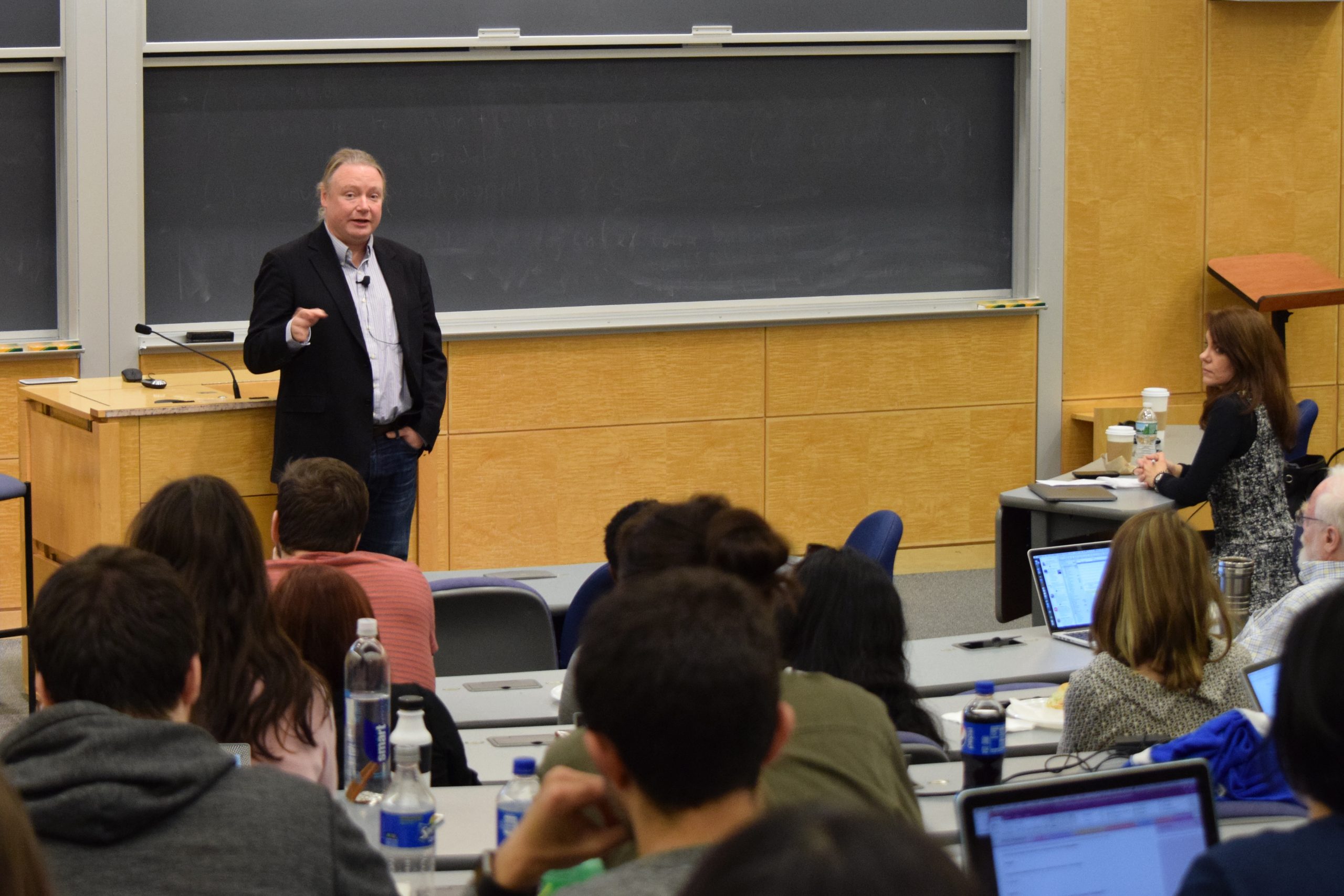
The potential for disruption or transformation of industries has been the subject of recent conversations. The Institute for the Study of Human Rights recently hosted Brian Behlendorf for a talk on Applying Blockchain Technology for Social Impact, kicking off a technology and human rights speaker series. Behlendorf is the executive director of the Hyperledger Project (among...
By Bárbara Matias, an M.A. student in human rights
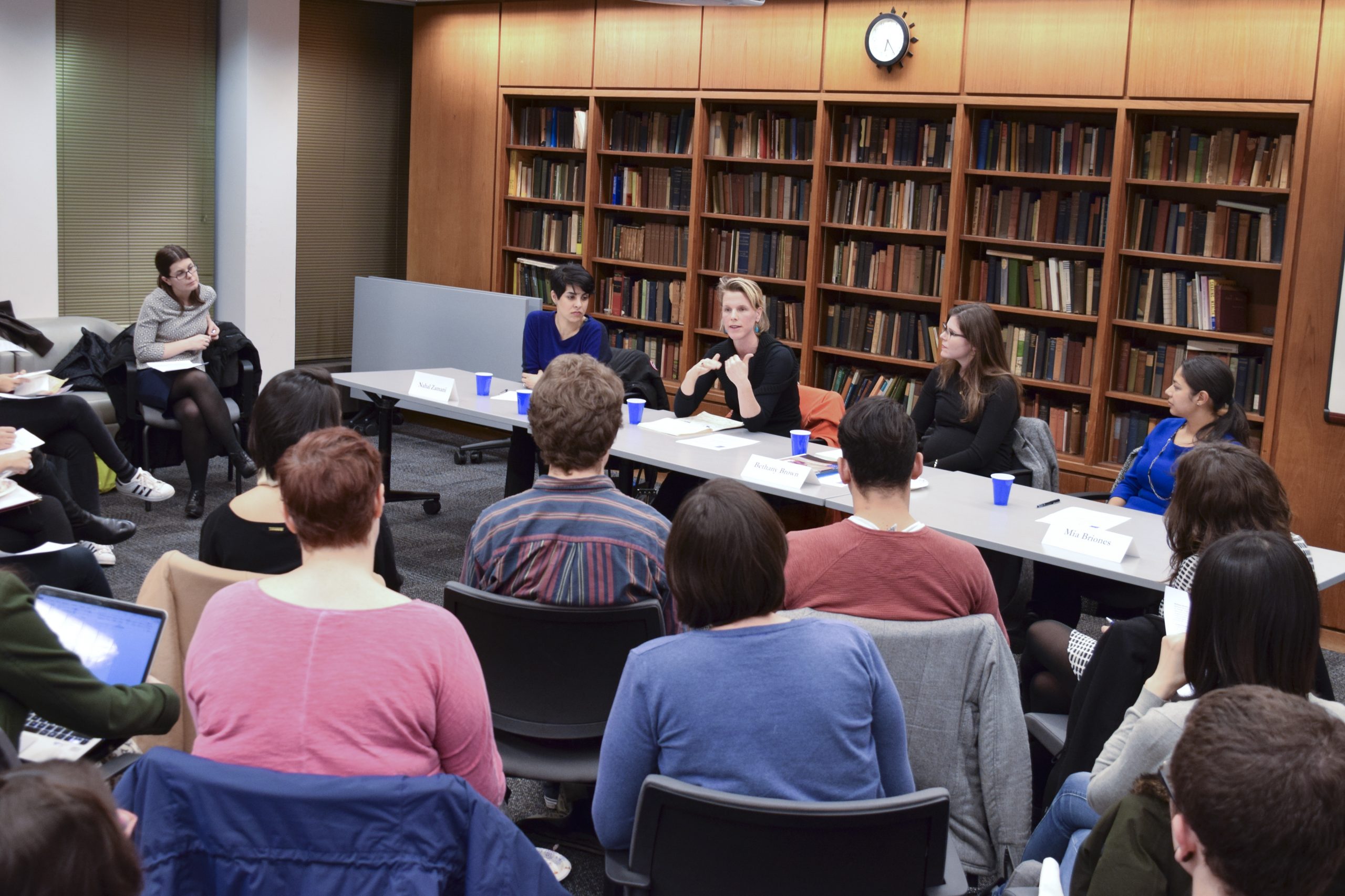
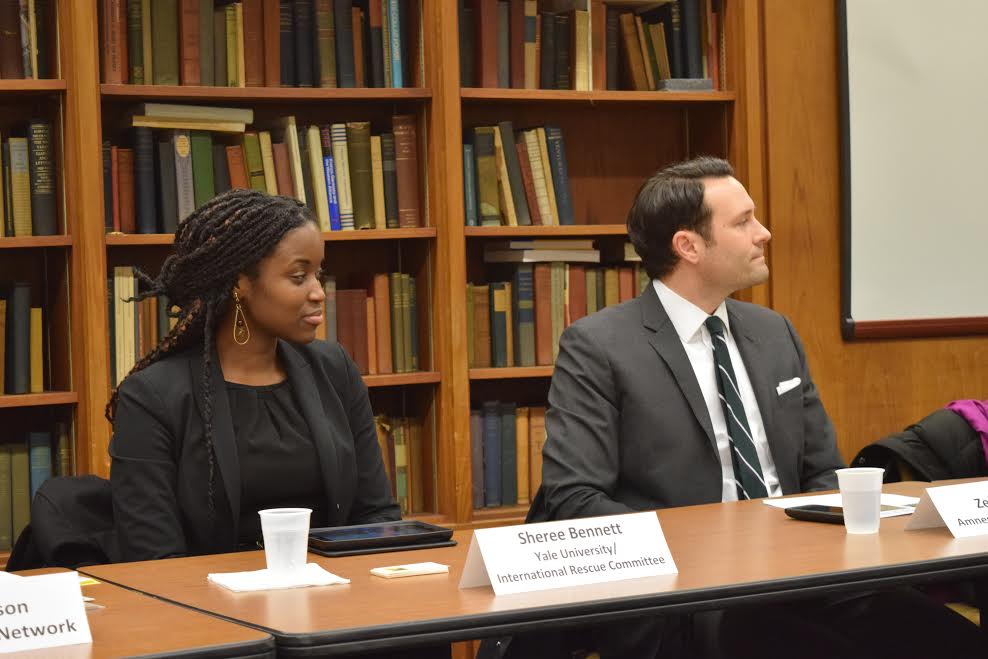
Amid a tense political climate and growing importance of the human rights field, the Institute for the Study of Human Rights annual Career Panel came at a particularly conducive time. On February 21st, an ensemble of undergraduate, graduate and prospective students gathered to discuss topics ranging from the professional opportunities available to human rights students to the skills, credentials, and experiences most valued by organizations.
As acknowledged by faculty and students alike, human rights does not always present an obvious career path, which was why hearing from experts in diverse fields within this realm proved opportune. This year’s panel welcomed four experts working at intergovernmental organizations, NGOs and not-for-profit organizations: Mia Briones, a leadership gifts officer at the International Rescue Committee (IRC); Bethany Brown, a researcher at the Health and Human Rights Division at Human Rights Watch; Emilie Filmer-Wilson, a Global Human Rights adviser at the United Nations Population Fund (UNFPA); and Nahal Zamani, an...
By Joseph Chuman, a lecturer at the Institute for the Study of Human Rights
With dark forces clouding the political horizon, both domestically and globally, defense of fundamental freedoms has become stridently urgent. While some may prophesy or lament the end time of human rights, the drumbeat of illiberalism requires an even more robust enunciation of the human rights program. Those striving to consolidate greater power in the hands of state executives may seek to swat aside human rights as an annoying manifestation of political correctness, but it is good to remember that the Universal Declaration of Human Rights emerged out of the nadir of European fascism. The response to darkness is not despair, but the bright light of civility and decency, which are conveyed most powerfully by human rights and the ideals that it reflects.
At the heart of human rights is respect for the dignity of human beings - without exception. If asked to summarize in briefest terms the purpose of...
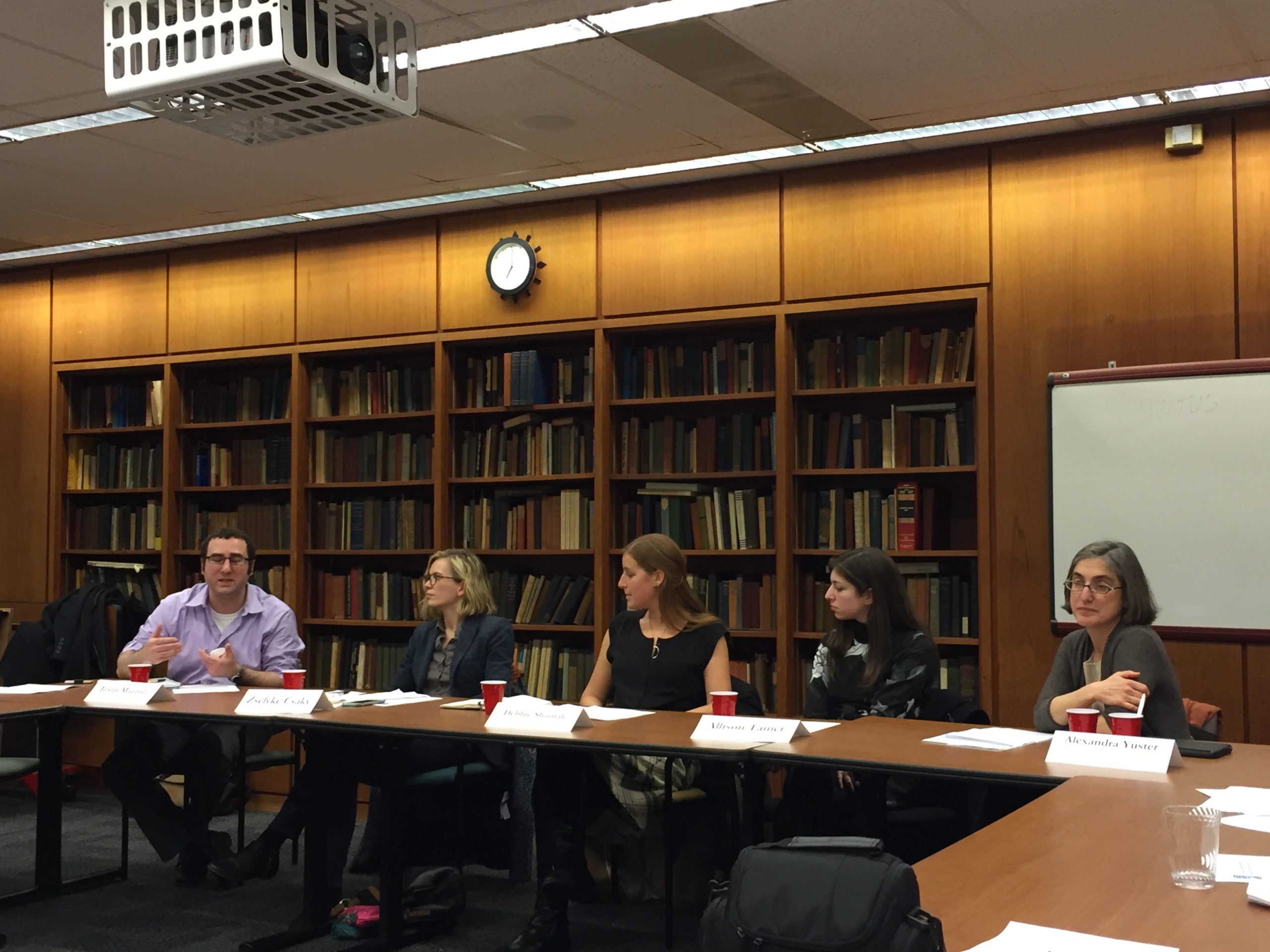
What are some of the most important steps towards finding a job in the human rights field? A few weeks ago, the Institute for the Study of Human Rights (ISHR) at Columbia University hosted a career panel aimed at answering this question.
Five panelists were present to talk about their experiences in the human rights field:
Zselyke Csaky: Senior Researcher, Nations in Transit, Freedom House
Justin Mazzola: Deputy Director of Research, Amnesty International USA
Debbie Sharnak: PhD candidate, University of Wisconsin-Madison; Adjunct Professor, Center for Global Affairs, New York University
Allison Tamer: Development Officer, American Jewish World Service; Alumna of the Human Rights Studies M.A. Program
Alexandra Yuster: Associate Director, Social Inclusion and Policy, UNICEF
Here are our top ten takeaways.
Acquiring skills for the job:
1.. Hone Your Research and Writing Skills
Don't expect much opportunity to develop your research and writing skills on the field beyond perfecting them. Use your time in academia to hone these skills instead. Justin recommends getting practice doing interviews, not only with survivors but also with advocates and government officials, as this will help develop the skill of knowing what you need from...
By Tim Wyman-McCarthy, graduate student of human rights at Columbia University
___________________________________________________________________________
As students across Columbia—both graduate and undergraduate—settle into the Spring term a series of questions echo around campus: What are your plans for the summer? Have you begun your dissertation? And, most dreaded of all: what’s next? It is this last question, of what comes after graduation, that seems to produce the most anxiety. This is especially true for students interested in fields characterized by less-than-clear paths to employment or uncertain job prospects. One such example is human rights, and so it was of great benefit to many that on February 26th the Institute for the Study of Human Rights held a career panel about what it means to pursue human rights as a profession. The event was comprised of a panel discussion with five human rights professionals followed by an open question and answer session.
The speakers were qualified, interesting, and informative. The panel consisted of: Antonio Cisneros de Alencar, Program...
By Caroline Fidan Tyler Doenmez, graduate student of human rights at Columbia University
___________________________________________________________________________
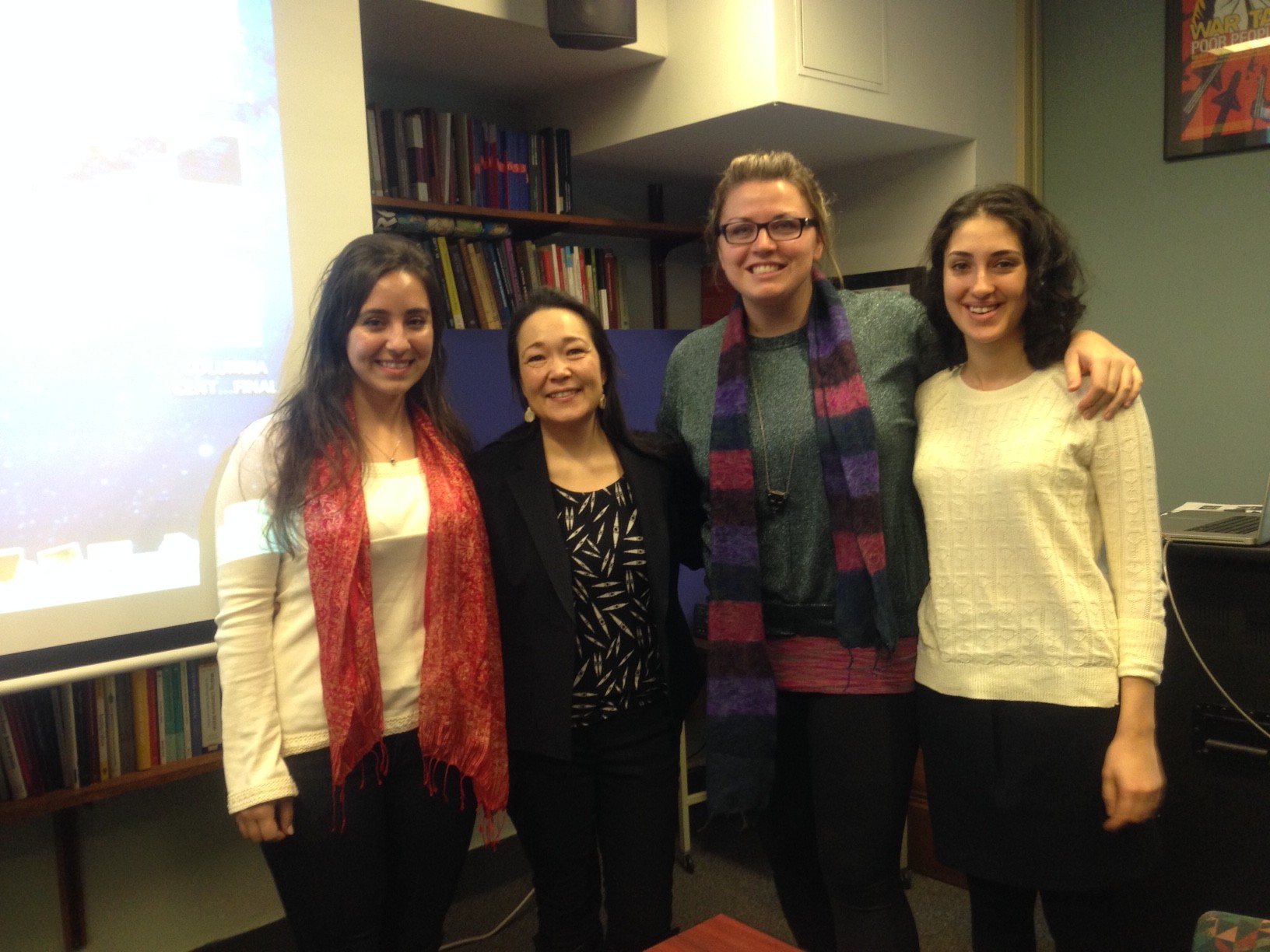
On November 20th Aviaja E. Lynge, HRAP Fellow at Columbia University, gave a presentation titled: "Indigenous Peoples' Right to Education: Implementing a Culturally Appropriate Education System in Greenland." Lynge holds an M.S. in Social Anthropology from the University of Edinburgh and currently works at the University of Greenland, where she is Head of Department for Further Education. Lynge began the presentation by thanking her mentor Elsa Stamatopoulou, Director of the Indigenous Studies Program at Columbia.
Lynge contextualized her presentation by starting with a description of her own childhood in Greenland and her Inuit family, because, she said, “I am part of the story I am going to tell you.” She recounted the influence of her grandparents and parents, who helped to foster her interest in equality and human rights from an early age. Her parents were involved in the decolonizing movement in Greenland, and her grandparents closely followed...