Orchestrating a bacterial vaccine – a personalized therapy for cancer treatment

By Janice Chithelen

Do you spend a good amount of time choosing the next new mobile or laptop? What built-in features do you look for? Now imagine the same level of customization for cancer treatment.  What if individuals undergoing broad-spectrum chemotherapy – a common method of cancer treatment that is often harsh and produces side effects, could instead avail a more tailored, bacterial-based vaccine designed specifically for their tumors?

From Traditional Vaccines to Personalized Cancer Immunotherapy

Traditional bacterial-based vaccines for infectious diseases work by expressing antigens – specific biomolecules such as proteins, lipids and others that are recognized by the immune system. This recognition triggers elimination of the pathogen and results in a robust immune response and long-term memory. Typically, these vaccines use pathogenic bacteria or viruses that express antigenic proteins foreign to the host. Factors such as biosafety profile, host tolerance, and efficacy determine whether the vaccine would contain whole live bacteria, attenuated (weakened) bacteria or just antigenic subunits – i.e specific protein fragments. Normally a host immune response is triggered when patrolling immune cells, such as macrophages, engulf antigens or bacteria and process them into smaller fragments.  These fragments are then displayed on the cell surface to be recognized by T cells (a type of immune system cells), which initiate an immune response – such as killing target cells, recruiting other immune cells, and activating antibody response.

Unlike foreign infections, cancer presents a unique challenge since cancer cells are transformed non-foreign cells. In order to specifically recognize cancer cells from normal host cells, researchers use neoantigens – i.e. modified or altered proteins uniquely produced by tumour cells due to their abnormal state. In their recent study, Columbia postdocs Mathieu Rouanne, Edward Ballister, Jaeseung Hahn and their colleagues developed a novel cancer vaccine by expressing tumour specific neoantigens. They used the probiotic Escherichia coli Nissle 1917 (EcN) strain as the antigen expression system. The EcN strain was chosen  for its biosafety profile as a non-pathogenic bacteria known to have a beneficial action on the gut.

Engineering a Probiotic Vaccine Platform

The researchers undertook a specific approach to further optimize the bacteria for the production and delivery of multiple neoantigen-containing short protein sequences.  In order to clearly distinguish the tumor cells from normal host cells, multiple tumor specific neoantigens were identified from databases and included in the therapeutic vaccine so that the collectively expressed neoantigens would initiate a specific and durable immune response similar to a multivalent vaccine. The authors included additional features to fine tune their system :

1) Deletion of specific bacterial proteases (proteins that degrade other proteins) which significantly increased the neoantigen accumulation. A higher neoantigen accumulation also led to better antigen presentation on the surface of the patrolling immune cells  which triggered a better T cell-mediated killing of the cancerous cells.

2) Absence of proteases led to increased susceptibility to clearance of the bacteria by human blood factors like phagocytosis (ingestion by patrolling immune cells essential to clear the pathogen and also present them to other immune cells) – indicating a good biosafety profile.

3) Removal of suppressive plasmids (naturally occurring non-genomic DNA molecules that negatively influence the stability of the engineered therapeutic DNA). This additionally boosted the neoantigen production by another 10-fold.

4) Optimizing the neoantigen producing DNA with regulatory regions that additionally increased the neoantigenes’ levels.

5) Coexpression in their system of the protein  LLO (listeriolysin perforin), a protein from  intracellular pathogen Listeria, in order to release the antigen inside the immune cell which further triggers a more potent T cell-mediated immune response.

Figure a: Scheme of the bacterial vaccine platform and its engineered components – deletion of bacterial proteases OmpT and Lon for neoantigen accumulation, removal of suppressive (cryptic) plasmids and LLO coexpression thereby leading to defensive host responses like primary phagocytosis,  and T cell immune response. Figure b: Representative images (tumor intensity in blue) of lung metastases in mice and treatment with the bacterial vaccine for 22 days. M1 – M5 are the different mice treated with either saline (PBS – upper row), negative control (empty) bacterial vaccine (middle row), or bacterial vaccine expressing respective tumour neoantigen (lower row). Image adapted from the original publication and from www.vecteezy.com/eezy.

The vaccine was tested in mouse models of colorectal and aggressive melanoma cancer using various delivery methods. The live vaccine was not only found to be well tolerated by mice and specific against tumor cells, but it also shrank tumours, prevented metastases, and enhanced mice survival. It was also observed that intravenous vaccine delivery which is one of the less invasive forms (as compared to surgical tumour removal) led to optimal anti-tumor effects. The vaccine  effectively activated both helper and killer T cells, which is crucial for killing the tumour cell. This also demonstrated signs of long-term protection, suggesting an overall broad and lasting defense against tumor growth. The authors also showed that the tumour specific neoantigen expressing DNA sequence could be exchanged with sequences expressing neoantigens of another cancer type and the modification worked when applied to respective specific cancer mice models. This meant that the bacterial vaccine could be re-programmed based on the tumour type.

Such a model of using a live bacterial vaccine to treat solid tumours presents a major leap in cancer treatment by turning a probiotic bacteria EcN into a programmable cancer vaccine. This paper reflects a comprehensive demonstration that engineered bacteria could be customized to safely and effectively direct the immune system against solid tumors. It combines precision, safety, and adaptability paving the way for personalized cancer vaccines, but further testing in human trials is still required. What still remains to be accomplished would be to test the system further in human trials and further improving the vaccine platform and adapting it for patients with weakened immune systems, especially those undergoing chemotherapy. Though more research is needed before human trials, the approach described by Columbia postdocs Mathieu Rouanne, Edward Ballister, Jaeseung Hahn and their colleagues could one day lead to safer, smarter, and more personalized cancer treatments.

Reviewed by : Margarita T Angelova, Saheli Chowdhury, Maithê R. M. de Barros
Ancient Viral DNA: From Genome Invaders to Gene Whisperers

Over the past decade, scientists discovered how bacteria defend themselves against viruses using CRISPR, a system that has revolutionized gene editing. But what if bacteria and viruses have been repurposing their own genetic tools for entirely different functions? A new study published in Nature by Columbia postdocs Tanner Wiegand, Egill Richard and Chance Meers uncovers a surprising twist in this evolutionary story: ancient genes, once used by viruses and mobile DNA elements called transposons, have evolved into RNA-guided transcriptional regulators – natural gene regulators that operate much like the immune system CRISPR, but without cutting DNA.

Bacteria are constantly in an evolutionary arms race with viruses. The mobile DNA pieces transposons have played a major role in bacterial evolution by jumping between locations in the genome and spreading genes. One of these genes, TnpB, was long thought to function only as a simple DNA-cutting enzyme, helping transposons move around. However, scientists have now discovered that some TnpB-derived proteins have lost their cutting ability and instead evolved into RNA-guided transcription factors – proteins that turn genes on or off by blocking access to DNA.

Wiegand and colleagues named this new class of proteins TldRs (TnpB-like nuclease-dead repressors). Unlike CRISPR proteins, which evolved from transposon-related genes to protect bacteria from viruses, TldRs appear to have been repurposed independently for gene regulation. These proteins rely on small RNA molecules to guide them to specific sequences in bacterial genomes, where they bind and shut down target genes by preventing transcription.

One of the most fascinating discoveries in the study is how viruses have co-opted TldRs to manipulate their bacterial hosts. The researchers found that some bacteriophages – viruses that infect bacteria – carry TldR genes along with a bacterial gene called fliC, which encodes flagellin, the protein that makes up the bacterial flagellum (a whip-like structure used for movement).

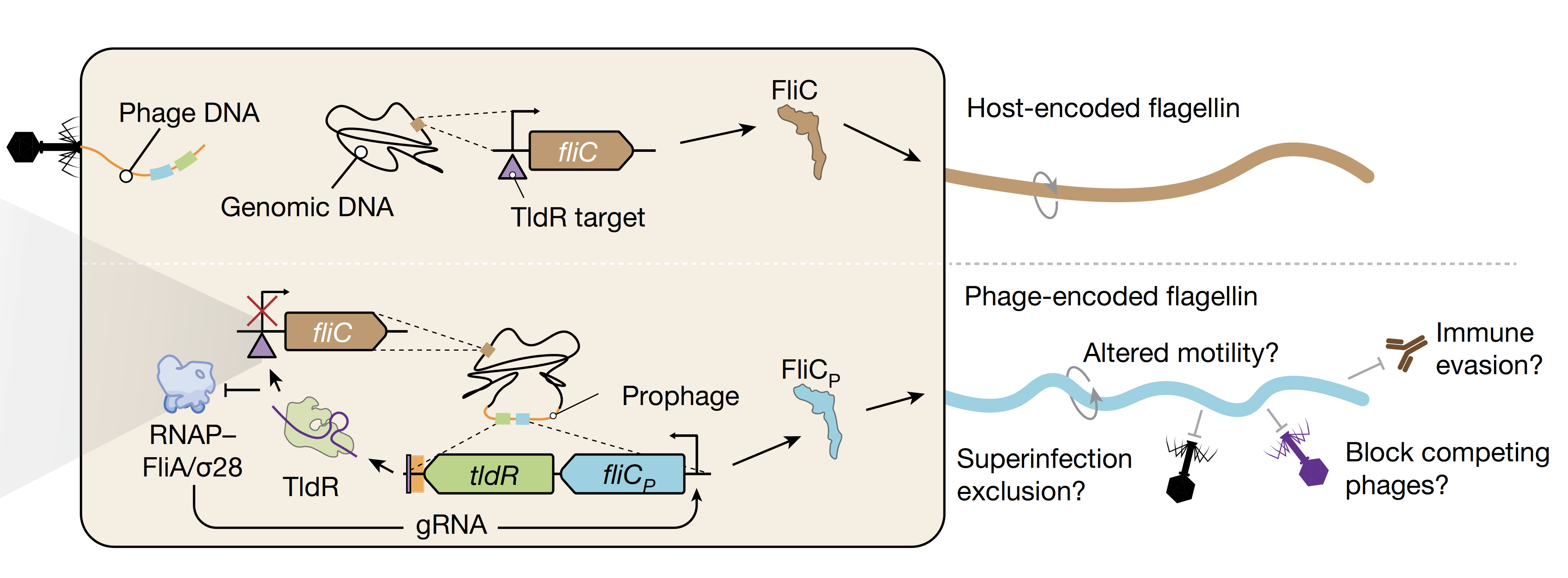
Normally, bacteria express their own version of fliC to build flagella, which are crucial for swimming and sensing the environment. However, in bacteria infected with certain bacteriophages, the viral version of fliC (fliCᴾ) replaces the host’s version. The study shows that TldRs, guided by their RNA molecules, specifically silence the bacterial fliC gene while allowing the viral version to be expressed. This means that the bacterium’s flagella are partially “rewired” to contain viral proteins instead of its own (Figure 1).

Why would a virus want to do this? In their study, Wiegand et al. propose a few possibilities:

  • Evading the immune system – Many bacterial flagellins are recognized by immune cells, and replacing them with a different version could help bacteria (and their resident viruses) go unnoticed.
  • Avoiding other viral infections – Some bacteriophages recognize flagella as entry points to infect bacteria. By altering flagellar proteins, the virus controlling the bacterium might block access to competing viruses.
  • Affecting bacterial motility – Flagella are primarily involved in motility. Changing their structure could alter how bacteria swim in various environments.

Figure 1: Schematic representation of the repression of the bacterial fliC gene by the RNA-guided viral-encoded TldR and consequent expression of the viral version of the flagellum gene, fliCp. Figure from the original paper. 

One of the most exciting aspects of this discovery of this new class of gene regulators is their potential for biotechnology tools development. CRISPR-based gene editing relies on programmable RNA-guided proteins, and TldRs appear to work on the same principle – but without the need to cut DNA. Instead, they act as natural gene “dimmer switches”, fine-tuning expression levels in a targeted way. Because TldRs are much smaller than CRISPR-Cas proteins, they could be useful for future genetic engineering applications where space is limited, such as in gene therapy or synthetic biology. Unlike traditional CRISPR editing, which involves cutting DNA (which can lead to unwanted mutations), TldRs could provide a more precise way to repress or regulate genes without permanent genome changes.

This study is a striking reminder of evolution’s endless innovations and how nature continuously repurposes molecular tools over evolutionary time. The same transposon-derived genes that gave rise to CRISPR have now been independently adapted to regulate gene expression in bacteria. It also underscores how much we still have to learn about the diversity of RNA-guided systems beyond CRISPR, which could lead to new technologies inspired by nature’s own innovations.

With further research, TldRs might become a new class of programmable genetic tools, opening new doors in medicine, synthetic biology, and biotechnology. As we continue to explore these hidden layers of microbial evolution, who knows what other surprises nature has in store?

Reviewed by: Temistocles Molinar, Saheli Chowdhury

A continuous war between DNA elements shapes genome evolution

While genomes include the totality of genes that determine an organism’s biological identity, genes can only be a tiny fraction of the genome. In humans, and in many other species, DNA contains multiple diverse regions. One example are transposons, or mobile genetic elements, which are parts of DNA that can move in new places in the genome (Figure 1). The “genomic walks” of transposons are potentially harmful, since when they “jump” within a gene, they trigger mutation and loss of that gene. Cells are constantly evolving new strategies to keep transposons under control. In response, transposons adapt and arm themselves with new strategies to escape cellular control.

Sometimes, a mobilized transposon hijacks additional DNA information that it transfers to the new location with itself. When this additional DNA happens to be a gene providing survival advantage, not only the recipient increases its gene pool and survival capacities but the transposon also increases its chances to propagate. This process of transmission of information between different species is termed horizontal gene transfer and represents a major driver of genome evolution across all domains of life. Transposons have been key players in this process.

Figure 1. Schematic representation of a DNA transposon and its movement between two DNA molecules. Image created with BioRender.com.

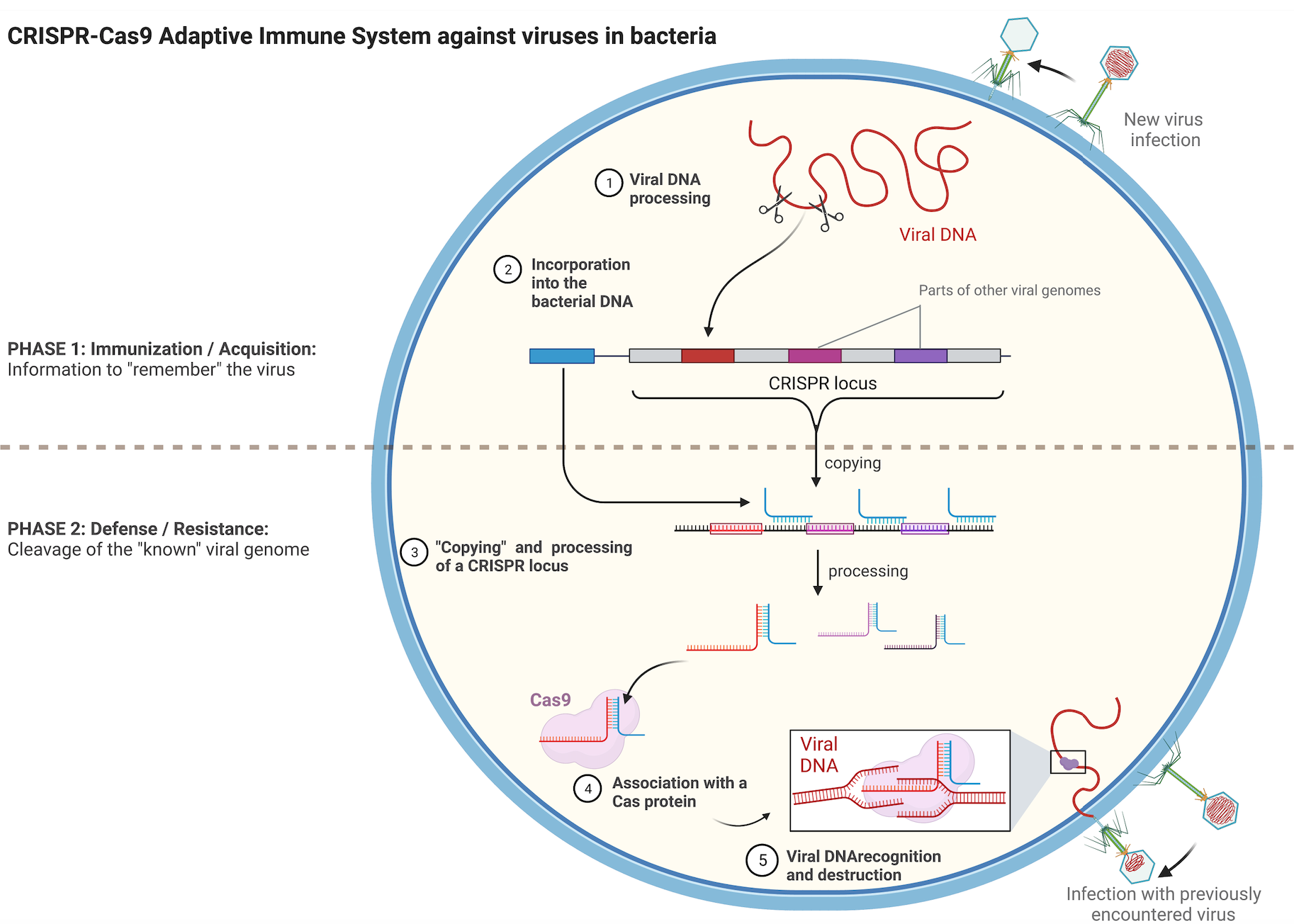
Transposons can be considered as reminiscent of ancient viral infections that managed to integrate in a host cell genome but later lost the capacity to completely exit the cell. Bacteria have evolved a fascinating mechanism to remember viruses that they have already encountered. This acquired immunity involves a family of DNA sequences named CRISPR and their associated protein partners Cas. The CRISPR sequences are fragments of DNA derived from different viruses that have infected the bacteria and were integrated in the bacterial genome, creating a footprint of previous infections (Figure 2, upper part). When cells are infected, they use the CRISPR catalog and compare it to the invading DNA, helping it to recognize recurrent viruses and destroy them more rapidly. Cas proteins participate in the degradation of the viral DNA. (Figure 2, lower part).

Advances in research showed that the CRISPR-Cas complexes can be modified to edit genes in different organisms. To do this, part of the complex is changed to lead the Cas protein to a gene of interest, instead towards a viral genome. This system of gene editing has already found numerous important applications ranging from basic biology research to disease treatments and development of new technologies. The discovery of CRISPR-Cas was acknowledged with the 2020 Nobel Prize in Chemistry to Emmanuelle Charpentier and Jennifer Doudna.

Figure 2. Schematic representation of the CRISPR-Cas9 adaptive immune system of bacteria. Briefly, upon infection the viral DNA is fragmented and part of it is integrated in a special region of the bacterial genome, the CRISPR locus. CRISPR sequences get copied into shorter RNA molecules that carry parts of sequences identical to the sequence of a certain virus. Once copied, these short RNAs form complexes with Cas proteins and serve as “guides” for them towards potential complementary viral DNAs. The viral DNA is destroyed by the Cas protein if it can hybridize with the short RNA from the CRISPR locus. Image created with BioRender.com. 

Interestingly, researchers have found an intriguing interconnection between transposons and the  CRISPR–Cas defense system. In a striking example a bacterial transposon has hijacked some of the genes of a CRISPR-Cas system and uses those genes for its own propagation in genomes. These transposons are called CRISPR-associated transposons. Such widespread exchange of genes is caused by the never-ending arms race between the transposons and their hosts’ defense systems. In the recent publication of Hoffman and colleagues, five Columbia postdocs Minjoo Kim, Leslie Y. Beh, Jing Wang, Diego R. Gelsinger, and Jerrin Thomas George collaborated and brought significant insight in the functioning of one CRISPR-associated transposon.

In their publication, the authors monitored in detail the formation of  this RNA-guided transposon and its associated complexes, which enabled them to resolve distinct protein recruitment events that take place before the integration of the transposon. They also found that even if initially hundreds of non-desired genomic sites are targeted for integration at the end only few of those sites recruit the whole transposon machinery that is required for integration at this genomic location. This discovery offered insights into how the potential target sites in the host genome are identified, screened and approved for integration, allowing the transposon system to be specific.

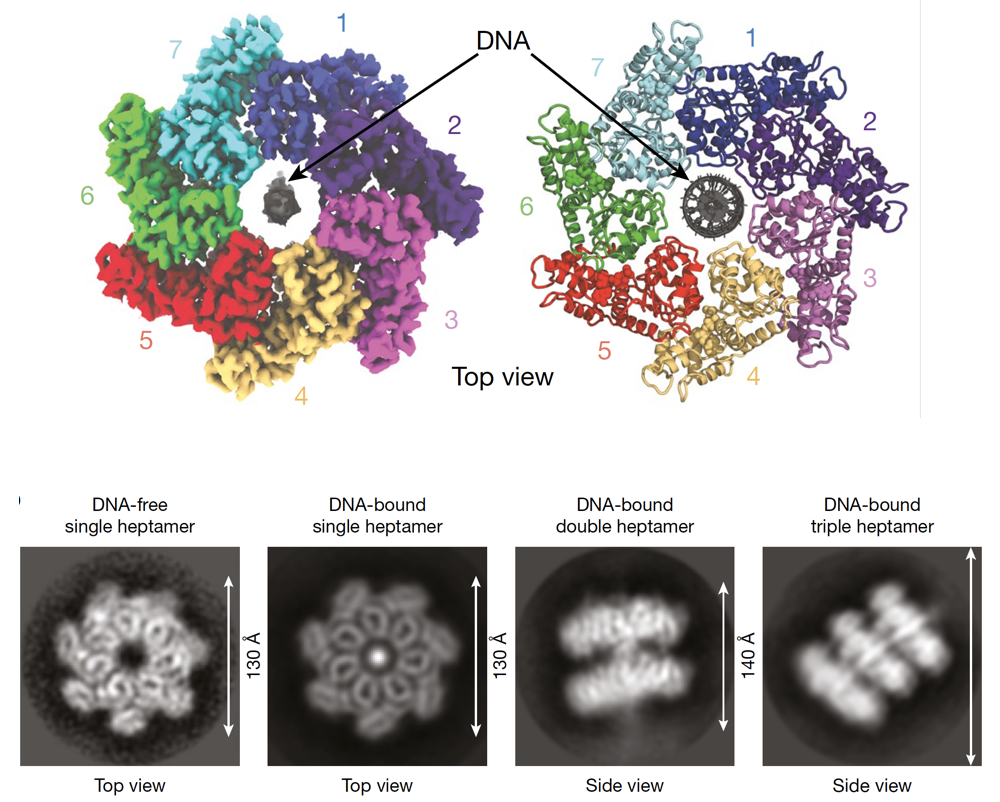
To advance the understanding of interactions responsible for the assembly of the transposon associated proteins, the authors determined the structure of one of the interacting proteins, named TnsC and found that it is forming rings of seven molecules of TnsC that can pass DNA through the central pore of the ring. This helps to correctly position DNA for the following integration (Figure 3). The resolved molecular structure also allowed to gain clarity on how TnsC mediates the communication between the proteins in this transposon complex that are responsible on the one hand for the targeting and on the other hand for the integration at a specific genomic location. Their results pointed to TnsC as the proofreading checkpoint that ensures the specific selection of genomic sites for transposition.

Figure 3. Upper part: Model of the 7 molecules of TnsC forming a ring through which DNA is passed. Lower part: Representative experimental result from Hoffmann et al. showing different configurations and views of the DNA-TnsC complex. Figure adapted from the original publication. 

In summary, the paper not only deciphers the molecular specificity of consecutive factor binding to genomic target sites in this interesting process of RNA-guided transposition, but the resolved detailed structure also provides valuable information for the development of future biotechnologies in the field of programmable and specific integration of DNA in desired genomic locations. Such technology differs from the above-described original CRISPR-Cas system currently used for genome editing, because it has the potential to be less mutagenic, as well as because it provides the opportunity to insert much longer pieces of DNA in a desired location. RNA-guided transposases hold tremendous potential for future biotechnological and human therapeutic applications and will without a doubt accelerate novel discoveries. Find out more in the original publication.

Reviewed by: Trang Nguyen & Maaike Schilperoort

Follow this blog

Get every new post delivered right to your inbox.