Categories
EDforSD

Charting an SDG 4.7 Roadmap for Radical, Transformative Change in the Midst of Climate Breakdown

The purpose of this workshop is to build off of the Brookings report and to bring together stakeholders from the fields of ESD, GCED, GE, and HR education to begin laying out a shared vision, or roadmap, for the global education sector in climate action. The aim is that this workshop will serve as a launching pad for a series of working meetings over the course of 2020 for those who express interest at the workshop to continue being engaged. The working meetings will culminate in an edited volume focused on education and climate action.

Workshop organized by –

Radhika Iyengar, Center for Sustainable Development, Earth Institute, Columbia University

Christina Kwauk, Center for Universal Education, The Brookings Institution.

The workshop is for Virtual CIES- More details at http://cies2020.org

We will be broadcasting the event on our Youtube link- Power in Praxis –https://www.youtube.com/channel/UCkZHqp2zW-VUbmcWFdaKQ-g

We will also be live on Facebook on our Eco-ambassador page: https://www.facebook.com/ecoambassador/

Agenda for the event-

April 29, 9am – 12pm

Opening:

9am – 9:10am

Radhika Iyengar to say a few notes to welcome the guests + housekeeping re: Google doc, the structure of the 3 hours, etc.

Please use this time to write your thoughts on a live document- https://docs.google.com/document/d/1UA0sVDLq5SIp7WVSaCkKF89QtUn6cUTMVG494DCNILA/edit?usp=sharing

9:10-9:20 Jahnavi Bhatt to inspire us with a poem recitation

9:20-9:40am

Professor Jeffrey Sachs, Director Center for Sustainable Development, Earth Institute presents his vision on integrating SDG 4.7 with climate change.

Part 1:

9:40 -9:50

Christina Kwauk presents the Brooking Institution Report specifically highlighting the 5 Roadblocks in Education. See full report here. https://www.brookings.edu/research/roadblocks-to-quality-education-in-a-time-of-climate-change/

Perspectives by…

Academicians 9:50-10:10am

On: Entry points to systems transformation needed for radical climate action by education systems

Nidhi Thakur, Professor Kean University, New Jersey

Bob Jickling, Professor Emeritus, Lakehead University

Heila Lotz-Sisitka, Professor, Rhodes University

Jeffrey Schlegelmilch, Deputy Director, National Center for Disaster Preparedness (NCDP) , The Earth Institute

Policy and Advocacy 10:10-:1030am

On: Reorienting monitoring & accountability mechanisms and the incentive structures of our current education systems

Adriana Valenzuela, UNFCCC

Priyadarshani Joshi, Global Education Monitoring (GEM) Report, UNESCO

Frank Neopold, NOAA

Jess Cooke, Plan International

Non-profits and think tanks 10:30am-10:50am [radhika]

On: Role of Think Tanks and NGOs that integrate education and Climate: Successes, challenges.

Caroline Lewis, Founder and Senior Climate Advisor, CLEO Institute

Kartikeya Sarabhai, Centre for Environment Education, India

Ellen Chigwanda, Advocacy Advisor for Education, CARE USA

Anna Bertmar Khan, Deputy Director of Programs, Dubai Cares

Part 2:

10:50am – 11:00am (Christina Kwauk to present Part 2 of the Brookings Report).

Perspectives by…

School teacher’s perspective 11:00-11:15

On: What support do teachers require to take the leap toward radical, transformative teaching and learning for climate action?

William Bertolotti, Plainedge High School, New York.

Elisa Hartwig, The Green School Antigua

Abby Ruskey, Fellow in Complex Systems Management at UC-Merced.

Local organizations/Community organizing, US-domestic and international 11:15-11:35

On: Local action at the township level: Evidence of what has worked and what are some roadblocks to building community leaders/action at the grassroots.

Priya Patel, Chair Millburn School Green Team and also Member Millburn Environmental Commission.

Vanita Gangwal, Convener Millburn Climate Action Group

John Mugabo, Millennium Promise Staff in Rwanda.

Lagipoiva Cherelle Jackson, Editor, Pacific Environment Weekly, Samoa.

Youth Perspective and their communications 11:35-11:50

On: What do students want to see happen in schools and communities and how best to communicate these actions/ideas.

Aalok Bhatt , Millburn High School, New Jersey

Vidya Bindal, Millburn Middle School, New Jersey

Srinivas Akula, community-based education coordinator, Telangana, India

Sahana Ghosh, Climate Reporter Mongabay India

Wrap up & next steps

11:50am – 11:55am

Program ends

11:55am – 12:00pm: Gopal Patel, Director Bhumi Project, reads out quotes from the Bhagavad Gita on sustainability


See full recording here-


https://columbiauniversity.zoom.us/rec/play/6Jcud-Grrz43HtWXtQSDBfN7W9S-LaOs1igXqfZZxUq9AHFXZFugMrAVarQY5XasONH4OaG8h7FwKko4?startTime=1588165361000
Categories
EDforSD

Reflections from a high school science teacher

Author: William Bertolotti, Science Teacher, Plainedge Highschool.


Hello everyone, my name is Will Bertolotti. It’s important to stress the fact that teachers do not teach facts; we teach people. We embrace the responsibility for fostering the intellectual, emotional, and social growth of human beings. I have been guiding high-school students for the past 12 years as a social science research and psychology teacher. I am fortunate to teach in a district where the community, teachers, and administration are united behind ensuring the success of our students. Furthermore, several years ago I volunteered with an educational not for profit that used student-oriented experiential learning centered on the UN SDGs and it led to a significant paradigm shift in my teaching philosophy. As a teacher, I am still learning — but I put some thought into the purpose of education and I am eager to share the mindset of a teacher to the students of the world.


We need you, the students, to know — that you embody our hope and collective investment for a future. That your efforts are cherished and your talents acknowledged as our community’s greatest resource. That your youthful frustrations and restlessness are the fuel for future change and innovation. You have a place at the communal table and in time you will control the fate of our planet. Some time ago, we as a society chose to forget that we all live on borrowed time — I am sorry that we pushed onto you the consequences of an unsustainable lifestyle. As your teachers we must prepare you right now and every day to survive and flourish in a world not of your own making. But your potential is latent and it is incredible.


And so, we forge them — our future civic science leaders — guiding them with our collective experience, supporting them so that failures are embraced as opportunities for learning and growth, empowering them with lessons in resilience, knowledge, and wisdom, and tempering them with the guiding spirit of integrity and compassion. Mentorships with academia, government, and industry become the route of transmission for action. Experiential learning becomes the sandbox for future policy. We teach them that sustainability is compassion toward the other people in a world of limited resources — and it is compassion towards your future self.


Why? It’s the perennial question my students always ask. Why? Well, it’s our fundamental purpose. Not only as teachers, but as parents, as members of a global community — we have the responsibility to ensure that the next generation is prepared. Our true calling must be to inspire the spirit that guides their efforts, to mentor and advocate, to challenge, and to let go — unshackle our youth from outmoded preconceptions of learning. We must open their eyes, that students don’t need our permission to question — that they themselves are the primary agents of their own growth. That learning can occur beyond the classroom, outside school hours, without adults. We need to teach them how to bridge differences and build connections — to challenge and advocate — to set the foundations for lasting change.


The world around us is our classroom, rich with experience, filled with challenges, and begging for solutions. We must ensure that our memory lives on in posterity as a generation of young leaders, ready to mend a broken world, to heal a wounded society, and to steer the course through an uncertain century.


Thank you very much for your time and for this opportunity to share.


Categories
EDforSD

Earth Day/Week Show & Tell

Updated: May 1, 2020

The social distancing and quarantine from COVID19 did not stop Eco Ambassadors from celebrating Earth Day 2020 in their homes, kitchens, gardens and backyards.

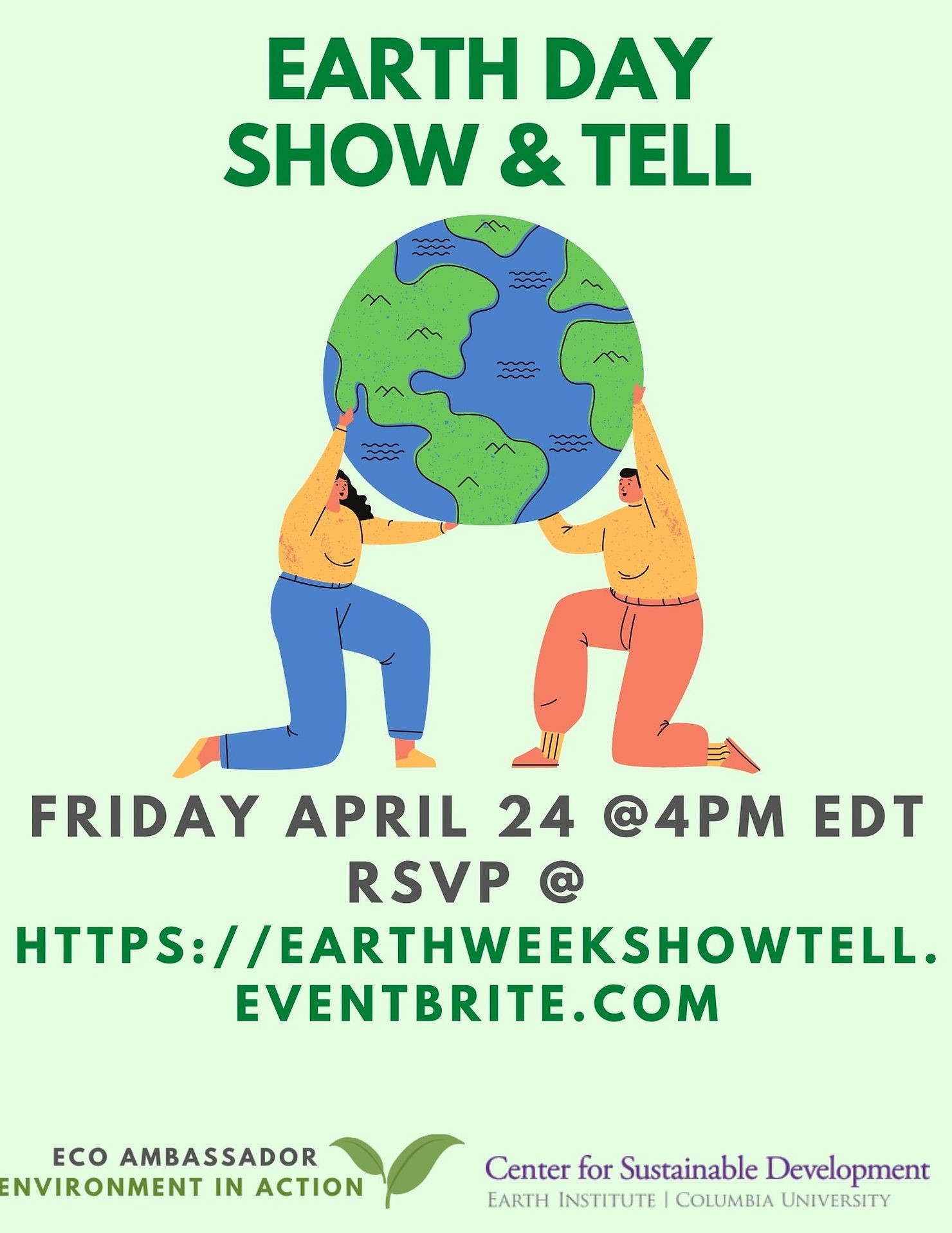
On Friday, April 24th, few Eco Ambassadors got together for a casual Show & Tell to share what they did during Earth Day (April 22, 2020 and week of) to celebrate the environment, nature and our Earth.

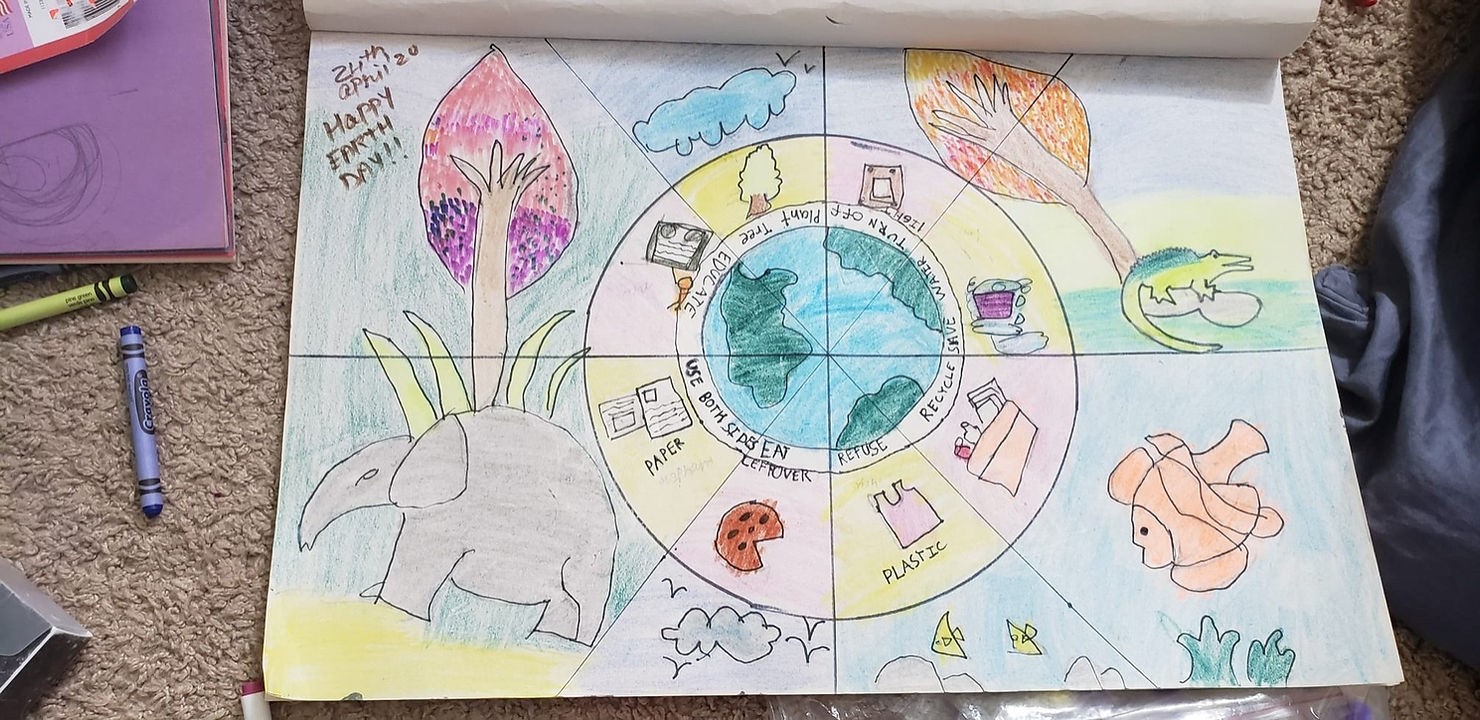
Our youngest Eco Ambassador Arjun drew what a beautiful Earth looks like to him with some strategies to protect the Earth.

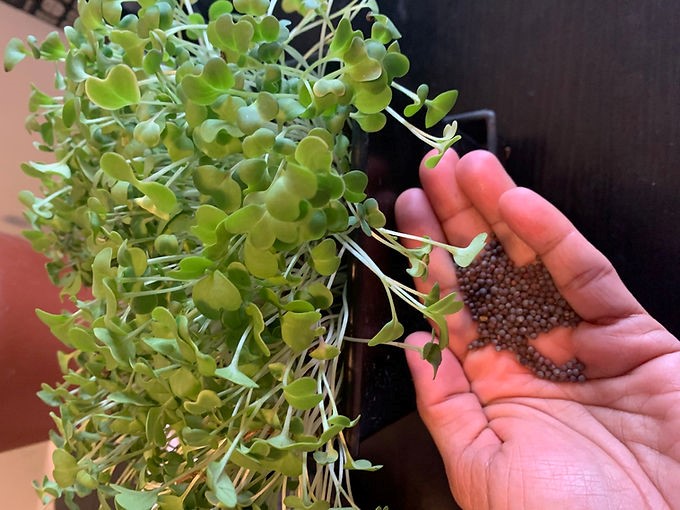
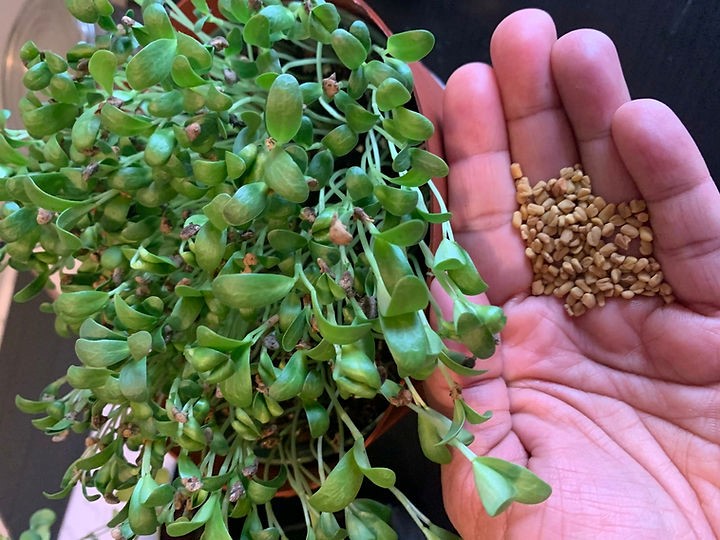
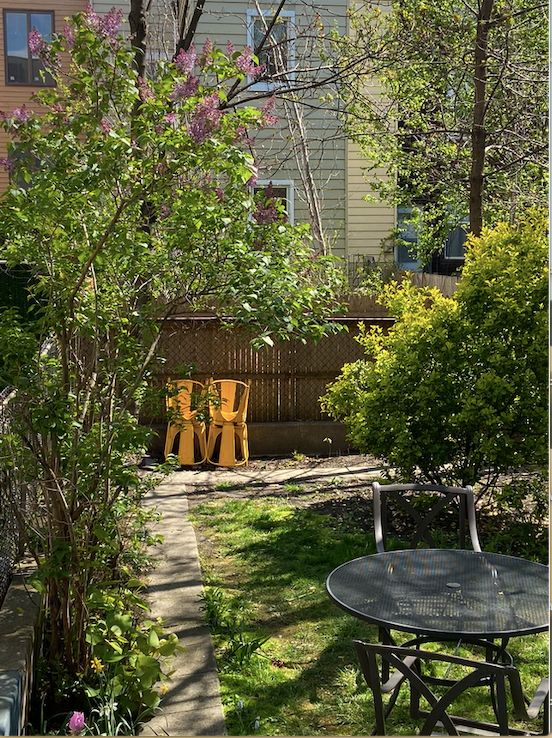
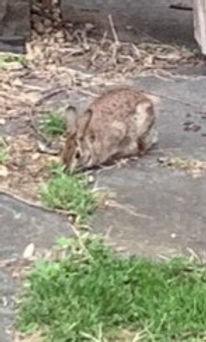
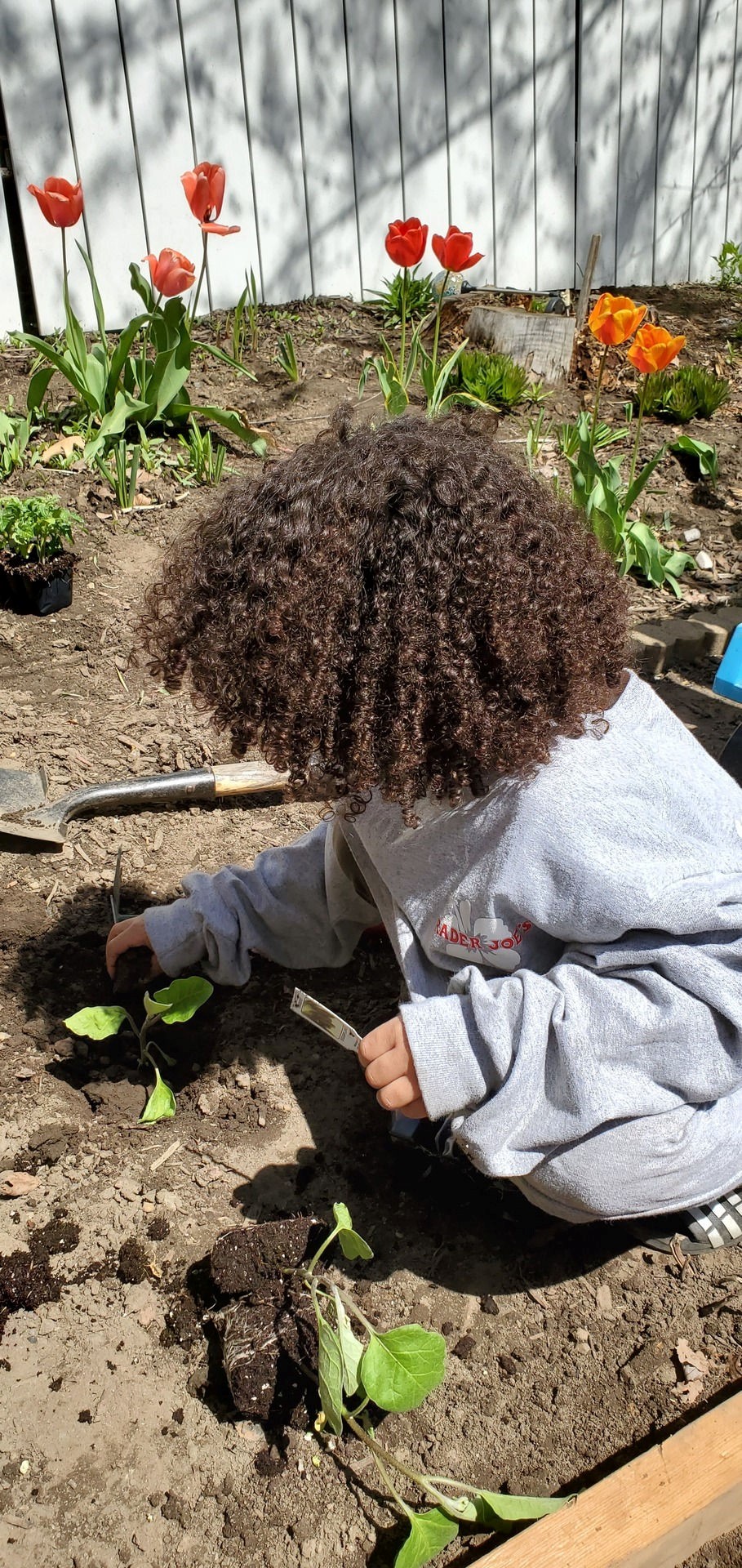
Eco Ambassador Ishaan and our Eco Ambassador program staff shared respective home gardening projects to plant flowers, tomatoes, fenugreek seeks and mustard seeds, as well as various observations made in the yard to examine various birds, animals and plant varieties.

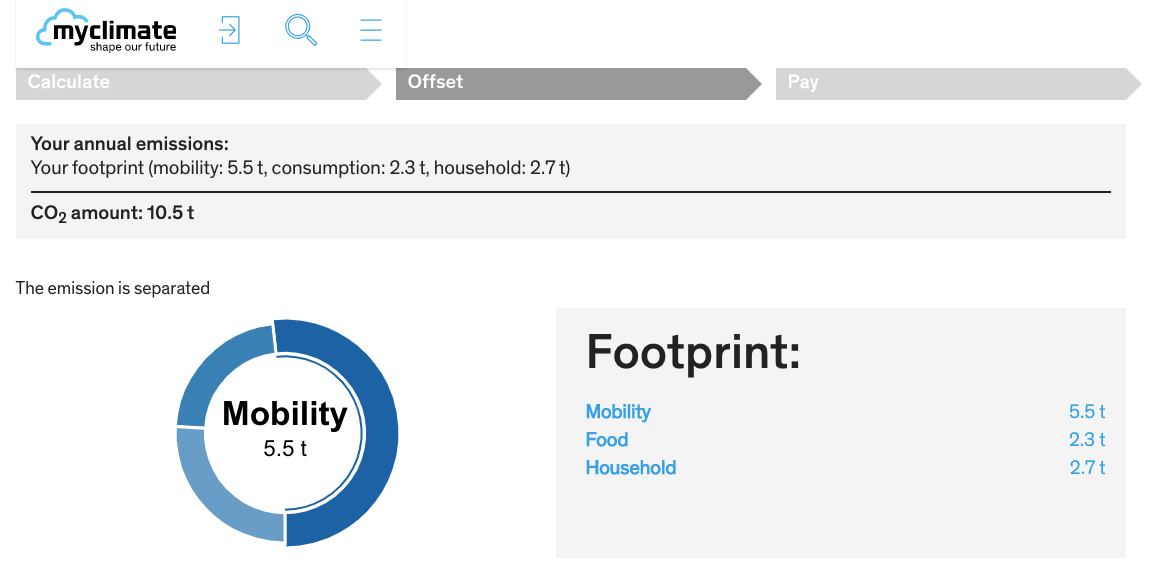
Another Earth Day/Week project also included calculating carbon footprint then offsetting it by donating to organizations and businesses working on eco-friendly and renewable energy projects to reduce carbon footprint.

Here are some resources that were used for carbon footprint information:

https://www.myclimate.org/

https://www.epa.gov/ghgemissions/global-greenhouse-gas-emissions-data

https://www.footprintnetwork.org/our-work/ecological-footprint/

And to end, sharing a wonderful song Tara had shared with her sons to celebrate Earth Day:

https://www.youtube.com/watch?v=QNtE5FanPLE

HAPPY EARTH DAY/WEEK 2020 !


Categories
EDforSD

What does it take to be a journalist?

Updated: Apr 8, 2020

We had the pleasure of speaking with Mr. Subhajoy Roy of The Telegraph (Kolkata), who has been with this eastern India’s largest circulated English daily for 10 years.

He covers stories on air quality issues; civic issues like waste management, water supply, health issues and road network as well as infrastructure (traffic planning and traffic management. He is currently covering COVID19 -related steps taken by the government and  state health department.

In the conversation, our Eco Ambassador participants asked about the nature of the job of a journalist – what skills and qualities are needed to be a journalist?

Along with sharing an advice he was once told– that EMPATHY is the most important quality of a journalist– he also shared with us a list of quotes, movies and books he found, that further reflects and illuminates a journalist’s job (see below!)

Thank you Subhajoy Roy!

FULL INTERVIEW can be found @ https://youtu.be/0-DXDD6EtJU

QUOTES: (Gabriel Garcia) Marquez used to say that the journalist should be like a mosquito, which is there to irritate those in power, buzzing instantly. -Director of Colombian news website La Silla Vacía

I have learnt a great deal from listening carefully. Most people never listen. -Ernest Hemingway

Headline in a 2016 piece by Columbia Journalism Review: “The voicelss have voice. A journalist’s job is to amplify this”.  Source: https://www.cjr.org/first_person/buttry_story.php

MOVIE LIST:

All the President’s Men (1976) #Won multiple Oscars, Golden Globe and BAFTA nominations.  #The issue: Investigations by two reporters of The Washington Post unearthed facts and stories that led President Nixon of the United States to resign. One of the most defining moments of investigative journalism in history.  # The Washington Post won Pulitzer prize for public service in journalism in 1973.  SPOTLIGHT (2015) #Won Oscar for best picture in 2015.  # The issue: how investigation by The Boston Globe’s Spotlight department unearthed sexual abuse of childern by the Church.  # The newspaper won Pulitzer prize for public  service in 2003 KILLING FIELDS (1984)  #The film won 3 Oscars and 8 BAFTAs.  #The issue: how journalists reported the killing of people by a tyrannical regime in Cambodia.  PEEPLI LIVE (2010) #It is an Indian film in Hindi language. Look for a version with English subtitles.  # It is a critique of modern day media and political leadership.  # The story is how things unfold after farmer suicides in an Indian village.  How media landas there and how it covers the story.  READING LIST

ALL THE PRESIDENT’S MEN  #By Bob Woodword and Carl Bernstein, the two reporters whose work primarily led to president Nixon’s resignation. 1974 book, film in 1976.  GEORGE ORWELL’s essays for their prose. Read “Why I Write”. Orwell says “I write it because there is some lie that I want to expose, some fact to which I want to draw attention, and my initial concern is to get a hearing”.  JOHN HERSHEY’s “Hiroshima” on what happens after the atom bomb fell in Japan.  GABRIEL GARCIA MARQUEZ’s “The Story of a Shipwrecked Sailor”. Marquez, who was a journalist, wrote 14 pieces for a newspaper. Only one sailor of the Columbian Navy ship survived. Marquez’s account revealed that the official version of a storm killing all but one sailors was false. The accounts were later published as the book.  Read on ROBERT FISK. A British journalist who interviewed Osama Bin Laden thrice. He has written on his experience of interviewing Laden.


Categories
EDforSD

What has led to COVID19? A compilation of responses from a public call. What ICT Center Global trainees know on COVID19

With COVID19, the ICT Center classes and operations in our sites in India, Rwanda, Uganda and Myanmar have come to a temporary slow down.

We continue to keep the communication channel with our trainees open, however, given site specifications and limitations, communication can be challenging.

Before the ICT Center classes closed for COVID19 measures, the ICT Center Managers in each site shared COVID19 knowledge with trainees and youth.

Thank you to Srinivas, Navatha, Munmun, John for getting the information out!

Here are some 1-line responses we received from our trainees, collected through WhatsApp text message, voice message, pictures of written pieces– we get creative when we have to communicate during isolation and quarantine!

IN JUST A FEW WORDS, WHAT ARE THE SYMPTOMS OF COVID19?

*Cough, fever and tiredness.

*Dry cough, headache, and fever.

*Cough, fever and headache.

*Fever, chest pain, chills, rapid heartbeat, breathing difficulties, Pneumonia, and kidney failure.

*Cough, fever, rapid heartbeat


IN JUST 1 SENTENCE, WHAT ARE SOME THINGS WE CAN DO TO STOP THE SPREAD?

*Stay at home, use mask and sanitize frequently.

*Sanitize, hand wash.

*Do not panic and if anybody visits your home from outside first tell them to hand wash and use sanitize.

*Follow all the safety rules and regulations directed by the government because your safety is in your hands.

*If you buy anything from outside first wash or clean it with lukewarm water before using it.(–> please use soap and sanitizer or disinfectants!)

*COVID19 is a virus whose medicine has not been discovered so please stay at home and follow safety rules and support the Indian government in this mission.

*Hand wash, use a mask, and take steam along with gurgle by adding salt and turmeric. (–> we haven’t found research on salt and tumeric gargle on COVID19, but hygiene practices are indeed important)


We also received questions from our trainees, from which we will plan a video session to address the questions. Be on the look out for the session schedule via https://www.edforsd.org/spring-2020-schedule

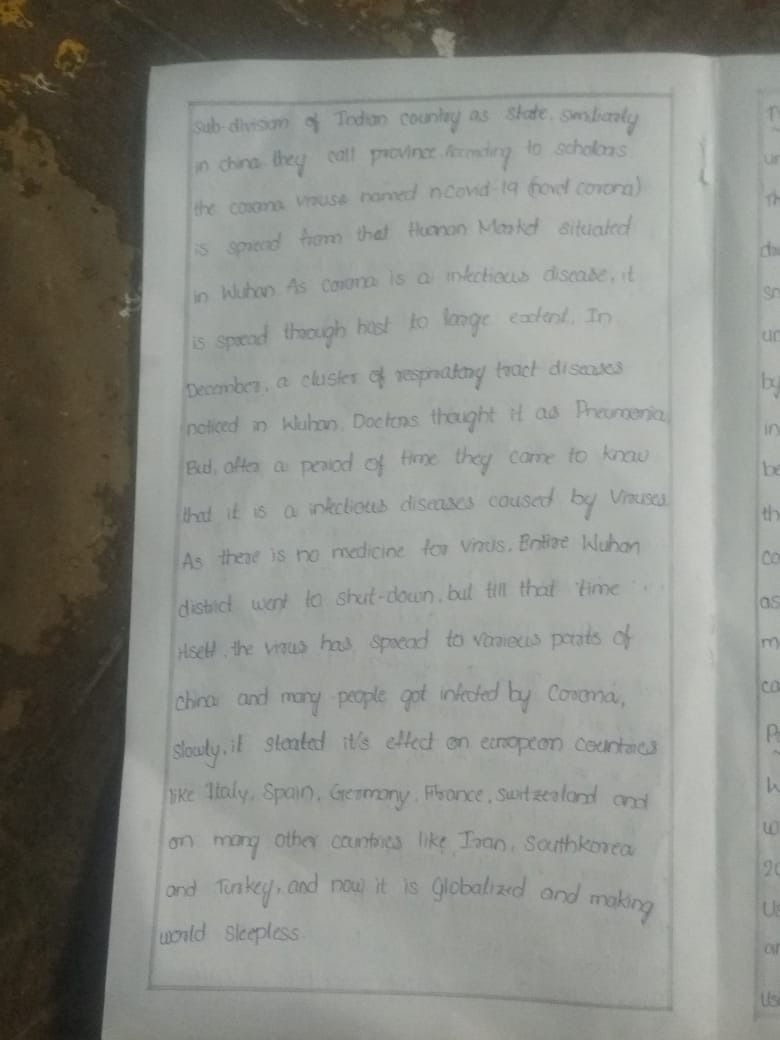
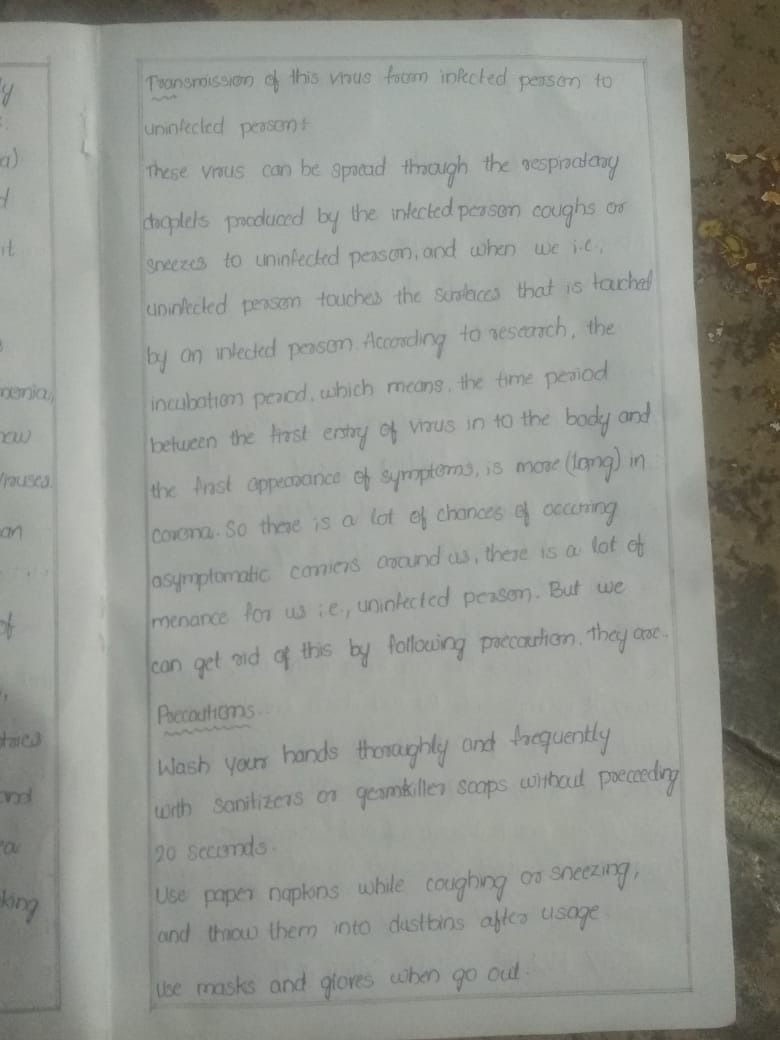
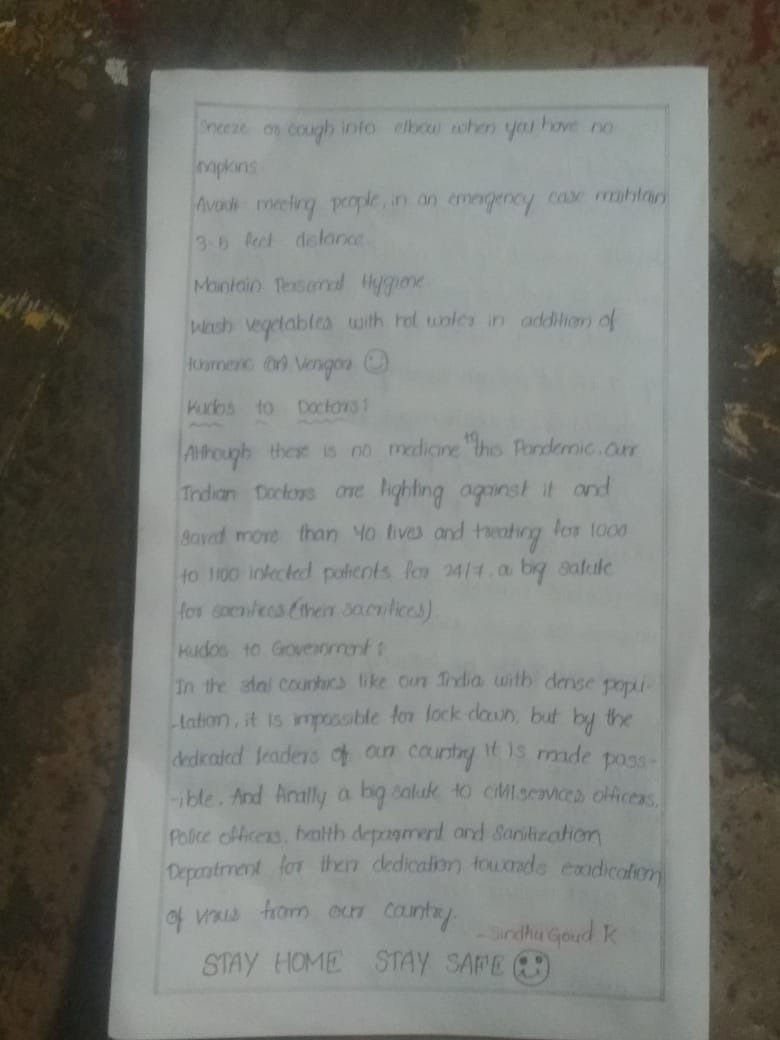
One of our trainees, Sindhu from Mahabubnagar wrote a piece on COVID19:


Categories
EDforSD

How much plastic is in your school?

Please take a look at this fantastic study and post by one of our most active Eco Ambassadors, Aalok Bhatt.


BY AALOK BHATT

My name is Aalok Bhatt and I am a sophomore in Millburn High School, New Jersey, and an Eco Ambassador for the Center for Sustainable Development (CSD) at Earth Institute, Columbia University and SDSN program.

Miss. Priya Patel of the Millburn Green Team, asked me and another student to create a survey in order to get more information about the plastic consumption habits of students in our school.

The survey got a good response as 1082 students participated in it, which is over ⅔ of the student body. To get such a high number of respondents, I had to put in a lot of effort to get the word out.

The first thing I did was to speak to all the class presidents to send out the survey. Unfortunately, I did not get enough responses so I decided to speak to the principal of MHS, Dr Miron, requesting him to send out the survey in a school wide email.

He did so and even reminded students to fill out the survey on the loudspeaker 2 times!

While analyzing the results of the survey, I saw that 57.9% of respondents never bring reusable cutlery to school. I was shocked when I saw this statistic and realised that a lot of work needs to be done in terms of convincing students to bring their own cutlery, and persuade the school to provide less or no plastic cutlery.

In order to achieve this, I, along with members of the High School Environmental team, plan to speak to Dr Burton (the superintendent of Millburn Public Schools), and Mrs Schnider (who handles the school’s finances) to lobby for reduced disposable cutlery in our school.


On a positive note, most of the results leaned to the environmentally friendly side, which gives me hope that we will be able to combat this problem in an expeditious manner.


Click here to see my findings!


Eco Ambassadors

Categories
EDforSD

Addressing Plastic Pollution through Entrepreneurship in Ghana

By Tara Stafford Ocansey

Though only in production for little over half a century, plastics have become so ubiquitous that by mid-century, it is estimated that there will be higher quantities of plastics than fish in our oceans.[1] This is because plastic takes more than 400 years to degrade, and less than 10% of plastic produced is recycled. The rest ends up in landfills where toxic chemicals leech their way into groundwater, or in our oceans, where they break down into microplastics that then make it into the bellies of wildlife and humans alike. It is estimated that the average person ingests between 39,000-52,000 particles of microplastic per year.[2]

Consumer habits driving demand for cheap products is a big part of this problem, as are plastic producers who are unwilling to sacrifice short-term profit for longevity of our planet’s habitability. These problems are then further compounded by waste management systems unable to handle the growing burden of plastic waste, particularly in developing parts of the world.


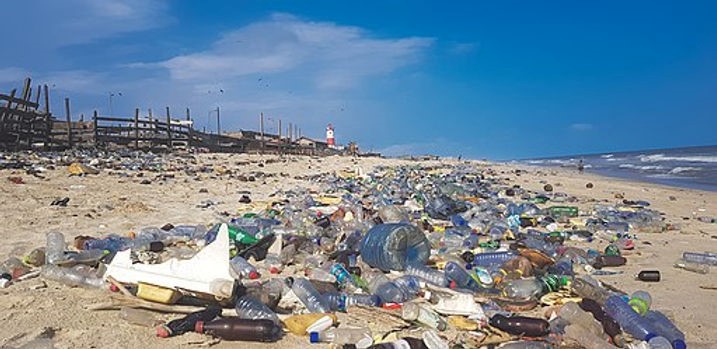
Plastic Pollution on Accra Beach. Photo by: Muntaka Chasan

In Ghana, a beautiful country that has become increasingly plagued by mismanaged plastic waste, the country is taking important policy strides toward addressing the challenge. In 2017, Ghana’s President Nana Akufo Addo launched the National Sanitation Campaign, which aims to increase Ghana’s sanitation by establishing a National Sanitation Authority, building a youth brigade tasked with enforcing sanitation laws, and establishing new recovery sites for recycling, among other efforts. Earlier this year, Ghana became the second country in the world and the first in Africa to join the Global Plastic Action Partnership of the World Economic Forum.

These policy solutions, while sounding great on paper, have been slow to take root. A visit to one of Ghana’s gorgeous beaches or along a main road makes it clear that plastic is everywhere. It is estimated that the country loses approximately 1.44 billion GHS annually due to poor sanitation.[3] During the rainy season especially, plastic pollution clogs drains, leading to public health crises such as numerous cholera outbreaks in recent years. The 2014-15 cholera outbreak impacted nearly 29,000 Ghanaians.[4]

With affordable, accessible waste management services slow to keep pace with demand, many families deal with their waste by dumping or burning it. During a recent survey in Odumase, a town in Ghana’s Eastern Region, just 60% of respondents reported using trash collection service. Among those not using the service, 56% reported that the main reason was due to lack of available service in their area, while another 22% reported that the service doesn’t come often enough. To deal with their waste, 47% reported burning their waste, while 40% said they dump it in open space or allocated dump sites near their communities.

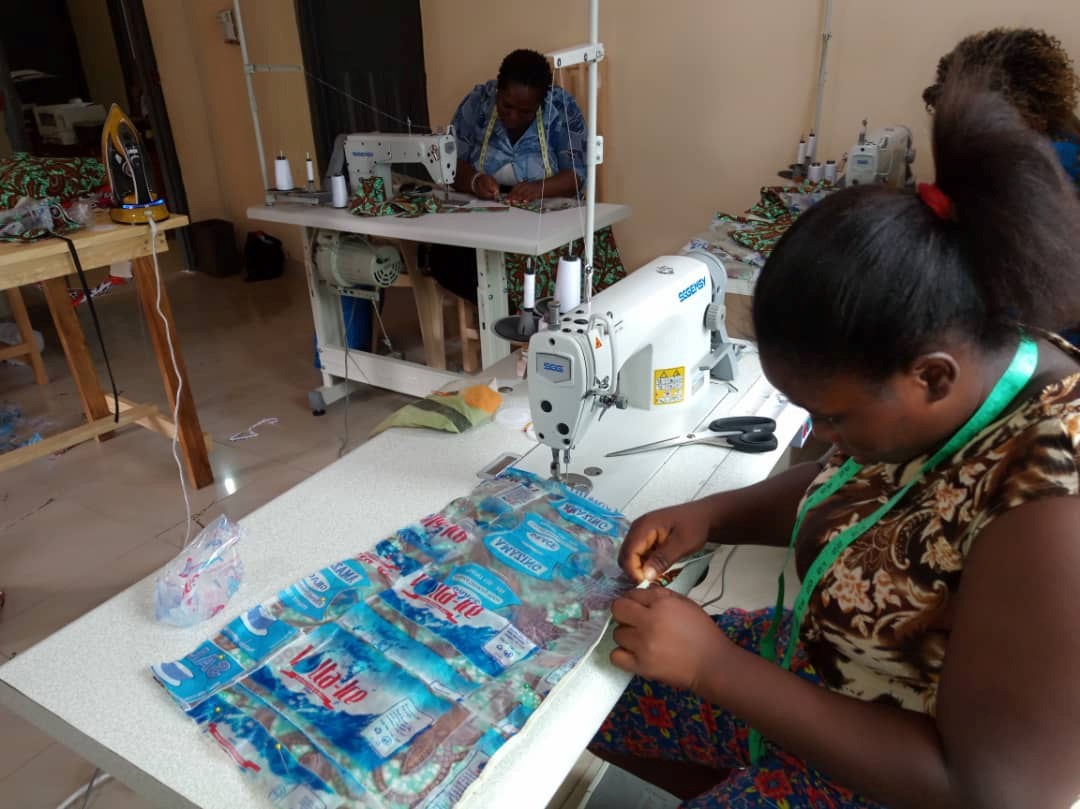
Vocational training participants making products lined with upcycled plastic sachets

One major source of plastic waste in Ghana comes from plastic sachet water, a main source of drinking water for much of the population. In the survey, 53% of respondents reported sachet water as their primary source of clean drinking water. These sachets are often discarded as soon as they are consumed, leaving sachets littering the ground. In homes, these sachets often get burned along with the rest of household waste, but it seems few are aware of the harmful impacts of home burning. Home burning increases risks of heart disease, aggravates respiratory ailments such as asthma, causes rashes, nausea, and headaches, and can damage the nervous system and reproductive system. Burning of plastic in particular releases some of the most dangerous, highly toxic chemicals. Plastics containing PVC release cancer-causing and hormone disrupting Dioxins. They accumulate in our body-fat and thus mothers give it directly to their babies via the placenta. Dioxins also settle on crops and in waterways eventually winding up in our food, our bodies and passed on to our children.[5]

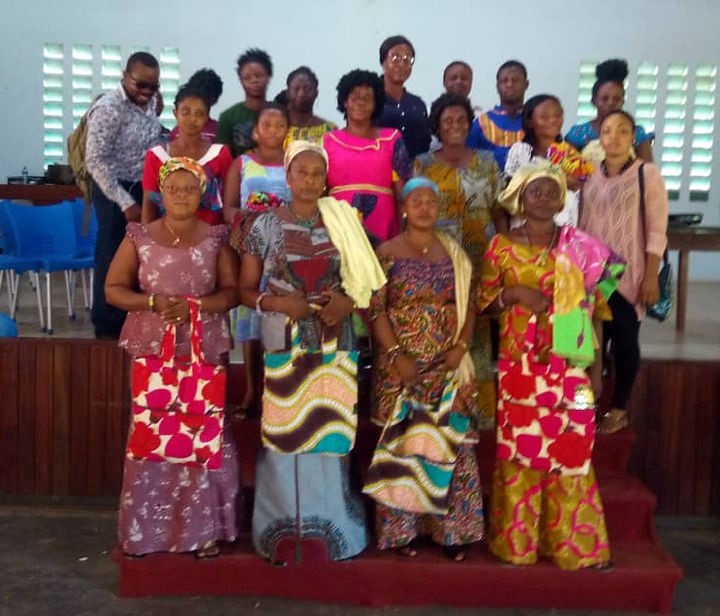
Sensitization participants pose with their new tote bags made by the vocational training participants to encourage “bring your own bag” practice.

To help address these challenges and contribute toward the National Sanitation Campaign’s aims, the Center for Sustainable Development has partnered with Youth and Women Empowerment in Ghana’s Lower Manya Krobo District, where Odumase is located, to help sensitize community leaders and citizens on the impacts of plastic pollution and to devise simple everyday actions that can be taken to help mitigate the issue. Leading up to the start of the sensitization campaign, the initiative invested in training a group of 10 young women in tailoring, but with a twist. Instead of learning to make typical clothing items found on the market, these women are making waterproof items lined with upcycled plastic sachet waste, including baby bibs, kids’ lunchboxes and school pencil cases, toiletry bags, tote bags, placemats, shower curtains, and more.

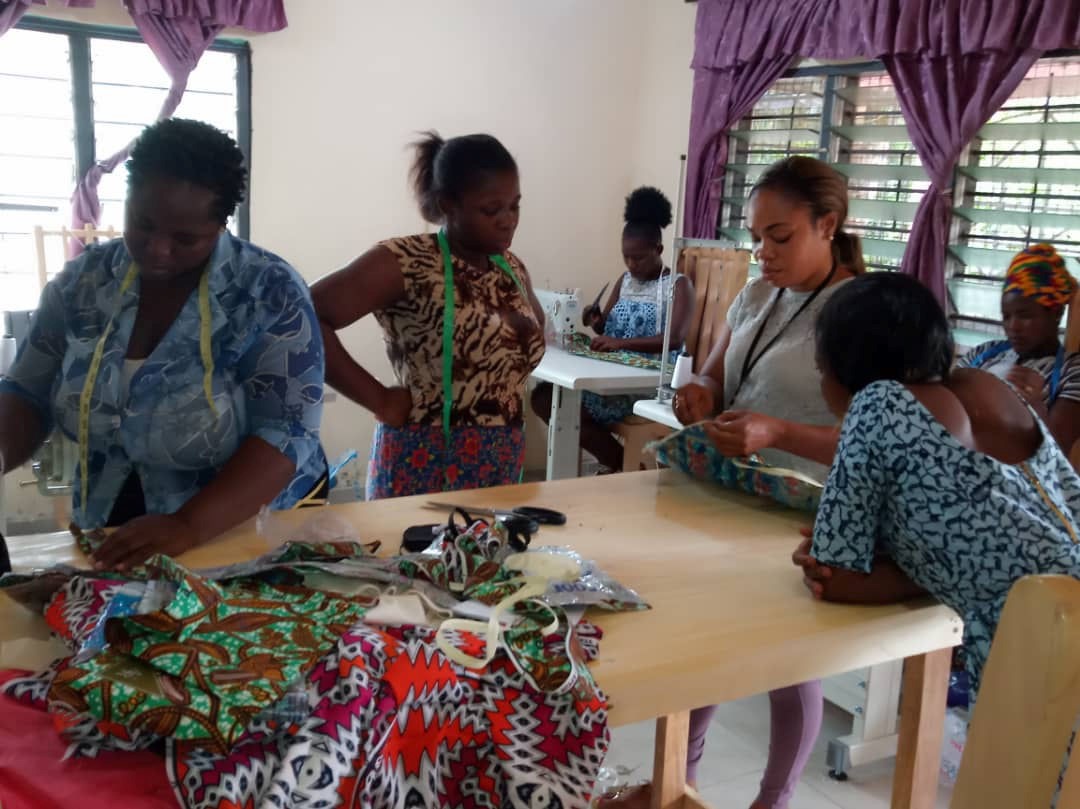
Trainees with their trainer, Judith Ahiabor, in the YOWE workshop.

During sensitization trainings beginning in November 2019, Queen mothers, PTA leaders and other key community stakeholders were provided tote bags purchased from the tailoring trainees, helping the young women earn income while at the same time giving the community members something tangible to help encourage them to avoid using plastic bags when they go to the market for their shopping. Judith Ahiabor, the tailoring trainer working with YOWE, described the sensitization by saying “They were so into it, because they were complaining about the plastic choking the gutters, and people’s homes were getting flooded, so they embraced it so well. What we came up with was that we would go to the schools, and come up with an award scheme in the community. Those who are able to gather a lot and keep their homes and environments clean, we will award them with our products.” In addition to committing to bringing their own bags while shopping, other actions that were decided upon during the sensitization trainings include separating their wet and dry waste, stopping their burning of household waste, and educating their peers to do the same. The community will also hold community clean-up days beginning in January 2020.

Cosmetics bag lined with upcycled plastic sachets

As these sensitization trainings are going on, the tailoring trainees are growing their sales by partnering with schools to provide their children’s products to the pupils, and participating in local exhibitions to expose their products to new audiences. Sensitization trainings will continue over the coming months, and changes in waste management behavior will be documented through continued observation and survey data collection by the CSD and YOWE team.


REFERENCES

[1] https://www.nationalgeographic.com/news/2017/07/plastic-produced-recycling-waste-ocean-trash-debris-environment/


[2] https://www.huffpost.com/entry/plastic-waste-pollution-ocean_n_5dcc2afae4b0d43931cddd52


[3] https://thebftonline.com/2018/economy/country-loses-gh%C2%A21-440bn-annually-to-poor-sanitation-open-defecation/


[4] https://www.ncbi.nlm.nih.gov/pmc/articles/PMC6003169/


[5] http://www.arb.ca.gov/smp/resburn/res-burn.htm


Categories
EDforSD

“I wish we had more of this in our school”

Reflections from Vidya Bindal, Middle School, Millburn, NJ

On the 13th of December 2019, a meeting took place at the library in our town. The goal was to raise awareness about the environment. It began with a movie, featuring a group of 4th/5th graders who made a difference in their community, and made it a greener place. They especially looked at the microplastics in their bay area. They collected samples and examined them under the microscope. After the movie we discussed.  We learned that in 2050 there will be more plastic (in weight) than fish in the ocean. Also, there were over 5 trillion microbeads in the oceans. Some points that were discussed were about the microfabrics that came from people’s clothes when they were washed.Some valuable suggestions came up too.The micro fabrics could be caught instead of let into the environment and made into clothes once again. Also, it was brought up that every store could have a grade in their front window. If they were extremely eco-friendly, they would receive an A. The grades would go down from there. Also, all the shoppers would be signaled that the store was worried about getting a grade if they didn’t have one in their window. That could only mean one thing. The store was not eco-friendly. Also, restaurants can start selling the reusable containers themselves. That way all take -out would be plastic-free. Everyone unanimously agreed that they would try to help in any way possible and that as much plastic was reduced was as many lives (of not only humans but animals too) saved.

Watching the movie, and seeing how schools were taking kids out to check microplastics in the ocean and then to talk to Council Members in the city, I was impressed that schools are making time from studies for these activities. I wish our schools did that more. They could either extend school by half hour, or switch some classes to make room for such activities.


Categories
EDforSD

Movie party at the Millburn public library

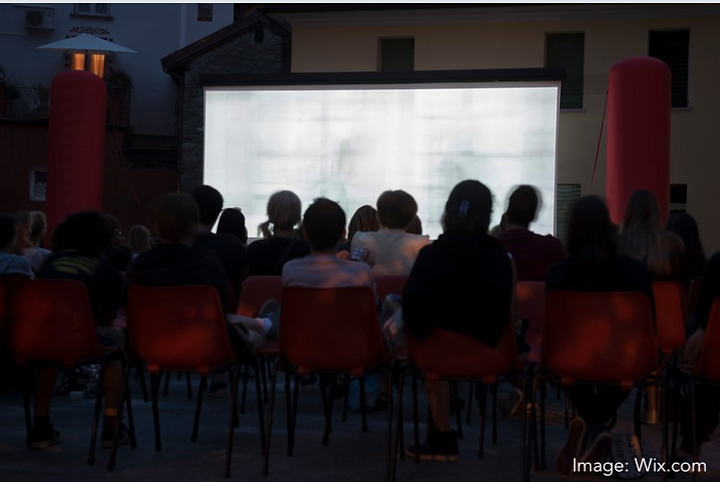
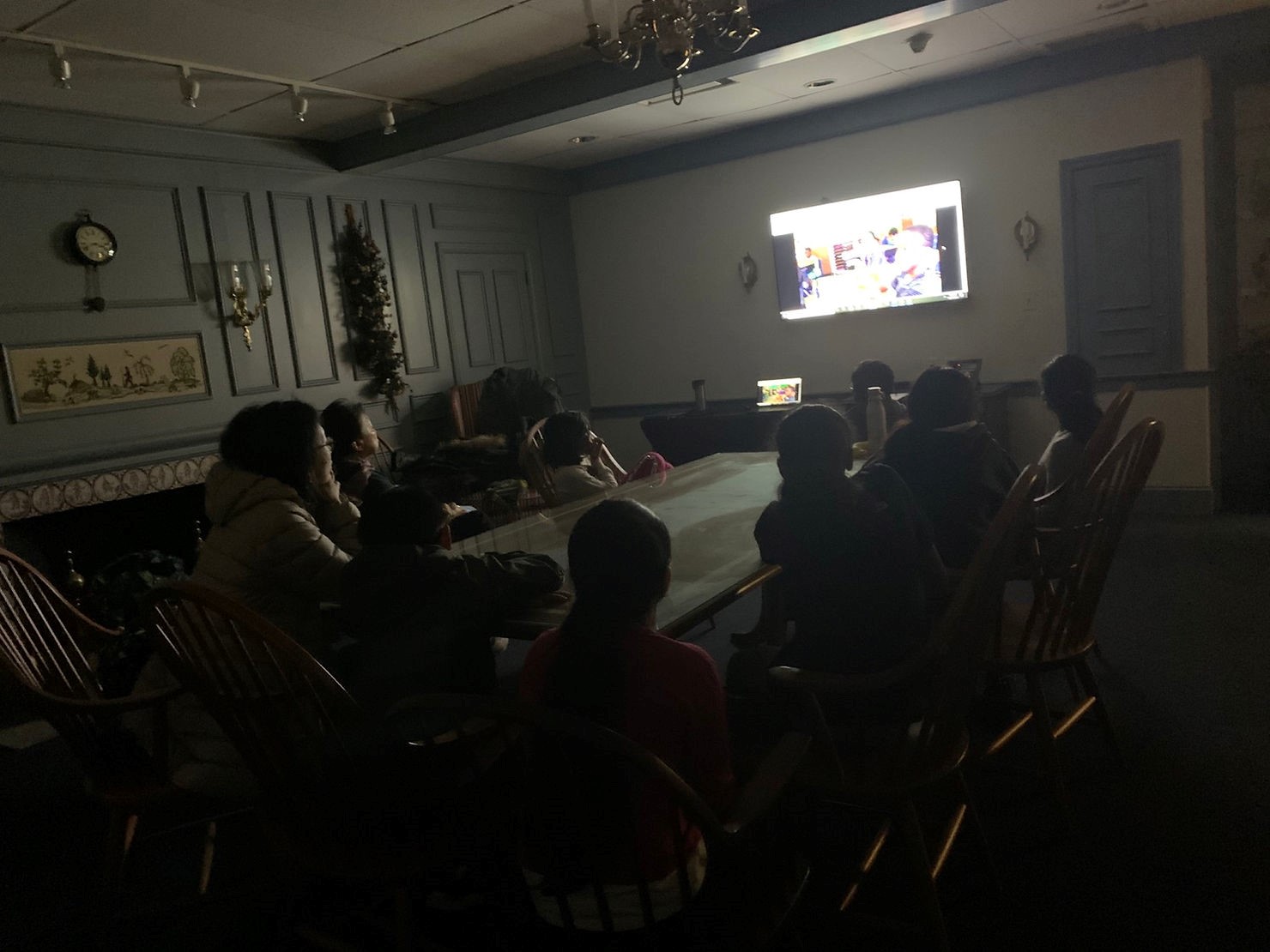
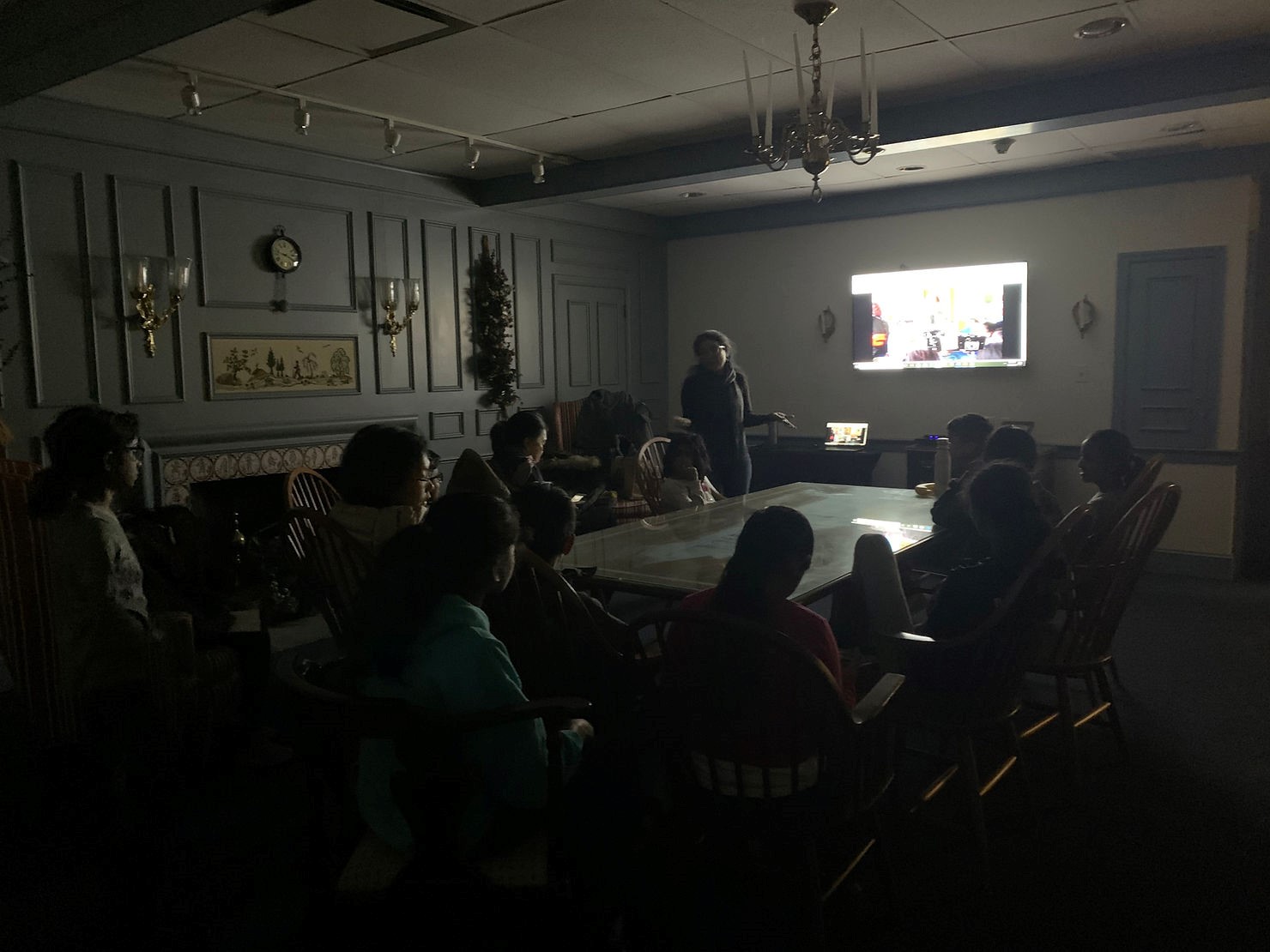
The eco-ambassadors were given an assignment to organize a movie party. Eco-ambassadors Vidya and Veda Bindal organized the Movie show at the Millburn Public library. There were more than 25 children present at the event. The Movie “Microplastic Madness” was screened. The children attentively watched the movie. The movie followed a discussion led by the students. Discussion on micro-fibers led to children trying to find a solution for it. What kind of filters to be used to control micro-fibers? Students came up with suggestions on how to control the plastic pollution at homes. Some said that they kept re-using the plastic bags and others said that they are careful not to take any plastic bags from the market. Many students said that they take their own bags. The session ended with students discussing how they are going to become eco-activist at homes, schools and in their communities.

Cheers eco-ambassadors!

Categories
EDforSD

Who wants to be an EcoKing or a Queen?

Ishaan Bharadwaj: Millburn Middle School

Hi! My name is Ishaan Bharadwaj. I am a 6th grader at Millburn Middle School and I am part of the Eco ambassador’s club. This year my family decided to have an environment friendly Thanksgiving. On Wednesday afternoon, the day before Thanksgiving, it was a half-day and I was bored. My mom was doing her usual Thanksgiving preparations. While I was just sitting down, I thought about the wastage each year at the end of Thanksgiving parties when we would have one or two garbage bags filled with wasted food, one-time use cutlery, wasted cups and napkins, and more. Think about how much your street wastes. How much your town wastes, how much the state wastes how much the country wastes! if you think it’s just a little or it’s just one day, the amount of wastage that happens every Thanksgiving throughout the world each year can’t be fixed. It is so much, that it is leading to a big disaster. So this year, I decided that my family would be the one to start the change, not just to change this Thanksgiving, but to initiate a change in the small world around us.

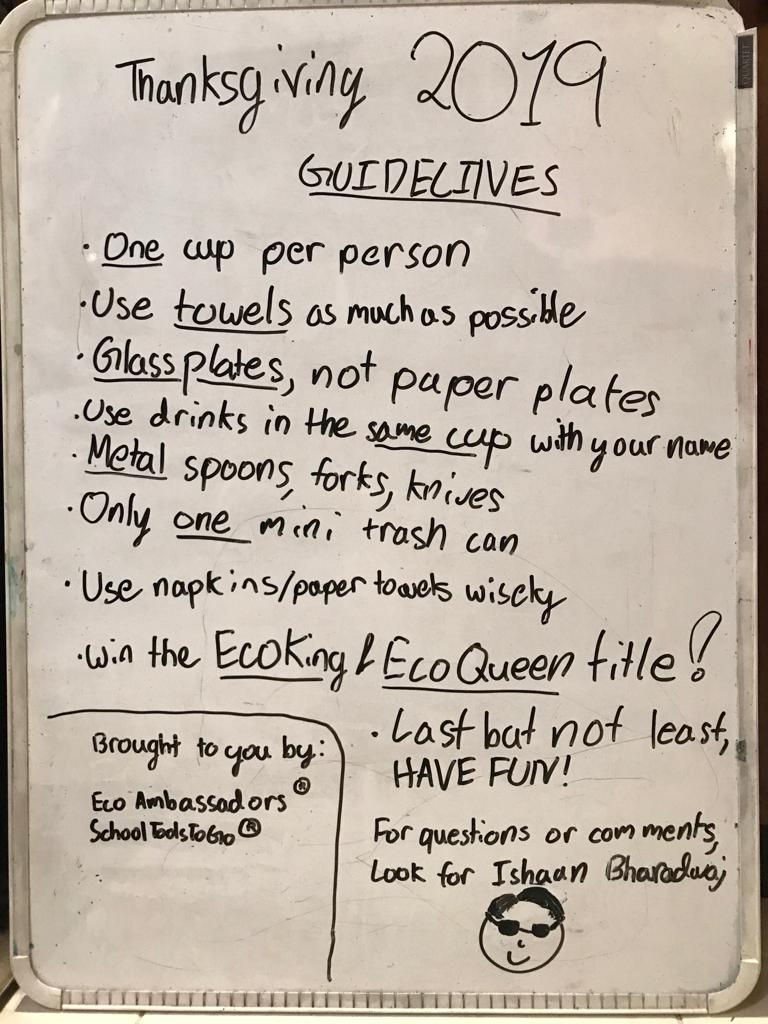
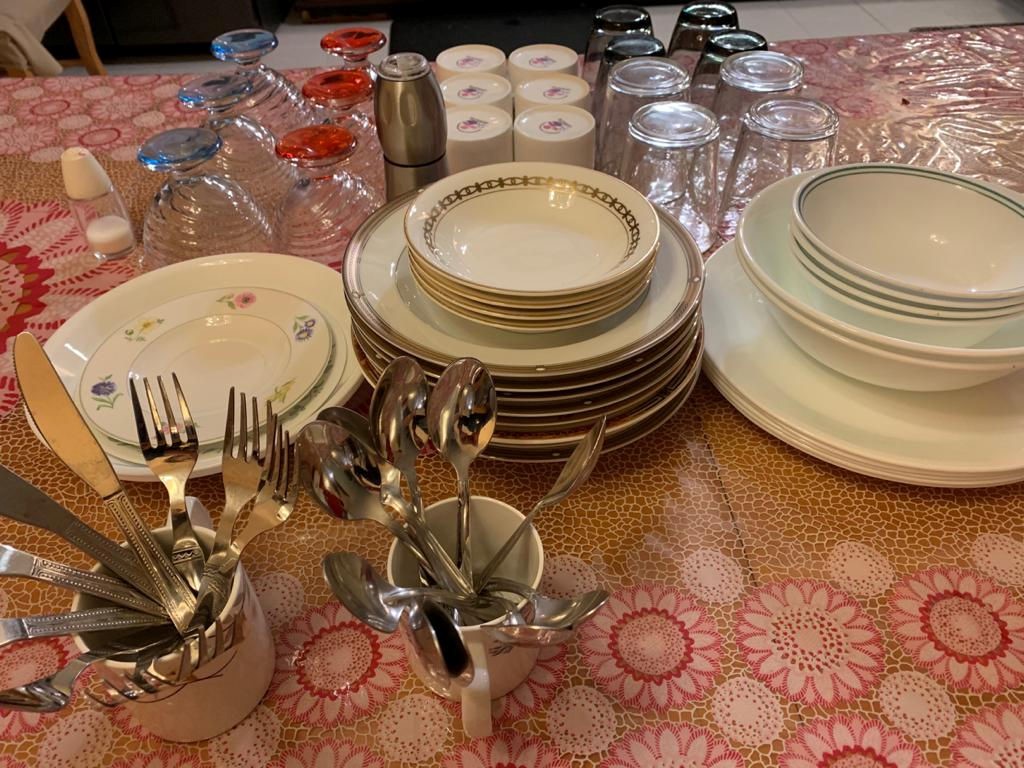
We told all our friends who were invited that we are having an eco-friendly party. I wanted to be more creative, so I made a board with rules and the guest who followed the rules the most would be crowned ECOKing & ECOQueen. We started preparing for the plastic-free party. We took out all our glassware, metal spoons and forks, and glass cups. We removed all plastic items including serving bowls and serving spoons and table cloth. We cooked everything at home and we requested our guests to bring food without plastic packaging as well. None of the food used plastic packaging, plastic cans or plastic covers because everything was homemade! All the guests were very cooperative and followed the rules. They were, in fact, having fun playing the game and were very sportively trying to win the ECOKing/ ECOQueen title. They even helped clean the dishes. At the end of the day, I was so happy to see our garbage can barely filled up. I think our Thanksgiving this year did make a difference to the environment. My biggest takeaway from this event was that it is not very difficult to go plastic-free in your parties and by making it fun with a game you can send the message across in a fun way while doing your part to save earth.