Categories
EDforSD

Eco-education: Why we must prioritize environmental learning—before it’s too late

Ryan Cho

12th Grade

Choate Rosemary Hall

Barely half a year since it was first reported in Wuhan, the novel coronavirus has infected upwards of 12 million people worldwide. On top of the direct threat the virus poses to public health, COVID-19 has hobbled the global economy and transborder mobility. It has also jeopardized the livelihoods and mental health of millions of people around the world, who are currently coping with the economic downturn and with lockdown or stay-at-home orders. The ongoing COVID-19 pandemic provides a sobering example of how imprudent human actions that strain the environment can come back to haunt us. According to scientists from institutions such as Stanford University and the Johns Hopkins Bloomberg School of Public Health, prioritizing profits over the ecosystem and failing to stringently execute regulations can lead to environmental disasters, including deforestation. These disasters, in turn, facilitate the emergence of zoonotic diseases, such as COVID-19 (Stanford University, 2020; Wolfe et al., 2005).

Simply put, human activities have consequences. When we act without regard to our environment, the effects do not stop at harming Mother Nature. Ultimately, those actions and their environmental repercussions boomerang back to harm us, too. As demonstrated by the spread of COVID-19, our decisions affect the environment, and environmental consequences impact our society, our economy, and our public health. Thus, more prudent environmental decision-making is not only eco-friendly but also healthful for society in general.

Fortunately, many of the environmental issues plaguing our planet, including deforestation, climate change, and pollution, seem to be entering the realm of common knowledge. However, this increasing awareness is not enough to achieve sustainable development. Simply realizing that humans contribute to environmental issues does not necessarily mean people understand that the next step in the feedback cycle is negative impact on humans, nor does awareness equate to a willingness to make environmentally sustainable decisions (Iizuka, 2000; Postigo et al., 2007).

This is precisely why eco-education is important. Eco-education, also referred to as environmental education, does not stop at enhancing awareness of environmental issues. As a process, eco-education helps individuals cultivate a deeper understanding of the natural environment, environmental issues, and their impact. Its objective is to develop attitudes, behaviors, and critical thinking, problem-solving, and decision-making skills that encourage individuals to act more responsibly and contribute to resolving environmental challenges (EPA, n.d.). In other words, eco-education strives to support students in making informed, environmentally sustainable decisions. Such informed decision-making need not be constrained to pivotal, newsworthy moments. Environmentally responsible decisions in everyday situations matter, too. For instance, greater knowledge of environmental consequences prompts consumers to select eco-labeled products out of environmental concern (Göçer & Oflaç, 2017).

Eco-education can be implemented for all age groups, ranging from early childhood to those in tertiary education. While programs aimed at enhancing the eco-literacy of older students have considerable benefits, it is particularly advantageous to begin eco-education at a young age. First, spending time outdoors is beneficial to the cognitive development and physical and mental health of young children (Taylor et al., 2006; Wells & Evans, 2003). Participative eco-education may also enhance prosocial behavior in toddlers (Mizuuchi & Kim, 2013). Furthermore, research finds that childhood experiences in nature are positively linked with a propensity for environmentally protective attitudes in adults (Wells & Lekies, 2006). Time spent outdoors has also been shown to contribute to feelings of connectivity with nature and environmental stewardship (Andrejewski et al., 2011; Kals et al., 1999). The positive effects of eco-education for young children are not even limited to the children themselves. The parents of children receiving eco-education have also been found to exhibit greater eco-literacy, suggesting that child recipients of eco-education may act as agents in facilitating inter-generational learning (Istead & Shapiro, 2014; Vaughan et al., 2003). Thus, it is especially beneficial to encourage eco-education beginning in early childhood.

With the COVID-19 pandemic at the top of the list, the current suffering caused by harrowing global issues could have been ameliorated if more people were aware of environmental challenges and had been trained to help resolve them. The list of possibilities is extensive. Deforestation leads to flooding, drought, loss of water sources for drinking and agriculture, and climate change (Derouin, 2019). The effects of climate change are numerous, among them threats to our food supply and public health, floods, drought, rising sea levels, and loss of biodiversity(National Oceanic and Atmospheric Administration, 2019). Recent calamities caused in part by man-made environmental problems include the 2019-2020 Australian bushfires that killed one billion animals and the ongoing locust plague, which could threaten the livelihoods of a tenth of the world’s population, according to the UN (Baskar, 2020; The University of Sydney, 2020). Stronger implementation of eco-education could contribute to lessening the impact of, or perhaps even outright avoiding, similar problems in the future.

Governments are increasingly showing enthusiasm in supporting eco-education. In countries ranging from India to Italy, movements to integrate eco-education into formal education are a step towards a higher average of eco-literacy. Additionally, non-governmental institutions, such as the Foundation for Environmental Education and the National Wildlife Foundation, provide eco-school programs. Corporations such as EPSON also provide environmental education for employees. One way to further enhance the effectiveness of eco-education policies is to align national policies in other sectors, forming a holistic and cohesive policy structure that promotes sustainable decision-making (Iovan, 2014). In addition, utilizing new technologies may provide additional methods to enhance students’ learning experience in eco-education (Huang et al., 2016). Considering the inevitability of online teaching in the near future, now may be a good time to investigate how to effectively conduct eco-education online.

References

Andrejewski, R., Mowen, A. J., & Kerstetter, D. L. (2011). AN EXAMINATION OF CHILDREN’S OUTDOOR TIME, NATURE CONNECTION, AND ENVIRONMENTAL STEWARDSHIP. Proceedings of the Northeastern Recreation Research Symposium. https://scholarworks.umass.edu/cgi/viewcontent.cgi?article=1001&context=nerr

Baskar, P. (2020, June 14). Locusts Are A Plague Of Biblical Scope In 2020. Why? And … What Are They Exactly? NPR. https://www.npr.org/sections/goatsandsoda/2020/06/14/876002404/locusts-are-a-plague-of-biblical-scope-in-2020-why-and-what-are-they-exactly

Derouin, S. (2019, November 6). Deforestation: Facts, Causes & Effects. https://www.livescience.com/27692-deforestation.html

EPA. (n.d.). What is Environmental Education?https://www.epa.gov/education/what-environmental-education

Göçer, A., & Oflaç, B. S. (2017). Understanding young consumers’ tendencies regarding eco-labelled products. Asia Pacific Journal of Marketing and Logistics, 29(1). https://www.emerald.com/insight/content/doi/10.1108/APJML-03-2016-0036/full/html

Huang, T.-C., Chen, C.-C., & Chou, Y.-W. (2016). Animating eco-education: To see, feel, and discover in an augmented reality-based experiential learning environment. Computers & Education,96, 72–82. https://doi.org/10.1016/j.compedu.2016.02.008

Iizuka, M. (2000). Role of environmental awareness in achieving sustainable development(Enhancement of Citizen’s Awareness in Formulation of Pollution Control Policies in Major Latin American Cities). Environment and Human Settlements Division, ECLAC. http://biblioteca.cejamericas.org/bitstream/handle/2015/3375/Role_Environmental_Awareness_Achieving_Sustainable_Development.pdf?sequence=1&isAllowed=y

Iovan, M. (2014). Eco-Education: A Required Element of Public Policies for Sustainable Social and Economic Development. Academicus International Scientific Journal, 9, 14–28.

Istead, L., & Shapiro, B. (2014). Recognizing the Child as Knowledgeable Other: Intergenerational Learning Research to Consider Child-to-Adult Influence on Parent and Family Eco-Knowledge. Journal of Research in Childhood Education, 28(1), 115–127. https://doi.org/10.1080/02568543.2013.851751

Kals, E., Schumacher, D., & Montada, L. (1999). Emotional Affinity toward Nature as a Motivational Basis to Protect Nature. Environment and Behavior, 31(2), 178–202. https://doi.org/10.1177/00139169921972056

Mizuuchi, T., & Kim, G. (2013). The Effects of Eco-Education by Hands-on Natural Activities on the Prosocial Behavior of Toddlers. The Asian Journal of Disable Sociology, 13, 43–53.

National Oceanic and Atmospheric Administration. (2019, February). Climate change impacts. https://www.noaa.gov/education/resource-collections/climate/climate-change-impacts

Postigo, A., Haines, A., Neira, M., & Confalonieri, U. (2007). Will increased awareness of the health impacts of climate change help in achieving international collective action? Bulletin of the World Health Organization, 85(11), 826–828. https://doi.org/10.2471/blt.07.021107

Stanford University. (2020, April 15). Forest loss could make diseases like COVID-19 more likely, according to study. World Economic Forum. https://www.weforum.org/agenda/2020/04/forest-loss-diseases-covid19-coronavirus-deforestation-health/

Taylor, A. F., Kuo, F. E., Spencer, C., & Blades, M. (2006). Is contact with nature important for healthy child development? State of the evidence(Vol. 124). Cambridge University Press.

The University of Sydney. (2020, January 8). More than one billion animals killed in Australian bushfires. https://www.sydney.edu.au/news-opinion/news/2020/01/08/australian-bushfires-more-than-one-billion-animals-impacted.html

Vaughan, C., Gack, J., Solorazano, H., & Ray, R. (2003). The Effect of Environmental Education on Schoolchildren, Their Parents, and Community Members: A Study of Intergenerational and Intercommunity Learning. The Journal of Environmental Education, 34(3), 12–21. https://doi.org/10.1080/00958960309603489

Wells, N. M., & Evans, G. W. (2003). Nearby Nature: A Buffer of Life Stress among Rural Children. Environment and Behavior, 35(3), 311–330. https://doi.org/10.1177/0013916503035003001

Wells, N. M., & Lekies, K. S. (2006). Nature and the Life Course: Pathways from Childhood Nature Experiences to Adult Environmentalism. Children, Youth and Environments, 16(1), 1–24. JSTOR.

Wolfe, N. D., Daszak, P., Kilpatrick, A. M., & Burke, D. S. (2005). Bushmeat Hunting, Deforestation, and Prediction of Zoonotic Disease. Emerging Infectious Diseases, 11(12), 1822–1827. https://doi.org/10.3201/eid1112.040789
 

Categories
EDforSD

Victor Kobayashi Award for the Best Field-Based Initiative:

Sponsored by the Environmental and Sustainability Education Special Interest Group (ESE SIG) at CIES

The annual Victor Kobayashi Awards were instituted in 2020 to honor the legacy of Victor Nobuo Kobayashi (1932-2018) and his support for the Environmental and Sustainability Education Special Interest Group. A Professor Emeritus of Educational Foundations at the University of Hawaii, Dr. Kobayashi contributed to the field of comparative and international education for more than four decades. His presidential address at CIES in 2006 centers around the furies of human conflict and the devastation of the global environment that destruct our relationships with others and other creatures[1]. He calls for a revolution in comparative education that highlights the interconnectedness of life in the study and practice of education. The awards, therefore, are intended to encourage both research and field-based initiatives that advance the work in environmental and sustainability education.  Best field-based Initiative is an award given to the INGO/NGO/field-based organization, individual or group within an institution implementing an exemplary project in the area of environmental and sustainability education. The award acknowledges the critical field-based effort by any institution, individual or group within an institution working on a project on environmental and sustainability education. The winner of the award will be given an opportunity to give a brief presentation at the ESE SIG Business Meeting at the 2021 CIES Annual Conference. The Award Committee does not specify any particular field that will be given priority but preference will be given for an action-based project that has changed or has the potential for changing lives of disadvantaged and deprived sections of society. No special privileges will be given to any particular institution, gender, race/ethnicity or sexual orientation. Specific criteria for selection of the Organization/Group/Individual are: 1) Nominations/Submissions can be made by ESE SIG Members only. 2) The nominee must submit a specific project for consideration. The nomination should not detail an overall organization or multiple projects. 3) Eligible nominees need to be paid or volunteer workers of INGO, NGO or other field-based organizations. The nomination can be submitted by an individual, a group working on a project or an organization. The project should not be part of any corporate organization but might have availed of funds/support from such agency.  4) While not required, it is preferred that the project/innovation have an impact on a sizeable number of beneficiaries with evidence. Evidence that the project is easily replicable is also preferred but not required. 5) Nominees should submit a 3-5 page maximum, double spaced 12-point font summary of their work in English along with whatever evidence that supports their case (e.g. pictures, video-clippings, media coverage, snippets from a monitoring or evaluation report, brochure or project brief etc.) Supporting documents should not exceed 5 pages and video should not exceed three minutes. Videos and supporting documents need to be included as either attachments or links. No hard copies will be accepted. The summary should include information on the: a) nature/title of the project; b) motivation for the project; c) location of the project; d) duration of the project; e) approximate number of people impacted by the project; f) approximate cost involved in the project; and, g) sustainability of the project. Only electronically received copies will be considered. Submissions should include name(s), email ID(s) phone number(s), and a copy of the published article. Please email the article to [email protected] by December 15th, 2020. Please also copy Radhika Iyengar at [email protected] Carine Verschueren at [email protected]

[1]Kobayashi, V. (2007). Recursive patterns that engage and disengage: Comparative education, research and practice. Comparative Education Review, 51(3), pp. 261-280.

Categories
EDforSD

Victor Kobayashi Award for the Best Journal Article:

Sponsored by The Environmental and Sustainability Education Special Interest Group (ESE SIG) at CIES

The annual Victor Kobayashi Awards were instituted in 2020 to honor the legacy of Victor Nobuo Kobayashi (1932-2018) and his support for the Environmental and Sustainability Education Special Interest Group. A Professor Emeritus of Educational Foundations at the University of Hawaii, Dr. Kobayashi contributed to the field of comparative and international education for more than four decades. His presidential address at CIES in 2006 centers around the furies of human conflict and the devastation of the global environment that destruct our relationships with others and other creatures[1]. He calls for a revolution in comparative education that highlights the interconnectedness of life in the study and practice of education. The awards therefore are intended to encourage both research and field-based initiatives that advance the work in environmental and sustainability education.  The award acknowledges the academic work of scholars focusing on sustainability and environmental education issues globally. The winner of the award will be given an opportunity to give a brief presentation at the ESE SIG Business Meeting at the 2021 CIES Annual Conference. The Awards Committee does not specify any research topic or methodology that will be given priority. It will keep in mind the issues of environmental and social justice. No special privileges will be given to any particular institution, gender, race/ethnicity, or sexual orientation. Specific criteria for selection of the article are: 1) Submissions can be made by ESE SIG Members only  2) Article should have been published in a peer reviewed Journal between 2019 and the present. 3) The author(s) should have earned a Master’s Degree.  4) Article must focus on educational issues relevant to the field of sustainability and environment. 5) Article must clearly describe the empirical approach (if any) and be grounded in an appropriate theoretical/conceptual framework and methodology.

6) Article must make a contribution to the field of comparative and international education and show promise of a significant contribution towards existing theory, policy or practice of education.

7) The awardee is encouraged to participate at the 2021 ESE SIG Business Meeting at CIES. 8) The article must be submitted in English.  Only electronically received copies will be considered. Submissions should include name(s), email ID(s) phone number(s), and a copy of the published article. Please email the article to [email protected] by December 15th, 2020. Please also copy Radhika Iyengar at [email protected] Carine Verschueren at [email protected]

[1]Kobayashi, V. (2007). Recursive patterns that engage and disengage: Comparative education, research and practice. Comparative Education Review, 51(3), pp. 261-280.

Categories
EDforSD

Call for Proposals


Environmental and Sustainability Education SIG- CIES 2021

Theme: Our Moral and Social Responsibility to maintain Planetary Boundaries[1]

Radhika Iyengar, Chair, ESE SIG

Carine Verschueren, Program Chair ESE SIG

Please use the following platform for submissions and remember to choose the ESE SIG- https://cies2021.org/call-for-submissions/

Planet Earth is running a temperature: 2010-2019 was the warmest decade on record[2]. Moreover, the worst affected are the most vulnerable in the most marginalized settings across the globe[3]. On the heels of this climate crisis, we slipped into a pandemic. COVID-19 has taught us that humanity can be saved by our collective action to protect each other. The theme for CIES 2021 calls for recognizing the changing contexts and urges us to introspect our social responsibility. The ESE SIG invites practitioners, researchers and youth to share their research, voices and best practices at the SIG sessions. The SIG will consider all papers that discuss the interaction between the four pillars of sustainability-social, environmental, economic and good governance. We encourage the inter-disciplinary approaches and cross-sectoral approaches that use a social responsibility lens and its links to climate, environment and sustainability. ESE SIG will especially welcome research topics that include the following strands-

  • Formal education curricula and textbooks:

o Trends and analysis on current formal classroom-based curricula and textbooks that challenge the status quo on the treatment of environmental education and climate change education.

o How can the formal school system understand the larger eco-system to address the climate crises?

o What are some teacher education models and classroom teaching practices and challenges on the climate crises?

  • Policies:

o Analysis of the education policies at the global, national and state and local levels with the sustainability lens.

o How are the state and non-state actors influencing policies to drive the sustainability agenda?

  • Non-formal education:

o What are the innovative practices of Community-based organizations, NGOs and INGOs that have been pushing the environmental education agenda?

o What are some “best practices” evidence, cross-country case studies that we can learn from?

  • Theoretical perspectives:

o The SIG will encourage a well-thought through conceptual piece on the interaction of social responsibility with the climate crises as it relates to the context of the marginalized.

  • UN’s Agenda 2030 and its links to education:

o A critical analysis of Agenda 2030 with a plan forward.

o How can Agenda 2030 get the boost it requires from education? What are some of the inter-sectoral analyses and what can we learn from it?

  • Change agents in communities and institutions to bring about sustainability in lifestyles:

o What is our social responsibility towards our community members? How can social capital help revitalize our social responsibility towards our environment?

o How can we learn from our immediate environmental issues and participate as a collective?

  • Environmental justice and social justice issues:

o How can we learn from various education disciplines (e.g. peace education, environmental education, religious education and civic education) to create a framework that helps to bring a transformative change in education?

o What are some of the intersectionalities between social and environmental issues and where does social responsibility fit in?

o How does climate injustice interact with aspects of gender equality?

  • Ethics and morality as it related to the climate crises:

o What are the ethical and moral principles that should guide human behavior and make our lifestyles eco-friendly?

o What is our social responsibility towards our planet and our neighbor?

[1]https://www.stockholmresilience.org/research/planetary-boundaries/planetary-boundaries/about-the-research/the-nine-planetary-boundaries.html [2]https://public.wmo.int/en/media/press-release/multi-agency-report-highlights-increasing-signs-and-impacts-of-climate-change [3]https://www.nytimes.com/interactive/2020/08/06/climate/climate-change-inequality-heat.html


Categories
Uncategorized

Hello world!

Welcome to Columbia Blogs. This is your first post. Edit or delete it, then start blogging!

Categories
EDforSD

“waste” can generate a $1000 for COVID-19 relief work

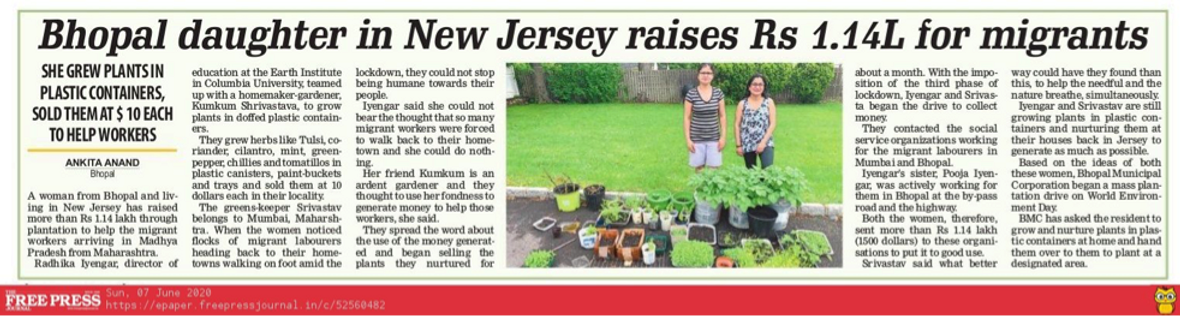
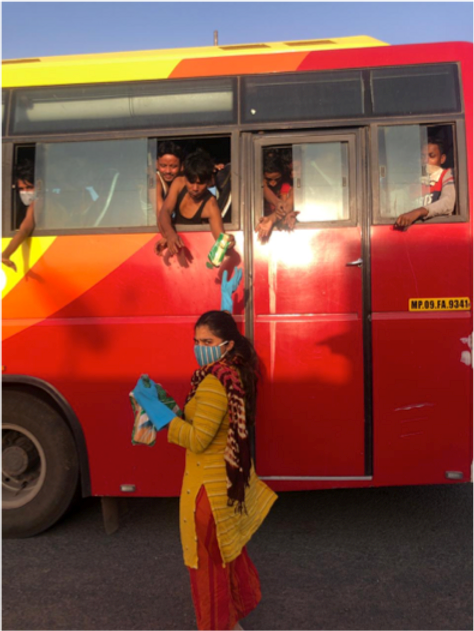
“Waste” can generate $1000 for charity and can have policy implications. Hundreds of daily wage earners were on the roads in India. In my hometown Bhopal, my sister Pooja had formed a citizen’s collective to feed these inter-state travelers. These people were traveling many miles walking, on bicycles, in crowded busses in 45-degree centigrade. They have been given the name migrant, but my sister corrects me “they are not migrants, we have made them into migrants”. Pooja needed some funds so that she could continue driving her community kitchen along with Goldie, Mita, Sparsh, and others. See Andrew Revkin’s broadcast on the topic here- https://blogs.ei.columbia.edu/2020/04/03/letter-bhopal-facing-covid-19-citizens-spread-masks-food-hope/

Back at home in Millburn, the Climate Action group had been actively spreading the sustainability agenda. Kumkum Srivastav, one of the inspiring leaders in the group has been giving sustainability tips through videos and comments. Her kitchen produces no waste. We were all intrigued. I have a composter at home and I compost diligently. But zero waste was only an aspirational goal for me. We (60 families) were all eager to learn how to better manage our kitchens. The weather was turning better, Spring was peeping through our windows with magical flowers. We were all confined to homes and at our yards. Meanwhile, Kumkum had taken sustainability to another level. She was taking the seeds from tomatillos, peppers, cilantro from her kitchen “waste” and was planting in small pots.She also used peels and scraps for fertilizers in her soil bed. On zoom calls she would show us how the seeds have sprouted into saplings and the natural fertilizer helped them to grow beautifully.

Due to the lockdown, my socializing was on the phone. So she and I spent hours talking about the problems that we around. One day, she texted me to tell me that she would like to do a “plant sale” for the troubled migrants passing Bhopal. Pooja’s needs had multiplied four times by now. The influx of migrants continued to grow exponentially. They needed soaps, toothpaste, tooth-brush, sandals, a hand-towel and lots of food. Kumkum and I decided to combine our passion “zero waste” “sustainable lifestyles” and also raise money for the COVID-19 relief in Bhopal. We made a quick flyer “100% sales go towards the Bhopal COVID-19 relief”. She started to plant more saplings- cucumbers, cilantro, mint, tomatillos, tulsi, small chilies we had it all in our flyer.

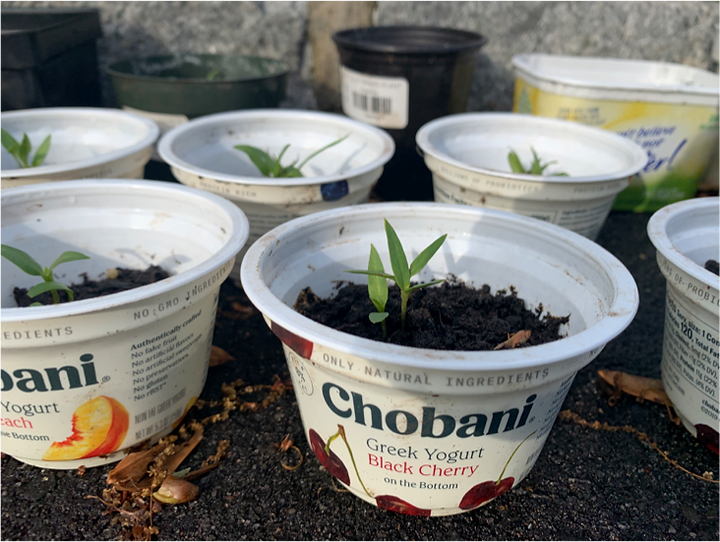
“Plant Sale” not from plants from plant-nurseries near the town, plants were saplings from the seeds in Kumkum’s kitchen. Kumkum, an IT professional, started to spend her evenings and all weekends to tend to her “nursery”. Many neighbors ordered. We kept the price at $10 per plant. Yes, expensive, but the plant was just a token, the actual reason was charity. Of course, everything had to be green (not literally, I meant sustainably green). We needed to get containers to grow the plants and as takeways. We created another flyer to ask the Chobani lovers to store their containers. Strawberry plastic containers were no longer kept in the (hopefully) recycling bin, we had a new purpose for them. Many residents came forward to share their potentially recycled containers. Our “Plant Sale” drive had become so popular that we were getting orders from the Basking Ridge, a nearby town. Pooja’s friend Pratiti, also from Bhopal, in Basking Ridge started to help us with this drive. Kumkum also created videos on how to plant the sapling in homes when our friends take the sapling. It was a full package- sapling grown with tender loving care along with tips to take good care of the plant at home.


Back in Bhopal, the news spread that we are raising some funds. The Municipal Corporation of Bhopal (equivalent to a City Township Council) heard about the green initiative. This World Environment Day (June 5th) announced their green drive. Inspired by our model, all residents in Bhopal are asked to use their recyclable containers to grow plants. The Corporation will take these plants and plant them in various parts of the city.

During this pandemic, I learned that individual actions on sustainability can lead to massive policy implications. We need to keep doing our bit. In my household, Chobani containers don’t go into the recycling bin automatically, I may have another purpose for them.


Categories
EDforSD

Social Emotional Learning during the COVID-19 pandemic

By Anchal Sharma & Tara Stafford Ocansey

Updated: Jun 8, 2020


The COVID-19 public health crisis has presented our communities around the globe with unprecedented health, socioeconomic and human rights challenges. While the virus does not discriminate, health disparities caused by poverty, racism, classism, and other social ills has led to stark inequalities in terms of which communities have been most severely impacted by COVID-19. The constant flood of information on these compounding challenges add to our worry of being infected by the virus, concerns over job security and economic upheaval, and loneliness caused by social isolation. This overwhelming multitude of fears and concerns can lead to major psychological risk factors like anxiety, depression or even self-harm. How can our education institutions address and help to mitigate these risk factors and provide critical psychosocial support to children, families, and educators during this time of physical distancing?

Nearly all of the world’s countries have responded to this public health crisis in part by closing their schools, affecting close to 80% of the world’s school-going population, according to data from the World Bank. While children seem to be less vulnerable to severe illness resulting from COVID-19, staying away from school contributes to a tragic situation for children, particularly those who rely on schools as a safe learning space, for feeding programs that provide a main source of nutrition, and for fulfillment of their social and emotional needs.

Education thought leaders around the globe have identified Social Emotional Learning (SEL) as a major priority for educators to focus on as education systems work to rapidly transition to remote learning while attempting to mitigate the widening of achievement gaps that result from existing digital divides (See WHO, USESCO). The challenge of providing SEL is all the more daunting in light of the reality that the teachers and adults who children turn to for social and emotional support are themselves likely to be struggling with their own mental health challenges during this time. Survey findings released recently by the Collaborative for Social Emotional and Academic Learning and Yale’s Center for Emotional Intelligence showed that US teachers’ most commonly cited emotions during this crisis are feeling anxious, fearful, worried, overwhelmed and sad. Teachers cited worry over themselves or loved ones contracting COVID, but also the anxiety they feel over trying to juggle caring for their own families at home while also trying to work full time from home and figuring out how to transfer their teaching practice to online platforms, which many have very little if any experience using.

While these challenges are difficult to process, let alone allow us the mental latitude to think of solutions, this time we are in can be viewed as a wake-up call that we must heed as we re-imagine how our education systems can better support psychosocial well-being as a foundation for learning going forward.

This article offers a review of resources that have been put forth globally, with an emphasis on resources in the US and India,as two of the world’s most severely impacted and heavily populated countries, and the common threads among them that can inform how we approach education beyond the COVID-19 pandemic, with resources tailored to – parents, children and educators.


For Parents/Guardians


In addition to keeping themselves and their children physically safe amid the pandemic, parents are being challenged to take extra care of their emotional well being as well. Extended responsibilities of home schooling and creating a positive learning environment, on top of professional commitments and household chores can take a huge toll on parents’ overall health. While it may sound like yet another responsibility to juggle, parents must do their best to care for their own mental health in order to persevere through everything else. When we practice and build our own social-emotional skills such as self awareness, emotional management, and social awareness, we are better equipped to navigate stress and anxieties, and overcome challenges. Following are some of the fundamental skills with relevant resources which can be practiced by parents:-


Personal Well-being Practices – One great way to support your own well-being during this crisis and beyond is to establish or grow mindfulness practice. Mindfulness can be defined as the state of being aware and focused on the present moment; accepting the present while being open and curious about what is happening around and inside us. Dedicating even just a few minutes of your day to incorporate mindful practices can help in calming your mind and build healthy coping skills. Below are some useful resources for mindfulness exercise and wellness routines:

Actively listening to your kids and addressing their queries – Understanding and listening to children’s feelings and their questions patiently will help them better understand and process the situation, and also give parents an opportunity to address any misinformation or rumors they may be hearing through their friends or social media. The following resources offer tips for having these conversations with your children.


Establishing routines – Making a schedule for you and your children to engage in structured activities, even for free time will help to have an engaging day. Children can also help plan their own routines and take ownership over developmentally appropriate activities. These habits can be a small step toward children feeling a sense of normalcy, learning to regulate their own emotions and building their decision making skills. Hopefully, they may also help give you a little break as well!


Healthy Work from Home habits – Working from Home, a new normal amid the pandemic can be quite hectic and challenging especially if you are a parent. It’s important to create a healthy environment to work at home and following tips can be useful in achieving this.

Some of the useful resources:-


Practice Physical Distancing not Emotional Distancing – Being physically isolated for a long period of time can have long lasting psychological impacts. However, the present need for physical distancing does not have to mean that we cannot still connect with our loved ones using new technology as well as bringing back dying practices like letter writing.


*A letter to Parents by a schools principal


For Children

The sudden disruption of routines, lack of social and physical activities and constant worries of the pandemic situation can be stressful for kids. They might find it struggling to express how they feel about it and can exhibit extreme behaviour like being sad, alone, irritated and angry.

By supporting children with their continuous learning can help in keeping a sense of normalcy and routine in their lives. Here is the repository of resources that can be useful based on one’s needs and interests.


Knowing Coronavirus through Story Telling & Discussion for Social Emotional Learning knowledge makes one feel empowered, but with the ongoing constant coronavirus updates this knowledge can be overwhelming as well. It’s important for children to make sense of the current situation and feel heard and given the opportunity to get their questions answered. Below are some of the resources in child friendly language, briefly explained through stories or comic strip format to provide them with accurate knowledge.


Activities for increasing well-being – Being involved in creative activities can make children express themselves better and learn new things in a fun way. It overall creates a positive environment with a warm opportunity to spend time together as a family. Few ideas for such creative activities are here.


For Teachers

The complete shift to remote teaching can be overwhelming for teachers. With the constant juggling between taking care of the well-being of their own families, it also becomes prioritize caring for their students emotional well-being, which is arguably more important than concern over academics during this time. Understanding your emotions and implementing SEL skills can help both teachers and children to overcome these challenging times. The resources compiled below may be helpful for teachers in easing this transition.


Categories
Power in Praxis

Module for Global Citizenship and Education for Gender Equality

Jessica Kim


My module introduces two complementary topics: global citizenship and education for gender equality. Global citizenship means being aware of the wider world and our collective interdependencies and developing skills and cultural empathies to engage effectively with each other. Education for gender equality encourages people to reflect upon and ultimately change how they think, to build a healthier and more harmonious society today, and for the future.


Literature Review

World economies are churning faster and more quickly affecting global citizens in interdependent ways that policy makers call the impact of “galloping globalization.” In this digital revolution where people communicate and interact non-stop 24/7, it is even more urgent to examine what global citizenship means today (Aktas, Pitts, Richards, and Silova, 2017). And as important, how global citizens can work together to achieve progress in the indicators of gender equality outlined by the UN’s SDG’s by 2030 (Kim, and Grabowski, 2019; O’Dowd, 2019).


As the renowned educator John Dewey pointed out, “Education is not a preparation for life, it is life itself.” Teachers and students (including our families and larger communities) together shoulder joint responsibilities to learn and educate ourselves about how we impact the people on the planet with what we door not do. It is even more significant when we become aware of how widespread and deeply rooted the various forms of gender inequality can be. For instance, how women are more likely to be negatively affected by financial crises and the associated diminishment of social security measures; how women are disproportionately employed in sectors with low wage, status, and security; and, how women are significantly more vulnerable to sexual and gender-based harassment and violence (Peppin Vaughan, 2016).


Even more challenging to consider, and to unlearn, are perceived biases we have absorbed from growing up in different societies; with each society having its own ethnic preferences and cultural prejudices. The big challenge is, we must continue to unlearn unhealthy notions (Cho and Mosselson, 2018). To move towards learning constructive new ideas to improve the quality of life not only environmentally, but also emotionally and healthily, so we all get along peacefully to enrich our lives (Toh and Cawagas, 2017).We can do this only by collaborating successfully with practical and safe measures as global citizens. We need to cultivate world citizens who become increasingly aware, are caring, and feel empowered, in wanting to be responsible for our every action (DiCicco, 2016; Katzarska-Miller and Reysen, 2019).


Yet, we must also know we cannot have all the answers, all the time, and all at once (Misiaszek, 2016).We need to be open-minded to ask questions, especially hard questions. To research answers online, from discussing with our peers, neighbors and friends—even agreeing to disagree for the time being if needed, until answers present themselves (Hancock, 2017; Myers, 2016). These are some of the main reasons I have considered while developing this learning module on how we can promote global citizenship inside and outside the classroom. The bigger goal is for never-ending conversations to enlarge our world views as global citizens (VanderDussen Toukan, 2018).


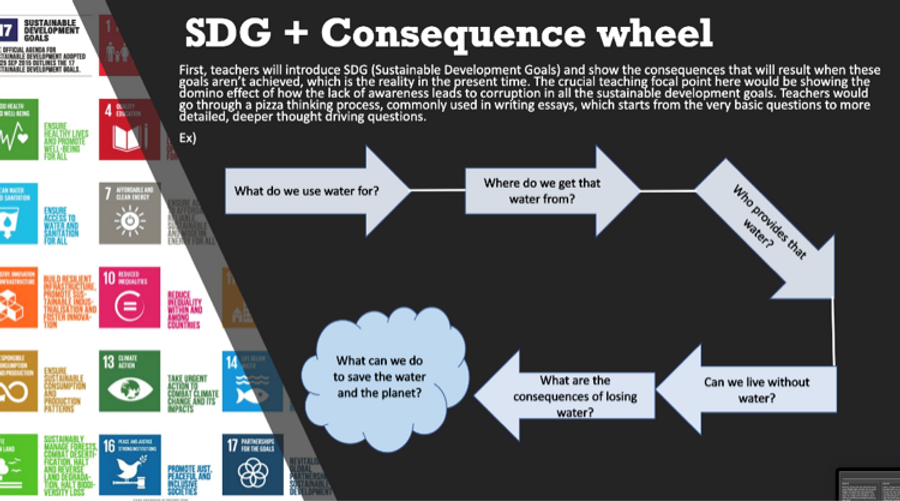
Adopted in 2015, the United Nations Sustainable Development Goals (UN SDGs) aim to achieve sustainability by 2030. It is imperative for everyone to show more appreciation and awareness of our surroundings and in paying attention to the wider world. To ask how: I, as an individual, and we, as a group, can build healthy communities locally and globally, to make lifetimes of impact. (Refer to Image 1.)

I developed the module from a student’s perspective; to consider creative and engaging ways to encourage them to understand these lesson plans they participate in with hands-on learning. This approach will facilitate their understanding and feeling the importance of what global sustainability and equality means individually and collaboratively in impacting larger groups and communities.


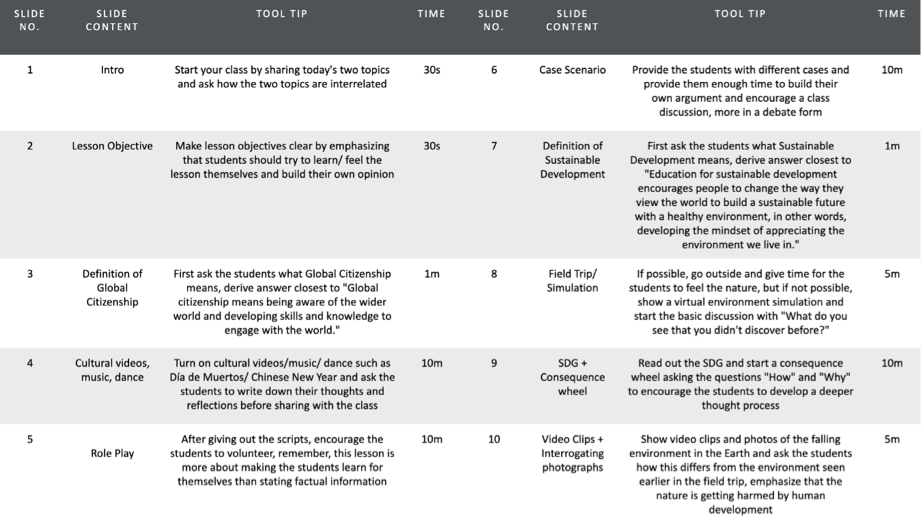
For global citizenship, I focused the module on helping students experience the wider world and diversities within community using physically and visually engaging activities. One of the most important elements of global citizenship is identity of self, and how self relates to various shades and forms of diversity. To show various cultures existing harmoniously in different countries, activities include appreciating ethnic music and dance that entertain, and also inspire them to appreciate other international cultures. (Refer to Image 2.)


Another approach encourages students to build their own arguments about different parts of the world. Teachers would show videos of traditional events such as Chinese New Year or Día de Muertos celebrations. After viewing them, students will be asked to share their thoughts. Such as writing down questions of what they discover from individually researching online resources. Furthermore, integrating offline and online research motivates independent research skills through drawing up students’ curiosity. (Refer to Image 2.)

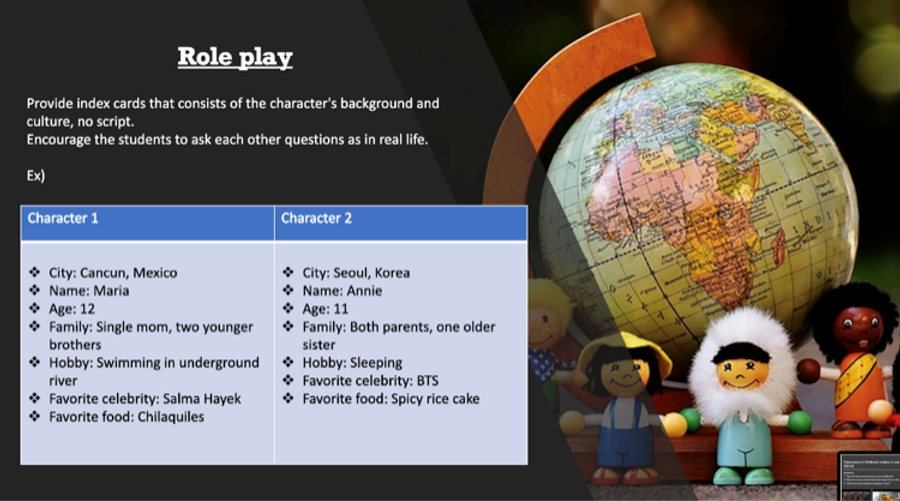
Another engaging activity is role play; students will be given scripts with characters from around the world. By acting out ethnically diverse personas, students would gain and insights regarding global citizenship. Role play activities also enhances effective communication and in valuing diversity, other key elements of global citizenship. (Refer to Image 3.)

In another activity, students act as judges to try cases, to learn another critical characteristic of global citizenship: social justice and equity. They will be introduced to try cases based on discrimination such as gender identity, race, age, disability, marital status, religion, social class. They will be encouraged to freely share their judgement and participate in open debates with their classmates. This will encourage students to become confident in their abilities to manage complex and uncertain information, along with thinking about positive and innovative ways to take informed and reflective action. (Refer to Image 4.)

Having been pinpointed by the UN as priorities in the 2030 Sustainable Agenda, concern for women’s empowerment and commitment to gender equality are crucial components for education in global sustainable development (Miotto et al., 2019). Addressing issues relevant to gender equality through education is particularly important because stereotypical norms about how men and women should behave can be reinforced via school curriculums, methods of teaching, and instructor behavior (Peppin Vaughan, 2016). Two points are vital when approaching this topic. First, gender must be understood as a social construct that shapes expectations and ideas about men and women and the power relations between them, rather than as a matter of mere biology. Second, it is vital to encourage students to recognize that “unequal gender relations and gendered preconceptions” hurt not only women and girls, but men and boys as well (Miotto et al., 2019).


This lesson starts with a screening or reading of scenes that depict typical, commonplace situations with gendered elements that people, both adults and children, experience. Examples could include common interactions and discussions that occur throughout the day at locations including the classroom, home, office, and cyberspace. Students will be given ample time to digest and form their own opinions about what is happening in each situation. Special care should be taken to ensure that examples depicting how men and boys can be harmed by unequal gendered relations are included.


Afterwards, students will be asked to share their thoughts and opinions about what they observed from the scenes. Teachers will join the discussion to point out the inequalities and gendered preconceptions and ideas present in each scene, then link them with the students’ observations. This discussion will enable them to recognize how prevalent gendered preconceptions and unequal power relations between genders are in our society. It will also contribute to students realizing how gender inequality negatively affects everyone.

Thereafter, teachers will describe how the inequalities and gendered norms discussed previously are reflected in the broader context of global sustainable development statistics. Teachers introduce Goal 5 of the UN SDGs (Sustainable Development Goals), its specific targets, and relevant information. Teachers will utilize structured discussions and debates on consequences when these targets aren’t achieved. The crucial teaching focus here is to show the global, sometimes horrific ramifications of the gender inequalities discussed beforehand, and how the SDGs are relevant to eradicating them. Teachers would go through a pizza thinking process, commonly used in writing essays, which starts from asking very basic questions to more detailed, deeper thought driving questions. For instance, teachers start discussions with questions such as “How was the girl expected to behave in this situation?” and progress to “What are the consequences of gendered norms and opinions in society?” to provoke deeper thinking about gendered preconceptions and unequal power relations between men and women. This encourages students to think about the greater consequences of gender inequality. (Refer to Image 5.)

Teachers introduce information about specific examples of gender inequality that sustainable development goals are aiming to eradicate, and how widespread they still are. For instance, teachers can talk about how “49 countries lack laws protecting women from domestic violence” and “husbands can legally prevent their wives from working” in 18 countries (United Nations, n.d., p. 5). Drawing from the theory of cascading domino effects, teachers will next discuss how such gender inequality can be harmful to democracy, economic growth, public health and safety, and the community around the world (S. Klasen, 2002; Stephan Klasen & Lamanna, 2009). Teachers can further explain how such consequences all go against achieving other SDGs, too. Teachers may use pictures and photographs to form a consequence wheel; to ask students “how” and “why” in prompting independent curiosity and research skills.


In discovering the prevalence and consequences of gendered attitudes, students will hopefully take steps towards promoting gender equality, global citizenship, and sustainable development. Students, future leaders of this world, will contribute as individuals and as members of groups to make societies better and healthier places in which everyone, regardless of culture or gender, can live harmoniously and peacefully together. Being a global citizen means moving forward, for everyone to accept, and take conscious action, in making our increasingly interconnected world more pleasant and safe to inhabit.

References

Aktas, F., Pitts, K., Richards, J. C., & Silova, I. (2017). Institutionalizing global citizenship: A critical analysis of higher education programs and curricula. Journal of Studies in International Education,21(1), 65-80. doi:10.1177/1028315316669815

Bamber, P. (ed.) (2019).Teacher Education for Sustainable Development and Global Citizenship: Critical Perspectives on Values, Curriculum and Assessment. Routledge.

Cho, H. S., & Mosselson, J. (2018). Neoliberal practices amidst social justice orientations: global citizenship education in South Korea. Compare: A Journal of Comparative and International Education,48(6), 861-878. doi:10.1080/03057925.2017.1364154

DiCicco, M. C. (2016). Global citizenship education within a context of accountability and 21st century skills: The case of Olympus High School. Education Policy Analysis Archives,24, 1-26. doi:10.14507/epaa.24.2364

Goren, H., & Yemini, M. (2017). Global citizenship education redefined–A systematic review of empirical studies on global citizenship education. International Journal of Educational Research,82, 170-183. doi:10.1016/j.ijer.2017.02.004

Haigh, M. (2016). Fostering Global Citizenship–tree planting as a connective practice. Journal of Geography in Higher Education, 40(4), 509-530. doi:10.1080/03098265.2016.1150438

Hancock, R. E. (2017). Global citizenship education: Emancipatory practice in a New York preschool. Journal of Research in Childhood Education,31(4), 571-580. doi:10.1080/02568543.2017.1346731

Katzarska-Miller, I., & Reysen, S. (2019). Educating for Global Citizenship: Lessons from psychology. Childhood Education,95(6), 24-33. doi:10.1080/00207594.2012.701749

Kim, J., & Grabowski, C. (2019). Learning Global Citizenship through UN Sustainable Development Goals. Retrieved from https://teachingsocialstudies.org/2019/01/04/learning-global-citizenship-through-un-sustainable-development-goals/

Klasen, S. (2002). Low Schooling for Girls, Slower Growth for All? Cross-Country Evidence on the Effect of Gender Inequality in Education on Economic Development. The World Bank Economic Review, 16(3), 345–373. https://doi.org/10.1093/wber/lhf004

Klasen, Stephan, & Lamanna, F. (2009). The Impact of Gender Inequality in Education and Employment on Economic Growth: New Evidence for a Panel of Countries. Feminist Economics, 15(3), 91–132. https://doi.org/10.1080/13545700902893106

Miotto, G., Polo López, M., & Rom Rodríguez, J. (2019). Gender Equality and UN Sustainable Development Goals: Priorities and Correlations in the Top Business Schools’ Communication and Legitimation Strategies. Sustainability, 11(2), 302. https://doi.org/10.3390/su11020302

Misiaszek, G. W. (2016). Ecopedagogy as an element of citizenship education: The dialectic of global/local spheres of citizenship and critical environmental pedagogies. International Review of Education, 62(5), 587-607. doi:10.1007/s11159-016-9587-0

Myers, J. P. (2016). Charting a democratic course for global citizenship education: Research directions and current challenges. Education Policy Analysis Archives,24, 1-19. doi:10.14507/epaa_24.2174

O’Dowd, R. (2019). A transnational model of virtual exchange for global citizenship education. Language Teaching, 1-14.

Oikonomidoy, E. (2016). Critical Cosmopolitan Educational Research: grounded and potentially transformational. Globalisation, Societies and Education, 14(4), 466-476. doi:10.1080/14767724.2015.1069734

Peppin Vaughan, R. (2016). Gender equality and education in the sustainable development goals (ED/GEMR/MRT/2016/P1/7 REV.; 2016 Global Education Monitoring Report). https://unesdoc.unesco.org/ark:/48223/pf0000245574

Stoner, L., Kerr, Z. Y., & Ward, D. S. (2018). Now is not the time for isolationism: integrating global citizenship into higher education for the good of global health. Journal of global health, 8(2). doi:10.7189/jogh.08.020301

Toh, S. H., & Cawagas, V. (2017). Building a culture of peace through global citizenship education: An enriched approach to peace education. Childhood Education, 93(6), 533-537. Doi:10.1080/00094056.2017.1398570

United Nations. (n.d.). Goal 5: Achieve gender equality and empower all women and girls. Retrieved February 9, 2020, from https://www.un.org/sustainabledevelopment/gender-equality/

VanderDussen Toukan, E. (2018). Educating citizens of ‘the global’: Mapping textual constructs of

UNESCO’s global citizenship education 2012–2015. Education, Citizenship and Social Justice, 13(1), 51-64. doi:10.1177/1746197917700909

LINKS

http://www.ideas-forum.org.uk/about-us/global-citizenship

https://teachingsocialstudies.org/2019/01/04/learning-global-citizenship-through-un-sustainable-development-goals/

http://news.trust.org/(Thomson Reuters Foundation News)

https://www.globalcitizen.org/en/content/5-facts-about-extreme-poverty-everyone-should-know/


Categories
EDforSD

Call for book chapters

Updated: May 16, 2020

Published by UNESCO-IBE

Charting an SDG 4.7 roadmap for radical, transformative change in the midst of climate breakdown

Editors:

Radhika Iyengar, Center for Sustainable Development, Earth Institute, Columbia University

Christina Kwauk, Center for Universal Education, The Brookings Institution

The global education community, guided for decades by the concept of Education for Sustainable Development, has done little to support the radical transformation of education systems needed to respond to climate change. Part of this inertia rests in five roadblocks to quality education identified in a Brookings report, and off of which stakeholders from the fields of ESD, GCED, GE, and HR education came together in April 2020 to begin discussing ways of addressing. This edited volume picks up that conversation by laying out elements of a shared vision, or roadmap, for the global education sector in climate action. The volume includes perspectives that span multiple continents, disciplines, and positionalities within the education system—from policymakers to teachers to youth. It curates exiting literature, surfaces in-depth case studies, and overviews conceptual frameworks on a diverse range of topics relating to systems transformation, monitoring and accountability mechanisms, lessons from the field, teacher support, as well as activism and advocacy by students. Charting an SDG 4.7 roadmap for radical, transformative change in the midst of climate breakdown offers researchers, practitioners, donors, and decision-makers insights into entry points for education systems change needed to reorient human society’s relationship with our planetary systems.

Call for book chapter proposals

On 29th April 2020, a community of diverse education and sustainability stakeholdersstakeholders came together for a workshop to critically examine the education sector’s role in achieving sustainability and combating climate change. Drawing on five roadblocks that have prevented education systems from achieving radical and transformative climate action, the workshop explored the following topics aimed at charting a roadmap for bolder action by education stakeholders:

  • Entry points for education systems transformation
  • Reorienting monitoring & accountability mechanisms (including assessment or other incentive structures)
  • Successes and challenges to integrating education and climate (the role of NGOs, think tanks, and donors)
  • Support for teachers
  • Action at the grassroots: Evidence and roadblocks
  • Youth perspectives and communication

In an effort to maintain momentum from the workshop and to fill critical gaps in the literature, this call for submissions will dive deeper into empirical examples of the topics above, representing a diversity of epistemological orientations and sources of knowledge from around the world. Empirical research could include documenting processes, summarizing lessons learnt from field-based studies as well as impact evaluations. These examples would collectively help to identify pathways for which education systems, including formal and non-formal, can re-orient toward climate action. The treatment of the topic(s) can be as follows-

  • A cross-site or cross-country comparative analysis
  • A meta-analysis or literature review
  • An in-depth case study of a program or initiative, longitudinal or cross-sectional
  • A cross-sectoral case study documenting processes of and lessons learned from coordination across the environment, health, education, and/or other sectors
  • Use of multi-methods and interdisciplinary approaches, preferred
  • Inclusion of youth and teacher voices preferred

The volume is intended to include voices from students, academicians, practitioners, researchers, policy makers, think tanks across the globe. Each of the proposed contributions should help to identify, describe, or propose a roadmap for achieving SDG 4.7 that helps society break from the status quo. Cumulatively, the contributions will contribute towards the overall quest for understanding what initiatives, frameworks, and recommendations are promising for catalyzing radical, transformative systems change within the formal or non-formal education system toward climate action. Authors should consider how does the project, program, initiative, or intervention provide an example of or insight into what is needed to catalyze broader systems change for bolder climate action now? Would you recommend this effort be scaled or contextualized to other locales?

Proposals for book chapters should be approximately 150 words and include the names and affiliations of the authors and a provisional title. Please submit chapter proposals by 30 May 2020 to the book editors: Radhika Iyengar, [email protected], and Christina Kwauk, [email protected]. Authors will receive notification whether their proposals have been accepted by 1 June 2020. Submissions (APA style; up to 8000 words, for general chapters; up to 2000 words, for youth and teacher reflections), should be submitted before 30 July 2020.


All the submissions will be externally reviewed (double-blind peer review) and fast-tracked, with a planned publication date by the end of 2020.

For any questions regarding the submission process, please contact Simona Popa, IBE Book Series Managing Editor, at [email protected].

More about UNESCO-IBE Book Series here: https://brill.com/view/serial/IBE

Categories
EDforSD

Connections

By Jahnavi Bhatt

Today feels different

Isolated  in my home

I’m making connections

With old pals from school

And that one estranged friend

who showed up on my phone


Yesterday was different too

Immersed in my life

I missed making  connections

Between the straw swirling my drink

And that one turtle

Who washed up dead on the shore

Between my red silk shirt

And that one little boy

who never went to school


Tomorrow should be also be different

Intimidated by my experience

I’m realizing the connection

Between the misuse of free will

And members of that one species

Who fear for their survival