Categories
EDforSD

Education and Sustainability

By Aalok Bhatt


From the way we study, work and go about our lives to how we view the inequalities in our society in terms of race, gender and economics, change is everywhere. And yet, beyond the pandemic there is another crisis that threatens us all. It’s climate change.

Until I became a part of the Eco Ambassador program, brought to our local community by Dr. Iyengar and Ms. Shin, I thought I was doing my bit for the environment by carrying a reusable water bottle to school and saying no to the occasional single use plastic bag. It was at a talk I attended at the UN conference on climate change two years ago that the seriousness of the issue hit me. The amount of water it takes to produce a pound of steak is the same as the amount of water used by an average person to shower over a three year period! The amount of water it takes to produce a t-shirt is a staggering 2700 litres! Besides the environmental degradation caused by the meat and fashion industry, I also learned about the abuse of animal rights and workers’ rights, and the lack of ethics in the fashion and food industry.

I found these facts very interesting and I thought to myself, why is this not taught at school? We are taught about the effects of climate change, but we are not taught what to do, and why well enough. I believe that environmental studies should be an integral part of our curriculum just like math, history and science. Education is not just about preparing ourselves for a career but also about making us responsible citizens of the world. Unfortunately for my generation, it is a world threatened by rising temperatures, shrinking forests and oceans brimming with plastic. When I spoke about this in spring at a virtual conference organized by the Earth Institute, I shared the link with my Biology teacher, Mr. Rollo. He agreed with me and told me that going forward, he would consciously talk about how to combat climate change while teaching.

Our high school does offer a course in Environmental Studies, but it is an AP course that only high school seniors can take. Also, there is a tough entrance exam to qualify for this course, so not everyone can access it. Maybe schools should make important courses like these accessible to all students and start educating them from the elementary school itself.

In terms of education, we not only need to revise our textbooks and curriculum, but also need more programs at grassroots levels to encourage community participation and practical learning for students. I’ll give my own example. In my first year as an eco-ambassador, I designed a poster campaign highlighting the adverse effects of plastic in my town. As part of my initiative, I went to local businesses to understand their single use plastic consumption and educate them about this issue. I also met up with the recycling director of my town and realized that most of us were recycling the wrong way by adding contaminants. So, Wouldn’t it be nice if we all learned about this in our schools? Most of the local restaurants agreed to display my posters and ask their customers whether they wanted plastic cutlery and bags. The superintendent of our board of education allowed me to put up these posters in our schools. They were also put up in our town library. Not only that, my fellow eco ambassadors and I along with boy scouts members, members of the high school environment club and our town’s Green Team rallied for a ban and a tax on single use plastic bags at our town council meeting and we were successful in getting it approved.

Recently too, our school environment club organized a flyer competition to highlight the recycling rules of our township for all high school students. This encouraged many of us to research and present the rules in a creative manner and we ended up internalizing important points without trying too hard. This summer, I tried to spread awareness in my town on reducing meat consumption and the importance of eating local produce. Since we were all stuck at home because of COVID, I made a short film on Meatless Mondays and had fun researching the material and making it. It would be great if such initiatives and projects become a part of our mainstream curriculum and everyone benefits from the knowledge. Thankfully, we will soon have a government that believes in addressing the climate crisis and plans to allocate $2 trillion towards this cause.


Aalok Bhatt is a Millburn High School Student and is passionate about environmental issues.


Categories
Eco Ambassadors

Activity: How much energy are you using at home?

With SDG Hub – Columbia University facilitators, the Eco Ambassador Program was able to learn more about renewable energy and the importance of being aware of energy consumption. Energy use in the world has direct relation to carbon dioxide emissions linked to global warming and climate change.

Check out the energy audit activity and watch the video (link coming soon) on the energy session!

SDG Hub Energy Audit

Categories
EDforSD

The Biden-Harris agenda should commit to Education for Sustainability

By Julia Sommer

Member of Green Team for South Orange Maplewood School District (NJ) and sustainability educator


The formal education system experienced by millions of American youth is one in which academic subjects occupy separate silos that often lack relevance and timeliness to students’ lives. As Covid-era schooling is now conducted mostly through screens at home, parents are seeing firsthand how such a structure leads to lack of engagement, both cognitive and emotional. At the same time, Americans’ levels of civic learning are dangerously low as public schools for years have prioritized math and reading over civic literacy. We no longer expect or demand that our schools will focus on what it means to participate actively in our democracy. The Biden-Harris administration could address all these ills through a commitment to Education for Sustainability. Imagine if the government provided incentives for every school, K-12 and beyond, to hire a Sustainability Coordinator and every district to hire a Climate Literacy Officer? (A handful of schools already do the former and Portland, OR has actually done the latter.) Educators in such roles could support teachers and administrators in developing interdisciplinary projects that ensure all students learn about the causes and effects of climate change. An empowering education would teach students how to work within democratic institutions to enact local, state, and federal policies that ensure a healthier planet as well as economic stability in the coming years. Students’ education would become both relevant and timely if they studied local problems related to the environment and devised real-world solutions with the support of educators trained in Action Civics. Teaching this curriculum successfully is a serious shift from the system currently in place and will only happen with significant financial support for professional development. I can think of no initiative that could have a greater impact on Earth’s future than empowering youth to mitigate Global Warming’s effects through civic engagement.


Categories
EDforSD

Seven Habits of Highly Effective (U.S.) CITIZENs

Building towards global citizenship virtues

by Nidhi Thakur

  1. They VOTE(as often as they can, but especially in the general election that everyone agrees is the election for the ‘soul’ of the world’s most developed country).
  2. They VOTE, even when the act of voting is just a choice, not a mandated duty like ‘jury duty’. No one will put them in jail for not voting, but they know that voting is the bedrock of democracy (unlike dictatorship and monarchy).
  3. They VOTE, despite a global pandemic, because, either they have a no-hassle mail-in ballot, or even if they have to physically stand in a line to vote, they vote, because they realise, and strongly cherish, their RIGHT TO VOTE, knowing fully well that this right is a privilege acquired after many a hardships. (They are amazed to learn that African Americans did not win the right to vote until the 15thAmendment to the U.S. constitution in 1870- approximately a 100 years after Independence, and that women were not granted this right up until the 19thAmendment in 1920!).
  4. They VOTE, because the right to vote is granted to only ‘special’ people– who are at least 18 years of age on voting day, have legal (and sometimes hard earned) citizenship of the U.S.A. and are eligible to vote as per the specific rules of the State they are registered to vote in. Being ‘special’ enough to be thus granted this right, is not something that they take lightly. (https://www.usa.gov/who-can-vote)
  5. They VOTE, because each vote matters way more than one imagines. Of the 240 million eligible voters this year, going by past trends, approximately 40% of these voters may NOT vote. This number would not be troubling, if elections were NOT as close as they have been in recent years. For example, the 2016 election went one way versus the other largely because of non-voters in the state of PA.
  6. They VOTE because voting record is public information! They know that their peers/employers/families (can) know whether they voted or not.

(Please note: WHO they voted for is ALWAYS confidential, but whether they voted or not is not.

Source: https://www.ncsl.org/research/elections-and-campaigns/access-to-and-use-of-voter-registration-lists.aspx)

  1. They Vote because all civic societies are formed by/around laws and laws are formed by elected officials. They know that their only shot at influencing the laws that are made, is by ELECTING the people who reflect their sense of basic/universal human value.


Dr Thakur can be contacted –[email protected]


Categories
EDforSD

Post COVID-19 demands Social Emotional Learning to be prioritized

Radhika Iyengar,

Earth Institute, Columbia University

Human beings, while capable of the worst, are also capable of rising above themselves, choosing again what is good, and making a new start, despite their mental and social conditioning. We are able to take an honest look at ourselves, to acknowledge our deep dissatisfaction, and to embark on new paths to authentic freedom.”Laudato Si, Pope Francis.

COVID-19 had led to mass destruction of lives and economies, but it has also shown us that humanity can come together in many unique ways. Among many lessons from the pandemic, we should not forget the lesson of empathy that COVID19 teaches us. Many ordinary citizens from across the globe have become #coronaheroes. Some are running community kitchens for migrants, others are organizing mass mask supplies for frontline workers. What can we learn from each other and how do we integrate this in our curricula? Social Emotional Learning (SEL) has become even more important for the COVID-19 era and beyond.

The National Education Association in the United States has put out a statement that Social Emotional Learning should be the priority during and post-COVID-19 crisis[1].Many teachers and experts are calling to include SEL in all components of the current curricula. The World Bank education experts agree that the SEL component has been neglected thus far and given that millions of children are out-of-school and families continue to suffer financial, mental, emotional and health risks, SEL must be prioritized[2]. The World Bank report states that nearly half of the students surveyed in the United States reported feeling worried about the potential risk of a close relative getting infected, but they are also concerned about not learning enough at home to be ready for the next school year. The report also quotes a survey study by the University of Oregon, showing that children are experiencing difficulties in their socio-emotional development and present higher rates of disruptive behaviors than before the pandemic started. At the same time, families are experiencing household economic insecurity that limits their capacity to meet their basic needs. Given this need, the World Bank has started a youth skilling program in Kaduna State Nigeria that gives SEL the substantial treatment it deserves[3]. Therefore, there is ample evidence that SEL needs to expand much more than what was required before COVID-19.

With SEL being the immediate need in curricula across all levels, values such as empathy towards each other and towards the planet will help communities to recover from this pandemic and avoid future pandemics. Religious leaders like the Dalai Lama and Pope Francis have emphasized empathy towards each other and our environment. Pope Francis’s Laudato Si[4], or “On Care for Our Common Home,” urges us to be empathetic about our environment. This “Environmental encyclical” is a meeting point between the environment and spirituality. He delicately balances using scientific words such as “global warming” and “carbon emission” and puts it in a spiritual perspective. Pope Francis takes his inspiration from St Francis of Assisi and relates to nature as “sister earth”, “brother sun” and “sister moon”. He urges us to get connected with different aspects of the planet to cultivate the “ecological virtues”. A broadened understanding of SEL that incorporates empathy for our shared home on earth as an extension of empathy for each other, and that links individual and community resilience to environmental resilience, can help raise awareness of how issues like environmental degradation and biodiversity loss pave the way for spread of deadly pandemics like COVID-19, droughts that cause mass hunger, and other human challenges.

Pope calls for a “consciousness-raising” to prevent further all the health and environmental risks caused by humankind. An approach to SEL that incorporates empathy for each other and for environment will help us to be mindful of our own actions and will help us to look deeper within ourselves to break the “myths” of a modernity grounded in a utilitarian mindset (individualism, unlimited progress, competition, consumerism, the unregulated market).” This reflective practice will also help in “establishing harmony within ourselves, with others, with nature and other living creatures, and with God.”

The mass destruction has taught us about empathy in real-life, how can we take this lesson and integrate it into our schooling systems? Pope Francis thus explains the real purpose of environmental education, which can be incorporated into SEL, is to not teach facts, but an approach to question one’s own practices and meaning-making. He urges educators to encourage “ecological ethics” in developing “ecological citizenship.” Pope Francis gives examples of small, but essential practices that we could all learn from this form of education”…such as avoiding the use of plastic and paper, reducing water consumption, separating refuse, cooking only what can reasonably be consumed, showing care for other living beings, using public transport or car-pooling, planting trees, turning off unnecessary lights, or any number of other practices. “This could be such a profound way of “cultivating sound virtues” where people will be empowered to “..make a selfless ecological commitment”.

This pandemic has given us the time to reflect on our past, including the way we have mistreated sister earth. The sixth mass destruction is underway[5]. In order to reverse these catastrophic trends in human health and environmental degradation, it is time to revisit Laudato Si and bring humanity back to humans.

The SEL intervention that has been part of the SENSE activity should therefore be broadened to include supplemental teaching and learning materials that help teachers, pupils, and community education volunteers make links between foundational SEL concepts like self-awareness, empathy, and resilience with critical challenges of our time like COVID-19 and climate change. Stories, discussion questions, role-playing activities, and other SEL activities can be curated to align to the current curriculum, with key messages shared within school communities through the engagement of community education volunteers and school-based management committees. This broadened approach to SEL implementation will help young people, teachers, and communities build the critical consciousness that will enable understanding and mobilization around solutions to protect our shared environment and promote health and well-being.

[1]https://www.nea.org/advocating-for-change/new-from-nea/social-emotional-learning-should-be-priority-during-covid-19 [2]https://blogs.worldbank.org/education/importance-monitoring-impacts-covid-19-pandemic-young-children-and-their-families [3]https://blogs.worldbank.org/digital-development/new-skills-youth-succeed-post-covid-world [4]http://www.vatican.va/content/francesco/en/encyclicals/documents/papa-francesco_20150524_enciclica-laudato-si.html [5]https://www.theguardian.com/environment/2017/jul/10/earths-sixth-mass-extinction-event-already-underway-scientists-warn


Thank you to Tara Stafford Ocansey for her valuable inputs to this article.


Categories
EDforSD

Reimagining Education for SDG 4.7 and Sustainable Future

Anant Bhaskar Garg and Manisha Agarwal

Director, HaritaDhara Research Development and Education Foundation(HRDEF)

Abstract

As per data from various studies, quality, climate education, and 21stcentury skills are ignored in mainstream education. To bridge this gap, HRDEF provide quality skillful education, problem solving, creativity, communication, design and computing. Building capacity for citizenship, Climate Action, and Sustainable Development Goals (SDGs) among school students and youth so that they are able to tackle future challenges.

HRDEF is using games, project, and hands-on approach for interactive learning. HRDEF conduct teachers, student’s development programs for capacity building on ICT, SDGs, climate change, disasters, STEAM, andwork towards Sustainability, Green Swachh, (Hindi word for Clean) and Sustainable Campus/Living in government schools.

Students, youth of our after-school GOAL program become motivated, equipped with self-confidence to excel in life and creating sustainable future. As systemic changes required continuous working and time for visible performance. Change, transformation will come through working gradually taking a step-by-step approach.

Keywords

Climate Action, Education for Sustainable Development, Quality Education, Hands-on, Game, Project Based Learning

1 Introduction

Beginning with 21stcentury the United Nations (UN) started Millennium Development Goals (MDG) and decade of Education for Sustainable Development (ESD) (2005-2014) that highlighted vibrant role of education towards sustainable development for saving our planet as world witnessed extreme events due to climate change. Further, the UN adopted the 17 Sustainable Development Goals (SDGs) in September 2015 to advocates for SDG 4 that provide inclusive, equitable quality education and promotes lifelong learning opportunities for all to build sustainable, inclusive and resilient societies. SDG 4.7 targets that by 2030 all learners acquire the knowledge, skills needed to promote sustainable lifestyles, human rights, gender equality, peace, non-violence, global citizenship, and cultural diversity (UN, SDSN Reports).

Through education we transfer knowledge, values, and skills across generation to facilitate societies to build the foundation for sustainable future. But many barriers to education access, outcomes, and monitoring of progress are main challenges that need to be addressed for achieving SDG 4.7. The global climate educationand the concept of ESD are unable to provide radical transformation of education systems needed to guard against climate change. Five roadblocks identified in a Brookings report needed to resolve in a time of climate change (Kwauk, 2020). India’s Philosophy of ‘One World’, Global Partnership, and culture of support is known for centuries. Uniting all stakeholders for their role in shaping the 2030 Agenda and the SDGs on three pillars of economy, social, environment with culture based on the principles of equality and humanity was very important for the global society.

2 Why need Transformative Learning for ESD, Climate Change Education

As per UNICEF study, 50 % of Indian Students don’t have 21st Century Skills required for Jobs and around 15 Crore school students lack job skills by 2030 published in 2019. ​21st century skills such as critical thinking, inquiry based learning, collaboration, communication, and SDGs, sustainability, and hands-on learning are missing in school educational institutions. School education system require maker spaces, DIY (Do it yourself), smartphone, tablets, relevant software, and computers for successfully implementing STEAM education.Yale University research on climate change communications pointed out that 65% of the Indian population is not aware of climate change published in 2016. Thus, everyone urgently needs to include climate change and ESD in a radical way to address future challenges.

3 Experiential, Embodied Learning for Sustainable Development

How do we learn? As a child we learn by exploring, by touching things, moving things and taking things apart. This is really an experiential way of learning i.e. learning by doing. But in school’s classroom, we sit down quietly, without moving, talking or playing. Making as a construction, DIY process provides various insights, knowledge about our surroundings, and actively participate in enjoying transformative learning. Playing games, making provide an entertaining, fulfilling experience of doing, creating new things, have many advantages for students, as it makes the player, a decision-maker, facts investigator, evaluating strategy, prioritizing their actions and abilities.

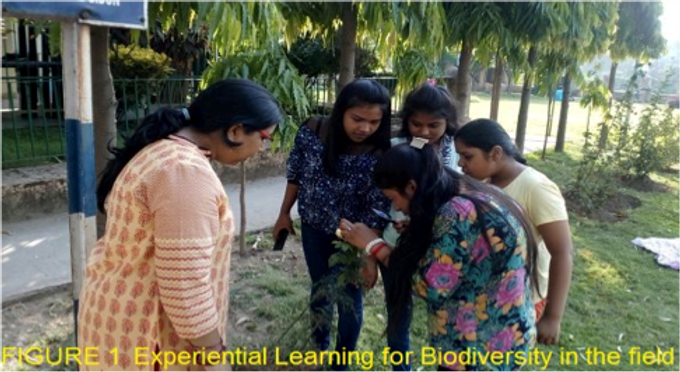
Integrated, hands-on, project, game-based learning that incorporates technology is crucial for the 21stCentury Skills. MAKER (Manufacturer, Author, Knowledge analyst, Exhibitor, Recycler), Project, Game-based learning provides a new emerging ways to understand difficult concepts and further it provides opportunities for students, learners to experience the phenomena. Therefore, it promotes interactive, experiential learning that helps the learner to develop curiosity, creativity, critical thinking, collaboration, and problem-solving that are essential for the 21stCentury skills. Thus, learning a concept, its understanding, and practice involve different steps such as exploration, curiosity, asking the question, discussion, create, design thinking, making model, games, role play, drama, story, and present (Scott, 2015). Students of our GyanDhara Opportunities for All with Learning (GOAL) worked, developed a miniature, presentations, played board games, card games for embodied, immersive learning related to climate change, and sustainability concepts as given below in the case study. Figure 1 describes experiential learning for biodiversity concepts in the field.

4 Quality Skillful Education: Games for SDGs, Sustainability

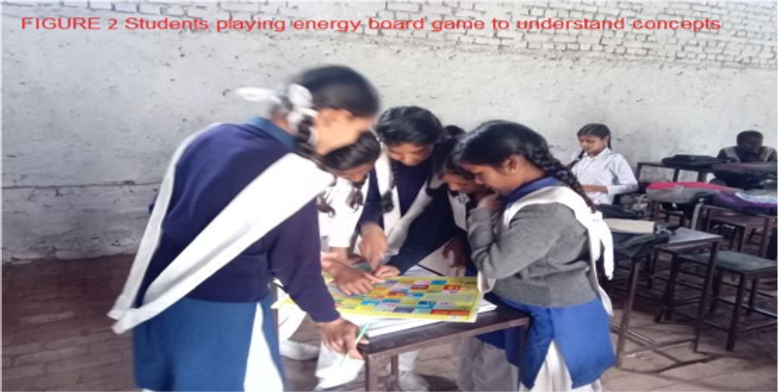
Games require players to think systemically and consider relationships instead of isolated events or facts for sustainability and sustainable development (Stommen et. al., 2016). Some games are externally designed while we designed games keeping in mind Human Work Interaction Design approach through studying work settings and embedding screenplays, rules for better understanding (Clemmensen et.al., 2005), (Campos et. al., 2009). Games need not be restricted to educating schools or colleges, but on learning new things, maybe cooking virtually, learning yoga, explaining and teaching complex problems such as climate change, and sustainable development (Katsaliaki et. al., 2012). In figure 2 students playing an energy board game to understand concepts such as electricity conservation, renewable energy.

The educational game is a form of social interaction, as learners tries to map out situations that will encourage solving compelling problems. For example, to learn about climate change and sustainability problems, learners team-up for gathering and discussing information in a project way (Garg et. al, 2017). Such games foster effective learning habits to change our lifestyle for sustainable living as described in fireworks example later on.

5 Transformation of Education to create “Sustainable Consciousness”

We need more focus on skill development, innovation, decision-making, and problem-solving through establishing Centre of Excellence with focus on 21stcentury skills. With the advent of sustainable consciousness, our GOAL program youth decided to reduce pollution during Diwali celebration, thus some children haven’t burn any crackers to save the environment and others burned 60 to 70% less firework as per previous years based on student and parents stories. Further, they saved Rs. 200 to Rs. 600 that made them very happy. Some senior students decided to devote time for providing quality education to poor students. Now, same students dream is to become a doctor, IAS, IPS, Judge, dancer, cricketer, banker, lawyer, army officer, and teacher (maximum girls dream) rather than focusing on their social background as most of them come from low income group.

Thus, we are doing capacity development programs for 21stcentury skills, STEAM, and Sustainability through:

– Teacher development programs designed to develop and teach students for SDGs, climate change, and 21stcentury skills

– Focusing on employability, skill development and entrepreneurship with industry orientation and linkages

– Learning science, technology, engineering, arts, mathematics (STEAM) linking with SDGs with hands-on, game and problem-based approach

– Establishing learning centers with the community to imbibe responsibility, accountability, global citizenship, gender equality, values

Therefore, ESD is crucial for the SDGs awareness and success for all. Education in school and higher education institution (HEI) play key role as prevalent in our golden time, e.g., Nalanda, Takshila Universities in India. Schools (Ashrams), universities happen to be not only seat of learning but also providers of solutions to humanity’s problems; however, modern schools, universities are not very well connected with their local communities and the environment.

6 Conclusion

Using games to teach a specific curriculum topic related to sustainability such as climate change, water cycle, energy, biodiversity, associated concepts such as light, plant identification, disaster management, and renewable energy increased players’ motivation towards science and sustainability. Besides this, learners showed interest in English, personality development, and improved their leadership skills.

Games and makerspaces can motivate students to turn to textbooks with the intention of understanding rather than memorizing. Learning occurs not just in the gameplay but other kinds of making activities, encourage collaboration among participants, thus provide a context for peer-to-peer teaching and for the emergence of communities of Learners. It will go a long way in nurturing a spirit of inquiry, fostering creativity, and developing a culture of innovation among students; equipping them with skills and competence to create an equitable and sustainable future.

References

Campos P., Campos A. (2009), An Educational Game Created through a Human-Work Interaction Design Approach. In: Gross T. et al. (eds) Human-Computer Interaction, INTERACT 2009. Vol 5726. Springer, Berlin, Heidelberg

Clemmensen, T., Orngreen, R. & Pejtersen, A. M. (2005). Describing Users in Contexts: Perspectives on Human-Work Interaction Design. Workshop Proceedings of Interact’05

Garg, A. B. & Agarwal, M. (2017). Educational Games for Learning Sustainability Concepts, INTERACT Workshop Human Work Interaction Design meets International Development, pg. 290-297

Katsaliaki, K. & Mustafee, N. (2012). A survey of serious games on sustainable development, Proceedings of IEEE Winter Simulation Conference

Kwauk, C. (2020). Roadblocks to quality education in a time of climate change, Centre for Universal Education, Brookings Institution

Scott, C. L. (2015). The Futures of Learning 2: What kind of learning for the 21st century? UNESCO Education Research and Foresight, Paris. [ERF Working Papers Series, No. 14]

Singer, N., Farahaty, E., Mahmoud, E. S. (2020). Motives of the Egyptian Education Future for Sustainable Development: A Comparative Analysis Between 2020 and 2030, Humanities & Social Sciences Reviews, Available at SSRN: https://ssrn.com/abstract=3585908

Stommen, S.M. & Farley, K. (2016). Games for Grownups: The Role of Gamification in Climate Change and Sustainability, Indicia Consulting LLC

https://sustainabledevelopment.un.org/content/documents/23669BN_SDG4.pdf

https://indicators.report/targets/47/#:~:text=Target%204.7%20by%202030%20ensure,%2Dviolence%2C%20global%20citizenship%2C%20and

https://www.unicef.org/press-releases/more-half-south-asian-youth-are-not-track-have-education-and-skills-necessary

https://environment.yale.edu/climate-communication-OFF/files/Climate-Change-Indian-Mind.pdf

About Authors

Anant Bhaskar Garg, Director, HRDEF, Engineer and Educator with 23 years of exp. in various capacities in academia, industries. Published two books, 53 papers in Intl. Journals, Seminars, 2 chapters in Springer’s book, Invited Speaker at 98th ISC, member of Prof. Societies IEI, ACM, CSI, ISCA, IETE, ISTE. Senior Member 2011 of ACM, USA. Climate Reality Leader, #MentorofChange, AIM, NITI Aayog, MIEE. Organized various seminars, faculty, and student development prog. Learned best practices on education, environment through visiting Denmark, Sweden, Switzerland, USA, involved in community services for computer, and sustainability.

Manisha Agarwal, Director, HRDEF, Educator having done M. Sc. (Botany), PhD (Forest Botany) Forest Research Institute University. MBA in Education Management. Sixteen years of research experience in the field of Botany, Wood Anatomy, medicinal plants, papers in international, national journals, member of Indian Botanical Society, ISCA, Climate Reality Leader, Society of Wood Science and Technology, USA – 2013-14, Involved in environment education, climate action, STEAM teaching, raising awareness and skills development

HRDEF established as non-profit social enterprise and in Special Consultative status with the United Nations Economic and Social Council (ECOSOC) since 2018. HRDEF established afterschool program, conducting workshops, and training on climate change, Sustainable Development Goals, and STEAM. HRDEF worked with school students, youth to develop their learning capacities for 21st Century Skills through game, project based interactive learning. Provide makerspace, hands-on experiments for school children to understand concepts, Climate Change, SDGs and Sustainability.


Categories
EDforSD

Event: Reaching the Hardest to Reach with Education Technology During COVID

Updated: Oct 26, 2020

Reaching the Hardest to Reach with Education Technology During COVID Co-Sponsored by The Center for Sustainable Development (CSD), Earth Institute, Columbia University & South Asia Special Interest Group (SIG) at the Comparative International Education Society (CIES).

Education has been disrupted during the COVID19 pandemic. Millions of children have trying different models of learning remotely with the help of parents, teachers, extended families and others. What have we learned so far from the ground? What has worked and what needs to be improved?

This panel will look at the Kerala model from India and learn from the governmental and NGO actions on the ground. Join us in discussing education in the COVID19 times with concrete examples from Kerala on the use of technology to ensure learning continuity.

Let us also learn the lessons for sustainable development and what we can infuse in the education systems to build back better.

Our esteemed panelists:

  • Anvar Sadath, CEO, Kerala Infrastructure and Technology for Education, Government of Kerala
  • Professor V.K. Damodaran, President Vakkom Moulavi Foundation Trust and Member, Governing Board and Executive Committee Kerala State Council for Science, Technology and Environment
  • Sajitha Bashir, Adviser, Office of the Global Director for Education, World Bank

Remarks

  • Tania Saeed, Assistant Professor-Tenure, Department of Humanities & Social Sciences, LUMS University, Pakistan
  • Yanis Ben Amor, Executive Director of Center for Sustainable Development, Earth Institute, Columbia University

Moderators

  • Radhika Iyengar, Director Education of Center for Sustainable Development, Earth Institute, Columbia University. Chair of the Environmental and Sustainability Special Interest Group at CIES
  • Haein Shin, Education Technical Adviser, Center for Sustainable Development, Earth Institute, Columbia University

Please see below documents and links shared by our speakers:

Facing Forward : Schooling for Learning in Africa. By Bashir, Sajitha; Lockheed, Marlaine; Ninan, Elizabeth; Tan, Jee-Peng.   World Bank regional flagship

https://openknowledge.worldbank.org/handle/10986/29377?CID=EDU_TT_Education_EN_EXT

TV Based Learning in Bangladesh : Is it Reaching Students?

https://openknowledge.worldbank.org/handle/10986/34138

Status Report – Government and Private Schools During COVID-19, India.  By Oxfam

https://www.oxfamindia.org/sites/default/files/2020-09/Status%20report%20Government%20and%20private%20schools%20during%20COVID%20-%2019.pdf

Survey on National Education Responses to COVID-19 School Closures  – UNESCO-  UNICEF- World Bank

https://datacatalog.worldbank.org/dataset/survey-national-education-responses-covid-19-school-closures

The effect of school closures on standardized student test outcomes.    Study about Belgium schools during COVID

https://feb.kuleuven.be/research/economics/ces/documents/DPS/2020/dps2017.pdf

National report at Times Of India published on 22nd October

https://timesofindia.indiatimes.com/india/what-kerala-did-that-others-could-not/articleshow/78783667.cms

Comparative and International Education Society (CIES)

https://www.cies.us/

South Asia Special Interest Group of CIES

http://sigs.cies.us/southasia/

Center for Sustainable Development

https://csd.columbia.edu/

Categories
EDforSD

Reducing Meat Consumption for Human and Planet Health


By Aalok Bhatt, 

Millburn Highschool


Watch Aalok Bhatt’s video here- 

https://youtu.be/vXFN6LPZzeM

My name is Aalok Bhatt and I am an Eco-Ambassador and a junior at Millburn High School. This summer, I decided to raise awareness in my community about the health and environmental benefits of reducing meat consumption. I chose this topic because last summer I attended a talk in NYC about sustainable development, where I was shocked to learn about the detrimental impact of increased meat consumption on our environment. The amount of water it takes to produce a pound of beef is equal to the amount of water used by an average person to shower over three years! Another reason why I picked this issue is that Covid-19, which has brought the entire world to a standstill, also originated in an unhygienic meat market in Wuhan.  I knew I had to do something to convince people that even if we abstain from eating meat for one day a week, it will have a huge impact on our health and the health of our planet.

      As I was researching this topic, I found that the entire public school district of New York City has adopted the Meatless Mondays initiative. A lot of hospitals like the New York Presbyterian and restaurants, too, have implemented this program. My goal is to launch this program in my community and then scale it up to include New Jersey public schools and hospitals.

      Given the fact that we are living through a global pandemic, I realized that I would need to take an unconventional approach for my project. With that in mind, I sent emails to various experts in the fields of health and nutrition, environmental protection, and animal rights. I was successfully able to host two talks. The first one was with Nutritionist Monika Mahajan on the health and environmental impact of meat consumption. The second talk was with Ms. Daniel Schwab of Illuminate Supply Chains about the importance of eating local and seasonal foods and setting up sustainable supply chains in communities. 

Unfortunately, I faced many roadblocks this year as compared to last summer, where I raised awareness on eliminating single-use plastic in my town through a poster campaign. Most of the people I contacted did not respond. For instance, I sent many emails to Monday Campaigns to organize a talk on Meatless Mondays for my community, but they were not very responsive. I also contacted faculty members from the Columbia School of Public health for guidance on implementing Meatless Mondays in hospitals in my area, just like they have done in NYC. However, I still haven’t heard from them. I am in talks with the Humane League, which works for animal rights and against factory farming for a one on one interview.  I hope to post it on this website soon. The talks that I did host so far had a limited number of participants and viewers.

In the middle of August, I realized that this was not going anywhere and I would have to do something else. I thought for a while about what I could do next, and then it hit me: I could create a short animated video in the form of a story. I created a google slides document and used pictures from a website called Freepik to create a short educational film. The story is based on a fictional cow, named Moodles, who talks about the drawbacks of eating too much meat. I had a lot of fun making this film and researching all the facts. In the coming weeks, I will ask the principals of Millburn Elementary Schools, Millburn Middle School, and Millburn High School to share this video with their students and parents. I also plan to put it up on my town Facebook group and other community platforms. I’m determined to continue spreading awareness on this issue throughout this year.


Categories
Power in Praxis

Research & Reflections on Menstrual Hygiene Management & Education (India & Nepal)

Research & Written by INES IM

In India, Rayka Zehtacbhi’s 2018 Oscar-winning documentary film Period. End of Sentence and Amit Virmani’s 2013 documentary film Menstrual Ma, both detailing the efforts of Indian entrepreneurs supplying and manufacturing low-cost sanitary pads for their respective communities, have generated buzz. Nepal’s menstruation problems, on the other hand, have recently come under worldwide scrutiny following the media-covered deaths of girls practicing Chaupadi.[1] Chaupadi is a practice in Nepal that forces women to spend 4-5 days in a shed extraneous to their homes while menstruating— deriving from the belief that menstruating women are untouchable.[2]
In between the release of the two films, in 2015, the Ministry of Drinking Water and Sanitation (now the Ministry of Jal Shakti)[3] of India released the Menstrual Hygiene Management India: National Guidelines. The Guide detailed efforts for reform in India, focusing on how to improve the education, resources, and stigma in India on/around menstruation as a part of Swachh Barat, or the ‘Clean India’ initiative.[4] The Nepali government banned Chaupadi in 2015 and criminalized it in 2017 with fines and jail time.[5] This legislation and media suggests that people’s attitudes towards and the stigma around menstruation have been changing for the better. However, it is difficult to determine the actual effects of what the media and government have done. There could be a disparity between the world’s view of India and Nepal’s management of menstruation and the actual situations of the countries.
This paper aims to link Indian and Nepali government legislation to the individual experience and fill in the gaps of information that exist between the two. This paper also aims to cover more recent data, as most articles detailing menstrual taboos are from the late 90’s or early 2000’s.[6] And finally, this paper aims to hear personal narratives and views of women living in Nepal and India from their own words.

Literature Review
Menstrual management is clearly deemed as important for many reasons, but most broadly and basically in that, as said in the 2016 Menstrual Hygiene Matter resolution, “many [menstruation related] myths and social norms restrict women and girls’ levels of participation in society.”[7]
Almost all literature on poor menstrual management seems to recognize that in many underdeveloped countries, such as India and Nepal, tackling bias/stigma around menstruation is the main goal. The Maverick Collective 2017 stated Hindu beliefs and scriptures have influenced practices to deem “[menstruating] women “untouchable,” and prohibiting … [them] from inhabiting public space, socializing with others, and sharing food and water sources.”[8] According to the 2012 WaterAid Menstrual Hygiene Management resolution, Hinduism (practiced by approximately 80% of the population in India[9] and Nepal[10]) holds beliefs that bodily excrements, including menstrual blood, are pollution.[11] Thus, women in India and Nepal often suffer through cultural practices and beliefs such as Chaupadi (Nepal-specific), abstaining from religious activities, not being allowed to prepare food[12], not being allowed to touch running water[13], and a large number of other practices. A 2009 WATERAID report quoted a participant living in Dhading: “a woman is ritually impure during menstruation and anyone or anything she touches becomes impure as well.”[14]
Including the practices mentioned before, author Kothari, in a study in Japiur, India, described the negative practices to be divided into either the psychogenic category (i.e, the fear of menstrual blood), and sociogenic (“patriarchal social systems perceiving woman as impure or dirty”)[15]. This finding was supported in a 2001 Delhi study, where authors Garg, Sharma, and Sahay described the area’s understanding of menstruation to be the removal of dirty blood, or ganda khan— a belief that further supports the taboo of menstruation being a dirty, impure thing.[16] In general, menstruation seems to have a prevailing stigma of shame, and many areas seem to have negative perceptions of menstruation.[17]
Literature on the subject of menstruation has looked to tackle both the purveyors and implications of these cultural stigmas. One factor that seems to be present on both ends of the problem is education, or the lack thereof.
In both India and Nepal, there seems to be a severe lack in quality menstrual education in schools. According to the Maverick Collective study, “adolescent girls lack consistent access to education on sexual and reproductive health [in Nepal]”.[18] WaterAid cited that mothers and sisters seem to be the main source of education when it comes to menstruation in both India and Nepal[19] In many cases, as proven by studies in India, many girls seem to have their first education on menstruation after their menarche.[20] In addition, according to a 2012 WaterAid study, many girls are unaware about the biological function of menstruation.[21]
Lack of education is a huge problem for physical, health reasons, especially in rural or tribal contexts. According to a study in Gujarat, India, “lack of menstrual hygiene was found to result in adverse outcomes like reproductive tract infections. Better knowledge about menstrual hygiene reduced this risk.”[22] The current literature reflects that girls need adequate menstrual hygiene education so that they can manage their own menstruation in a clean, safe way.
Written works often gloss over the individual stories, needs, and cultural idiosyncrasies of specific groups of people in an effort to be all-encompassing. Specifics are reserved for the more urban areas of India and Nepal where the problems are less severe. Thus, the data from rural areas, where issues like Chaupadi (Nepal-specific) are more prevalent, is not in abundance.
Rather than detailing individual experiences, current literature seems to mainly be static and data-based. Because the implications of menstrual taboos are so personal, there is value in the personal narrative that isn’t being reflected in these studies.
It was extremely difficult to find relevant, recent literature on menstruation and menstrual health in India and Nepal. Studies on taboos in India were decades old, and general guidelines were also years behind. With the fast-paced and recent government legislation in India and Nepal correlating with Menstrual Hygiene Management, more recent literature is important for an accurate depiction of the narrative around menstruation.
Safe menstrual hygiene management is no small problem— almost all women menstruate every month. Nepal is a country with an estimated population of 29 million people— daily, 290,000 women in Nepal are menstruating.[23] India, on the other hand, has a population of around 1,296,834,042 as of July 2018,[24] with 649,574,719 members of that population being women as of 2018.[25] It is imperative that accurate, relevant information on such a large number of the global population is accessible.

Data and Methodology:
This paper primarily relies on document analysis based on secondary data research accompanied by personal interviews. Sources of documents include academic journals, public policy papers, government policy documents and literature on menstrual hygiene management as well as data from published documents of international organizations. Informal personal communication with professionals working in the sphere of young women’s education accompanied the secondary data for individual-level perspectives. While the sample size for personal communication is few, the conversation served as a means to understand the current status and practices of MHM from various levels. Limitations in the paper arose from inconsistent and scare data for specific figures in India and Nepal pertaining to recent and accurate data findings[HS1] .

Findings:
The 2017 Maverick Collective report in Nepal published that 83% of women in Nepal use cloth, and 15% actually use sanitary pads.[26] An interviewed international development professional providing education services to rural women of Nepal shared similar observations, stating that, as of 2019, most girls, even those living in urban areas, use cloths. However, she also stated that the Nepali government has recently been providing sanitary napkins for girls.
An article by the Guardian published that 88% of Indian women use ash, newspapers, and leaves during menstruation[27], and a corresponding journal by Shah et al published that 12% of Indian women use sanitary pads.[28] Overall, the main barrier for women when it came to using sanitary pads was that they were too expensive.[29] However, in the town of Mahabubnagar in the outskirts of Telangana State, one educator interviewed shared that, as of 2019, only very few women still use cloths (and those women are mostly isolated in rural areas). She also asserted that free sanitary pads (2 pads per girl) are being distributed in government schools.
A large factor contributing to poor menstrual hygiene management seems to be a lack of access to public, gender separated bathrooms. India’s Ministry of Jal Shakti boasts, at the time of writing this paper, that 99.83 percent of India to has access to public toilets, though whether those toilets are gender-separated is unclear.[30] The educator from Mahabubnagar asserted that separate bathrooms do not seem to be a priority for the government, though they were mandated in the 2015 Menstrual Hygiene Management guidelines. She stated that she had not seen changes in terms of gender separated toilets.
The education professional in Nepal stated that the Nepali government is taking efforts to construct toilets for girls. According to the Maverick collective report, in 2017, only 46% of Nepal had access to high quality sanitation facilities, and only 28% of schools had gender separated toilets.[31] The professional’s statement may represent some change.
Both interviewees supported data founding other papers on the state of menstrual education in their respective countries. The studies in Haryana and Jaipur reported that 68% and 92% of girls in the study weren’t aware of what menstruation was before their menarche, respectively.[32][33] The Indian educator asserted that, at least in her community, girls were seldom ever given education before their menarche— most of their came from their mothers after their first period. However, she asserted that she had seen Menstrual Hygiene Management education being implemented in districts— that education consisted of instruction on how to use pads, how to be hygienic, and just formal education on menstruation in general. Specifically, she had seen the topic of biological menstruation being taught to students, though the girls were separated from the boys.
As for reproduction, specifically, the Nepal contact asserted that in the hill and mountain areas of Nepal, the marriage and motherhood age was roughly 18-22, and in the plains areas, the age was 13-16 (illegal, young planned marriage is still being practice). The contact from India also asserted that women are being married early, illegally, in India.
The Nepali professional relayed that girls are usually taught about menstruation by their mothers. She asserted that schools in Nepal currently don’t have formal programs on menstruation. As an official of an NGO that supplies menstrual education for girls in Nepal, our contact works to educate girls and their mothers in non-formal, non government-affiliated classes on menstruation and reproductive health. However, she stated that there is discussion on endorsement and revision of school curriculums to include menstrual education.
Both contacts in Nepal and India somewhat corroborated assertions of negative cultural stigma around menstruation. Ms. Tahniyath disagreed that there are taboos around menstruation in India, but also noted that girls often feel uncomfortable speaking about menstruation due to a negative stigma. Ms. Joshi asserted that the cultural taboos in Nepal stemmed from Hindu beliefs in untouchability. She said that the negative stigma is most clearly seen in the practice of Chaupadi.
The contact in India mentioned that many girls and women stay at home from school or work to deal with their menstrual cycles. She even said that they cite ‘stomach pain’ as their reason for leaving, as the taboos are so prevalent that it would be embarrassing to mention menstruation. The contact in Nepal said that many girls do not go to school as a result of heavy bleeding during menstruation. Due to the poor facilities of school and lack of access to management materials, a lot of girls in Nepal find it more manageable to stay at home.
The Indian government has been making legislative strides to combat the problems with menstruation in India over the past couple of years with their Menstrual Hygiene Management India: National Guidelines.[34] In Prime Minister Narendra Modi’s independence day speech in 2014, he said, quoted, that “[is the] dignity of women is not our collective responsibility?” and that “all schools in the country should have toilets with separate toilets for girls. Only then our daughters will not be compelled to leave school midway.”[35] The guideline details efforts to reform menstruation education, dissolve taboos, improve facilities, distribute sanitary napkins, provide disposal, and in general foster an atmosphere of support.[36] Smaller efforts have also been made— for instance, Maharashtra state implemented a plan to make menstrual hygiene education mandatory in schools, as well as educating parents on dissolving menstruation taboos in 2017.[37] The educational professional in India stated that she had not only heard of the government’s efforts, but had also seen results. Over the past years, she had seen the government sending doctors to schools, implementing education, raising awareness, and giving out pads. She also stated that the Indian government had begun publishing advertisements, articles, and films that involve menstruation, a step that she believes indicates a change in attitude— for the better.
Nepal’s main legislation efforts have been specifically against Chaupadi. As part of their 2017 criminalization of the practice, the government has torn down Chaupadi sheds and implemented fines— however, an article published by NPR detailed how government policy isn’t effective against long-held cultural beliefs.[38] The Nepal educator corroborated these findings: she asserted that the practice still continues, even after the ban as Chaupadi is a social practice. Because people believe it averts bad luck, many people are afraid of stopping so as to avoid ill towards their families. She added that the criminalization[HS2] has not been effective.
Notably, both contacts in India and Nepal said that there are serious health risks resulting from poor menstrual hygiene management in their respective countries. The Indian professional emphasized how women in India have recently been vocally expressing discomfort over irritations, infections, itching, and excess discharge. She stressed that suppression of discussion on menstruation issues have led to complications such as miscarriages. The Nepal educator said that Chaupadi practice has led to death for many women. She also noted that the criminalization of the practice has led to other, unsafe alternatives.

DISCUSSION
One surprising result of the data collection was to see how much positive change is occurring in Nepal and India. The lack of coverage on the effects of the Nepali and Indian government’s menstruation reform efforts projected the image that change was not occurring. However, both contacts in India and Nepal emphasized that they were seeing significant differences; however, long-lasting, systematic change would take time. For example, the educator in Nepal emphasized how, even with it outlawed, women in Nepal believing in the benefits of Chaupadi were inflicting the practice on themselves. The professional in India mentioned how she could not really think of any negative cultural practices against menstruation, an assertion that could be due to the practices being so deep rooted that they are unnoticeable as unusual to an Indian woman. It also points to regional, economic and spatial inequalities that exist in such a large country with varying population groups. In addition, the fact that menstrual education, if it is even being taught, is only being taught to women, further indicates how much farther reform has to go. Without education, people in Nepal and India will not know better against the taboos and Hindu beliefs of impurity associated with menstrual blood. The taboos bring a vicious cycle to menstrual education— affected adult figures don’t feel comfortable discussing the issue with minors, and thus generations of people remain scared and uneducated when it comes to menstruation.
Along those lines, it is interesting to see how non-government organizations are stepping up to educate women in Nepal where the government is not. The Nepal educator’s organization, World Education, offers courses on menstruation and reproductive health to mothers and daughters. It is programs like these that seem to be influencing conversation to change the Nepali government’s education system to include a reproductive health aspect.
One question that naturally arises is whether or not menstrual hygiene reform, when compared with other issues, is a priority for developing countries like India and Nepal. However, one has to realize that menstruation is an issue that affects the life of almost every woman. Education, work, and overall participation in every-day life are hindered by complications due to menstruation— without dealing with menstruation issues, women are systematically at another disadvantage against the men around them. And menstruation issues don’t only affect women; women being forced to stay home from work or school are thus hindered from contributing to the economy and their country.
In both countries, there doesn’t really seem to be menstrual education, formal or not, for younger girls (i.e. younger than menarche age). With menstrual and reproductive education (if any) and the average marriage and childbirth ages for girls happening in their late teens in India and Nepal, girls are being educated too late on reproduction. There seems to be a disparity with the importance of menstruation/reproductive education and the age at which it’s being taught.
On a positive note, menstruation reform is directly giving some women jobs. In Jharkhand, India, over 55,000 women have been trained as rani mistri (or female masons) to construct toilets under Swachh Barat. Their resulting financial freedom is an interesting plus to the already positive effects of the Swachh Barat initiative in general, and indicates a shift in power for women in some parts of India and a possible turning of the gender narrative.[39]
Finally, it is interesting to see, compared to the data from the studies referenced in this paper, how rapidly change is occurring. Swachh Barat’s progress is a perfect example of recent change in India; the interviewed professional contacts’ assertions of attitude and small policy changes happening in their respective countries are others. Menstruation is an incredibly personal, hard to encapsulate issue— but the attitudes, policies, and knowledge around it is constantly changing and evolving. It is clear to see from the data in this paper that things are improving, and only seem to be going up.

The Way Forward:
As in accordance with the purpose of this paper, the world has the right to know if the reforms in India and Nepal are working. It is important to make sure that the Indian and Nepali government continue their work to improve menstrual hygiene management in their respective countries and follow their proposed legislations and guides. Hopefully, the educational work being done by NGOs, especially in Nepal, will influence the government to change for the better.
More women in the government could significantly improve menstrual hygiene management in Nepal and India. Women officials could provide more empathy and understanding towards fellow menstruating women, especially because of the taboos and fear around menstruation (especially from men).
The governments in India and Nepal must increase access to sanitary napkins: namely, pads. Relatedly, more efforts should be made to have gender separated bathrooms and disposal facilities. These steps are outlined in global Menstrual Hygiene Management guides, and in the Indian National Guide, but true implementation of these reforms is paramount for the safety and hygiene of women in both countries.
The deep cultural stigma in Nepal and India is not only a main cause of poor attitude and practices towards menstrual hygiene, but also a main reason why reform, such as the banning and criminalization of Chaupadi in Nepal, is not effective. There is no room for true change to happen without the removal of cultural stigma. Although, of course, this will be difficult, the task really falls on educators (both governmental and independent) to teach the next generation against the menstrual taboo. Hopefully, in the long run, future generations of Nepali and Indian people, especially young women and men, will feel that the discussion of menstruation is a comfortable, safe, and healthy one to have.

[1] Danielle Preiss, “Banished To A ‘Menstrual Shed,’ A Teen In Nepal Is Bitten By A Snake And Dies,” Goats and Soda, July 10, 2017, Women & Girls, accessed August 24, 2019, https://www.npr.org/sections/goatsandsoda/2017/07/10/536483652/banished-to-a-menstrual-shed-a-teen-in-nepal-is-bitten-by-a-snake-and-dies.
[2] Khagendra Dahal, “Nepalese Woman Dies after Banishment from House during Menstrual Period,” British Medical Journal 337, no. 7680 (November 22, 2008): 1194, https://www.jstor.org/stable/20511378.
[3] Press Trust of India, “Govt forms ‘Jal Shakti’ Ministry by merging Water Resources and Drinking Water Ministries,” Business Standard (India), May 31, 2019, accessed August 24, 2019, https://www.business-standard.com/article/pti-stories/govt-forms-jal-shakti-ministry-by-merging-water-resources-and-drinking-water-ministries-119053100711_1.html.
[4] Ministry of Drinking Water and Sanitation Government of India, Menstrual Hygiene Management National Guidelines, by Ministry of Drinking Water and Sanitation, December 2015, accessed August 24, 2019, http://www.ungei.org/resources/files/pub_doc107.pdf.
[5] Danielle Preiss, “Law In Nepal Sets Penalties For Forcing A Woman Into A Menstrual Shed,” Goats and Soda, August 10, 2017, [Page #], accessed August 24, 2019, https://www.npr.org/sections/goatsandsoda/2017/08/10/542585664/law-in-nepal-sets-penalties-for-forcing-a-woman-into-a-menstrual-shed.
[6] Suneela Garg, Nandini Sharma, and Ragini Sahay, “Socio-Cultural Aspects of Menstruation in an Urban Slum in Delhi, India,” Reproductive Health Matters 9, no. 17 (May 2001): https://www.jstor.org/stable/3776394.
[7] Sarah House, Thérèse Mahon, and Sue Cavill, Menstrual Hygiene Matters (WaterAid, 2012), 25, last modified 2012, accessed August 24, 2019, https://menstrualhygieneday.org/wp-content/uploads/2016/12/Menstrual-hygiene-matters-low-resolution.pdf.
[8] Maverick Collective, “Menstrual Health and Hygeine Management in Nepal Scoping Review,” review, Maverick Collective, last modified June 20, 2017, accessed August 26, 2019, http://maverickcollective.org/menstrual-health-and-hygeine-management-in-nepal-scoping-review/.
[9] The World Factbook, “South Asia:: India,” in The World Factbook, by Central Intelligence Agency, last modified October 2, 2019, accessed October 14, 2019, https://www.cia.gov/library/publications/the-world-factbook/geos/in.html.
[10] The World Factbook, “South Asia:: Nepal,” in The World Factbook, by Central Intelligence Agency, last modified October 2, 2019, accessed October 14, 2019, https://www.cia.gov/library/publications/the-world-factbook/geos/np.html#field-anchor-people-and-society-religions.
[11] House, Mahon, and Cavill, Menstrual Hygiene, 26.
[12] WaterAid, Is Menstrual Hygiene and Management an Issue for Adolescent School Girls?, 1, March 2009, accessed October 14, 2019, https://sswm.info/sites/default/files/reference_attachments/WATERAID%202009%20Menstrual%20hygiene%20school%20adolesencegirls-nepal.pdf.
[13] Shruti Chopra and Krishnan Sharma, “The Development of Menstrual-related Beliefs and Behaviors During Adolescence in Semi Rural Haryana (India): A Conceptual and Empirical Formulation,” Anthropologie (1962-) 49, no. 2 (2011): 101, accessed August 24, 2019, https://www.jstor.org/stable/26272368.
[14] WaterAid, Is Menstrual, 10.
[15] Bela Kothari, “Perception about Menstruation: A Study of Rural Jaipur, Rajasthan,” Indian Anthropologist 40, no. 1 (Jan/June 2010): 45, accessed August 25, 2019, https://www.jstor.org/stable/41920109.
[16] Garg, Sharma, and Sahay, “Socio-Cultural Aspects,”.
[17] UNESCO, Puberty Education & Menstrual Hygiene Management (Paris, France: UNESCO, 2014), 10.
[18]Maverick Collective, “Menstrual Health,” review, Maverick Collective.
[19] WaterAid, Is Menstrual, 17.
[20] Kothari, “Perception about,” 47.
[21] House, Mahon, and Cavill, Menstrual Hygiene, 22.
[22] Sobha P. Shah et al., “Improving Quality of Life with New Menstrual Hygiene Practices Among Adolescent Tribal Girls in Rural Gujarat, India,” Reproductive Health Matters 21, no. 41 (May 2013): 205, https://www.jstor.org/stable/43288976.
[23] Maverick Collective, “Menstrual Health,” review, Maverick Collective.
[24] The World Factbook, “South Asia:”.
[25] The World Bank, “Population, female – India,” chart, The World Bank, 2019, accessed October 14, 2019, https://data.worldbank.org/indicator/SP.POP.TOTL.FE.IN?locations=IN&view=chart.
[26] Maverick Collective, “Menstrual Health,” review, Maverick Collective.
[27] Lakshmi Sandhana, “India’s Women Given Low-cost Route to Sanitary Protection,” The Guardian, January 21, 2012, Women, accessed October 14, 2019, https://www.theguardian.com/lifeandstyle/2012/jan/22/sanitary-towels-india-cheap-manufacture.
[28] Shah et al., “Improving Quality,” 205.
[29] Shah et al., “Improving Quality,” 213.
[30] https://sbm.gov.in/sbmdashboard/IHHL.aspx
[31] Maverick Collective, “Menstrual Health,” review, Maverick Collective.
[32] Kothari, “Perception about,” 47.
[33] Chopra and Sharma, “The Development,” 95.
[34] Ministry of Drinking Water and Sanitation Government of India, Menstrual Hygiene.
[35] Ann Schraufnagel, “India’s Need for School Toilets,” Pulitzer Center (Washington, DC), February 16, 2016, accessed August 26, 2019, https://pulitzercenter.org/reporting/indias-need-school-toilets.
[36] Ministry of Drinking Water and Sanitation Government of India, Menstrual Hygiene.
[37] Pallavi Smart, “Maharashtra Government Makes Menstrual Hygiene Mandatory in Schools,” Mid-Day (Maharashtra, India), November 1, 2017, accessed August 29, 2019, https://www.mid-day.com/articles/maharashtra-government-makes-menstrual-hygiene-mandatory-in-schools/18700182.
[38] Preiss, “Banished To A ‘Menstrual,” Women & Girls.
[39] Pratibha Singh, “How female toilet builders are taking on menstrual hygiene management in India,” Unicef: for every child (blog), entry posted May 28, 2019, accessed August 26, 2019, https://www.unicef.org/stories/how-female-toilet-builders-are-taking-menstrual-hygiene-management-india.

Categories
EDforSD

Call for research collaboration!

Dear Colleague,


Hope you are well during this UN Week.

From our Center for Sustainable Development, we are planning to bring together the various and diverse strands of SDG-related research and work around the world for a concrete collaboration that results in a consortium of research partners, highlighting the research that can guide policies, guidelines and curriculum across industries and sectors.

More specifically, the scope of this call is to convene interested partners for conducting and documenting research that validates the linkages among the 17 SDGs and SDG outcomes. SDG can be from any area/SDG that you and/or your affiliated organization are already working on.

  • Conduct research to validate the linkages among SDGs (outcomes).
  • Conduct community-based action research on the pathways and processes that drive these inter-linkages, and how communities perceive potential trade-offs between SDGs.
  • Learn from the grassroots initiatives on some of the key factors that help in cross-pollination of the SDGs.
  • Learn how SDG 4.7 could become the central factor that binds all the SDG learning together.

If you are interested in this joint work for the consortium, please let us know.

Looking forward to hearing from you.

Thank you,

Radhika Iyengar [email protected]

Tara Stafford Ocansey

Haein Shin

Education Sector – Center for Sustainable Development