
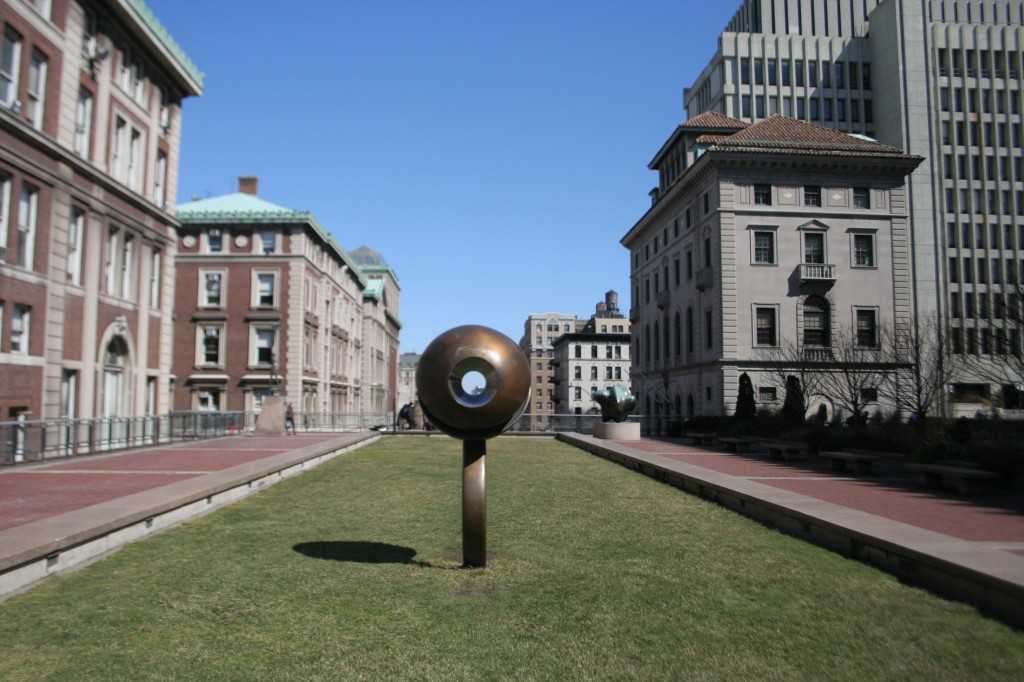
The Department of Sociology at Columbia builds on a rich tradition of scholarship to pioneer theoretical and empirical research on a wide range of social issues. We offer training at both the graduate and undergraduate levels in classical social theory, innovative research methods, and core substantive fields in the discipline. Here, you may explore our dense web of people and projects, and how they are advancing sociological inquiry.
………………………………………………………………………………………………………………………………………………………….
Class: Racial and Ethnic Inequality
Department: Sociology
Code: SOCI 4121
Call #: 75781
Section: 001
Instructor:C. Shedd
Semester:Fall
Description
This seminar critically examines how racial/ethnic inequality is generated and maintained in contemporary American society. We will explore the merits and limitations of various paradigms that aim to explain racial inequalities and the concomitant social policies that have been implemented and/or proposed. Major topics include: residential segregation, wealth inequality, educational achievement, employment outcomes, crime & punishment, and culture
………………………………………………………………………………………………………………………………………………………….
Class: Sociology of the Law
Department: Sociology
Code: SOCI 6055
Call #: 05710
Section: 001
Instructor: D. Becher
Semester:Fall
Description
This course will introduce students to several lines of research in the sociology of law. Students will develop a familiarity with this research that allows them to identify the legal foundations of any aspect of social life. They will also learn to compare and contrast different perspectives on and theoretical approaches to understanding the social dimensions of law. By the end of the course, students should be able to identify areas of research in the sociology of law that are ripe for development.
………………………………………………………………………………………………………………………………………………………….
Class:The Carceral Continuum Research Practicum
Department: Sociology
Code: W3964
Call #: 91396
Instructor: Carla Shedd
Semester: Spring
PERMISSIONS:
Instructor permission is required. Please email instructor your (1) resume/CV, (2) a one page cover letter describing your qualifications and interest in the course, and (3) an electronic copy of your spring 2014 course schedule to help with the determination of student availability.
Description
This course focuses on the plight of urban adolescents who confront daily the paradoxes of: neighborhoods that can either nurture or arrest healthy development; school systems that can either educate or criminalize them; police departments that can either protect or harass them; and a justice system that can rehabilitate them or further damage them. In this course, students will directly engage with issues affecting New York City youth—particularly those who are underserved by their schools, lack resources in their communities, and are at great risk of interacting with the juvenile justice system. Through a mixed-method research approach, students will investigate the linkages across three important adolescent developmental settings: neighborhoods, schools, and the juvenile justice system, analyzing within each space the interplay between New York City adolescents’ institutional experiences and their pathways toward or away from the formal juvenile justice system. Moreover, students will gain invaluable social science research experience, while directly contributing to my broader research agenda and designing a final paper on an issue/topic of their interest within the area of “juvenile justice.” The success of this course will hinge on each students thinking critically about the materials and what they observe, being an effective team player, and exhibiting self-motivation. Also, it is imperative that we establish a classroom space where we respect the views of others, without regard to our personal and/or political views.
………………………………………………………………………………………………………………………………………………………….
Class: Inequalities U.S. Law and Society
Department: Sociology
Code: SOCI BC3913
Instructor: John Salyer
Semester: Spring
Description
This class will examine the historical roots and ongoing persistence of social, economic, and political inequality and the continuing role that it plays in U.S. society by examining how such issues have been addressed both in social science and in law.