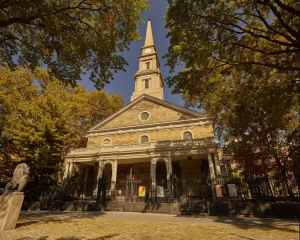
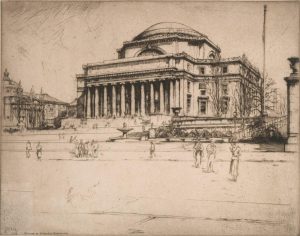
Library of Columbia University, New York, Photo Credit: New York Historical Society
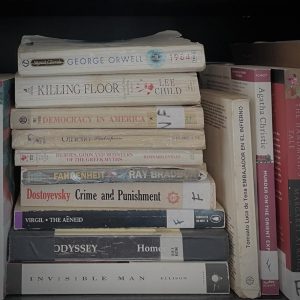
You are a typical Columbia College undergraduate student. CDC guidelines permitting, in your first year you live and breathe Columbia’s neoclassical (or Beaux-Arts, depending on who you ask) -style campus; and as far as academics go, the Core is all you can be certain about. You begin the year with a copy of Homer’s Odyssey in hand. For a week or two, you lug this book from the southernmost edge of campus, where you live, to—in all likelihood—Hamilton Hall, a couple hundred feet from your door, and back. Four or more times a week, you pass two stained glass windows depicting Sophocles and Virgil (gifts of the classes of 1885 and 1891, respectively) whose works will soon replace the Odyssey in your bag. In your second year, you may live as far away as Carlton Arms on Riverside, between 108th and 109th; you face the prospect (as I did) of ferrying your copy of Kant’s Critique of Pure Reason as far as Riverside Church on 120th and, on your very first day of the spring semester, gambling on which grand, pointed arch to duck into to escape the doom and gloom of winter. Continue reading