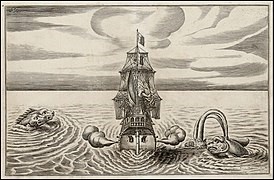
The first challenge I faced when I began formulating ideas for my senior thesis at the start of this semester was deciding on a project that could involve both my major fields of study. Classics and East Asian studies do not often overlap, and both departments’ differing thesis requirements made it initially difficult to find a project that would satisfy both. My initial plan had been to focus on a case of translation where an Indian Buddhist monk named Prajna and a Syriac Christian bishop named Adam had translated Buddhist scriptures together, in 8th-century Tang China. (I had come across this niche incident in the course of prior research about Syriac Christian missions from Central Asia to China). While this case study fell nicely within the domain of East Asian studies, it did not fall under the scope of a Classics thesis – a thesis within the Classics department need not explicitly be set within the time period or geographical range of classical Greece and Rome, but needs to deal to some extent with the languages and culture of those periods.
A photo of weathered books on a bookshelf, Photo Credit: Harini2101 on Wikimedia Commons
It was while procrastinating, actually, that I came across a way forward. I think it was in the library, when I was meant to be doing some other reading, that I was scrolling down the webpage of the Loeb Classical Library (this is how classicists waste time). I saw the title of a work I’d heard of before, but never really investigated. It was called the Barlaam and Josaphat, and when I clicked the link to it and read the translator’s introduction, I was pleasantly surprised. The Barlaam and Josaphat, a hagiography of two legendary saints that became widely read throughout medieval Europe, has, since the 19th century, been seen by most scholars as a Christianized version of the life of the Buddha. Both the Buddha and Josaphat are Indian princes; both are walled in by their fathers to keep them from the outside world; both eventually pursue lives of asceticism. From these parallels, as well as from historic and linguistic trails, scholars argue for a connection between the two narratives. It seemed providential that I had found, completely unawares, a case study that – like the Adam-Prajna collaboration – engaged questions of Christian and Buddhist contact, while also involving Greek and Latin. Continue reading


 parents’ parents. When forms ask me to input my parents’ education level, I leave my father blank (don’t ask, I am just as clueless), but proudly jot down “GED” for my mother. My mother often talks about the day she took her GED. She had just immigrated to the United States from Mexico and knew very little English. She laughs and tells me her English teacher was Barney the Purple Dinosaur, a children’s cartoon she’d play for my sister and me, but from which she seems to have learned more than I ever did. She had been nervous about the written essay portion of the exam but recalls that in the lobby of the testing center, a fellow lady advised her to simply write as much as she could. “They don’t care what you write, so long as you write a lot,” remarks this wise lady who, though she had only recently arrived in the United States, already understands the American education system. So my mother goes into the exam and she writes, and writes, and writes, and she passes!