The Kashmir Issue: How “Miller (2)” Must Inspire the Indian Supreme Court

The Kashmir Issue: How “Miller (2)” Must Inspire the Indian Supreme Court

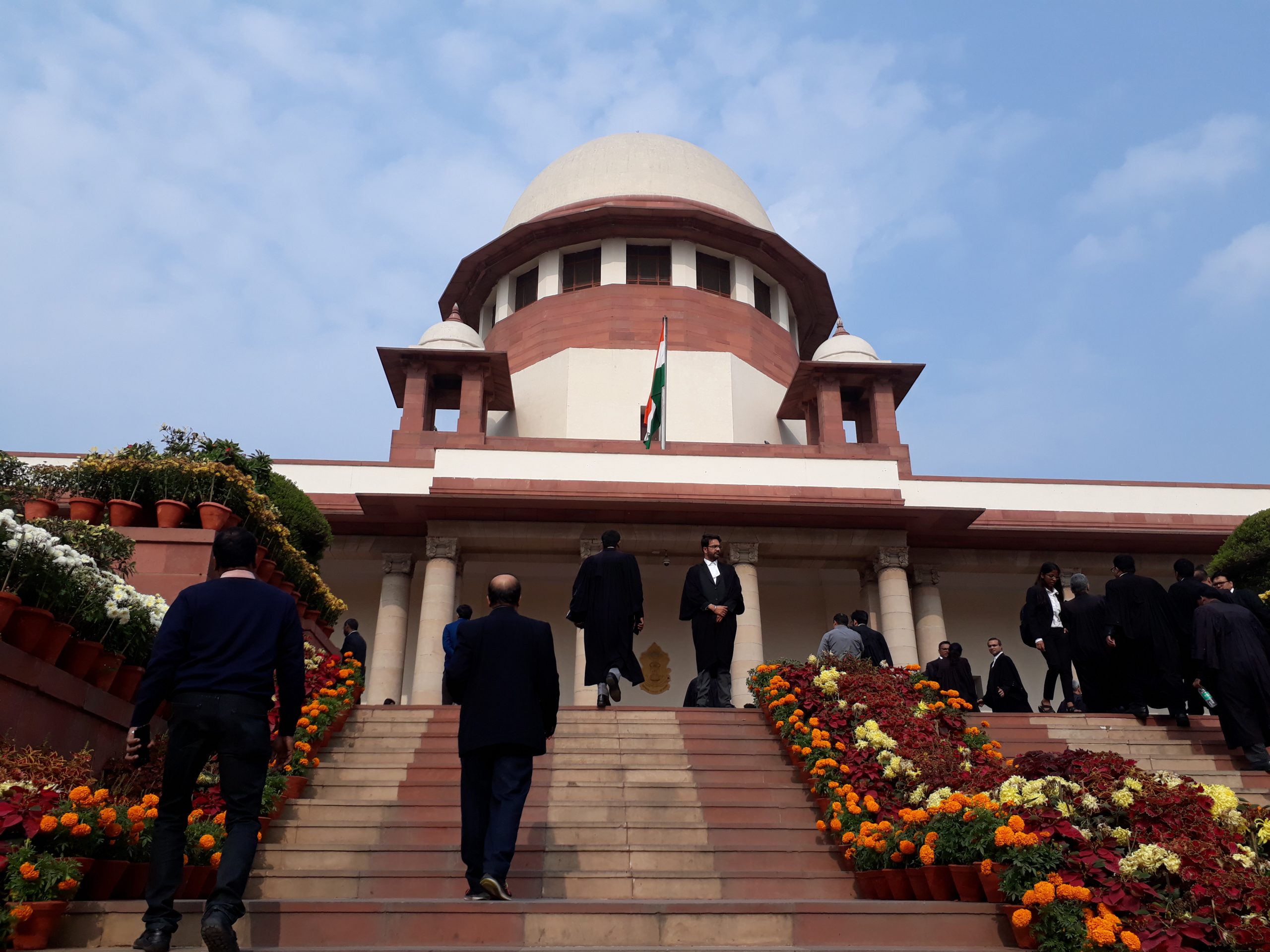
By guest contributors Anmol Jain and Prannv Dhawan. Jain is  a penultimate-year law student at National Law University, Jodhpur, India. He takes an active interest in the study of constitutional law and judicial approaches to human rights. Dhawan is a third-year law student at National Law School of India University, Bangalore, India. He is interested in policy and legal research in the domains of public law, human rights and climate justice.  India’s constitutional democracy is backsliding. Speaking at a rally during the ‘National Register of Citizens (NRC) Seminar’ recently, the Home Minister advocated for the re-introduction of the much contentious Citizenship Amendment Bill, which unconstitutionally aims to provide easier citizenship requirements for non-Muslim refugees. Noted scholars have argued that previously, the National Register of Citizens exercised in Assam and now, the dilution of Article 370 of the Constitution that provides special status to the state of Jammu and Kashmir, are arguably unconstitutional attempts to further the political vendetta of the ruling...
Read More
A Year After Jamal Khashoggi’s Assassination, The War On Truth Continues

A Year After Jamal Khashoggi’s Assassination, The War On Truth Continues

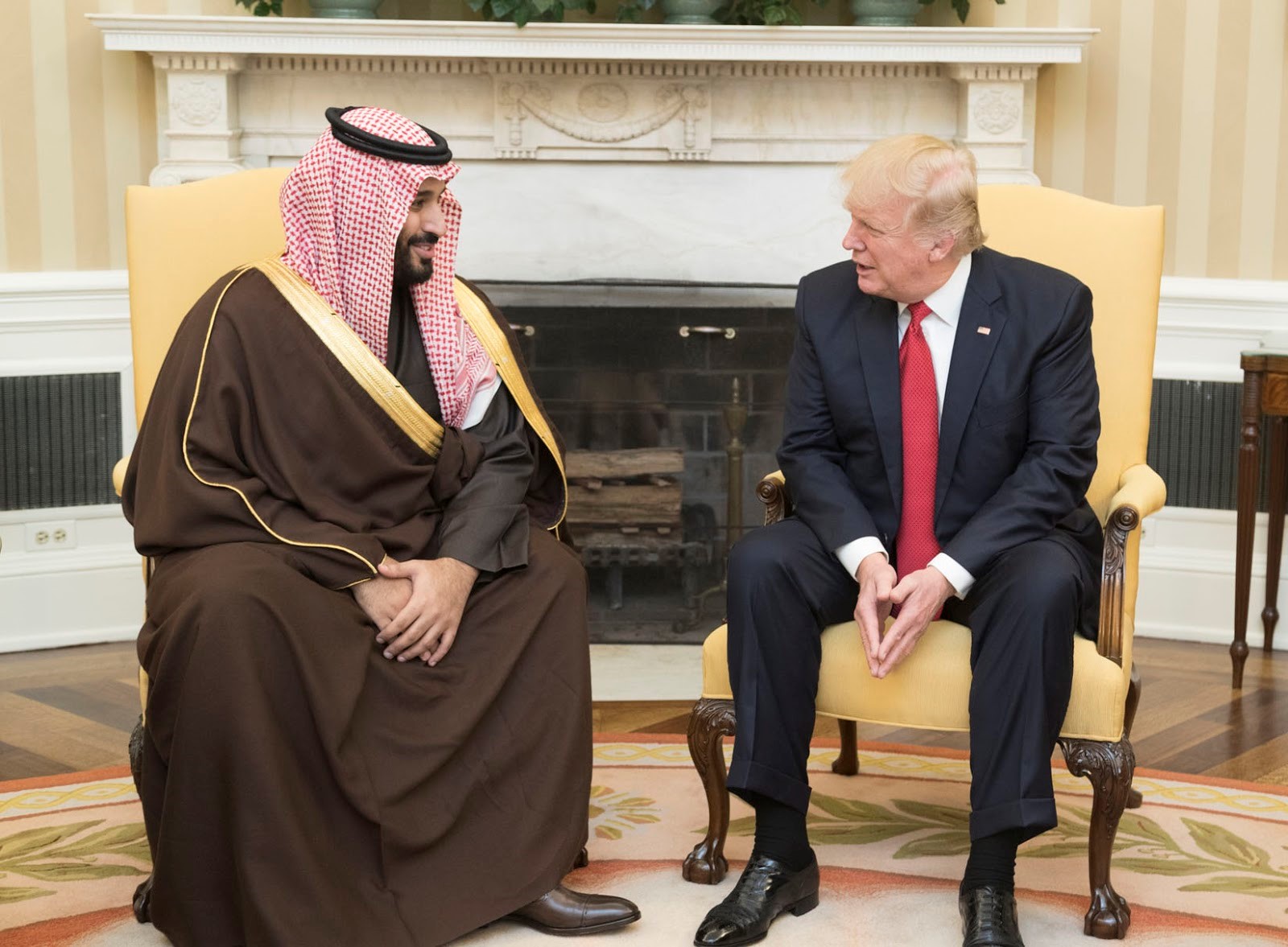
By: Kyoko Thompson, staff writer at RightsViews “A commission is coming from Saudi Arabia tomorrow; they have something to do in the Consulate. They will have something to do on my floor in the office.” - October 1 2018, 21:48 At 1:15 PM on Tuesday, October 2, 2018, Washington Post contributor and longtime journalist Jamal Khashoggi entered the Saudi consulate in Istanbul, Turkey, and was never seen again. His death was not the first of its kind. According to the United Nations, more than one thousand journalists have been murdered since 2006. Yet it drew international attention from governments and individuals alike, many of whom demanded justice. The events that followed challenged the limits of international law and U.S. foreign policy. One year later, an investigation yields more questions than answers, such as: What does justice for Khashoggi look like? Is his death a manifestation of a deeper, more insidious trend? And: What is the future of free speech in an era...
Read More
Classrooms and Curricula: the Role of the Right to Education in the Prevention of Mass Atrocities

Classrooms and Curricula: the Role of the Right to Education in the Prevention of Mass Atrocities

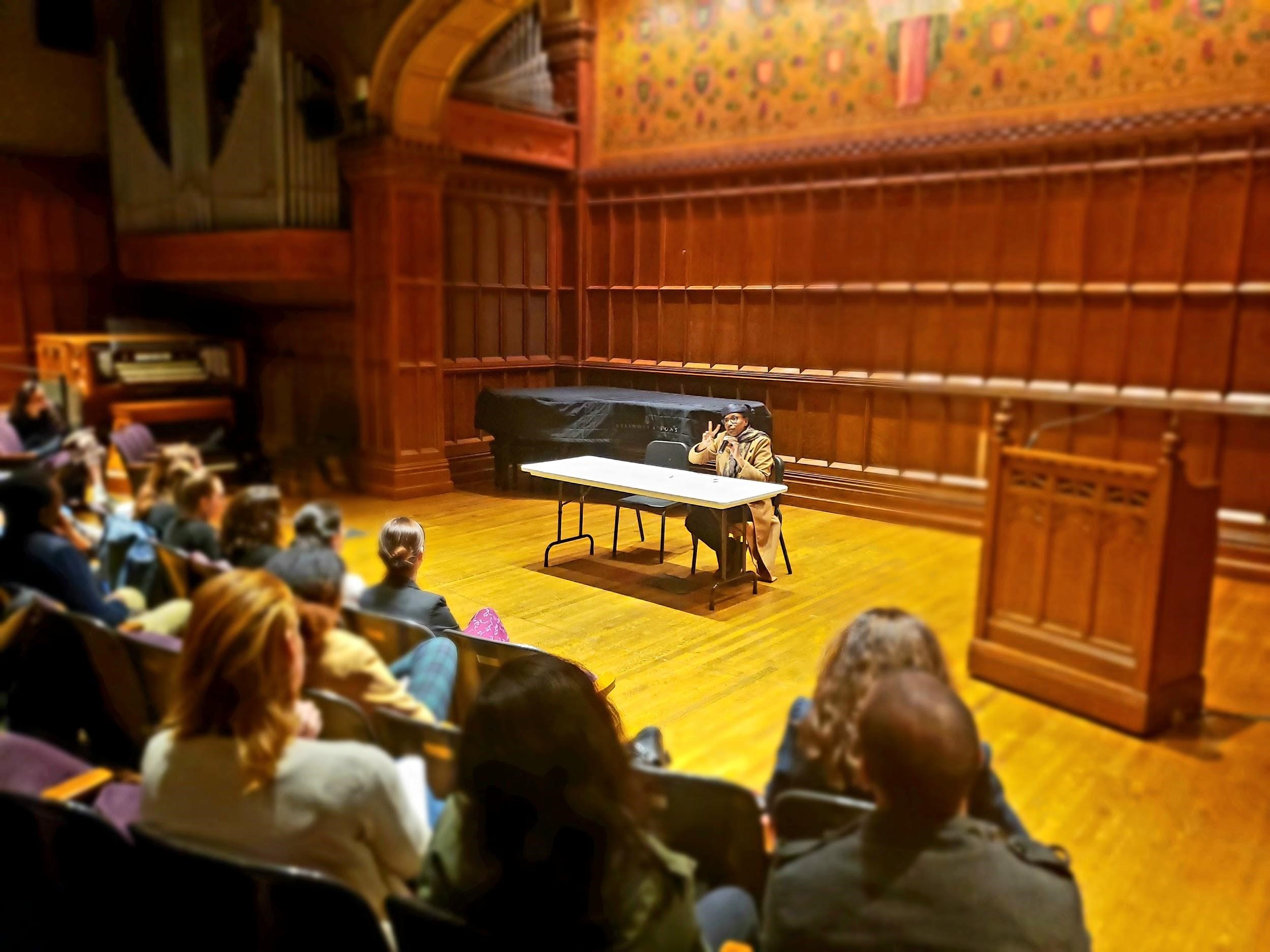
By: Nay Alhelou, RightsViews Co-editor In her first talk in an academic setting in the USA while serving in her current capacity, the UN Special Rapporteur on the Right to Education, Dr. Kombou Boly Barry, highlighted how education could help prevent mass atrocities. On October 15, she addressed students, teachers, and fellows at Columbia University and discussed the report she presented three days later to the United Nations. Dr. Boly Barry was appointed by the UN Human Rights Council in 2016 to examine the right to education as an independent expert. She is mandated to conduct country visits, respond to allegations of violations of the right to education and promoting dialogue with governments, civil society and other actors. According to the Special Rapporteur, schools can either be the space where intolerance is harnessed or where tolerance is promoted. In favor of the former, she remarked: “In a world where everybody is afraid of everybody else… education should be used as a tool to...
Read More
A Living Text? Dr. Hugo Slim on War, Humanity, and the Geneva Conventions under the ICRC’s Mandate

A Living Text? Dr. Hugo Slim on War, Humanity, and the Geneva Conventions under the ICRC’s Mandate

By Rowena Kosher, Co-Editor of RightsViews The International Committee of the Red Cross’ (ICRC) reverence for its mandate to the Geneva Conventions was obvious as Columbia students welcomed Hugo Slim, ICRC’s Head of Policy and Humanitarian Diplomacy Division, to speak on “War and Humanity: Challenges and Trends in the 70th Year of the Geneva Conventions” on November 6. From its founding in 1863 in Geneva, the ICRC has been committed to the provision of international humanitarian aid, embedding itself as one of the core players in international humanitarian law (IHL) as it developed over time to regulate jus in bello, or the “conduct of war.” It was the ICRC that convinced states in 1864 to adopt the very first Geneva Convention, creating a universal obligation of care for all wounded soldiers. From that moment on, it was also the ICRC that ultimately headlined what the IHL community now holds as some of its most fundamental texts: the four Geneva Conventions of 1949...
Read More
Period: End of Sentence Critical Panel: The Inconvenient, Bloody Truth Behind the Oscar-Winning Documentary

Period: End of Sentence Critical Panel: The Inconvenient, Bloody Truth Behind the Oscar-Winning Documentary

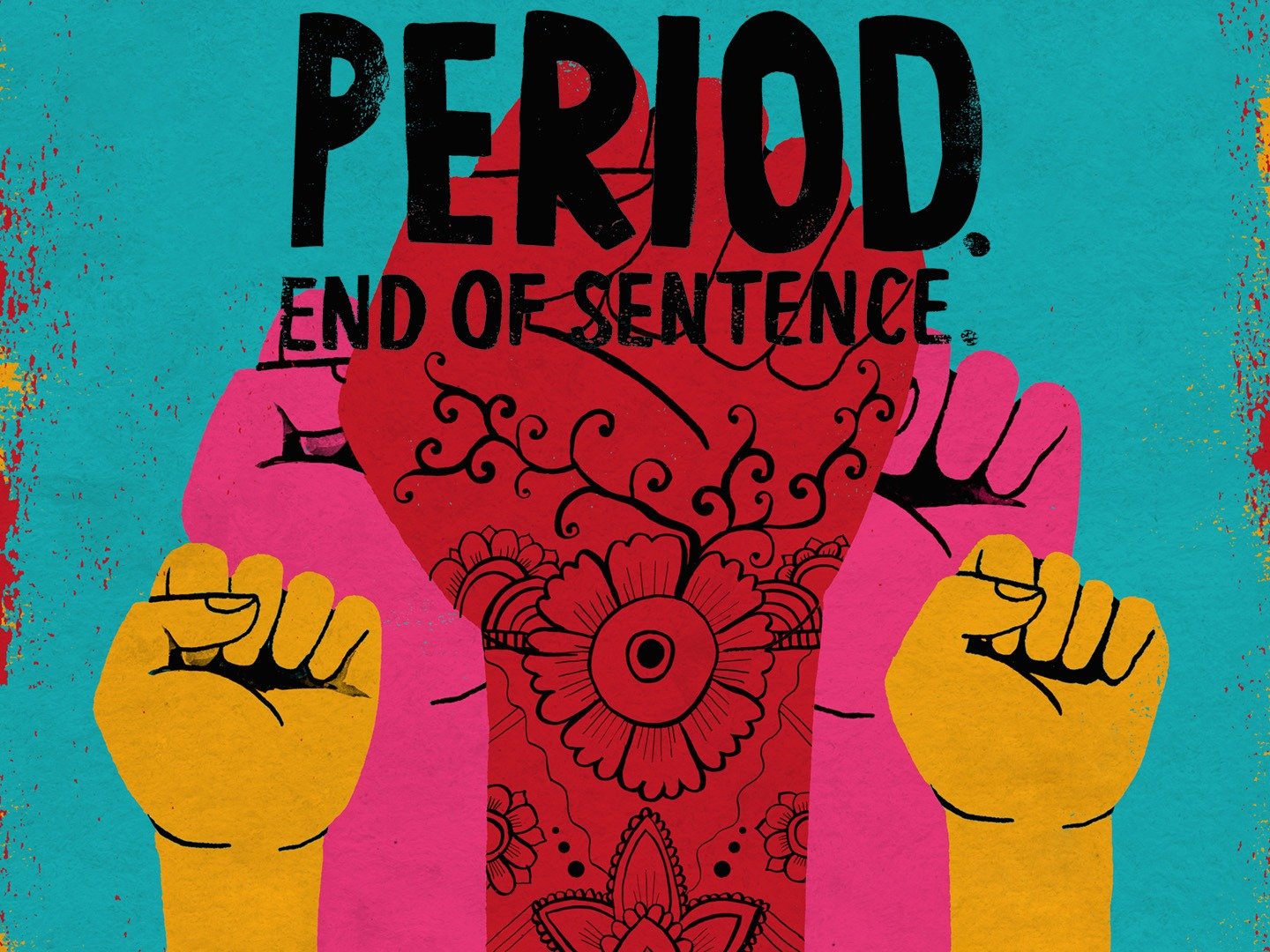
By: Laura Charney, RightsViews staff writer On September 26, the Menstruation and Gender Justice Working Group hosted a film screening and critical panel on the Oscar-winning documentary short Period: End of Sentence. Moderated by Inga Winkler, lecturer at the Institute for the Study of Human Rights at Columbia University and Director of the working group, the panel included Shobita Parthasarathy, Professor of Public Policy and Women’s Studies at the University of Michigan, Lauren Houghton, Assistant Professor of Epidemiology at the Mailman School of Public Health at Columbia University, and Emily Hoppes, a consultant at Huru International. Period: End of Sentence follows a group of Indian women in the rural Hapur district, 60 kilometers outside of Delhi, as they transition from a life of shame surrounding their periods toward establishing a self-sufficient microeconomy based on menstrual pad manufacturing. During the process, the documentary claims that girls and boys are educated, stigmas are shattered, and a new gender-equitable horizon ascends. Period: End of Sentence is...
Read More
Nicaragua: A Human Rights Crisis

Nicaragua: A Human Rights Crisis

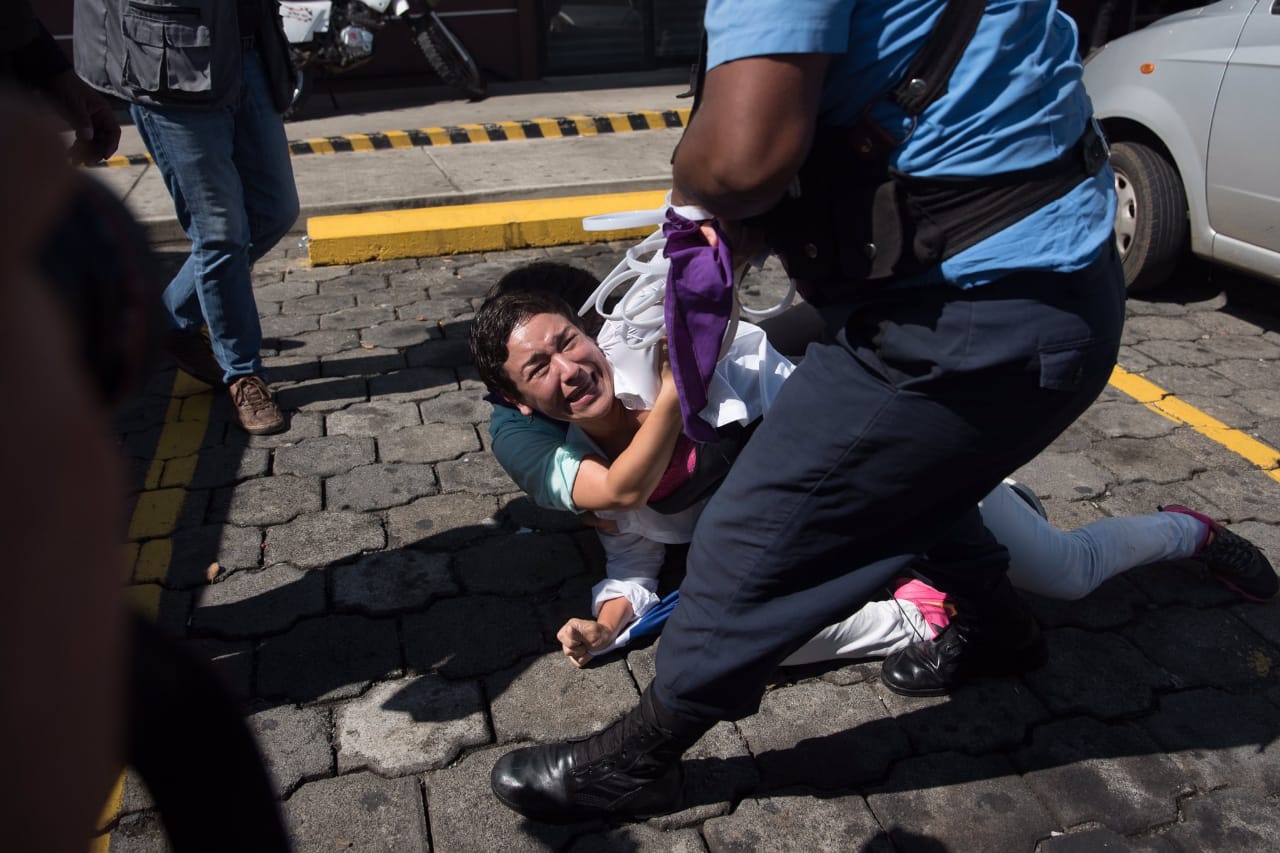
Social media has visibilized many human rights atrocities in the recent past and been crucial in the mobilization of masses, as it is able to transmit information to a great audience. Since the very beginning of the crisis in Nicaragua, activists have taken to Twitter, Facebook, and other forms of social media to raise awareness of the human rights abuses perpetrated by the government. Most recently, activists from the Alianza Universitaria Nicaraguense (AUN) or the Nicaraguan University Alliance have organized a week-long campaign of civil resistance. The campaign “Navidad Sin Presos Politicos” or “Christmas Without Political Prisoners”, from Monday, December 17 to Friday, December 21 demands the Ortega-Murillo government to release all political prisoners before Christmas Day. On Monday, December 17, the "Llamada Masiva" urged citizens to make phone calls to the Supreme Electoral Council, the Supreme Court of Justice, and the Ministry of the Interior. On Tuesday, December 18, the "Paro Electrico" urged that from 8-9pm everyone turn off all...
Read More
Taming the Bull: Can Global Finance ‘Save’ Human Rights?

Taming the Bull: Can Global Finance ‘Save’ Human Rights?

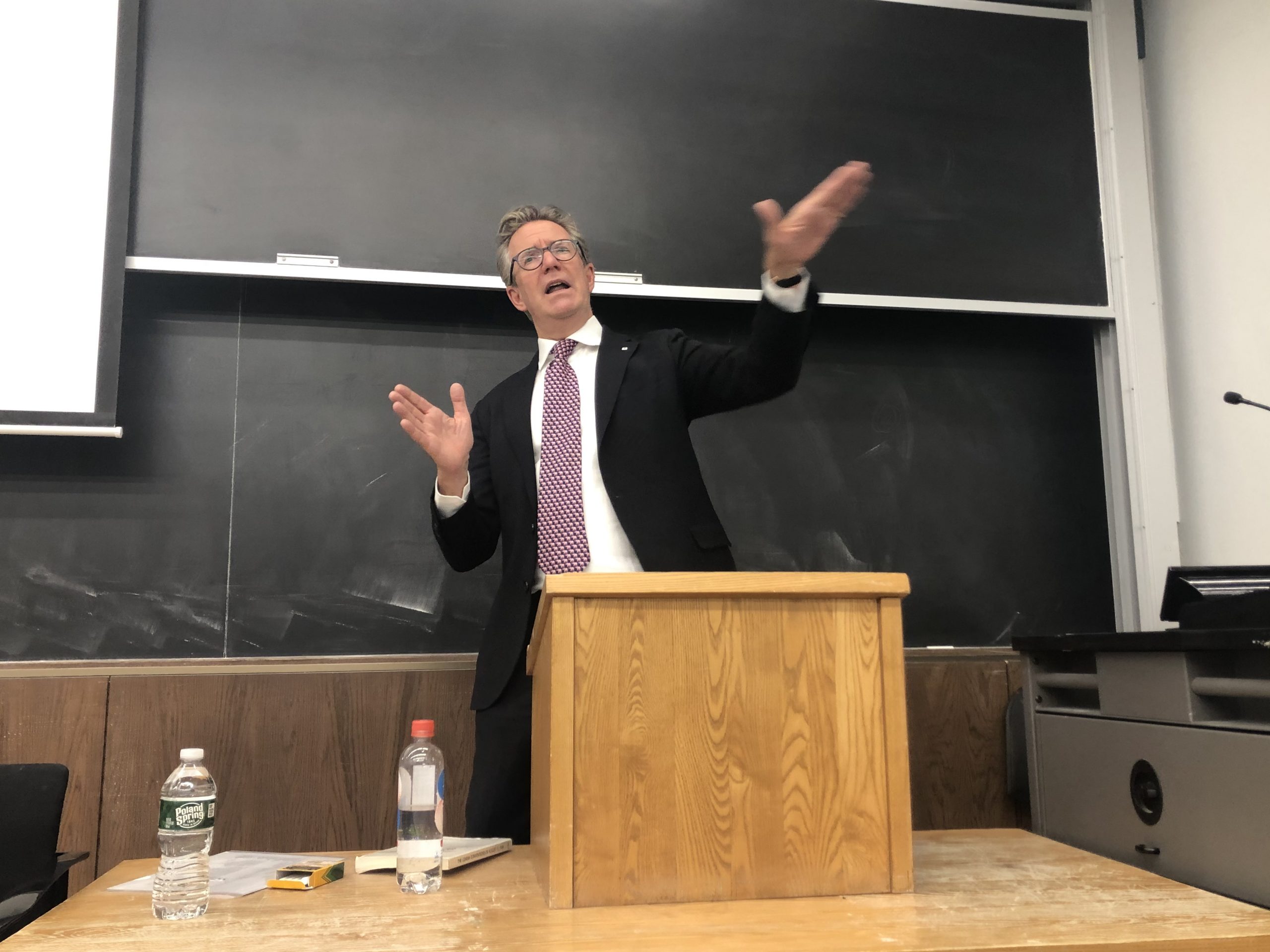
The global financial system has long had a public image problem. In the United States, Wall Street has become virtually synonymous with greed, power, and ruthlessness, a reputation turned into American lore by a long line of iconic films and insider tales. From the eponymous "Wall Street" starring Michael Douglas in 1987 to Leonardo DiCaprio’s 2013 role as Jordan Belfort in "The Wolf of Wall Street" and the dark story behind the 2008 financial collapse in "The Big Short," finance has been cast as the epicenter for the self-interested and corrupt.   David Kinley, chair in Human Rights Law at the University of Sydney, however, sees an opportunity to leverage Wall Street, and its international counterparts in London, Tokyo, Hong Kong and Geneva for the benefit of international human rights and social justice, a chance for finance to shed its bad reputation and become a positive force for socioeconomic impact. Kinley, an expert member of high-profile London law firm Doughty Street Chambers, spoke...
Read More
What Does a Career in Human Rights Look Like? The Experts Weigh in

What Does a Career in Human Rights Look Like? The Experts Weigh in

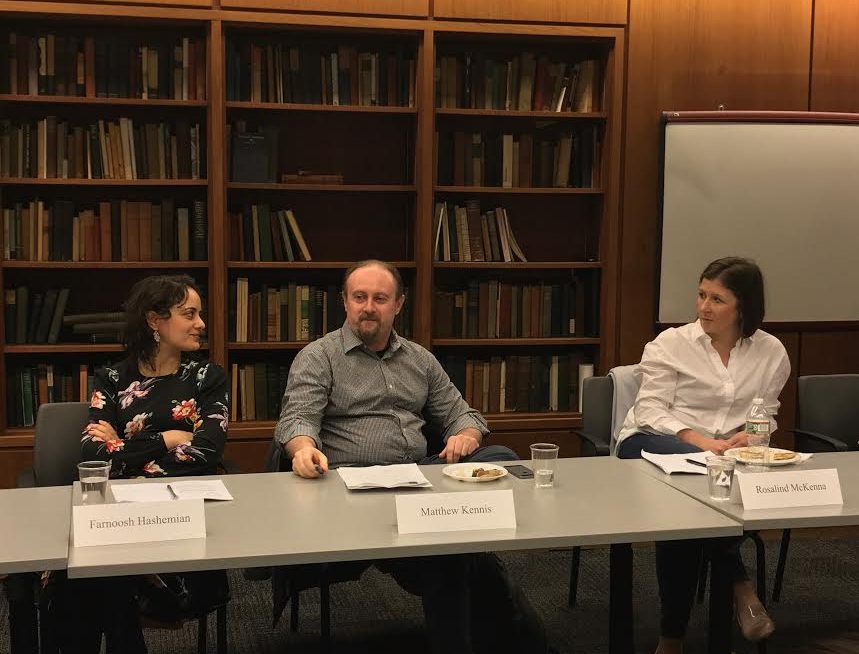
By Rowena Kosher, a blog writer for RightsViews and a student in the School of General Studies at Columbia University The Institute for the Study of Human Rights held its annual human rights career panel last month, offering students the chance to hear from individuals in a variety of human rights careers. The panel was an opportunity for future practitioners to gain insight into human rights in action outside of academic study at Columbia University. The undergraduate and graduate students who attended the event held at Columbia's International Affairs Building posed questions about their professional futures in human rights. The panelists, all career veterans in the field, helped answer student concerns by sharing stories about their career paths, their experiences, and other practical advice. What are the most rewarding parts of a career in human rights, and what are the challenges? The panelists agreed that the human rights field can be complicated and frustrating at times. Victories don’t always happen, but it is important to be...
Read More
Careers in Human Rights: Insights From the Field

Careers in Human Rights: Insights From the Field

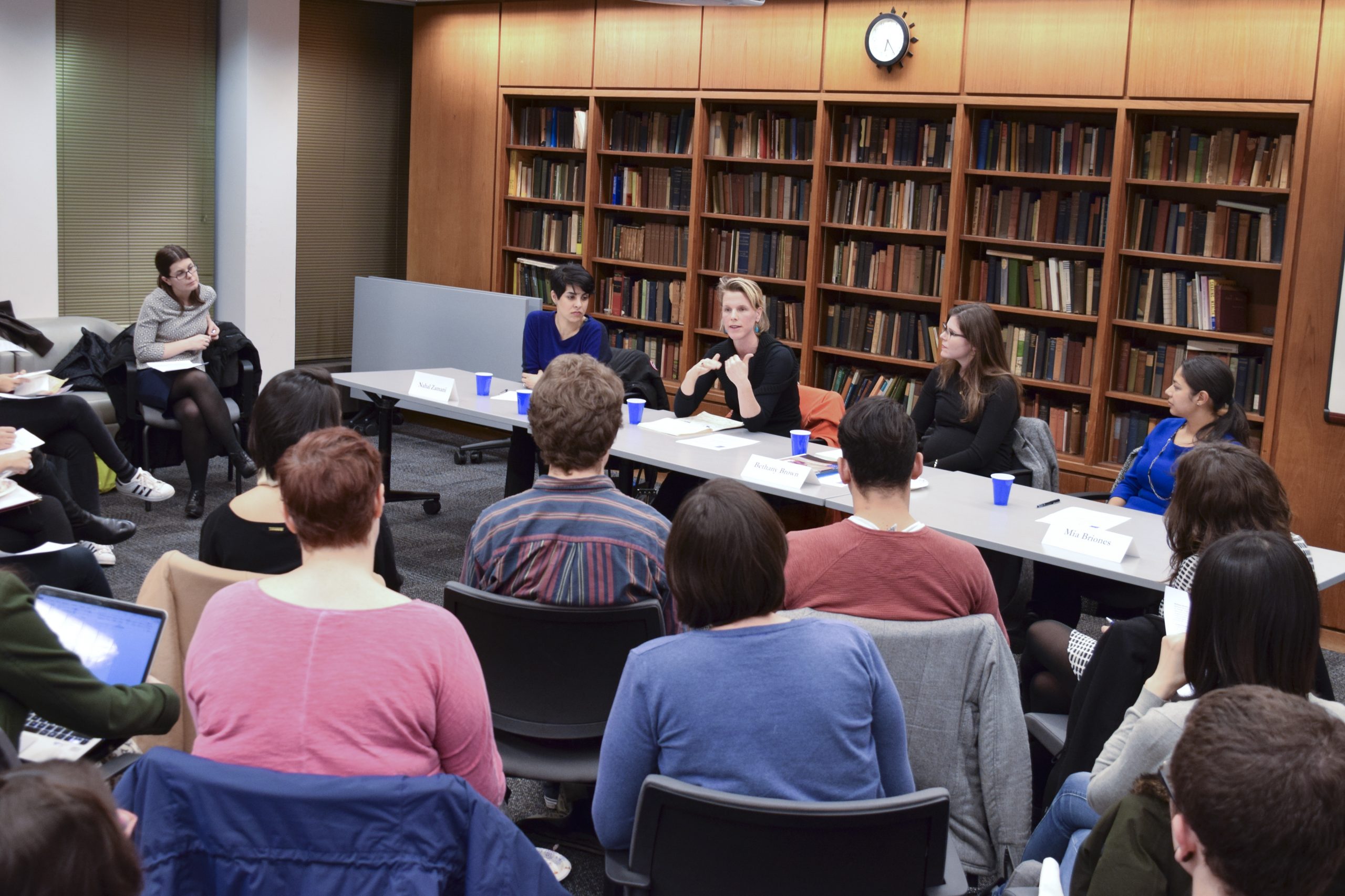
By Bárbara Matias, an M.A. student in human rights Amid a tense political climate and growing importance of the human rights field, the Institute for the Study of Human Rights annual Career Panel came at a particularly conducive time. On February 21st, an ensemble of undergraduate, graduate and prospective students gathered to discuss topics ranging from the professional opportunities available to human rights students to the skills, credentials, and experiences most valued by organizations. As acknowledged by faculty and students alike, human rights does not always present an obvious career path, which was why hearing from experts in diverse fields within this realm proved opportune. This year’s panel welcomed four experts working at intergovernmental organizations, NGOs and not-for-profit organizations: Mia Briones, a leadership gifts officer at the International Rescue Committee (IRC); Bethany Brown, a researcher at the Health and Human Rights Division at Human Rights Watch; Emilie Filmer-Wilson, a Global Human Rights adviser at the United Nations Population Fund (UNFPA); and Nahal Zamani, an...
Read More