
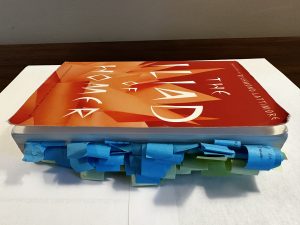
My freshman-year copy of The Iliad, complete with my overzealous annotations (credit: Sarah Bryden)
As the fall semester approaches, first-years across campus are engaged– excitedly, nervously, or maybe even frantically– in the hallowed Columbia tradition of reading the first six books of The Iliad. SparkNotes has been consulted, copious amounts of highlighter have been applied, and complaints have been fired off between new friends. Anticipation is high, but so are nerves– a canon experience, if you will.
If your experience with this reading assignment has been anything like mine, you may be worrying this very minute about how little sense The Iliad makes, and how despite your diligent annotations you failed to realize that Chryses and Chryseis are two different people. You may be wondering how you will ever have the time, patience, and stamina to endure two full semesters of readings like this; you may even be despairing of the value of the Core, and wondering how you can outsource future readings. The message of this blog post is: don’t panic! You will survive the Core reading lists, and it will be worth it.
In CC, Lit Hum, and as a Peer Academic Skills Consultant at the CSA, I’ve heard the gamut of reading-related complaints, frustrations, and challenges. These are dense and intimidating texts, and it’s completely normal to feel some anxiety towards them. But the Core texts are also rich, complex, and as previous Rose Research Ambassadors have noted, more relevant to our emerging self-conceptions than we may expect. In my own seminar experiences, Core readings have helped me connect with classmates from around the world, and with my professors (who are experts in their fields, and can offer surprising insights). My history and linguistics coursework frequently calls upon the Core as a foundation, and I’ve used Core readings to contextualize my visits to cities, museums, and art galleries around the world. In other words, although they are difficult, and although the idea of a “Western canon” is fraught with controversy, these texts are worth your time.
To conclude, I want to offer some practical suggestions for making sense of your Core reading list. First, annotate! Don’t be afraid to engage directly with the text, even if your annotations seem superficial or unoriginal. Simply writing your reactions into the margins can be a great way to aid your own memory, and spark discussion in seminar. Second, make use of secondary resources– such as your classmates, your professor, and reference material like Wikipedia or SparkNotes– to gauge your reading comprehension. Talk about the text with others, ask clarifying questions, and prioritize understanding the plot or argument (even if that feels a bit elementary). Third, try to take some pressure off of yourself. The Core texts may be “masterpieces” that scholars devote entire careers to, but you are not being asked to out-perform them, or to join their ranks. We have a lifetime to read, understand, and reflect on these texts– the Core is just a way of setting the foundation.
As the first Lit Hum and CC seminars get underway for the year, I wish you all luck, and urge you to remember the benefits (and feasibility) of reading these texts. At the very least, you can impress people one day in a museum, or when the movie adaptation of The Odyssey comes to theaters next year.
Sarah Bryden CC’26