
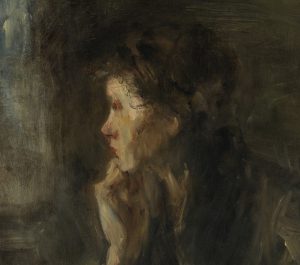
Meditation, Josef Israëls. Photo credit: Rijksmuseum
I often play one song on loop, over and over again—there’s something about a little instrumental detail that can hook me. Same goes for other media. Certain paragraphs in books, photographs in my camera roll or pasted on my wall, and scenes or lines from movies make me pause whenever I experience them. This is a kind of organic distraction: aesthetic things take me out of the stream of my continuous life and let me sit in some different place for a moment.
It’s a nice reprieve from the noise of the city and college. But it can sometimes be a bit too distracting. Ruminating over single pieces of art can take me away from the day and make my tasks a little more difficult to focus on.
Social media usually makes things worse. Rather than a natural fixation on media that merits some appreciation, social media involves a purposeful curation of images that veil lived reality with split-second snapshots of joy, excitement, and adventure.
With the tendency to fixate and that social impulse combined, we effectively become the artists of our own lives, creating media for others to consume. That might sound kind of romantic or interesting, but it’s also dangerous. Being constantly aware of how to make our day-to-day life photogenic can distract us from the things that might actually make us happy.
Granted, being in college certainly gives us a unique opportunity to put things on display. The friends I’ve made, the places I’ve been, the interesting things I’ve done—I have an urge to show it all. But college is not about display. It’s about development. As parents will say, this is our time to figure out who we are. A professor might put it differently: this is when we get to cultivate a “self.”
That’s a vague word, for sure. But simply by living on our own, we have started to cultivate a self: being responsible for our own grades and relationships, feeding ourselves, and paying closer attention to finances are examples of the ways we are thrown into the deep end of adulthood. But there’s more to this cultivation than bare necessity. We must also develop a set of ideas that informs how and why we live our lives. You could call this taste, preference, or belief. Whatever it is, this is the intellectual side of self-creation.
Columbia’s unique contribution to intellectual development is the Core. We are all given exposure to some of the most sensitive and engaging minds in written history. Plato and Descartes can certainly teach us something. But exactly what they can teach us is not always obvious. And that’s because the relation between the knowledge we acquire and the self we create is not direct. Plato’s points about the Kallipolis don’t seem to apply that much to my life in New York City. And how should we read the Quran or the Old Testament if we don’t believe in a deity?
These problems might explain how Lit Hum and CC, which deal with some of the most enduring questions of our species, can sometimes come off as our least relevant classes. We’ll miss the impact of great ideas if we choose not to step out of our immediate world to try and understand them. It’s tempting to feel that whatever Socrates had to say about justice is outdated or irrelevant to me because I have a bunch of things to worry about today that are more important. But what serves me in this moment is not the same thing that serves me as a person who will live for decades to come. For that second part of me, the part who won’t always be twenty-one years old, the subtleties of good ideas will sink in and become invaluable resources for the way I think and the way I live. That’s the hope, at least.
I’m not really trying to suggest anything new. I’m only here to reassure you that the tools you need to become a more complete you are within reach. Read the books, yes. But it’s not just about becoming erudite and collecting ideas in a pile. It’s about reconsidering the beliefs you take for granted, and it’s also about examining others’ ideas under the light of your own experience. Maybe you’ll keep to your convictions, or maybe the light will change.
Josh Martin CC’25