Why the UNHCR Needs to Bring a Policy Change to Help Displaced Afghans

Why the UNHCR Needs to Bring a Policy Change to Help Displaced Afghans

By Guest Writer Mohammad Zayaan On September 15, 2021, after a hostile takeover, the Taliban took control of Afghanistan, leading to one of the worst humanitarian crises the world has witnessed. Thousands of Afghans were displaced from the country and forced to move to different parts of the world to avoid persecution. As a result, some countries developed specific policies, after this unprecedented increase in the refugee influx, some guaranteeing safe haven while others are refusing to accept them.  This article discusses a specific policy change that the UNHCR could bring to help people from Afghanistan who had migrated before September and whose application for refugee status had been rejected by the UNHCR. Apart from a country’s own refugee policy, the UNHCR has a separate mechanism called Refugee Status Determination (RSD) to identify and recognize refugees. This mechanism is based on the Refugee Convention, 1951, the Protocol Related To The Status Of Refugees(1967), and the principle of non-refoulement. It is also used...
Read More
Art in Time of War: Celebrating the Resilience of Ukrainian Culture

Art in Time of War: Celebrating the Resilience of Ukrainian Culture

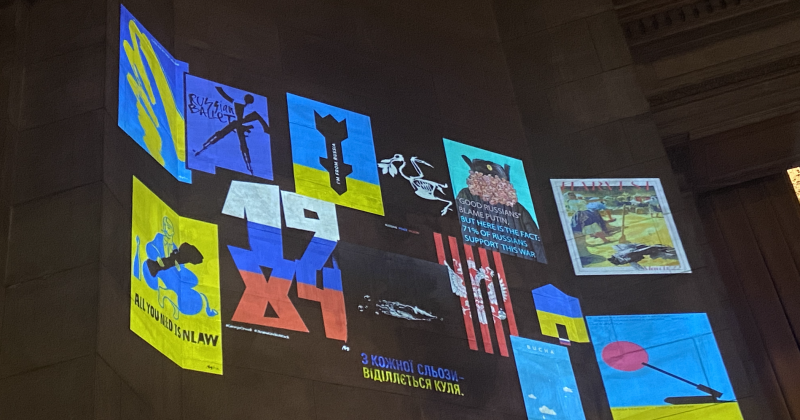
By Guest Writer Emma McDonnell Art is a means to document, a means to capture emotions, feelings, and history. Art has the capacity to chronicle and tell the story of a bygone era—to depict events and places which the world no longer knows of. And ultimately, art is a marker of the past, present, and future. As such, it ties us to periods and moments–persevering through devastating and disastrous times such as war and conflict.  Hosted by the Harriman Institute together with the President’s Office of Columbia University, Art in Time of War: Celebrating the Resilience of Ukrainian Culture celebrated the strength and talent of Ukrainian culture through a variety of artistic mediums. The event combined music, poetry, film, art, and conversation to showcase Ukrainian creativity and artistic talent.  The event began with opening remarks from the Director of the Harriman Institute, Valentina Izmirlieva, followed by remarks from the Executive Vice President for Columbia Global, Waffaa El-Sadr. Both highlighted what a unique, monumental,...
Read More
Social Norms Constraining Legal Provisions: Coparcenary Rights of Indian Daughters

Social Norms Constraining Legal Provisions: Coparcenary Rights of Indian Daughters

By Guest Writer Prasun Nabiyal The Hindu Succession Act (Amendment) of 2005 placed Hindu daughters on an equal footing with sons by giving them coparcenary rights over their father’s ancestral property. Coparcenary rights are a bundle of property rights shared among joint-heirs. According to N.R. Raghavchariar’s “Hindu Law Principles and Precedents”, this includes rights such as right to joint-possession and right to demand partition. Prior to the 2005 amendment, these rights were the exclusive domain of Hindu sons. The amendment thus marked a watershed moment, moving away from the gender-discriminating Hindu Succession Act of 1956. Last year, the Supreme Court of India, in the same tradition, held that Hindu daughters can inherit both self-acquired-property and coparcenary property.  However, despite these progressive developments in the legal realm, the societal perception towards the issue of Hindu women possessing property rights persists. The mainstream view continues to believe that only sons, not daughters, have coparcenary rights. Thus, the exercise of these rights by daughters is...
Read More

Forced Evictions and Bulldozer Demolitions: Crushing Human Rights under the Rubble

By Guest Writer Ketan Aggarwal “My parents were sleeping inside the house. They demolished the house without informing us and set it on fire. I somehow managed to come out of the house. The policemen caught me and beat me up. They were trying to push me inside the burning house. My father was severely burnt, while my mother and sister died in the fire.”  These were the words of Shivam, whose house was demolished during an anti-encroachment drive in the Kanpur Dehat district of Uttar Pradesh this month. This disturbing incident is not an isolated case of what has been termed "Bulldozer Justice." Similar incidents of forced evictions and demolitions have occurred in other parts of India, including Delhi and Madhya Pradesh. Many political parties, NGO & human rights groups like Al Jazeera have criticized these actions, which disproportionately target marginalized and minority communities, as a form of extrajudicial punishment. The use of bulldozers to demolish homes and businesses has become increasingly prevalent...
Read More
A Long Road to Fulfilling the Rights of Indonesian Domestic Workers:   One Step Forward for Ratifying the Domestic Workers Protection Bill?

A Long Road to Fulfilling the Rights of Indonesian Domestic Workers: One Step Forward for Ratifying the Domestic Workers Protection Bill?

By Guest Writers Desi Yunitasari and Devi Yusvitasari  Introduction With a population totaling around 260 million individuals, Indonesia is the fourth-largest country in terms of population size. This has contributed to the surplus of workers in Indonesia. Domestic workers are a fundamental part of the movement of the activities of millions of households in line with the increasing demand for the needs of families in urban and rural areas to do household work such as care and maintenance-and household services. Indonesia not only employs millions of domestic workers but supplies them in large numbers to Malaysia, Singapore, Hong Kong, Taiwan, Korea and Middle Eastern countries. Domestic workers indirectly affect national economic growth, as the wages they send home contribute to the country's foreign exchange earnings. The International Labour Organization (ILO) estimated that 80 percent of all domestic workers are women, while underage female workers make up 30% of the workforce. Most of these women and girls are breadwinners for their families. Moreover,...
Read More

Disenfranchisement of Prisoners in India: Representation or Repression of the People?

By Guest Writer Avanti Deshpande Introduction Free and fair elections underpinned by the universal adult franchise are undoubtedly the cornerstone of a democratic state in today’s standards. Yet, while most democratic countries acknowledge the importance of voting rights, voter suppression and voter disenfranchisement are not new problems and have long been plaguing democracies. Indian law places a blanket ban on voting for all prisoners; i.e., not only convicts but under-trial prisoners whose innocence or guilt is yet to be proven conclusively in a court of law. With no exception, reasoning, or rationale being provided under law for denying prisoners the right to vote, this piece will attempt to critically engage with the issue of the disqualification of prisoners from voting in elections and argue that it is fundamentally unconstitutional and violative of the basic tenets of a democratic state. Overview of the Present Legal Framework The issue of the disenfranchisement of prisoners in India stems from Section 62(5) of the Representation of the People Act,...
Read More
A Life and Legacy, Unmatched: Remembering the Activism of Lois Curtis

A Life and Legacy, Unmatched: Remembering the Activism of Lois Curtis

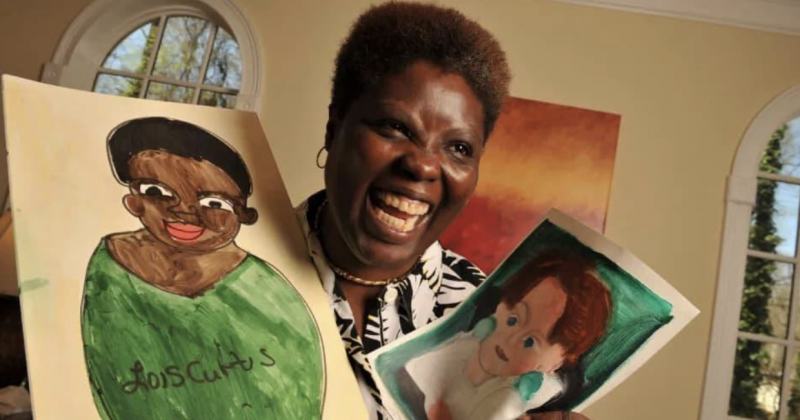
By Co-Editor Jess Gallagher   “Nobody’s free until we are all free.”  These are the words of Lois Curtis, the woman whose case determined the most influential court decision for people with disabilities in history. Ms. Curtis served as one of the plaintiffs in the landmark Supreme Court case, Olmstead v. L.C. (1999), which established the right of people with disabilities to live in the least restrictive settings possible under the Americans with Disabilities Act (ADA).  As the Disability Community mourns the loss of one of the nation’s greatest advocates, we reflect on her efforts to achieve justice for all. Her work secured the right of millions of people with disabilities to live within their own communities and away from the forced institutionalization that she faced throughout her life. Growing up in Atlanta, GA., Ms. Curtis was diagnosed with intellectual and developmental disabilities as a child and, due to a lack of support services for her family, she often wandered away from home. Missing person...
Read More

Words, Words, Words: Language Pedagogy and Social Justice Virtual Event Coverage

By Staff Writer Carina Goebelbecker How can words, language, grammar, and narrative be used in the fight for social justice? The Columbia University Society of Fellows and Heyman Center for the Humanities’ Language Pedagogy and Social Justice virtual event on May 11th explored the previous question. The roundtable discussion highlighted perspectives from language educators, featuring: moderator David Borgonjon (Public Humanities Fellow and PhD Candidate in EALAC, Columbia University) Maya Krinsky (Associate Director of Multilingual Education, Rhode Island School of Design), João Nemi Neto (Senior Lecturer in LAIC, Columbia University), Karim ElHaies (Worker-Owner, Algarabía Language Co-op), Aldo Ulisses Reséndiz Ramírez (Worker-Owner, Algarabía Language Co-op), and Pamela Rose (Mandarin Educator).  Each panel member reflected on their own teaching practice and how language pedagogy can be taught with a focus on social justice. Social justice themes and conversations are typically labeled as “advanced” in the language classroom. However, these topics are present within each unit of study, and denying this fact can perpetuate harm and...
Read More
The Right to Healthcare for LGBTQIA Indians: A Relentless Fight towards Equality

The Right to Healthcare for LGBTQIA Indians: A Relentless Fight towards Equality

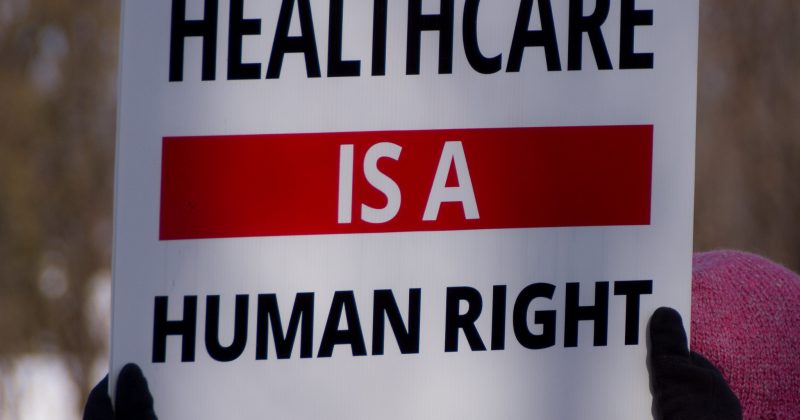
By Guest Writers Srushti S Kekre* and Udisha Surana**   Of all forms of inequality, ‘injustice in healthcare’ is the most shocking and inhumane. -Martin Luther King Jr.   Since time immemorial, the LGBTQIA community has been subjected to regressive and dehumanizing practices. Pervasive intolerance and prejudice has forced them to live on the margins of society and fight for something as indispensable as healthcare. The Indian healthcare system has historically functioned around a heteronormative mindset, actively dismissing the interests of people with gender diverse identities. Yet Article 14 of the Constitution of India guarantees protection against any discrimination on the basis of caste, race, gender and religion. Meanwhile, the Indian Supreme Court, in the landmark case of L.I.C of India v. Consumer Education and Research Centre, expressly applied the principles of equality to eliminate any form of discrimination and protect the right to health and adequate healthcare facilities.  Lamentably, bigotry has progressed to an extent where, throughout the Covid-19 global pandemic, the LGBTQIA community was intentionally...
Read More
What the Hazaras in Afghanistan Need From All of Us

What the Hazaras in Afghanistan Need From All of Us

By Guest Contributor Farid Noori. On September 30, 2022, 18-year-old Marzia Mohammadi started somewhat of a different day. A special day, some might say. She was going to take the practice version of Afghanistan’s national university entrance exam in a country where schools are closed for girls past sixth grade. Smart, beautiful, and ambitious, Marzia kept a diary in which she wrote lofty dreams like one day meeting in Paris her favorite author, Elif Shafak, and going for a bike ride. Her entry on September 22 reads:  “When national results are out, Marzia, daughter of Bostan Ali, will score in the top 10.” Eight days later, while preparing for that same exam, instead of showing the world her talent and grit, Marzia was torn to pieces. A suicide bomber entered the classroom and detonated himself among the students killing Marzia, her cousin Hajar, and 55 other students. Besides being mostly girls, the victims shared another identity: all were Hazara, an ethnicity heir...
Read More