The Future of Human Rights: Interview with ISHR alum, Bárbara Matias

The Future of Human Rights: Interview with ISHR alum, Bárbara Matias

By Anna Miller, RightsViews co-editor and graduate student in the human rights M.A. program. This spring, the Institute for the Study of Human Rights had the opportunity to connect with a graduate of the program who has endeavored on a remarkable career. Read on to learn more about international professional Bárbara Matias, and her career that spans across countries, cultures, and job sectors.  Please introduce yourself, your relation to Columbia University, and ISHR.  My name is Bárbara Matias, I am a professional in the field of international affairs who identifies as both a citizen of Portugal and of the European Union on top of a global human rights advocate, and I am a proud Columbia University alum. I moved to New York in 2016 to undertake a graduate degree in Human Rights Studies at Columbia University’s Institute for the Study of Human Rights (ISHR), as a Fulbright Scholar. Throughout my Master’s degree I was a Teaching Assistant for the undergraduate Introduction to Human Rights...
Read More
COVID-19 in India: Violation of the Right to Health and the Collapse of Healthcare Infrastructure

COVID-19 in India: Violation of the Right to Health and the Collapse of Healthcare Infrastructure

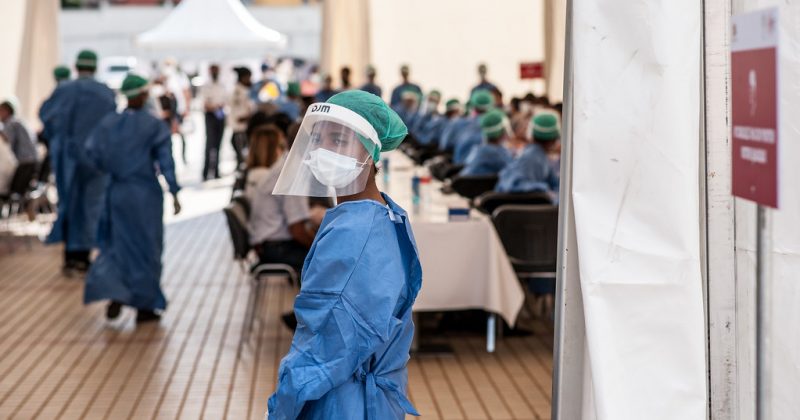
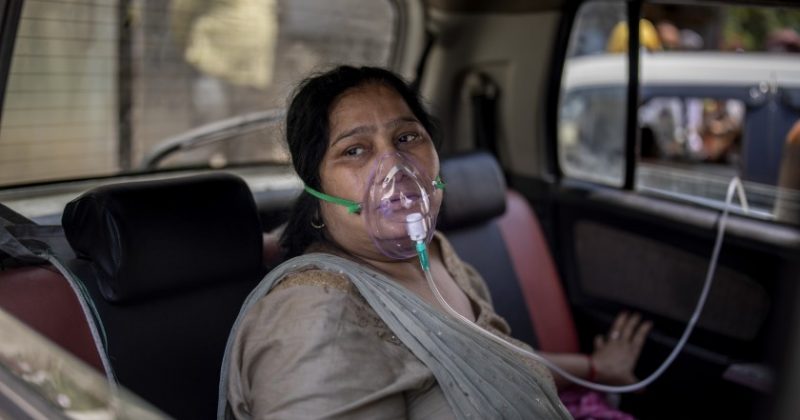
By guest contributor, Ayush Kumar is a law student at Dr. Ram Manohar Lohiya National Law University, India.   On the 13th of March, as a gesture of accountability, Jordan’s health minister resigned after six Covid-19 patients died due to lack of oxygen at a hospital ward. Accountability is the linchpin of a functional democracy as it compels a State to explain what it is doing and how it is moving forward in times of crisis. In the past few weeks, India has faced a massive oxygen shortage as the healthcare infrastructure collapsed like a house of cards due to exponentially rising cases of  Covid-19. Alone in the capital city, twenty-five patients died due to the shortage of oxygen on 24th April. The government’s inadequacy in providing healthcare facilities to its people is a serious violation of their human right to health. Patna High Court’s division bench expressed strong displeasure over the deaths due to oxygen shortage and further stated that lack of adequate...
Read More
Macron, Laïcité, and a Fight for the Rights of French Muslims

Macron, Laïcité, and a Fight for the Rights of French Muslims

By Lindsey Alpaugh, staff writer, RightsViews, Human Rights MA student.   French Muslims and French Electoral Politics France is stomping on the freedom of religious expression of its Muslim population. This spring and winter have seen a slew of anti-Muslim legislation in France, with some political commentators believing these measures come in advance of a right-wing-oriented election in 2022.  On December 2nd, 2020 the Council of Ministers announced that it was dissolving the Collective against Islamophobia in France (CCIF). The CCIF was founded in 2003 to fight discrimination against Muslims in France, and to provide legal aid to those fighting discrimination cases. Criticizing this decision, Human Rights Watch stated that “under international and European human rights law, states can only restrict the rights to freedom of association, freedom of religion and belief, and freedom of expression in a way that is lawful, necessary, and proportionate. Dissolving associations under international human rights law should be a measure of last resort taken because an association advocates...
Read More
Rerouted, Rerooted: Oral Histories of Syrian-Armenian Refugees

Rerouted, Rerooted: Oral Histories of Syrian-Armenian Refugees

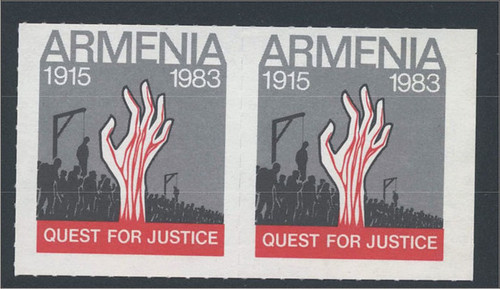
By Larissa Peltola, Editor, RightsViews.   The Armenian Genocide, which took place 106 years ago, today, claimed the lives of an estimated 1.5 million Armenians. While people around the world are now more aware of what occurred in 1915, following a global push for recognition of the genocide, few are aware of the lasting implications of the genocide which have carried on to this day. HRSMA alumna Anoush Baghdassarian (‘19) and Pomona College graduate Ani Schug (‘17) have undertaken the important and necessary work of collecting the oral histories of Syrian-Armenian refugees - the descendants of genocide survivors - to keep the memories of those who have perished alive. What was the Armenian Genocide?  Raphael Lemkin, the Polish-Jewish lawyer who coined the term genocide, was moved to do so after hearing about the systematic annihilation of Armenians in the Ottoman Empire in 1915. Before WWI, Armenians - in what is now Turkey - totaled over two million. But by 1922, there were fewer than...
Read More
ISHR’s 2021 Human Rights Career Panel: Pursuing a Human Rights Career During and After a Pandemic

ISHR’s 2021 Human Rights Career Panel: Pursuing a Human Rights Career During and After a Pandemic

By Anna Miller, RightsViews co-editor and graduate student in the human rights M.A. program. On March 24, 2021 Gergana Halpern and Monica Olveira hosted the Institute for the Study of Human Rights Annual Career Panel. Since the global community has been living through the COVID-19 pandemic for more than one year now, some wonder if there are still job opportunities for students interested in human rights careers. Human rights professionals say yes - perhaps now more than ever before.  Meet the Panelists  Rebecca Brown is the Senior Director of Global Advocacy at the Center for Reproductive Rights. Before joining the Center, Rebecca was Deputy Director of the International Network for Economic, Social and Cultural Rights (ESCR-Net), where she oversaw the organization’s program work and coordinated the Women and ESCR Working Group. Rebecca has published numerous pieces on reproductive rights, equality rights, economic, social, and cultural rights, and disability. Ryan Heman is Senior Manager of Forced Labor & Human Trafficking at Humanity United, and supports...
Read More
The Neoliberalization of Academia: Why the Columbia University Graduate Workers Strike is a Human Rights Imperative

The Neoliberalization of Academia: Why the Columbia University Graduate Workers Strike is a Human Rights Imperative

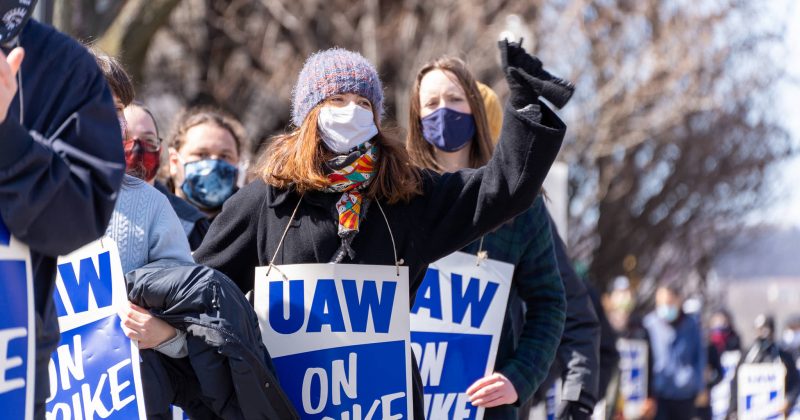
By Noah Smith, RightsViews staff writer and a graduate student in the human rights MA program. The opinions expressed in this article are Noah’s own and are not representative of the Institute for the Study of Human Rights (ISHR) or Columbia University.  Thousands of graduate students and student workers at Columbia University began striking on March 15, 2021 after many stalled negotiations with school administrators. A strong majority of student workers, 96%, voted  yes to authorize a strike and with a  deadline of March 15, 2021. The Graduate Workers of Columbia University (GWC) and all those in solidarity call on the university to agree to a fair contract. According to GWC bargaining committee members, the strike is a last resort after years of unsuccessful negotiations with university representatives, and assert that withholding their labor is the final means of forcing the university to recognize their demands. Columbia University has had a long and tumultuous history in regards to treating graduate workers as employees....
Read More
COVID-19 in Africa: Responses and Prospect for Recovery

COVID-19 in Africa: Responses and Prospect for Recovery

By Lindsey Alpaugh, staff writer, RightsViews, Human Rights MA student.  On Wednesday, January 27th, Columbia University held an event examining the impact of COVID-19 on the African continent. Panelists included Belinda Archibong, an Assistant Professor of Economics at Barnard College, Pedro Conceicao, the director of the Human Development Report Office and lead author of the Human Development Report, UNDP HDR office, and Dr. Wilmot James, Senior Research Scholar in the Institute for Social and Economic Research Policy. This event followed a series in the fall looking at COVID-19 in Latin America and was sponsored by the Economic and Political Development concentration at SIPA, the Institute for African Studies at Columbia University, Center for Development Economics and Policy, and SIPA Pan-African Network. African countries were able to have a significantly smaller first wave than predicted due to the dramatic measures that countries took to prevent the spread, such as closing schools and limiting travel. While this had a very successful impact on combatting the...
Read More
Myanmar’s Coup: Unearthing its Constitutional Roots

Myanmar’s Coup: Unearthing its Constitutional Roots

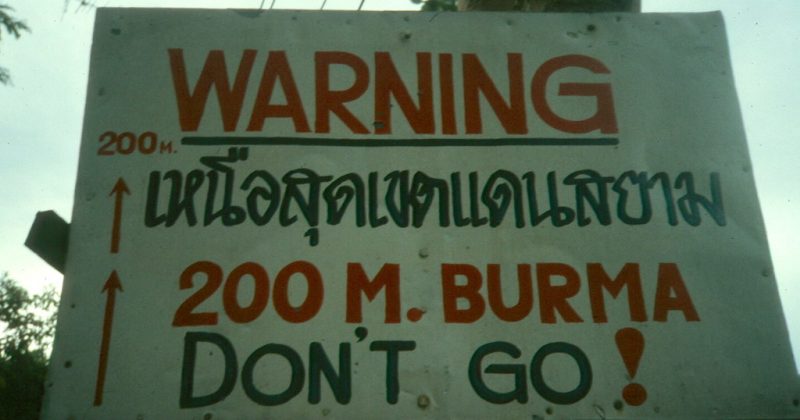
By guest contributors Namrata Rawat* and Rishav Devrani.* February 1, 2021, the world witnessed Myanmar succumbing to a military coup after a 5-year run of a democratically elected government. The coup happened on account of alleged fraud in the 2020 elections wherein the National League for Democracy (NLD) Party, headed by Aung San Suu Kyi saw a landslide victory with 83% votes in its favour. Myanmar, currently under a year-long state of emergency, would be under military rule. The coup d’état has been condemned by countries and international organisations across the globe, who have called it a serious blow to democratic reforms. However, this state of events is not unprecedented, a similar narrative presided over the 1990 election as well. The imposed state of emergency is provided for under Section 417 of the Constitution of Myanmar. It becomes pertinent to discuss this as a military rule can have unavoidable violations of human rights across the country. In this article, the authors...
Read More
Making a Statement: Whose Land Are You On?

Making a Statement: Whose Land Are You On?

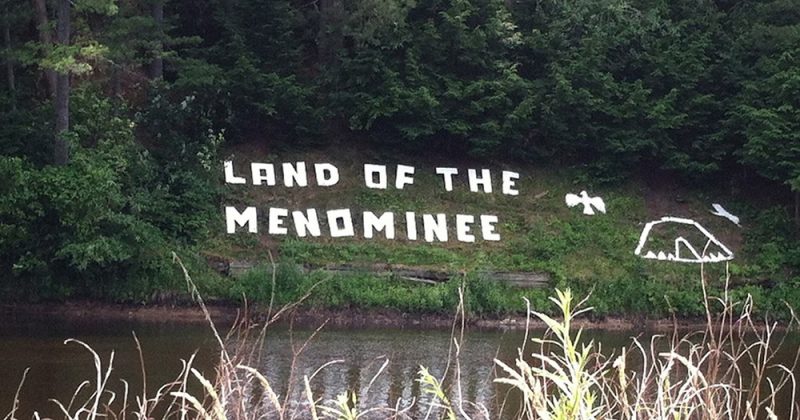
By guest contributor Ruthie Tucker* It is becoming trendy for institutions of higher education to recognize Indigenous land by issuing a “land acknowledgment statement” (LAS). Typically, a team of faculty and staff begins by researching the history of the ancestral land of the Indigenous Nation occupied by the institution. From there, the group crafts a statement that honors the ancestral land of the Indigenous Nation. Many national organizations provide models and suggestions for such statements, and it is common for colleges and universities to look to each other for wording. The institution will usually post the LAS on its website, and the LAS may make its way onto class syllabi, might be read at some campus events, and one might find the odd poster about it here and there on campus. These are all good things. My institution, St. Norbert College, is located on the ancestral land of the Menominee people. As a member of the Menominee Nation, I can’t help...
Read More
Brexit and its International Implications on Religious Communities in the United Kingdom

Brexit and its International Implications on Religious Communities in the United Kingdom

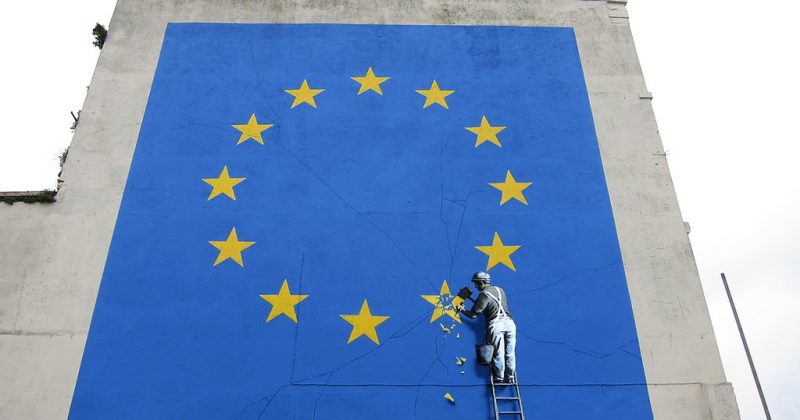
By guest contributor Dr. Ozgur H. Cinar.* The United Kingdom (UK) is frequently on the international agenda on account of Brexit. Finally, the European Union (EU)-UK Trade Agreement was signed on 31 December 2020. It came into force on 1 January 2021. Although the debate over the political, economic, social and cultural effects of Brexit continues to rage, its effects on the religious communities has not been explored. In particular, when considering the rise in hate crime following the EU Referendum of 23 June 2016, especially religious communities are wondering what is happening to the British lifestyle, traditionally founded as it is on tolerance and pluralism.  In a cosmopolitan country such as the UK where there are people of many different nations and beliefs, it is necessary for the state to take an active role in safeguarding. This freedom has a significant place in human rights in regard to the shaping of individual and social identity by enabling individuals to act in...
Read More