
Hungarian Curtailment of LGBTQ Rights: A Critical Analysis

Hungarian Curtailment of LGBTQ Rights: A Critical Analysis

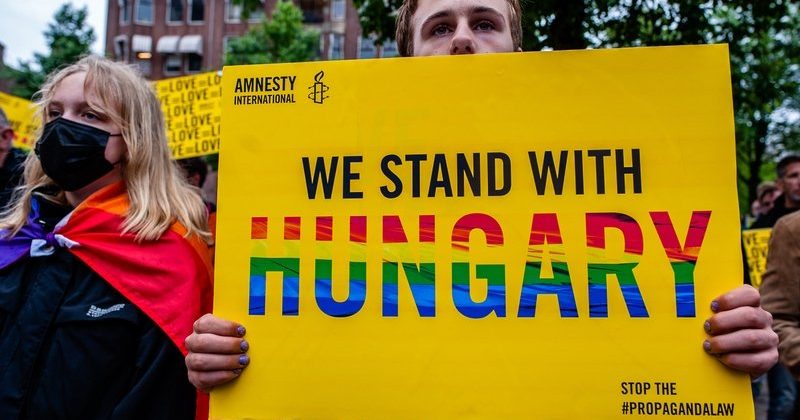
By guest contributor, Akshita Tiwary* Recently, Hungary has been in the news for adopting a slew of legislation in the past year that severely curbs the rights of the LGBTQ community. The Prime Minister of the country, Mr. Viktor Orban, and his right-wing political party ‘Fidesz’ have been accused of eroding democracy on several fronts, including attacking LGBTQ rights. This article aims to discuss three of these legislations and highlight how these laws contradict Hungary’s own Constitution and violate international human rights legal standards. Further, it also sheds light on certain legal precedents and measures that can be helpful in tackling this issue. THE CONTROVERSIAL LAWS On June 15, 2021, the National Assembly of Hungary passed Bill Number T/16365. This law prohibits children under 18 years of age from being exposed to any content (educational or otherwise) that promotes an understanding of sexual and gender diversity. This bill forms part of a broader law that seeks to restrict pedophilia and sexual crimes against...
Read More
Violation of International Laws and Women’s Rights: Afghanistan, the Taliban, and the Price of Peace

Violation of International Laws and Women’s Rights: Afghanistan, the Taliban, and the Price of Peace

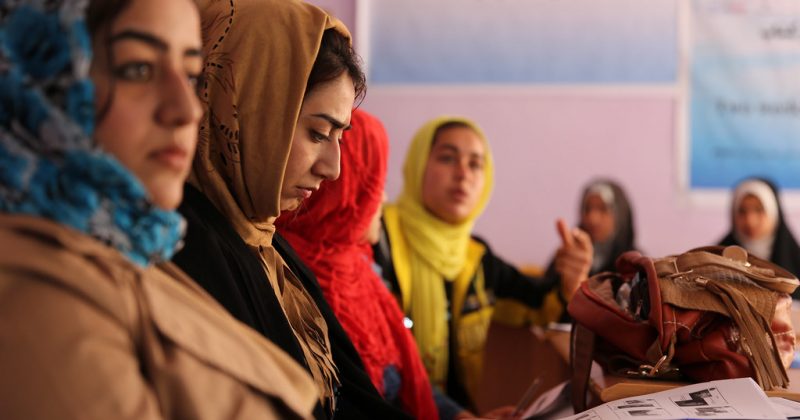
By guest contributor Shelal Lodhi Rajput, a student at Symbiosis Law School.  Uncertain certainties: An eclipse on human rights A country torn apart by war, a country that has seen 40 years of war, a country often referred to as ‘graveyard of empires,’ a country with the shattered dream of peace and a country with a million dollar question i.e., ‘Will the war ever end’? The country is Afghanistan, where things are going from bad to worse with the withdrawal of United States Combat troops. Once again history is repeating itself as the return of the Taliban spell suggests an end to civil liberty, basic human rights, prominently rights of women, and once again the regime of Talibanned as it existed in Afghanistan from 1996-2001. Previously, the Taliban regime banned several innocuous activities including kite flying, makeup artists and musicians. The Taliban’s return to power is evident with every passing day, their insurgencies are increasing day by day and with the alarming rate...
Read More
Milieudefensie v. Shell: Anchoring Corporate Human Rights Obligation in Indian Jurisprudence

Milieudefensie v. Shell: Anchoring Corporate Human Rights Obligation in Indian Jurisprudence

By guest contributors Swetha Somu and Sanigdh Budhia, students at Gujarat National Law University.  INTRODUCTION The recent case of Milieudefensie et al. v Royal Dutch Shell has shifted the focus back to the dilemma of whether private corporations are outrightly liable for infringing human rights, as defined under the international laws and treaties, or whether only the state is liable for the actions of private corporations under its jurisdiction. The Hague District Court, in this case, ordered a private company, Royal Dutch Shell (RDS), to decrease its net emissions by 45%, in relation to the 2019 levels, by 2030 in line with the Paris Agreement.  Generally, states are held accountable for any violation of private corporations as corporations  aren’t recognized as legal subjects. However, there’s a recent shift in the view that corporations are also subjects of international law since they are also contributors to it, even though there is no “hard” law in the form of treaties or conventions that legally bind...
Read More
Plight of Sex Workers During COVID-19: A South Asian Perspective

Plight of Sex Workers During COVID-19: A South Asian Perspective

By Atika Chaturvedi, a third year law student at National University of Study and Research in Law at Ranchi, India.  As the world came to a standstill, the shock of the lockdown rippled through the various strata of society. The proliferation of COVID-19 in 2020 left the daily wage earners around the world scraping for money and struggling for survival. One such group was sex workers. Albeit, various South Asian governments formulated covid-relief packages, most of them left out sex workers out of the ambit of such packages. Article 1 of the Universal Declaration of Human Rights, which affirms that all human beings are born free and equal in dignity and rights, and Article 3, that guarantees everyone the right to life, liberty and security of person, were denied to the sex workers as they were not only curtailed from earning their livelihood, but were also rendered ineligible for the relief packages. They were stripped off of the chance of continuing...
Read More
Amnesty Philippines: Promoting Corporate Accountability and Indigenous Women’s Rights through Human Rights Education

Amnesty Philippines: Promoting Corporate Accountability and Indigenous Women’s Rights through Human Rights Education

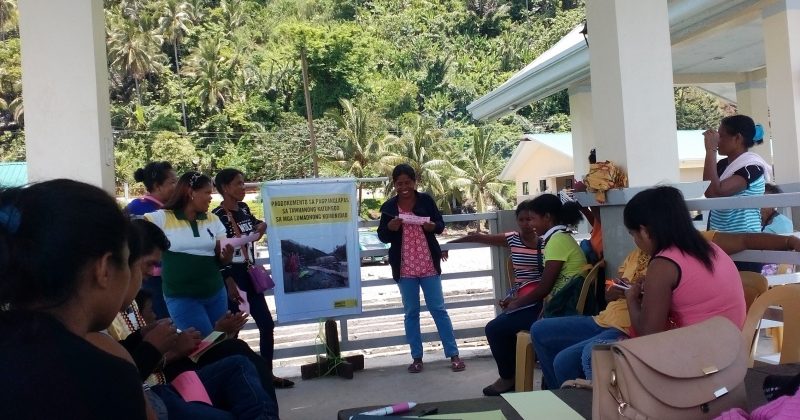
By Noah Smith, RightsViews staff writer. Promoting Corporate Accountability and Indigenous Women’s Rights was a five-year project implemented by Amnesty International (Amnesty) Philippines under the larger global Education, Empowerment, Justice (EEJ) Program, which ran from 2013 to December 2017. The EEJ program was coordinated by Amnesty Norway with the goal of reinforcing basic human rights of people across the world and contributing to greater justice for thousands of human beings through human rights education and empowerment initiatives. Since its inception in 2013, the project distinguished itself in such a way by coalescing women’s empowerment within a framework of corporate accountability; courageous in its attempts to change the balance of power in three exceedingly patriarchal indigenous communities; and undaunted in targeting governance structures to perform their state obligations to protect, respect, and fulfill indigenous communities’ rights.  The project was implemented in the Caraga Region which is an administrative region in the Philippines occupying the northeastern section of the island of Mindanao. It is...
Read More
The U.S.-EU Summit: Next Steps for Human Rights

The U.S.-EU Summit: Next Steps for Human Rights

By Ali Cain, RightsViews staff writer. President Biden’s summit with European leaders on June 15, 2021, was an important step in rebuilding the United States-European alliance. Contrary to former President Trump’s belief that the European Union (EU) is a ‘foe,’ Europe remains one of the United States most important allies, especially in promoting human rights and democratization. Biden’s statement that “Europe is our natural partner…we are committed to the same democratic norms and institutions, and they are increasingly under attack” summarizes why the U.S. and Europe must persist in using their shared values as a platform for cooperation. Despite the summit’s optimism, many challenges lie ahead in a renewed transatlantic relationship, especially in promoting human rights.  The COVID-19 pandemic remains the most pressing issue for all countries. However, geopolitical concerns present the largest obstacle to an effective transatlantic response to human rights abuses. The U.S. and EU face a combative China that utilizes investments, technology, and trade as successful foreign policy carrots...
Read More
In a Win For Trans Rights, Supreme Court Declines to Hear Appeal Challenging Landmark Ruling

In a Win For Trans Rights, Supreme Court Declines to Hear Appeal Challenging Landmark Ruling

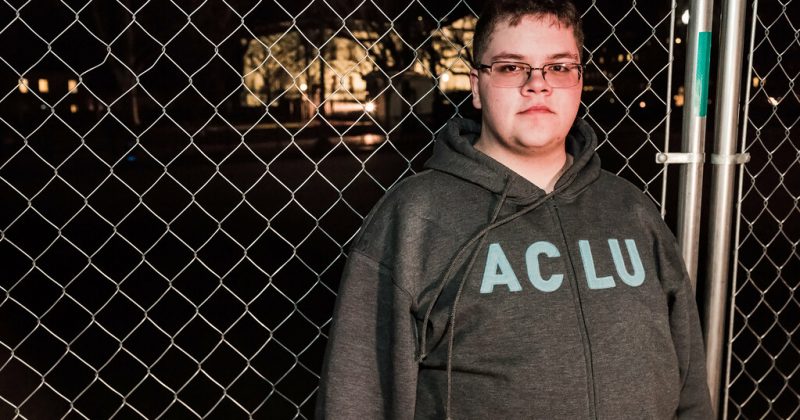
By Susy Prochazka, RightsViews staff writer.  On the 52nd anniversary of the start of the Stonewall uprising, advocates of LGBTQ rights scored a major victory when the Supreme Court declined to hear an appeal challenging a landmark trans rights ruling. On Monday, June 28th, 2021, the U.S. Supreme Court declined to hear an appeal to a 4th U.S. Circuit Court of Appeals ruling that required a Virginia public high school to let a transgender student use the bathroom corresponding with his gender identity. The Supreme Court’s decision represents a major victory for trans rights advocates amidst the flurry of anti-trans policies targeting trans youth that have emerged across the U.S. this past year.  This case began in 2015 when Gavin Grimm, a then-16 year old transgender high school student, sued his public high school over a policy that prevented him from using the boys restroom. Beginning in his freshman year in high school, Grimm identified as male and started taking hormones. But...
Read More
Inadequacy of Laws Against Cross-Border Sex Trafficking Between Nepal and India

Inadequacy of Laws Against Cross-Border Sex Trafficking Between Nepal and India

By guest contributor Ayush Kumar* Globalisation has caused the emergence of new technologies that facilitate trade and transport, making business more rewarding. A negative ramification of this change is the proliferation of cross-border human trafficking. The UN Office of Drugs and Crime (UNODC) defines Human Trafficking as the “recruitment, transportation, transfer, harbouring, or receipt of people through force, fraud, or deception, intending to exploit them for profit.” Men, women, and children of all ages and from all backgrounds can become victims of this crime, which occurs in every region of the world. There are nearly 36 million victims of human trafficking in the world, out of which two-thirds are from Asia, making it the third-largest crime in magnitude and profit after arms and drug trafficking. With Covid-19, the situation is anticipated to turn grimmer. Open Borders: A Facilitating Factor Nepal is an indispensable neighbour of India because of its cultural, historical, and economic connections. It also holds a vital place in India’s foreign policy...
Read More
Environmental Justice for All in Gowanus, Brooklyn

Environmental Justice for All in Gowanus, Brooklyn

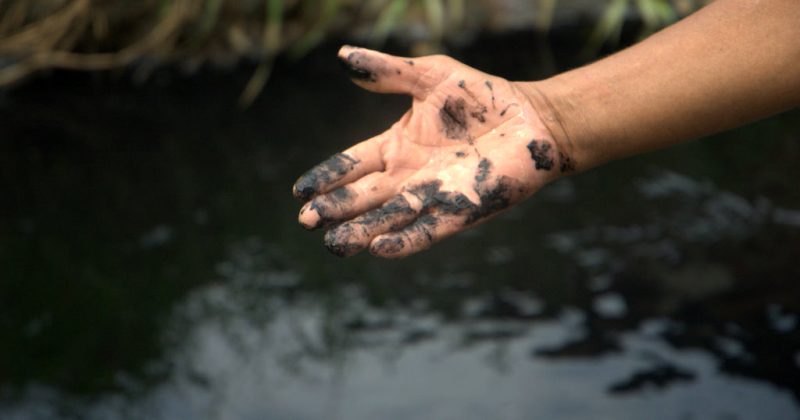
By Lindsey Alpaugh, RightsViews staff writer. Gowanus became one of the most sought-after neighborhoods in New York City in the 2010s, famous for its Whole Foods, art scene, and the canal. The Gowanus canal is a historic industrial site, hosting a combination of toxic chemicals and CSOs (Combined Sewage Outflows). The chemical and industrial pollution was so bad that in 2010, the Gowanus Canal was designated as a Federal Superfund site by the U.S. Environmental Protection Agency (EPA). This designation began a $500 million clean-up effort, which involved dredging contaminated sediment from the canal.  Despite these environmental hazards, the neighborhood experienced an influx of wealthier new residents. From 2000 to 2013, the average home value in Gowanus increased 145.78%. What does environmental justice look like in a gentrifying, formerly industrial neighborhood that sits in a flood zone and is home to one of the most toxic waterways in the United States?  The Gowanus canal first became an industrial zone by the mid 19th...
Read More
It’s High Time to Upgrade Consumer Rights to Human Rights

It’s High Time to Upgrade Consumer Rights to Human Rights

By guest contributor Swetha Somu* The Covid-19 pandemic has sparked a series of misleading advertisements claiming to cure and protect us from the deadly virus. As a result, the consumer protection regulatory authorities across the world have sprung into action by identifying and taking down false and inaccurate advertisements. Consumer rights in the pandemic era "A consumer is a shopper who is sore about something."  - Harold Coffin Coffin is no entrepreneur but a humor columnist and yet his famous quote aptly portrays why a consumer is a consumer. He asserts that a consumer is someone who has a problem or is made to think that he has one and that it can be resolved only if he buys a particular product. The need for an international instrument addressing consumer rights was strongly advocated for back in 1985 which subsequently led to the adaptation of the United Nations Guidelines for Consumer Protection (UNGCP). It was later revised in 1999, however, only recently in 2015, UNGA’s resolution...
Read More