
The Kashmir Issue: How “Miller (2)” Must Inspire the Indian Supreme Court

The Kashmir Issue: How “Miller (2)” Must Inspire the Indian Supreme Court

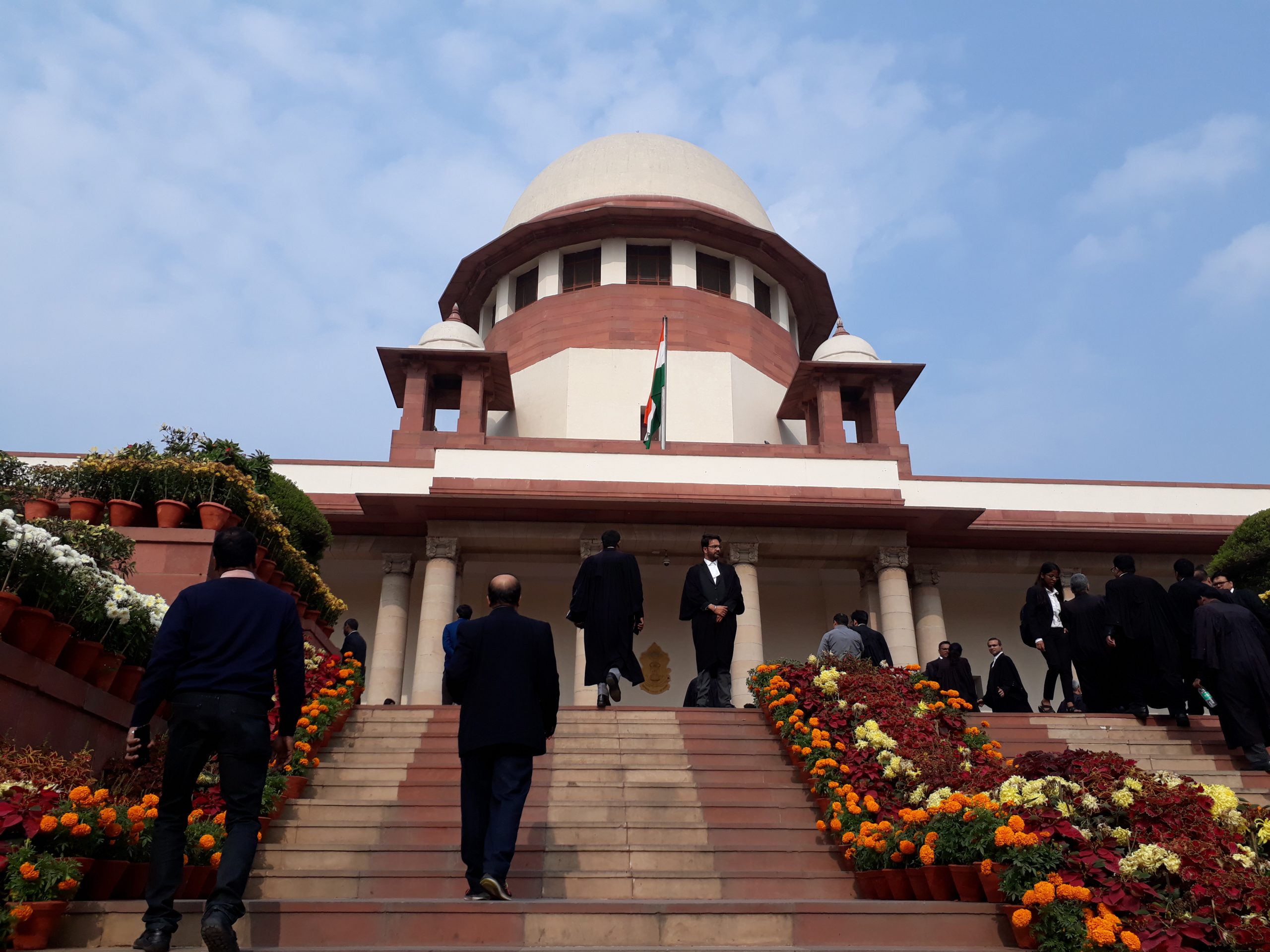
By guest contributors Anmol Jain and Prannv Dhawan. Jain is  a penultimate-year law student at National Law University, Jodhpur, India. He takes an active interest in the study of constitutional law and judicial approaches to human rights. Dhawan is a third-year law student at National Law School of India University, Bangalore, India. He is interested in policy and legal research in the domains of public law, human rights and climate justice.  India’s constitutional democracy is backsliding. Speaking at a rally during the ‘National Register of Citizens (NRC) Seminar’ recently, the Home Minister advocated for the re-introduction of the much contentious Citizenship Amendment Bill, which unconstitutionally aims to provide easier citizenship requirements for non-Muslim refugees. Noted scholars have argued that previously, the National Register of Citizens exercised in Assam and now, the dilution of Article 370 of the Constitution that provides special status to the state of Jammu and Kashmir, are arguably unconstitutional attempts to further the political vendetta of the ruling...
Read More
A Year After Jamal Khashoggi’s Assassination, The War On Truth Continues

A Year After Jamal Khashoggi’s Assassination, The War On Truth Continues

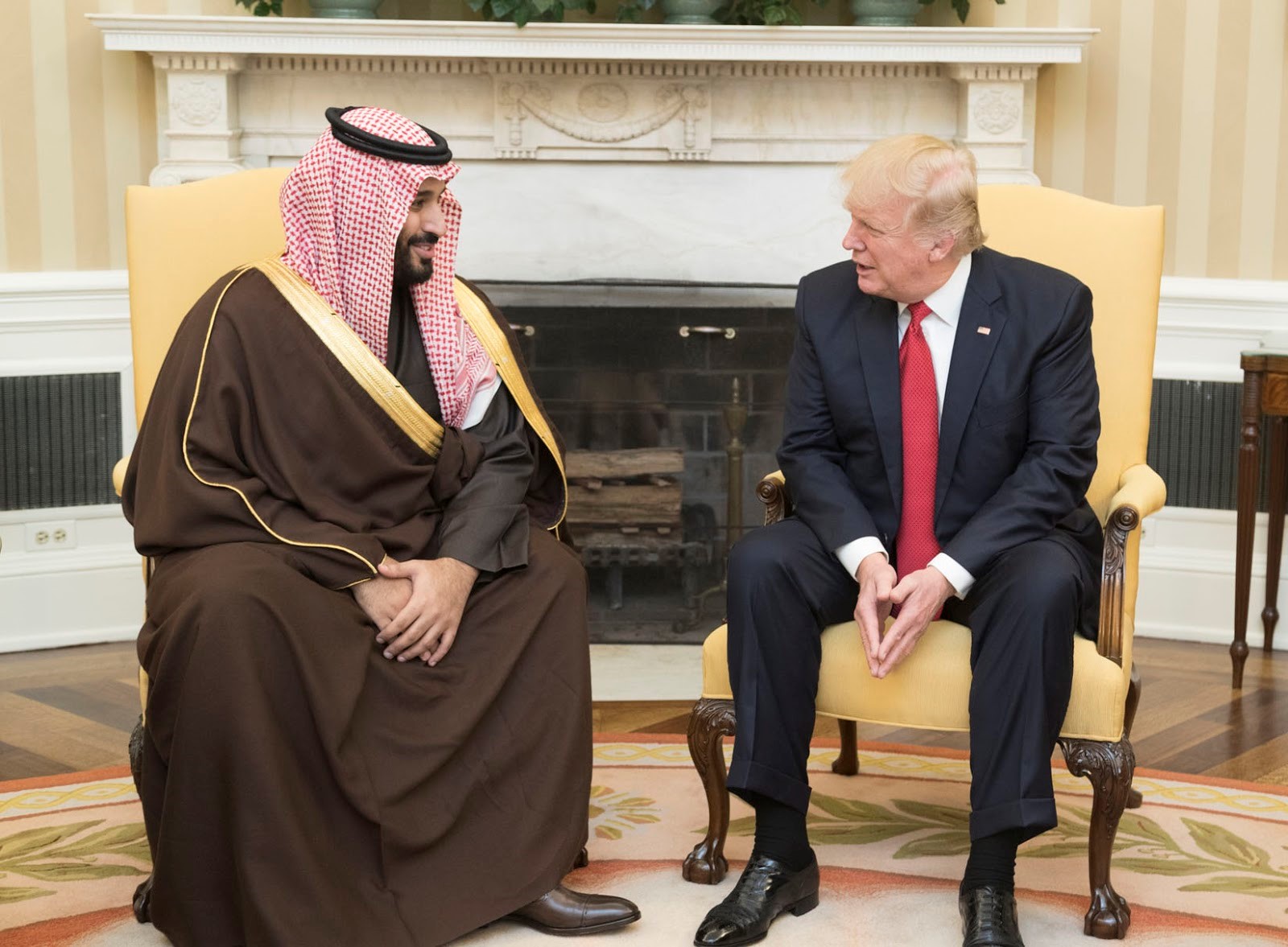
By: Kyoko Thompson, staff writer at RightsViews “A commission is coming from Saudi Arabia tomorrow; they have something to do in the Consulate. They will have something to do on my floor in the office.” - October 1 2018, 21:48 At 1:15 PM on Tuesday, October 2, 2018, Washington Post contributor and longtime journalist Jamal Khashoggi entered the Saudi consulate in Istanbul, Turkey, and was never seen again. His death was not the first of its kind. According to the United Nations, more than one thousand journalists have been murdered since 2006. Yet it drew international attention from governments and individuals alike, many of whom demanded justice. The events that followed challenged the limits of international law and U.S. foreign policy. One year later, an investigation yields more questions than answers, such as: What does justice for Khashoggi look like? Is his death a manifestation of a deeper, more insidious trend? And: What is the future of free speech in an era...
Read More
Classrooms and Curricula: the Role of the Right to Education in the Prevention of Mass Atrocities

Classrooms and Curricula: the Role of the Right to Education in the Prevention of Mass Atrocities

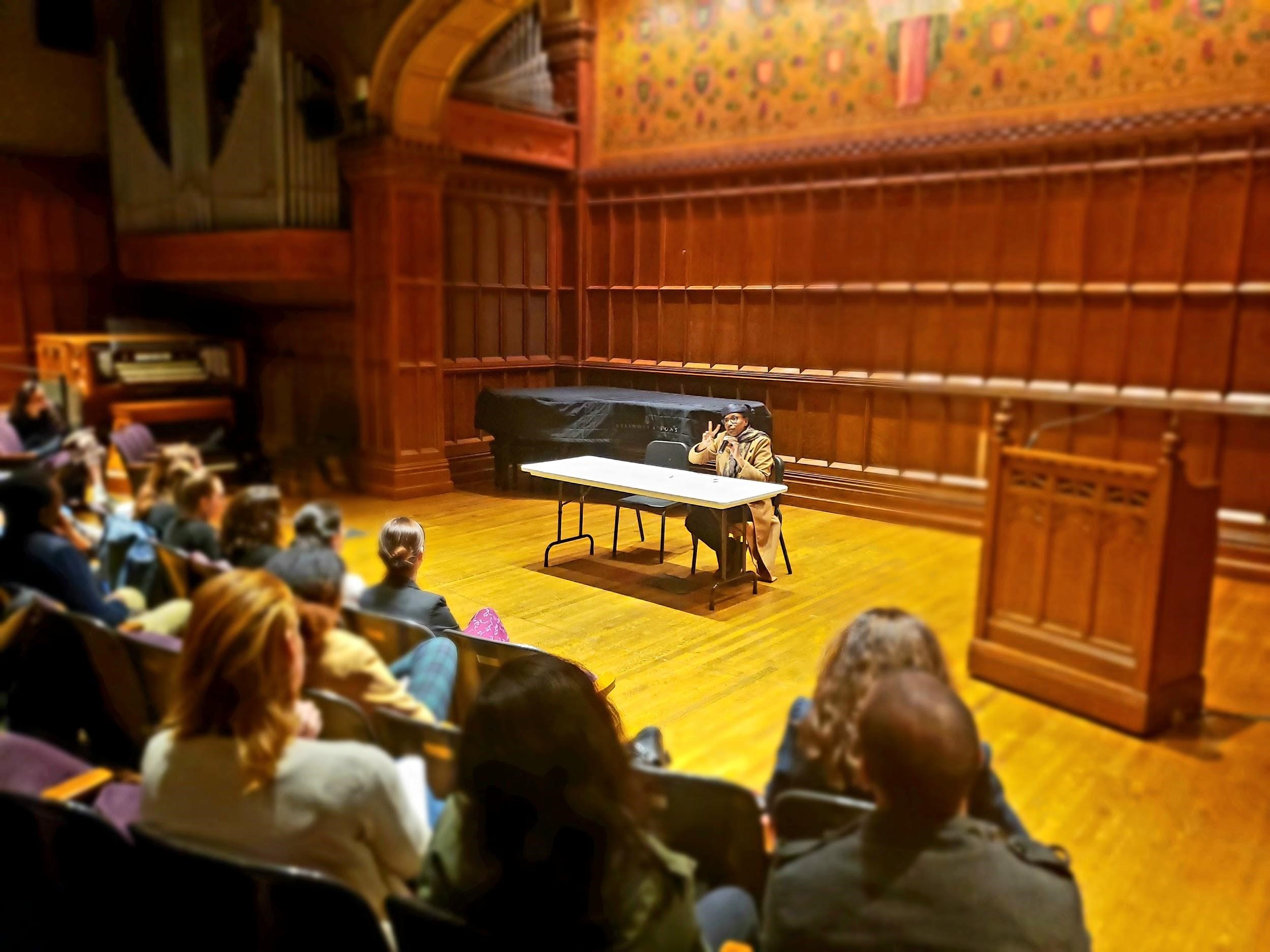
By: Nay Alhelou, RightsViews Co-editor In her first talk in an academic setting in the USA while serving in her current capacity, the UN Special Rapporteur on the Right to Education, Dr. Kombou Boly Barry, highlighted how education could help prevent mass atrocities. On October 15, she addressed students, teachers, and fellows at Columbia University and discussed the report she presented three days later to the United Nations. Dr. Boly Barry was appointed by the UN Human Rights Council in 2016 to examine the right to education as an independent expert. She is mandated to conduct country visits, respond to allegations of violations of the right to education and promoting dialogue with governments, civil society and other actors. According to the Special Rapporteur, schools can either be the space where intolerance is harnessed or where tolerance is promoted. In favor of the former, she remarked: “In a world where everybody is afraid of everybody else… education should be used as a tool to...
Read More
A Living Text? Dr. Hugo Slim on War, Humanity, and the Geneva Conventions under the ICRC’s Mandate

A Living Text? Dr. Hugo Slim on War, Humanity, and the Geneva Conventions under the ICRC’s Mandate

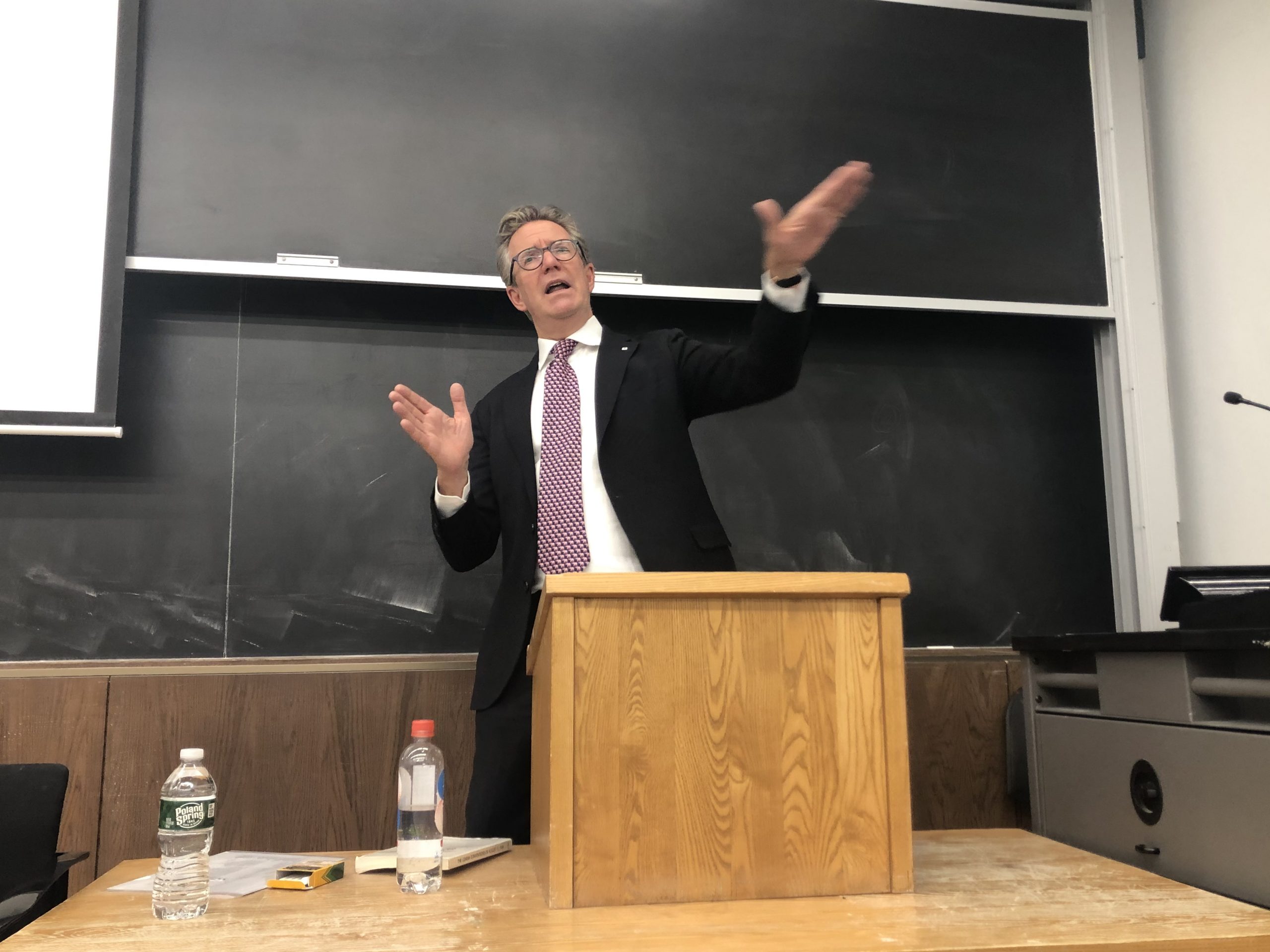
By Rowena Kosher, Co-Editor of RightsViews The International Committee of the Red Cross’ (ICRC) reverence for its mandate to the Geneva Conventions was obvious as Columbia students welcomed Hugo Slim, ICRC’s Head of Policy and Humanitarian Diplomacy Division, to speak on “War and Humanity: Challenges and Trends in the 70th Year of the Geneva Conventions” on November 6. From its founding in 1863 in Geneva, the ICRC has been committed to the provision of international humanitarian aid, embedding itself as one of the core players in international humanitarian law (IHL) as it developed over time to regulate jus in bello, or the “conduct of war.” It was the ICRC that convinced states in 1864 to adopt the very first Geneva Convention, creating a universal obligation of care for all wounded soldiers. From that moment on, it was also the ICRC that ultimately headlined what the IHL community now holds as some of its most fundamental texts: the four Geneva Conventions of 1949...
Read More
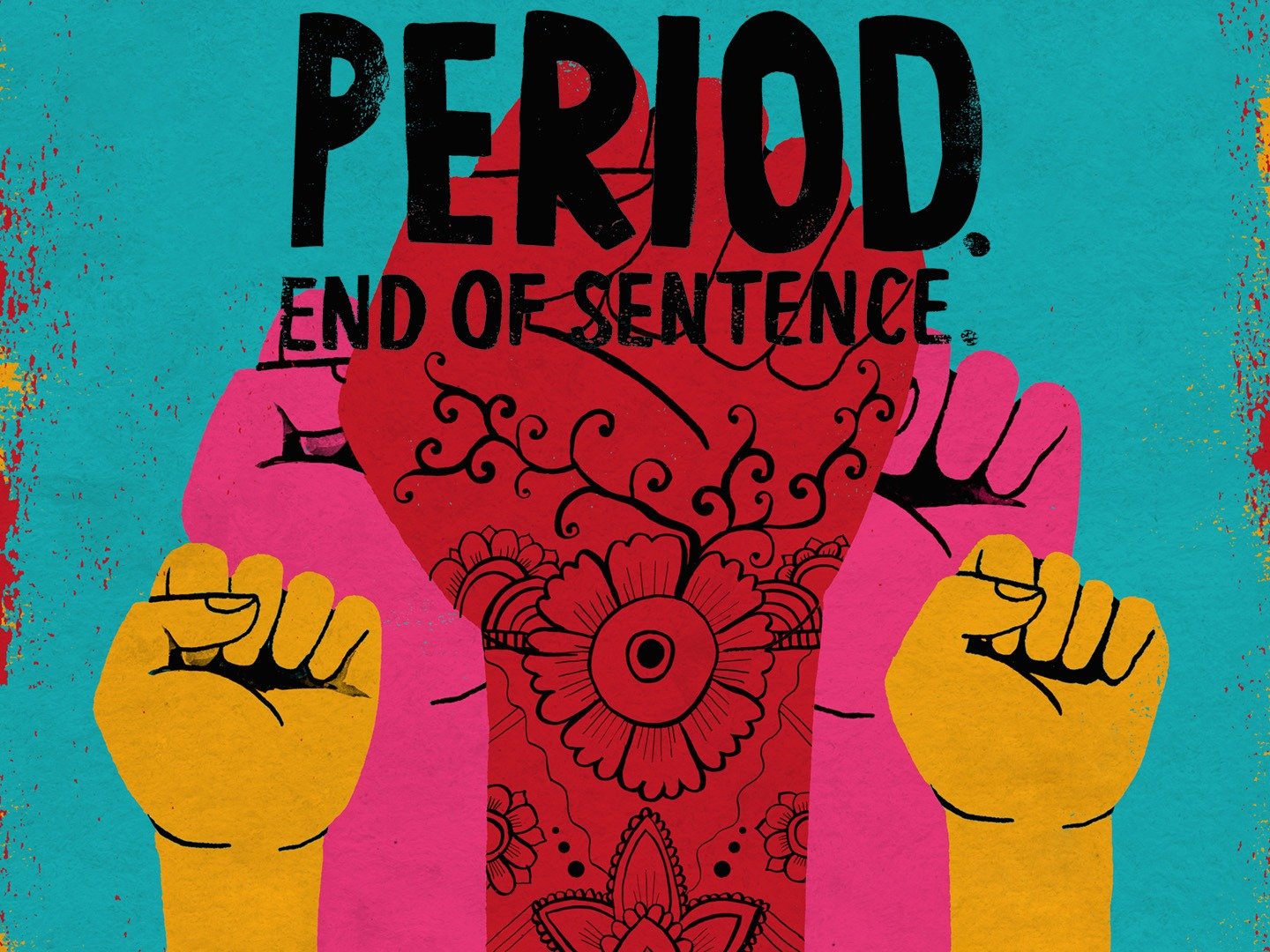
Period: End of Sentence Critical Panel: The Inconvenient, Bloody Truth Behind the Oscar-Winning Documentary

Period: End of Sentence Critical Panel: The Inconvenient, Bloody Truth Behind the Oscar-Winning Documentary

By: Laura Charney, RightsViews staff writer On September 26, the Menstruation and Gender Justice Working Group hosted a film screening and critical panel on the Oscar-winning documentary short Period: End of Sentence. Moderated by Inga Winkler, lecturer at the Institute for the Study of Human Rights at Columbia University and Director of the working group, the panel included Shobita Parthasarathy, Professor of Public Policy and Women’s Studies at the University of Michigan, Lauren Houghton, Assistant Professor of Epidemiology at the Mailman School of Public Health at Columbia University, and Emily Hoppes, a consultant at Huru International. Period: End of Sentence follows a group of Indian women in the rural Hapur district, 60 kilometers outside of Delhi, as they transition from a life of shame surrounding their periods toward establishing a self-sufficient microeconomy based on menstrual pad manufacturing. During the process, the documentary claims that girls and boys are educated, stigmas are shattered, and a new gender-equitable horizon ascends. Period: End of Sentence is...
Read More
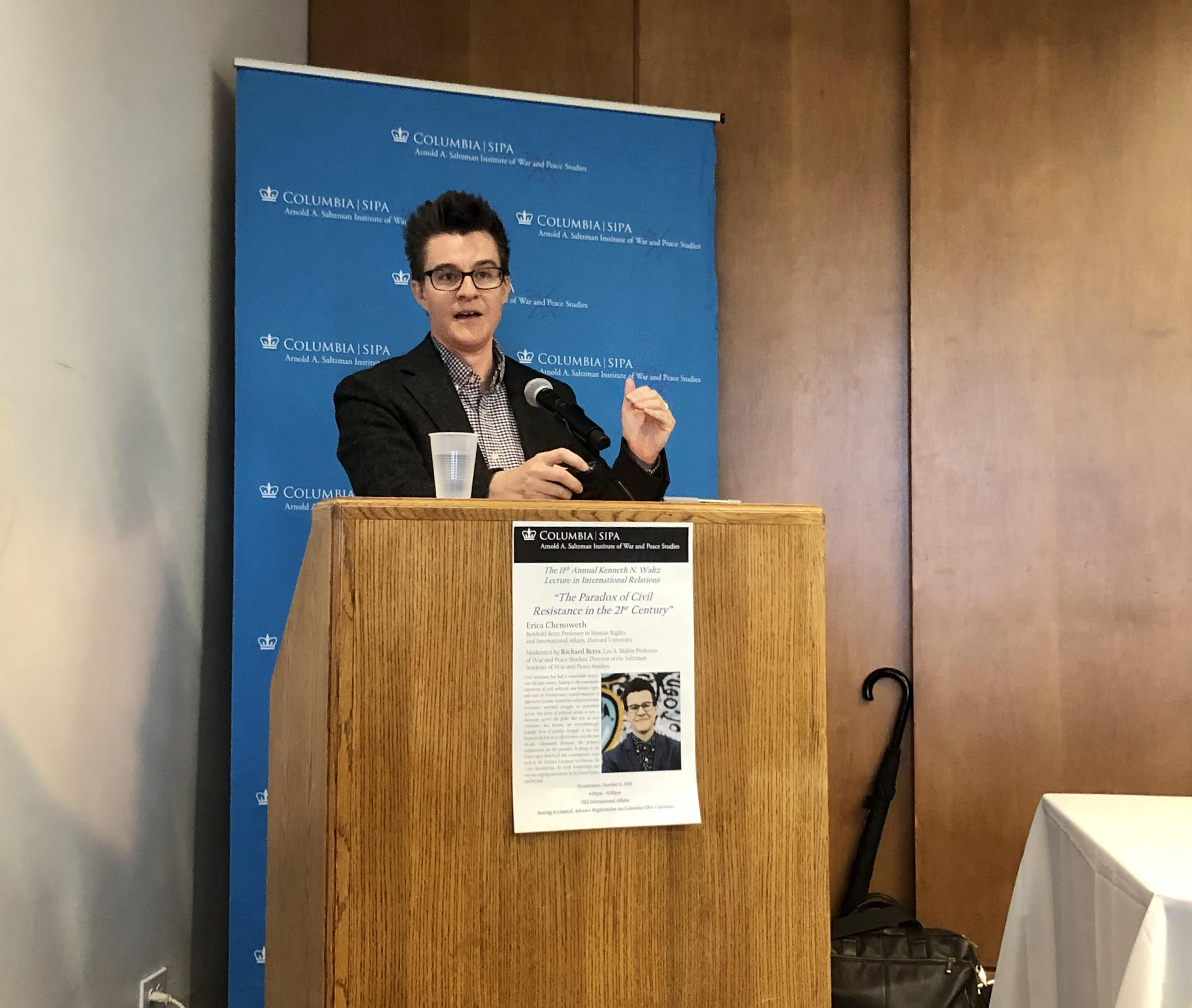
Hong Kong, The Women’s March, and #enough: Is Civil Resistance No Longer Effective?

Hong Kong, The Women’s March, and #enough: Is Civil Resistance No Longer Effective?

By: Kyoko Thompson, Staff Writer at RightsViews Odds are that, if you follow the news, you’re aware of what’s happening in Hong Kong. The protests—which began in June as the result of a proposed extradition bill—have taken over the media of late, with citizens taking to the streets in unprecedented numbers. During one such a protest on June 17th, for example, an estimated 1.7 million people marched from Victoria Park to Hong Kong’s Legislative Council complex to demonstrate their desire to keep Hong Kong free and independent. With crowds like those, the Chinese government has certainly been paying attention,  yet after over a hundred days of protests, participants have yet to see definitive results in regards to their demands. Even worse, the sustained protests have led to deaths, injuries, and thousands of arrests, as well as incidents of police brutality.  Civil resistance, as defined by the International Center on Nonviolent Conflict, is a powerful tool for people to fight for their rights...
Read More
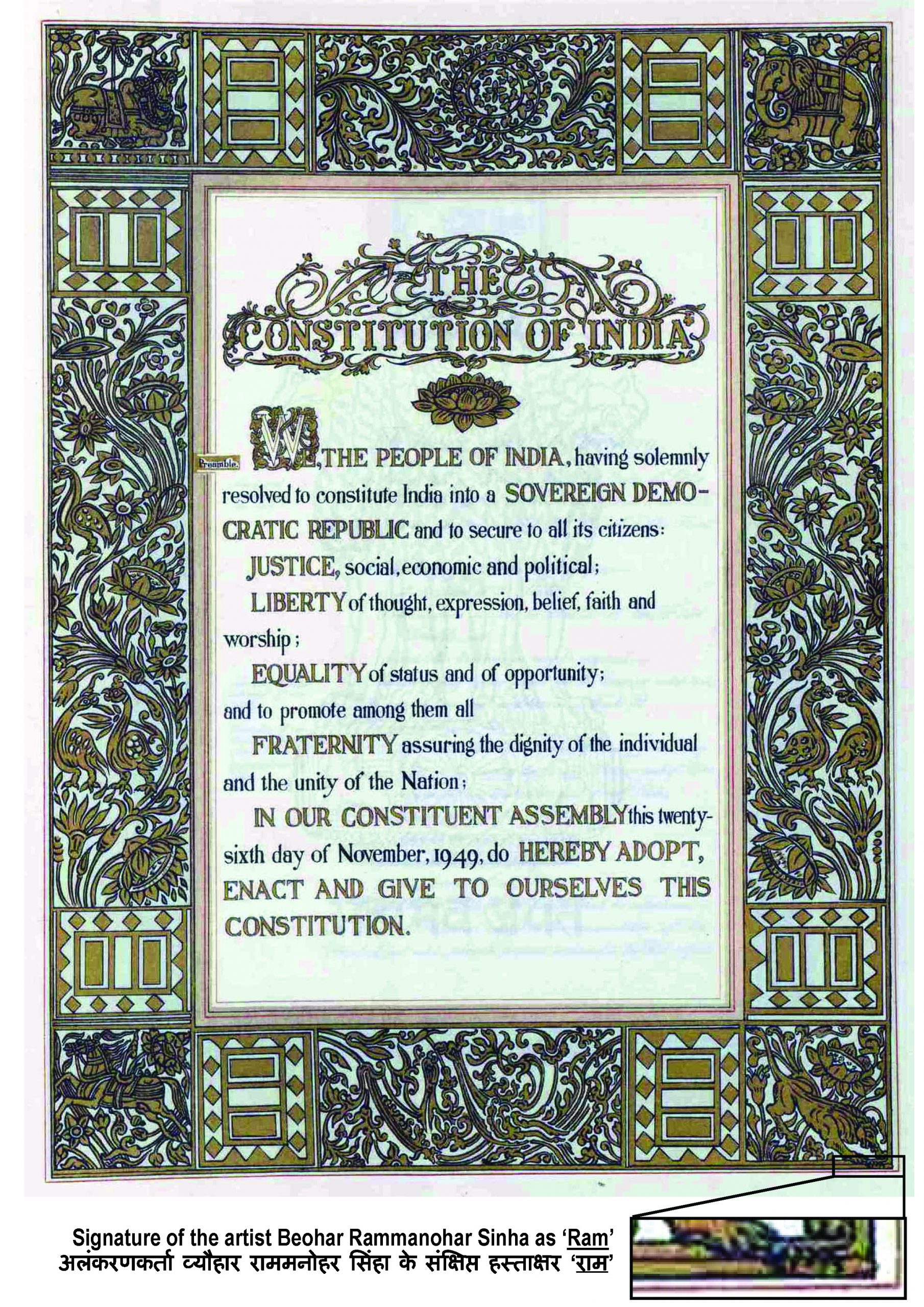
On Constitutional Morality: Thoughts from Delhi

On Constitutional Morality: Thoughts from Delhi

Guest Contributor: Anmol Mittal is a 5th Year Student at National Law University, Delhi.  The question of what the true import of the term “Constitutional morality” is has become pertinent following India’s (Application to Jammu and Kashmir) Presidential Order C.O. 272, and the subsequent State Reorganisation Bill introduced in the parliament. On the morning of August 5, through a combination of the Presidential order and the Reorganisation bill, the special status accorded to the State of Jammu & Kashmir, by way of Article 370, within the Indian Union, was revoked. To examine where the moral compass of India’s Constituent document lies, it’s necessary that the Constitution be considered as a ‘whole’, and not as being contained ‘essentially’ in Part-III on Fundamental Rights (Part-III rights).  For the uninitiated, Part-III rights are, in a manner of speaking, India's version of the bundle of rights in America guaranteed through the 1st, 5th, 6th amendments and so on. Article 19 corresponds directly with the 1st Amendment, Article 20...
Read More
The Lost World of Moldova: Corruption and Human Rights

The Lost World of Moldova: Corruption and Human Rights

Guest Contributor: Ararat Osipian is the Alexander Mirtchev Visiting Professor and Scholar at the Terrorism, Transnational Crime and Corruption Center, Schar School of Policy and Government, George Mason University, Fellow of the Institute of International Education, and Fellow of the New University in Exile Consortium, USA. His research interests include corruption, inequalities in access to education, and sexual harassment. Recent events in Moldova, including the political turmoil and the fight against corruption, sometimes become reminiscent of a witch-hunt. For Moldova, the story is not so new, as the pro-European Union Moldovan Parliament has been fighting pro-Russian President Igor Dodon for years. For the world, this is just a storm in a teacup. According to the locals, Moldova’s fight against corruption is mostly for resources and economic assets that may be accessed through the use of state power. Some of the formative results of such a fight are arrests on charges of corruption. Due to the anti-corruption campaign, some individuals prefer to...
Read More
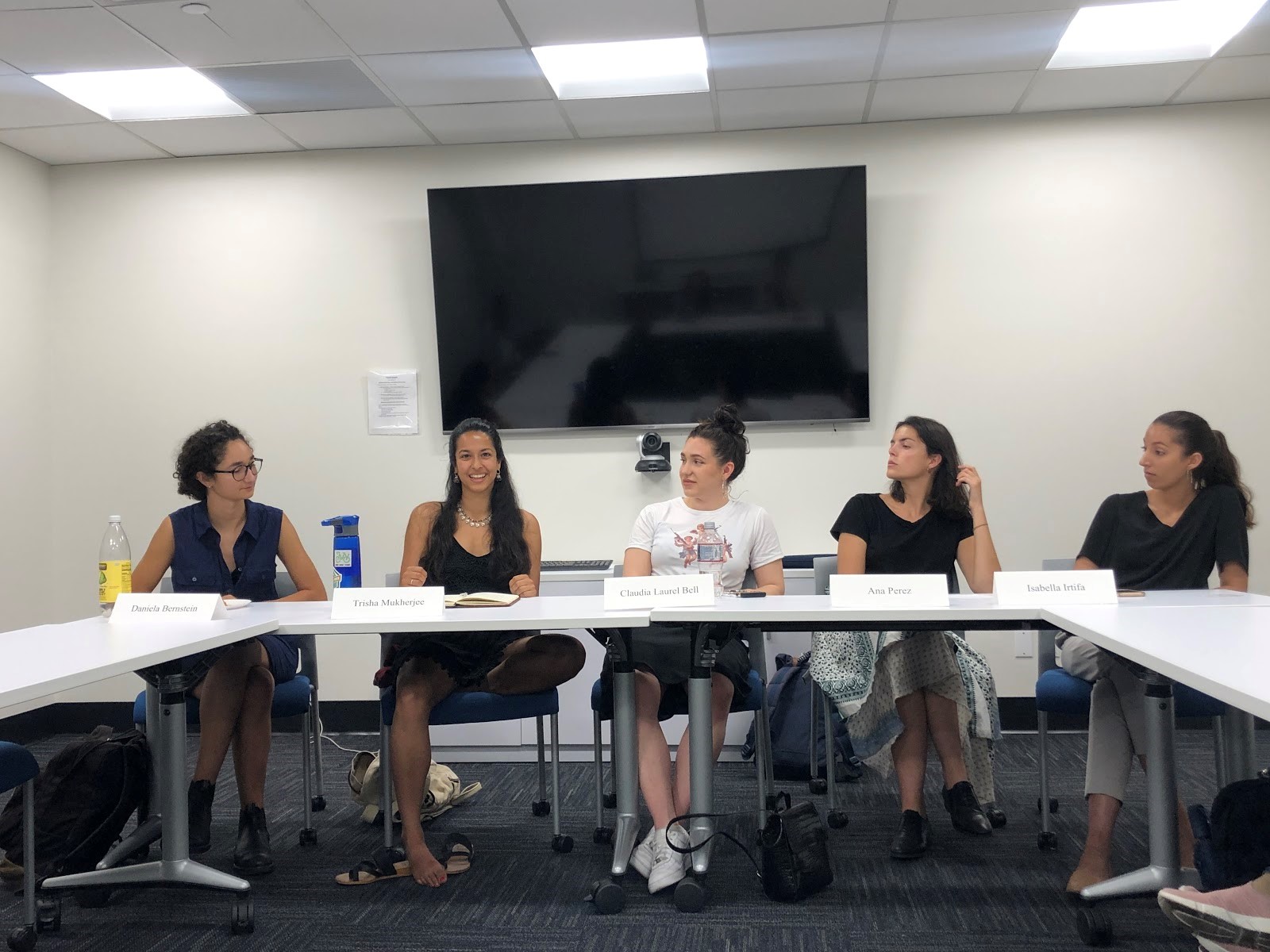
Columbia Community Internship Experiences in Human Rights: A Panel Discussion

Columbia Community Internship Experiences in Human Rights: A Panel Discussion

By Jalileh Garcia, RightsViews staff writer On October 2, undergraduate and graduate Columbia students gathered to share their summer experiences undertaking internships in the field of human rights. An annual panel  organized by the Institute for the Study of Human Rights (ISHR), this serves as an opportunity for students to learn from each others’ experiences applying human rights in the field. The different panelists shared about their work environment, advice, and the skills that helped them flourish in the internships.  Isabella Irtifa is a graduate student getting her Master’s Degree through the ISHR. She spent her summer in New York City interning for UN Women, more specifically with the Women Peace and Security Team. Here she was able to delve into transitional justice matters, as well as issues of women’s peace and security. Isabella drafted presentations on peace initiatives, women’s role in achieving security, and researched potential partnerships to increase women’s participation in decision-making.  Ana Perez is also a graduate student getting her...
Read More
Decoding India’s Faltering Extradition Track Record: A Human Rights Approach

Decoding India’s Faltering Extradition Track Record: A Human Rights Approach

Guest Contributor: Tanishk Goyal is a second year law student at the West Bengal National University of Juridical Sciences, Kolkata.  On July 2 2019, The U.K refused to extradite a couple who were accused of murdering their adopted Indian boy and his brother-in-law in order to receive a life insurance payout. The UK’s reasoning for this refusal took place against the backdrop of the inhumane and degrading human rights conditions prevailing in India. This discharge added on to the intractably dismal extradition track record of India, despite it having ratified the 1949 Geneva Conventions and The U.N Convention Against Corruption which adopt the framework for extradition and mutual legal assistance between countries for an expedited and effective extradition process. One of the fundamental reasons for this situation is India’s international perception as a country which cannot ensure the safety of the offenders it extradites.  Although India has ratified the International Covenant on Civil and Political Rights, which lays down a human-rights based...
Read More