Of Orwellian Times and Beyond: Examining India’s Recently Amended Anti-Terror Law

Of Orwellian Times and Beyond: Examining India’s Recently Amended Anti-Terror Law

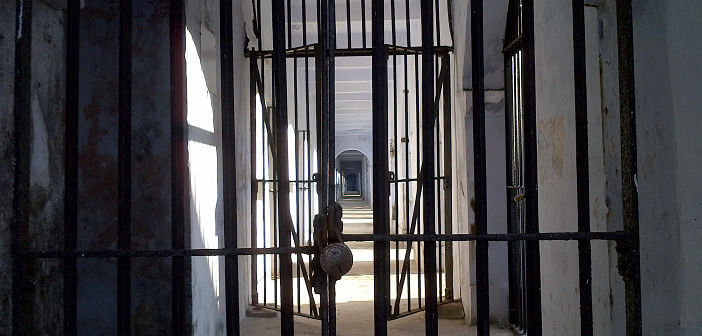
Guest Contributor Ashwin is an Advocate practising across trial and appellate courts in India. He belongs to '18 B.A.LL.B.(Hons.) class of Rajiv Gandhi National University of Law, India. When governments decide to condemn one as being “involved in terrorism” simply on the basis of belief and nothing else, one cannot help but wonder whether “Thought Police” from George Orwell’s 1984 is being brought to life. To be condemned solely on beliefs would indeed be blasphemous for the vires of justice. The Indian Parliament has recently introduced a process which allows individuals to be subjectively designated as terrorists by the government. The recent amendments to the Unlawful Activities (Prevention) Act allow the Indian Central Government to designate any individual as being “being involved in terrorism” based solely on, as stated,“if [the Central Government] believes that such… individual is involved in terrorism.”  Violation of the Principles of Natural Justice & lack of Procedural Fairness These recent amendments to the Act threaten the principles of natural justice...
Read More
Celebrating World Indigenous Peoples’ Day and Confronting Challenges in Defending Indigenous Languages and Territory

Celebrating World Indigenous Peoples’ Day and Confronting Challenges in Defending Indigenous Languages and Territory

By Jalileh Garcia, RightsViews staff writer  August 9th marked the 2019 International Day of the World's Indigenous Peoples. The theme for this year is Indigenous Peoples’ Languages.  According to the United Nations Development Programme, it is estimated that there are 370-500 million indigenous peoples in the world, representing over 5,000 different cultures. Furthermore, a majority of the 7,000 languages in the world were created and are spoken by Indigenous Peoples. Yet, despite this immense lingual diversity, human rights experts indicate that four in 10 Indigenous languages are in danger of disappearing. The main reason for the disappearance of these languages is the fragility of systems to ensure that Indigenous Peoples rights to land and territory are respected, protected, and guaranteed, including, among other reasons, forced assimilation.  As such, entire cultures are at risk of disappearing as companies and governments are stripping Indigenous communities of their lands. These cultures include the belief in a special relationship with the environment─land has physical, cultural, and spiritual...
Read More
LGBTIQ rights |Recent developments in Kenya

LGBTIQ rights |Recent developments in Kenya

Guest contributor Brian Dan Migowe is a graduate of the 18' LL.M class at the Center for the Study of Human Rights at the University of Strathclyde, Glasgow, UK.  July 2019 marks a month since the Kenyan High Court dismissed a consolidated petition of the National Lesbian and Gay Human Rights Commission (‘NGLHRC’) and other interested parties seeking inter alia abolishment of sections 162(a),(c) and 165 of the Kenyan penal code, which forbid same-sex relations and prescribe a jail sentence of up to 14 years for those found guilty. A long-awaited pronouncement, the NGLHRC’s challenge to the constitutional standing of these two legal provisions has been a subject before the court for the last quadrennium. Petitions have come to the court on two separate occasions. The first petition was initiated by Eric Gitari (then the Executive Director of NGLHRC) in 2016. Two other organizations, the Gay and Lesbian Coalition of Kenya (‘GALCK’) and the Nyanza, Rift Valley and Western Kenya Network...
Read More
Gaza On Screen: An Interview with Film Festival Curator, Nadia Yaqub

Gaza On Screen: An Interview with Film Festival Curator, Nadia Yaqub

By: Laura Charney, RightsViews Staff Writer This April, the Center for Palestine Studies at Columbia University hosted the “Gaza on Screen” film festival highlighting films made by Gazans and about Gaza. Curated by Dr. Nadia Yaqub, “Gaza on Screen” offered an invitation to not only bear witness to the lived struggles and resilience of Gazans, but also the opportunity to engage the ways that Gazans articulate and envision their own experiences. For over twenty years, Palestinian film festivals across North America and Europe have brought Palestinian stories to international audiences. However, Palestinians in Gaza face particularly prohibitive measures that inhibit the communication of their stories. Since 2007, Israel has maintained a blockade on Gaza, controlling its airspace, coastline, and borders, and restricting the movement of goods and humans entering or leaving the territory. It was not until this past April at Columbia University that a film festival focusing exclusively on Gazan stories came to life. In an attempt to shine light on the...
Read More
Technology and Privacy in Refugee Aid

Technology and Privacy in Refugee Aid

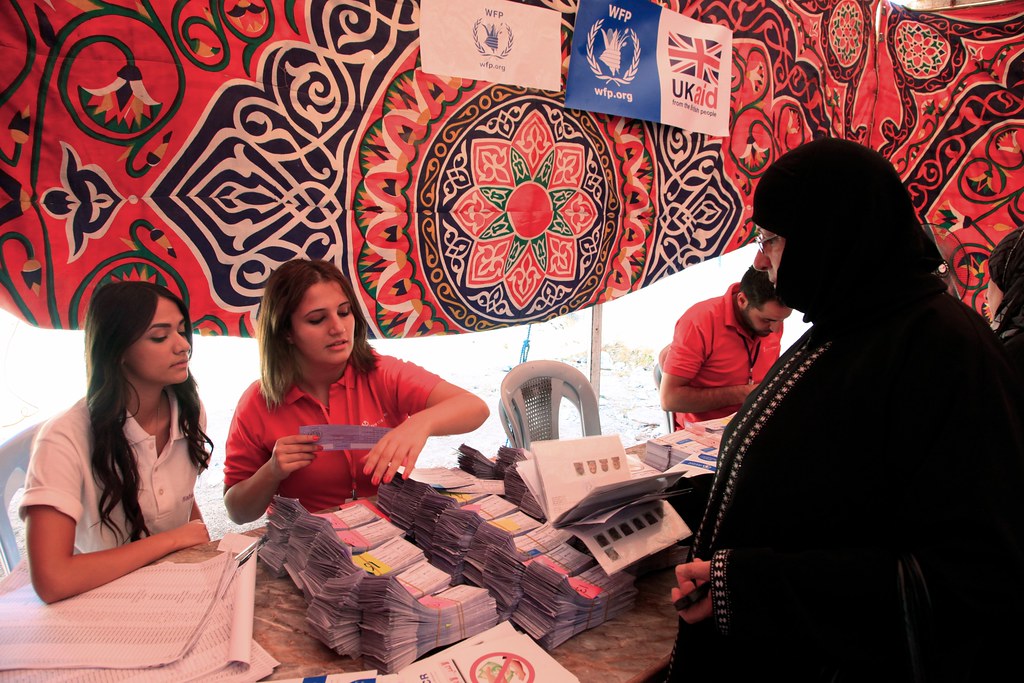
By: Parima Kadikar, guest contributor. Parima is a rising senior at Columbia College studying Middle Eastern Studies and Human Rights. In an exceedingly digital world, humanitarian aid for refugees is being revolutionized by technological innovation. International non-profit organizations and UN agencies have begun to employ strategies like biometric scanning and blockchain technology to streamline aid delivery and prevent identity fraud. While these strides are noteworthy examples of progress, it is also important to address the potential privacy concerns that could result. In the context of conversations sparked by the Patriot Act-- Congress’s response to the September 11, 2001 terrorist attacks which expanded federal jurisdiction over private data and communications for the purpose of intelligence gathering-- and, more recently, by the Cambridge Analytica data-mining campaign which harvested the data of millions of Facebook users without their knowledge or consent for conservative political campaigning, many Americans are protective of both their physical and digital privacy. The evidence of this can be seen from taped webcams...
Read More
Will the ‘not so accessbile’ Rajasthan State Assembly Elections, 2018, be a precursor to the Lok Sabha Elections in 2019?

Will the ‘not so accessbile’ Rajasthan State Assembly Elections, 2018, be a precursor to the Lok Sabha Elections in 2019?

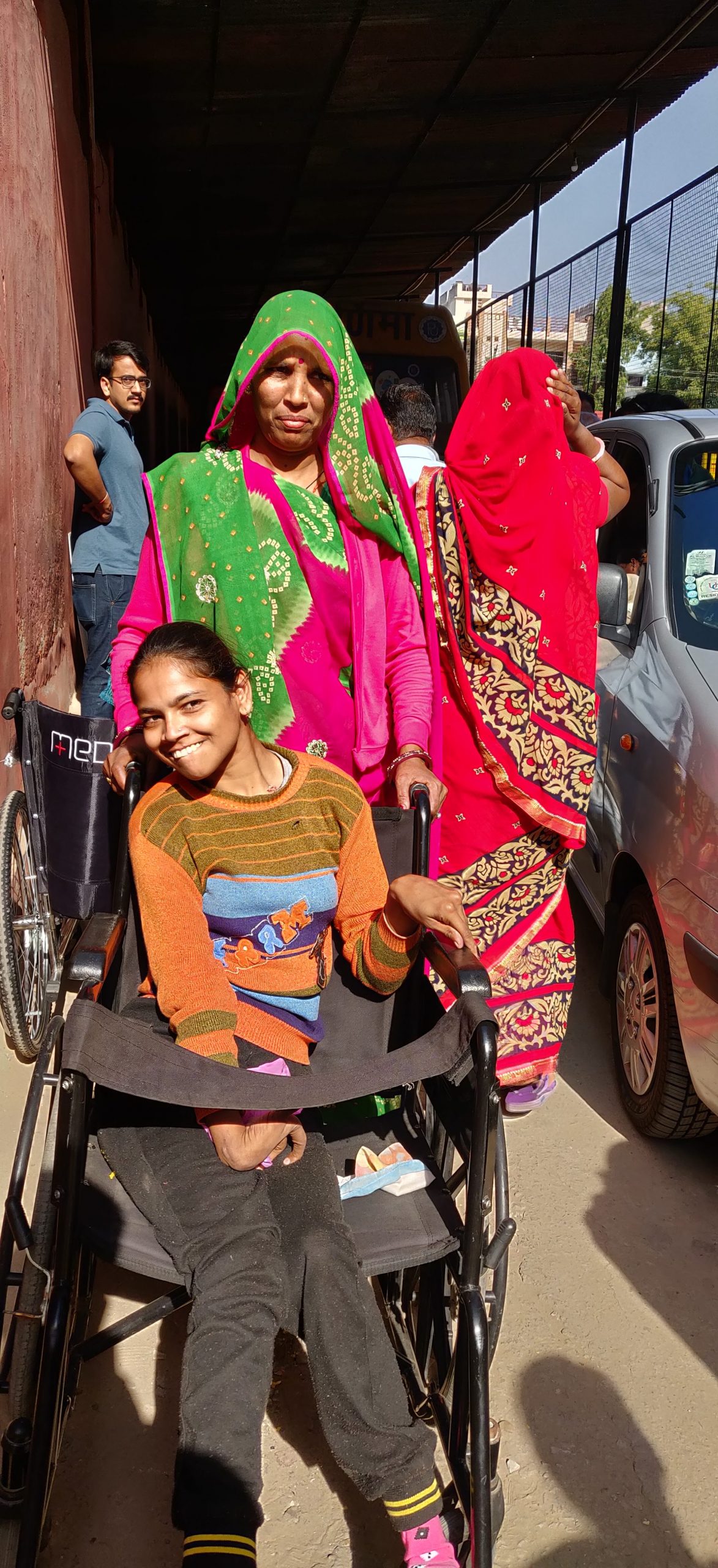
The 2019 Lok Sabha Elections are happening throughout India in several phases. At the present moment, the entire nation is embroiled in debates about who will be elected into the next Indian government, as well as reflections on the achievements of the current administration. Part and parcel to the upcoming elections is an important element that has been widely neglected: the question of accessibility. There is a broad lack of awareness about the issue of accessible elections, exasperated by a tendency for discourse to focus on more “appealing” election issues such as development, poverty, corruption and nationalism. ‘Accessible Elections’ was finalised as the central theme for all the upcoming elections by the Election Commission of India (ECI) during the National Consultation on Accessible Elections held in the first week of July, 2018. The aim is to increase the participation of Persons with Disabilities (PwDs) in elections by making them more inclusive and accessible to increasing numbers of people from different communities....
Read More

The month of March is over, but the struggle for women’s rights in Honduras persists

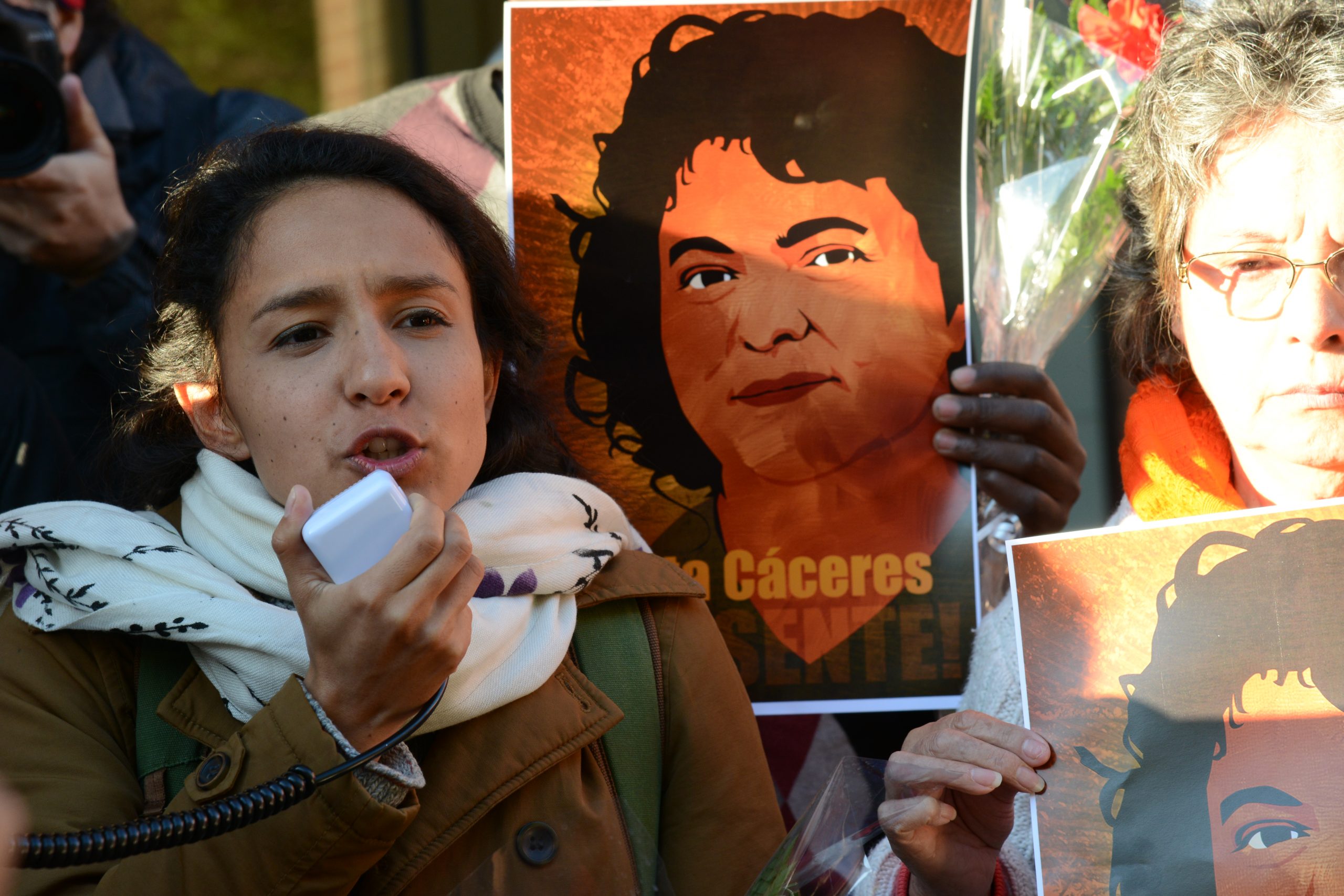
While Women’s History Month has come to an end, women around the world work every day of the year to have their rights recognized. As such, it is both crucial and necessary to remember this continued struggle beyond thirty days of the year. During the month of March, Honduran women commemorated the life of Berta Cáceres, as March 2nd marked the three year anniversary of her murder. Cáceres  was an indigenous activist who was one of the most prominent human rights and environmental rights figures in Honduras. Honduran women also protested on March 8th, as part of a larger feminist movement around the world. During these protests, some women were met with force from police officers. Marcela Arias, a lawyer from the Center for the Rights of Women (CDM) in Honduras is an expert on the current situation of women’s rights in Honduras. She has indicated that “While Honduras is a country that has ratified many international and regional conventions...
Read More
Human Rights in China: Mass Internment of Uyghurs & Other Muslim Populations

Human Rights in China: Mass Internment of Uyghurs & Other Muslim Populations

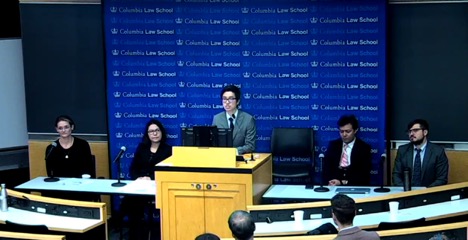
The Human Rights Institute at Columbia Law School invited Uyghur scholars to explore current practices of the Chinese government in the mass internment of Uyghur and other Muslim populations in Xinjiang, and address what human rights advocates and the broader public can do to end these systemic human rights violations. Since 2017, official reports have indicated that at least one million Uyghur and other ethnic minorities have been held in Chinese "political re-education camps" without due process rights or trial. With growing pressure from the international community to address China’s “re-education camps” in Xinjiang Uyghur Autonomous Region (Xinjiang), Columbia Law School’s Human Rights Institute welcomed an esteemed panel of Uyghur intellectuals and academics to discuss this pressing human rights issue. Vincent Wong, a Masters of Law Human Rights Fellow at Columbia Law School and event organizer, began the presentation with a precautionary statement to the audience. “I just want to recognize that there are a lot of people in this room...
Read More
Sanctuary Law – Can Religious Liberty Protect Immigrants?

Sanctuary Law – Can Religious Liberty Protect Immigrants?

Summers in Arizona can be unforgiving. One quickly learns to test the surface temperature of objects left in the sun before committing to full contact and to never wear shorts on leather car seats. From May through September, it is not at all uncommon to avoid the outdoors as much as possible; the reprieve of air conditioning far preferable to streets and sidewalks that fry feet as quickly as eggs. The arid, rocky, cactus-laden land that Arizona is perhaps best known for lies mostly in the southern part of the state, where temperatures can surpass 115 degrees Fahrenheit. Over 370 miles of that land stretches across the border to Mexico, which for years migrants have attempted to traverse at great risk. From 2000 to 2010, the remains of 1,755 people have been found scattered throughout this desert; individuals that succumbed to dehydration, starvation, or sun exposure. Despite the dangers, migrants from Central America continue to cross into the southwestern United...
Read More
Effective Human Rights: Between Critique and the Non-ideal Realities of Practice

Effective Human Rights: Between Critique and the Non-ideal Realities of Practice

By Professor Danielle Celermajer, RightsViews guest writer and author of The Prevention of Torture In recent years, human rights, understood as a form of transformative practice, have been attacked from both left and right. On the right, human rights are increasingly framed as weapons in the arsenal of a liberal internationalist agenda, designed to weaken national security and national identity. On the left, insofar as they fail to attend to the structural underpinnings of violations, human rights are, if not a cover for neoliberalism, then at least complicit in its expansion.  For human rights advocates, the question of how best to respond to critics from the right is largely a political and strategic one, a matter of defending territory, building alliances, and working out appropriate framing for campaigns. Responding to critics from the left is less a matter of altering the outward face of human rights than of turning inwards to critically reflect on the orientations, assumptions, logics and strategic toolkit...
Read More