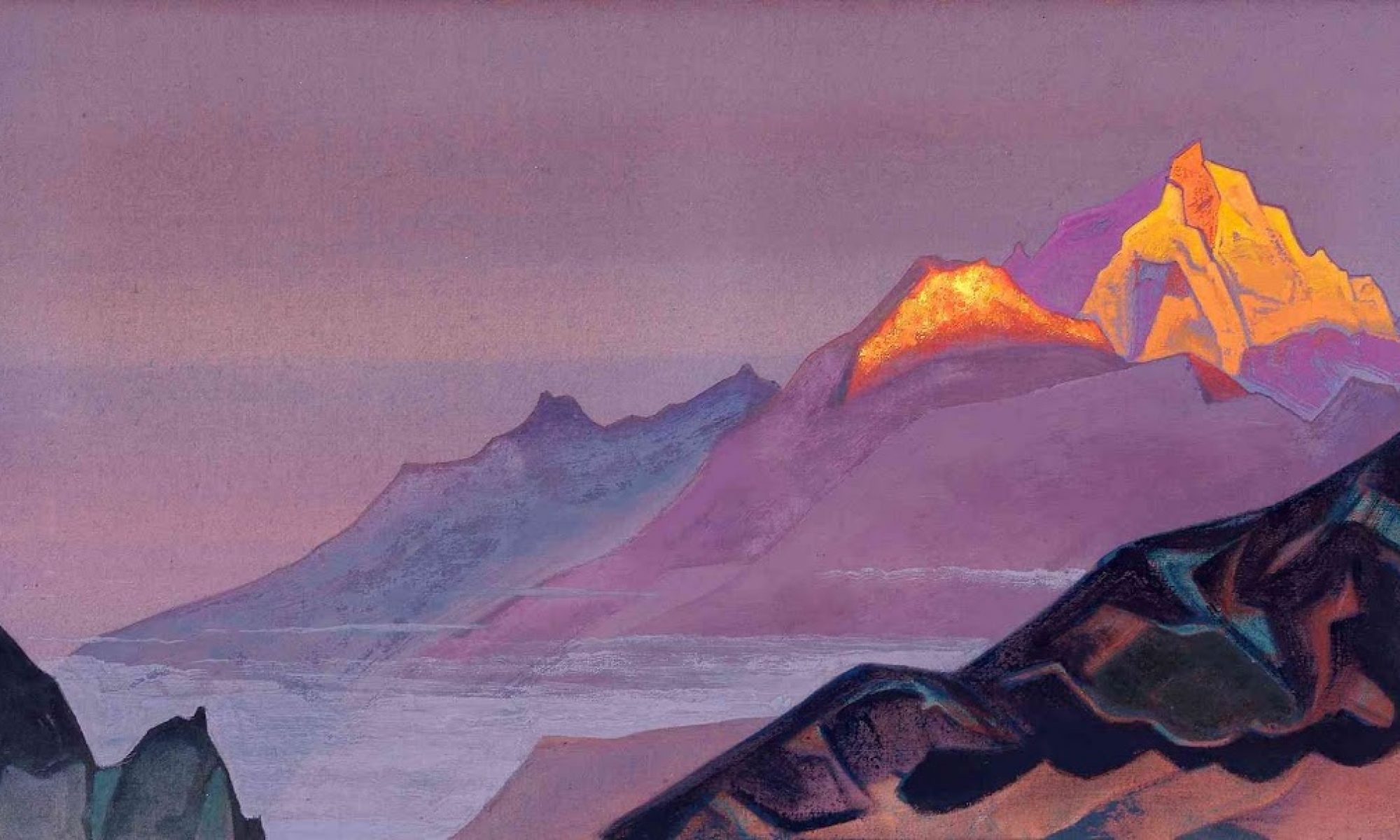
Many critics such as Bishop and Lopez have been more cynical to dismiss the many images of Shambhala/Shangri-la as an Orientalist “fantasy” that reveals more about the West itself than about Shangri-la or Tibet, and these critiques have even been taken up by proregime Chinese scholars to legitimize China’s Tibet policy. However, Yü sees that this discourse “is dominated by self-elected modern rationalists who tend to exclude imagination from human thinking faculty as if it were the inborn error of humankind, as if ridiculing it, degrading it, and getting rid of it would liberate us from ignorance” (p. 190). What these critics tend to ignore, claims Yü compellingly, is that imagination is, in itself, a transformative reality which Tibetan Buddhism actively employs and works with. Thus, nothing is inherently wrong or bad with imagining Tibet as Shangri-la or encouraging the imagination of Shangri-la, though one should be mindful of the power dynamics that are at play. Yü’s final argument is that imagination in contemporary times generates resistance to the modernization project of the PRC in Tibet, and to exploitative materialism on the whole. The social, spatial, and religious imagination, therefore, has been an integral part of both the Shangri-la myth within the Tibetan context, as well as its transformation and appropriation beyond Tibet in China and in the West.
Although I could not find many sources for the modern Tibetan imagination/representation of Shambhala, I found this very recent song by Tashi Dhondup precisely called “Tibet, Our Shangri-la”. Tashi Dhondup was previously detained in “re-education through labor” for 14 months starting September 2008. He was famous amongst Tibetans for his song “1958-2008” which compared the March 2008 uprising with the resistance against Chinese invasion of Tibet in 1958. Judging by the title, and the prominence of this singer, this song may be an example of how Tibetans can use the popular imagination of Shangri-la and Shambhala for their own goals as well, contributing to the endless cycles of appropriation that dynamically interact with its popular imagination. (Still, as there are no translations from Tibetan available, I hesitate to state this conclusively and would love to know if anyone could translate the song for me.)