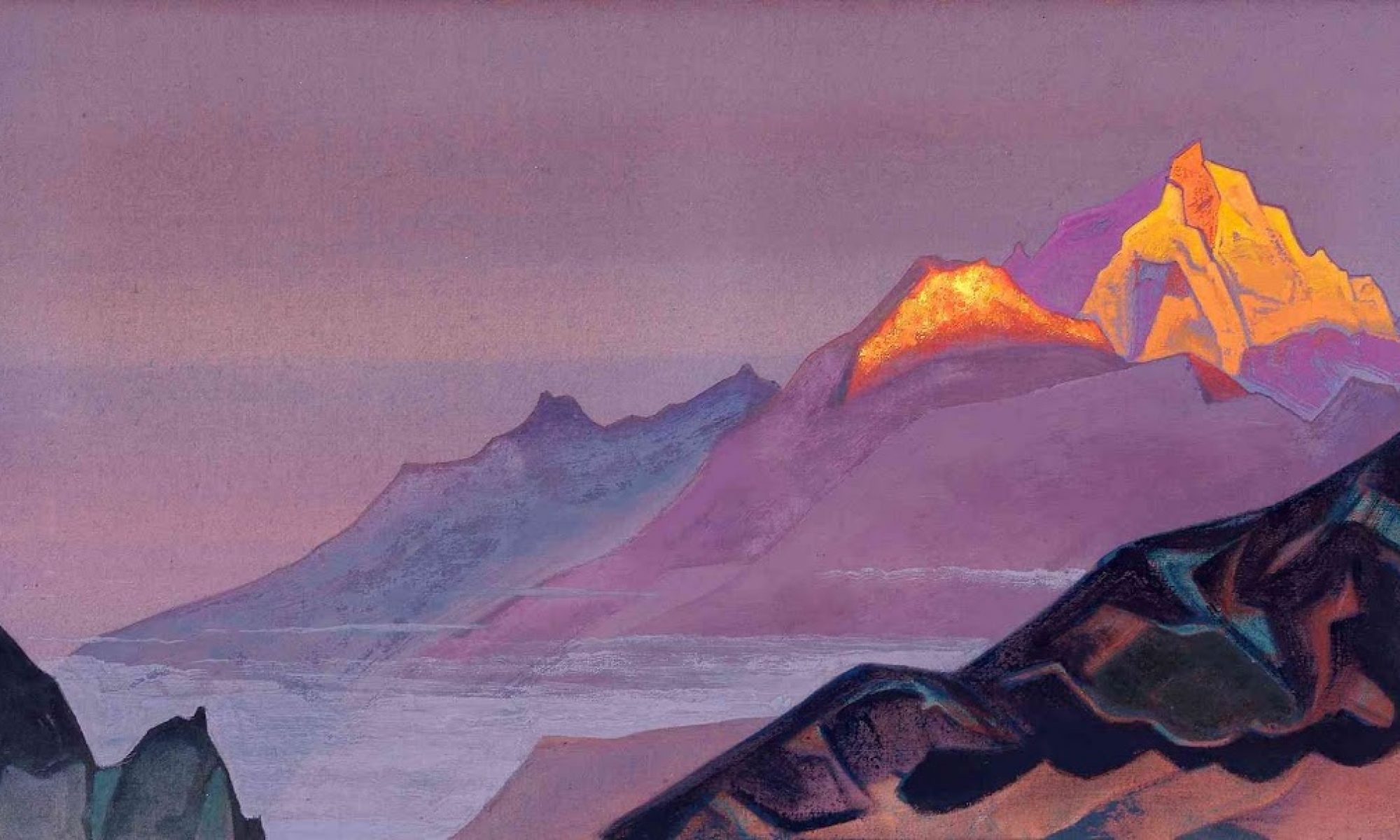
For this section, I looked at and personally translated excerpts from two books in Mandarin that were about Shangri-la in Yunnan but also have deployed Shambala imagery: Forever Shangri-la by Hainan (2009), and In Tibet: Essays on Teaching in Shangri-la by Suyang (2011).
Forever Shangri-la (永远的香格里拉) was written by Hainan (海男) in collaboration with a Tibetan photographer Qi Zhala (齐扎拉). With chapters such as “Shangri-la’s lakes”, “Shangri-la’s snow mountains”, and “Shangri-la’s clouds, dance, and wine”, it is a personal account of the writer’s visit to Shangri-la in Yunnan, weaving in histories and facts, but still bracketed by the tropes and stereotypes of the mythical kingdom. The following is an excerpt from the first section, a conversation about a “Spiritual Thoughts about the Kingdom of Shangri-la”.
Hainan: What does Shangri-la mean to you? I wanted to begin with this topic, because today we are going to talk about the great questions about spiritual thoughts regarding the Kingdom of Shangri-la.
Qi Zhala: At the hearts of the Diqing people, Shangri-la is an ideal realm of life. The “Shangri-la” of classical Tibetan Buddhism refers to a beautiful realm that man and god share and where man and nature live in harmony. Some of its symbols: surrounded from all sides by snow, snow-capped peaks towering in the clouds, vast forests beneath the peaks, with 108 of man’s rarest animals and plants in the forest, the snow mountains embracing vast grassy plains, the plains divided into eight pieces by the river, symbolizing eight lotus ponds. In this peaceful and prosperous place, simple people have their own spirituality, splendid temples, and the beautiful Sunlight City and Moonlight City. There is peace and harmony between people and between man and nature.
海男:香格里拉对你来说,意味着什么呢?我想用此话题开场,因为今天意味着我们要谈的是关天香格里拉王国心灵漫记的美好问题。
齐扎拉:在迪庆人民的心目中,香格里拉是一种理想的生活境界。藏传佛教的经典中“香格里拉”是指一种人神共有,人与自然和谐共生的美好境界,其象征和意味是:西周雪环绕,白雪皑皑的雪峰高耸入云,雪峰下是苍莽的原始森林,林中有人间最为珍贵的108种动植物,雪山怀抱着广阔的草原,草原被清澈的江河分为八块,象征着八瓣莲花铺池;在这宁静、富庶的地方,纯朴的人们有自己的神位,有辉煌的寺庙,有祥和美丽的日光城、月光城,人与人之间、人与自然之间和谐而宁静。
From this brief excerpt, we can already see the mysticization and ethnicization of Shangri-la, even in an interview conducted with a Tibetan, for the purposes of the book – to further continue and perpetuate stereotypes of purity and “peace and harmony” and a mystic timelessness of “forever”, with oblique references to “classical Tibetan Buddhism” to lend itself legitimacy. It is interesting to note how they have transplanted the Orientalization of a mythical, non-material space onto an actual community of people living in Yunnan, and the effects that this has.
In Tibet: Essays on Teaching in Shangri-la (在藏地:香格里拉支教随笔) was written by Suyang (苏羊), after she had spent a year volunteering and teaching children in Shangri-la. Although the bulk of this book does not refer to the original mythology of Shangri-la, being mostly about her experience as a volunteer teacher in the actual county, I found that the preface written by Ding Xiaocun (丁小村) could not resist toying with the imagery, as follows.
Suyang’s descriptions. Far and deep in Shangri-la’s plateaus, in Deqin county’s Tibetan school. The Tibetan children there. Their daily learning and their daily lives. The classrooms and dorms. Happy and unhappy things. The four seasons of the plateau. Snow mountains and wind. Lakes and flowers. The harsh living environment and poor standard of living. The plateau’s beauty and the peace of the soul…I cannot describe these one by one, but I have remembered these, they are as simple and pure as the plateau itself, having lodged in my heart as a poetically serene inner harmony.
This is Suyang’s Shangri-la, one person’s sacred place.
…
Suyang did this, she possessed Shangri-la, her own sacred place.
苏羊的讲述。远在香格里拉高原深处,德钦县山中德普利藏文学校。那里的藏族孩子们。他们的日常学习和生活。课堂和宿舍。开心和不开心的事。高原的四季。雪山和风。湖泊和花草。恶劣的生存环境和贫困的物质生活。高原的大美和心灵的安然……我无法一一描述,但是我记住了这些,它们就像高原本身一样质朴纯净,在我的心里铺展成一片静谧如诗的安详。
这是苏羊的香格里拉,一个人的圣地。
……
苏羊是这么做的,她拥有了香格里拉,她的圣地。
Once again, common descriptions such as “simple”, “pure”, “happy” are used along with the traditional imagery of natural features such as snow mountains and lakes. While these are indeed features of the region, the widespread repetition of these stereotypes risk locking the notion of Shangri-la (both the county and the myth) in essentialized tropes which can continue to be used to reinforce existing power structures. It also is interesting how it is referred to as “one person’s sacred place”, only belonging to Suyang, bringing up the idea of a personal sacrality, or sacredness as something inherently personal. The collective myth of Shangri-la is therefore appropriated to convey a personal meaning of individual sacrality. This is an alternative to common notions of sacred space as communally sacralized via collective ritual and practice. Still, is Shangri-la really something that an individual can “possess”, with its long history and conceptualization in the popular imagination? While the language of possession (拥有) seems somewhat self-centric and possibly violent, perhaps it is precisely because of the broad and expansive collective meaning of Shangri-la that it can be interpreted on such an individual and sentimental level without drawing from the collective imagination.