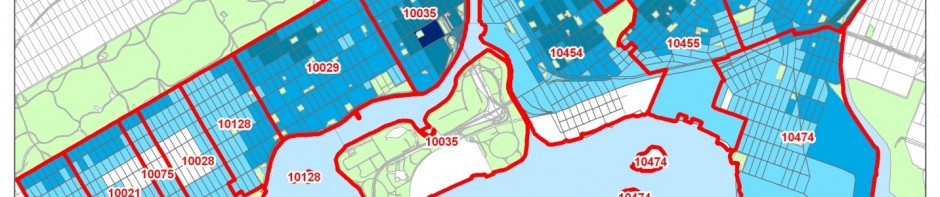
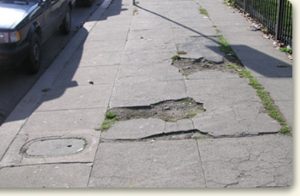
 Using data from the University of Alabama at Birmingham Study of Aging, Rundle and colleagues recently published research showing that higher neighborhood disadvantage is associated with risk of falls among community dwelling older adults. In the first six months of study follow-up, 13% of participants reported one or more incident falls. After adjustment for covariates, including race, income and education, the odds of falls among residents of the most-disadvantaged neighborhoods was more than three times that of residents of the least-disadvantaged neighborhoods. Data were not available on the circumstances of the falls, so the study does not point to specific factors that link neighborhood disadvantage and falls. However, disadvantaged neighborhoods have worse pedestrian infrastructure, including incomplete and damaged sidewalks, a disamenity that may increase the risk of falls. Additionally, poorer neighborhoods also often have lower-quality parks and open spaces that present potential fall hazards and impede the maintenance of fitness and balance skills.
Follow Us On:



Faculty Publications on:

 PubMed Feed
- Novel approach to the codesign of a tailored intervention bundle: applying theory with pragmatism
- Firearms as a Market-Driven Epidemic: Potential Pathways to Reduce Preventable Firearm-Related Harm in the United States
- The Impact of Indirect Transport to a Trauma Centre on Survival for Major Trauma Patients: A National Propensity-Adjusted Observational Study
- The Dual Burden of Weight in YMSM: Structural Inequities and Body Image Pressures
- Perinatal depression and breastfeeding: a longitudinal investigation of the bidirectional relationship in Pakistan
- Estrogen metabolites in premenopausal women living in China, Mongolia, and the United Kingdom
- Associations of social and genetic background variables to neuro-cognitive biomarkers of psychosis
- Adverse sequelae of the COVID-19 pandemic on mental healthcare in six low- and middle-income countries (MASC): a mixed-methods study with lessons for the future
- Cannabis Effects on Neurocognition and HIV-Related Outcomes: Protocol for a Longitudinal Observational Cohort Study
- Dispatch disparities: Neighborhood segregation as a predictor of EMS triage discordance among critically injured trauma patients