
Start a Tech Business in 5 Steps

Starting a tech business might sound daunting, like something reserved only for super-intelligent Ivy League graduates. But with recent advancements in technology, it’s easier than ever to start a business and get it off the ground. Not just that, the digital tools widely available to consumers now make it incredibly convenient and simple to set up fairly complex businesses.

In this article, we’ll go over five steps to starting a tech business—from incorporation to launch and marketing.

Step 1—Lifting Off Without Too Many Hassles

Don’t start off by registering your company as a corp or LLC, it’ll cost you a lot of money and the taxation will drain you too. It’s better to avoid the complicated legal issues that come with forming an entity, and simply get started as yourself, or an informal partnership. It especially makes sense to do this when you don’t have a product ready, IP to protect, or wages to pay

Since it’s a tech company, it would help if either you or one of your partners had a technical background and expertise in the field you’re venturing into. A great advantage you have is that you may not require money to build the product or the prototype. If it’s software, you could just write the code and have the product ready. The major investment here, instead, is in terms of time.

Step 2—Get Them to Pre-order

A smart and efficient method of starting is to approach potential clients with your offering before you spend dozens or hundreds of hours building your product. Reach out to your target audience and share your concept with them as though you already have the product ready. If your target market expresses interest in your product, it means you’re on the right track. If they don’t, then you need to research the market some more and determine what would meet their needs.

You can ask people to pre-order if they are keen on using your tech offering. With some revenue in hand, you’ll have more freedom to experiment with your product and ideas. You can also set up a website for your company and showcase your product. Website building isn’t half as hard as it used to be years ago—take some time to find the best website builder for your needs, and you’ll be on your way in no time.

Step 3—Connect with the Right Talent

With various digital platforms and applications connecting people together, it’s easier than ever for you to find talent for your business—whether it’s at the start, to create your offering, or later on when you’re looking to scale your company. If you’re looking to have a partner (co-founder) on board, it would help to attend networking events or search within your existing network for people with the appropriate skills. You could also find potential co-founders through websites that connect startups with the right talent. If you’re on a lean budget, you should offer the co-founder equity in the company.

Step 4—Marketing and Funding

Effective marketing is not easy. It takes excellent research and application. As mentioned previously, reaching out to potential clients and getting them to pre-order your product is a brilliant way to start out. It can also help with word-of-mouth marketing.

But once your product is ready and you want to scale up swiftly, it can take more than just word-of-mouth marketing. Startups that receive good funding can invest a lot in their campaigns and market aggressively. You could try crowdfunding platforms to receive more funds for your campaigns or get in touch with investors.

Alternatively, you could use various online platforms to spread word of your offering and even attend networking events to do the same. You could team up with relevant bloggers and news websites to share details about your business.

Step 5—Side Gigs for Money

In the early stages, when your business is still in development and isn’t raking in the big bucks, it would help to have side gigs that bring in enough money to handle your basic needs. The options are plenty—you could freelance, teach online, or even write for a publication. Anything that doesn’t drain too much of your time and energy and prevent you from working on your main gig. It can be a lot of fun if you monetize a hobby or a passion area of yours. It could relax you and keep the burnout away.

Ready for Launch?

Now that we’ve gone over the five steps to launching a tech business, hopefully some mystery has been removed. Setting up any kind of business takes plenty of effort, but with a clear roadmap, what could take years could be ready in a few months.

Keep in mind that not all startups take off immediately—your concept may need a few iterations for it to be fully market-ready. But once it’s well prepared, your customers will take to it like moths to a flame.

Digital Health Technologies that Create Health Care Savings

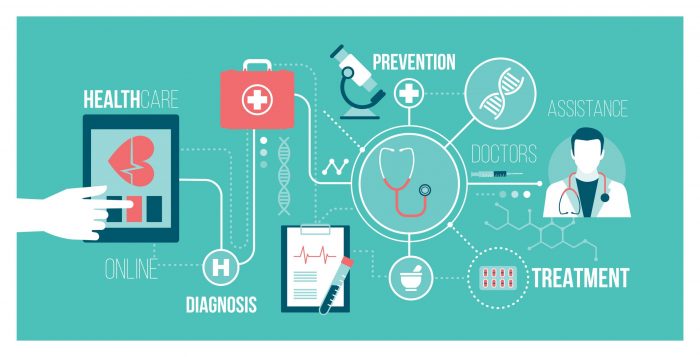
Healthcare has always been a top priority in the US. Chronic diseases make it a big part of a person’s monthly budget. An empirical study in 2018 found that 45% of Americans have at least one chronic disease. The most common chronic diseases were cardiovascular and pulmonary diseases, diabetes, and smoking. A person with a chronic disease spends an average of $5,300 for medication and check-ups.

Recent studies showed that these numbers continue to increase. It revealed that a person spends an average of $11,000 on healthcare every year. This does not even cover hidden costs like productivity loss and salary deductions.

This is where the impact of digital health is making a difference. The integration of simple digital technologies into healthcare is reducing medical costs. Below are a few of the areas where these technologies are making positive changes:

Medication Adherence

Patients with chronic diseases fill out 83% of all prescriptions. A person with at least one chronic disease fills more than 20 prescriptions every year. But, 20% to 30% of prescriptions never get filled out at all. This results in greater spending and poorer health outcomes in the long run.

Digital technologies are emerging to solve this problem. There are now smartphone apps that send out reminders of medication schedules. Others even come with a “virtual pillbox”, which has images of a pill’s shape and size. The app then submits summary reports to the doctor and the patient.

Then, there are digital health marketplaces that allow people access to cheaper medication. One of these is the USA Rx health savings for everyone. Getting access to better offers and deals on medicines helps get prescriptions filled. This, in turn, aids in medication adherence, especially for those with chronic conditions.

Diabetes Prevention

Recent statistics show that almost 10% of the US population has diabetes. On average, a diabetic spends $4,500 every year on medication and lost productivity. Meanwhile, 32% of the total population has pre-diabetes. These are people who are at high risk of developing diabetes.

The best diabetes treatment is not only insulin but prevention. Chronic disease prevention is the key to lower health costs. Prevention requires behavioral interventions, support, and education. And, digital therapeutics now offers diabetes prevention solutions.

A good example is Omada Health. Modeled after the Diabetes Prevention Program study, it offers an online interactive program. It runs for 16 weeks and comes with health coaches and personalized plans. Its main goal is to lessen the chance of developing diabetes in pre-diabetic patients. Based on observations, an average participant lost about 5% of body weight. This makes it less likely for them to develop diabetes. The Center for Disease Control (CDC) now recognizes Omada’s programs.

Smoking Cessation

Approximately 17% of US adults are smokers. Surveys show that companies spend almost $6,000 on employees’ medical costs every year. Smoking cessation requires a lot of effort, support, and behavioral change. As a result, digital therapeutics are being developed and validated for it.

2morrow’s SmartQuit has shown effectiveness in clinical trials. It is a smartphone app-based smoking cessation program. Although not all health insurance providers cover it, it guarantees its quality. If the expected results continue, it will help smokers quit or at least reduce smoking. As a result, lesser smoking-related cases such as lung cancer and emphysema happen.

Chronic and other diseases need prevention and consistent intervention. Digital health products and services can help achieve massive changes for this. It can also promote better efficiency and savings when it comes to healthcare.

The Best Anime Tech

Japanese anime covers every genre and situation you can imagine, from high school basketball rivalries to dread-filled ghostly encounters. But the style that’s perhaps most iconic, and which did the heavy lifting to establish the manga and anime industry as a peerless global force, is science fiction. And science fiction would be nothing without tech.

Sometimes anime’s machines and devices are mind-bending, other times spectacular, and occasionally disturbing. They might make you stop and think, deliberately hinting at ethical and existential dilemmas. And often, they’re just a lot of fun.

Whether you browse an extensive collection of manga and anime at home, or prefer to catch up at 9anime, it’s thought-provoking when you notice that fiction foreshadowed reality. Here’s a selection of memorable anime tech from down the years, that sometimes has parallels in real life.

Thermoptic Camouflage Suit

Featured in: Ghost in the Shell

Predating Harry Potter’s cloak of invisibility, but predated itself by the camouflage technology used by the hunter alien in Predator, is the Thermoptic Camouflage Suit, from the nineties cyberpunk classic, Ghost in the Shell.

These camouflage suits allow their wearers, members of a government intelligence department called Public Security Section 9, to blend into their environment when their suits are activated. The suits take information from their surroundings, and alter the surface material to mimic what’s around, but the wearers are not perfectly hidden.

Could such an artifact ever be manufactured in real life? Maybe so. Among others, a professor emeritus at the University of Tokyo, Susumu Tachi, has been working on something very similar, creating a working prototype camouflage coat with a technology that he calls retro-reflective projection.

Amusphere

Featured in: Sword Art Online

The amusphere is a sleek and shiny headset, that fits over the wearer’s eyes, and has the capability to read and transmit brain waves. Using this information, a fully immersive virtual world is created, which the amusphere wearer, as both creator and protagonist, can navigate and interact with.

The anime in which this concept features, Sword Art Online, is set in the near future, and deals with concepts such as cyberspace, VR gaming, the blending of reality and imagination, and the blurring of organic and artificial.

Heading as we now are into the 2020s, our lives seem increasingly to be shifting online, interactions take place through screens, a metaverse takes shape, and VR headsets can be purchased and played with. As for hooking up brainwaves and machines, tech pioneer Elon Musk is already working on a brain machine interface, at his extraordinary, but slightly creepy, Neuralink company.

Simulated Reality

Featured in: Megazone 23

Another slice of Japanese cyberpunk brilliance, Megazone 23 transports viewers to the early 24th century, an era in which humans live on board colonial spaceships, the Earth having been abandoned to environmental catastrophe.

One of these gargantuan, drifting habitats (Megazone 23, of the title) has been modelled on Tokyo, and is maintained by an all-knowing AI, called Eve. The twist, though, is that the inhabitants don’t know they’re in a simulated and computer-managed version of reality.

Concept sounds familiar? If you’ve watched The Matrix, The Truman Show, or Existenz, then you’ll have come across similar themes and set-ups. They all came after Megazone 23, though, which was released in 1985. But then again, Plato’s Allegory of the Cave was written around 380 BC.

Existing in a fabricated reality sounds far-fetched, but could something like this actually happen? There are a few deep thinkers who propose not only that it could, but that it already has. The idea is called the simulation hypothesis, and it suggests that it’s actually more likely than not that you are in a simulation right now, but you aren’t aware of it, and can’t—for now at least—prove it. After all, how would you know? And how would you get out?

Doko Demo Door

Featured in: Doraemon

Doraemon is one of the true greats of Japanese children’s animation. It started life in manga form, way back in 1969, and is still going strong today, revamped through the decades, and adored across generations.

Colourful, humorous, and endlessly creative, the titular character is a blue, robot cat, sent back in time from the 22nd century to take care of a young boy, Nobita, by Nobita’s own future grandson.

A key component of the Doraemon stories are the robot cat’s futuristic gadgets, pulled from his pocket, which itself has the mysterious capacity to contain a multitude of objects. Close to 2000 such gadgets have appeared throughout the many shows and movies, and there are a handful which are regulars, as famous as the main characters themselves. One of these is the Doko Demo Door, which means, in English, Anywhere Door.

When utilized, it takes the form of a pink, free-standing door and frame. The user can then step through and be transported instantly to any location.

Throughout the mishaps and strange adventures that the characters in Doraemon experience, technology is always presented as larger-than-life, packed with potential, and simultaneously unpredictable and irresistible.

While the Doko Demo Door is fantasy, the optimistic vision presented in Doraemon, of tech and our relationship with it, is something we can all keep hold of and be inspired by.

The Essential Steps For A New Tech Business

How many startups succeed? Just 10%.

That’s a stark number, but it’s not there to bring you down, it’s to show how critical it is to get your approach in order so you can pull ahead of the 90% that don’t make it.

Anyone can do it, if they go about things the right way, so here’s what you need to fire up a successful tech business in a crowded market.

Provide solutions, nothing else

Customers don’t go out, or online, searching for features, gimmicks, or lifestyle tweaks. The majority of people, the ones you need to attract, have a problem and are looking for a fix. They will go with whoever can provide an efficient, safe, easy-to-access solution, at an agreeable price point. Your priority is always to provide that solution.

Think about times when you’ve needed something, and what you spent your money on. Consider famous successful businesses. What do they do? You’d be hard pressed to find one that isn’t providing a solution, and doing it well.

Create your name and logo

This part is fun. Some people might leave it until later, but for many it can be inspiring, and so is worth addressing early. Once you have a vibrant brand identity, you can really start to perceive your enterprise taking shape.

You can use a business name generator to help pick a name that has impact and longevity. It shouldn’t be hard to spell or pronounce, and it should represent what you do, while having flexibility should you diversify in the future.

Get yourself a beautiful logo too, and you’re good to go.

Build your MVP

Now we’re getting down to business. Here’s where you put together your Minimum Viable Product, meaning the minimal version of what you plan to provide.

This will attract customers, serve a purpose, and allow you to gather feedback and make improvements.

The MVP concept can apply to all products and services. You’re pushing something out there, garnering attention, and receiving user data to convert into refinements.

The key here, at first, is functionality, followed later by design. When it works, you can style it.

Get an eye-catching website

Tying in with the name and logo, this is where your business comes together as a trustworthy, professional package.

If you have the coding and design skills, you can build from scratch, but while this saves money, it’s time consuming, highly specialized, and not the best option for most people.

A viable, affordable route is to look at freelancer sites and find the best deals by hiring a developer directly. You can get great work at reasonable rates.

If you’re on a larger budget, you can go to a web development agency. While it costs more, you’re guaranteed a quality product, customized to your specifications, with ongoing support.

Alternatively, try a do-it-yourself website builder. These don’t require coding skills, are cheap, and give you a professional-looking site, although you’re limited by their parameters, and will have to expend some of your own time.

Team up and network

Do this internally and externally. WIthin your startup, do you want to do it all by yourself, or can you bring in like-minded, motivated people and make it a team effort? A small, tight-knit group, each with their own speciality, but all on the same page, can make mind-blowing progress.

Externally, network, partner up, and collaborate. Put yourself and your ideas out there. You never know where a conversation will take you, so follow every lead. And at all times, while recognizing the importance of being confident and driven, stay humble. Learn from those who are successful, and when the time comes and you’re that person, pay it forward.

Start already!

It will always feel like there is a better time, a skill to be mastered, something else you need to think over.

But in reality, the best time is now, so get started immediately, and adjust as you go. Things move fast, particularly in tech, so rather than watching the currents pass by, it’s far better to be among the action.

You’ll be amazed at how much you learn by doing, and how much better you’ll retain what you pick up. You’ll find paths you’d never heard of, around obstacles you didn’t know existed.

Fail, learn, become stronger

Don’t be afraid of mistakes. Take the losses, and learn from them. It’s important to understand that setbacks are inevitable, and what matters is how you respond.

In tech, you can never be entirely sure how something will work until you try it, and it’s usual to spend time removing bugs and ironing things out, or even to start whole sections over again.

The key is your mindset. You execute, something fails, you correct and execute again. You repeat this process until it works, with the difference at the end being how much you learned and innovated, and how much stronger your project became.

In this way, over time, losses are gains, and so above all, enjoy the ride.

Travel During Covid: Is It Worth the Risk?

Travel in the wake of the pandemic might be a risky undertaking.

We may not have defeated Covid entirely, but more and more good news is arriving each day. With vaccines showing promising results and the economy recovering, the first step back into our everyday pre-Covid life is nearer than ever.

As countries are slowly re-opening to welcome new visitors, many travelers are aching to hop on the next plane and discover the world. While many nations still impose laws like mandatory masks and social distancing, tourists can somewhat safely enjoy the wonders of the (open) world. While countries across Europe allow travelers to enter with a vaccination certificate, proof of immunity, or negative Covid test, other nations like the United States only allow nationals and essential personnel to cross the border.

Nonetheless, airlines and other players of the tourism industry are already forging plans to reignite the economy. Many offer heavy discounts or cooperate with hotels to create complete vacation packages at bargain prices.

Now that the world of traveling is opening up again, many are looking for destinations to travel to. Covid marked a shift in perception for many of us, including the availability of traveling. With closed borders and grounded airplanes, countries and places we always hoped to visit were suddenly further away than ever.

Remember that vacation to Singapore you always planned but never followed through? Or the trip to Belize you always talked about with your significant other, just to never realize those plans? Many of us have those dream vacations that we always wanted to do but postponed indefinitely. If Covid showed us one thing, it was that those plans could be destroyed any day.

So now is the best time to make up your plans for 2022. With prices lower than ever, many destinations are just waiting to be visited. If you need inspiration, you should consult your favorite travel site. This site has a host of fantastic articles about cities and destinations you might have never considered. So, if you are looking for your next vacation, make sure to look at some of their recommended towns and areas to visit!

Tips for Travel in 2022 and the Future

Picking a travel destination is a question of open borders, as well as one of hygiene and safety measures. Many countries handled the pandemic in vastly different ways, from strict lockdowns and closed borders to the complete negligence of Covid and its effects. As such, traveling in a post-Covid world might be more dangerous than what it seems like.

You should avoid countries that took almost no measures to fight the Coronavirus. This includes many countries in Africa and Asia, but also more prominent countries like Brazil, where president Bolsonaro made weird claims about Covid and the vaccines, despite getting vaccinated himself. So, even while travel to Brazil is legally possible, it should probably be avoided. The same goes for a number of countries.

In the same vein, maybe your focus should shift towards remote travel destinations. The further away from big cities, the lower your risk of getting infected or being subject to strict rules. While towns and countries are still battling with the disease, the countryside might be more welcoming. Besides, many countries have beautiful places outside of their big cities.

So, choosing the first country to visit can become a riddle. For now, it might be best to wait a few more months and see how different governments handle the pandemic. As vaccination campaigns progress, there will undoubtedly be more news about countries opening their borders soon.

One thing to note is the upcoming spike in prices for traveling, though: For brave travelers, booking flights and hotels during the pandemic was a bargain-hunting galore. Tickets were cheaper than ever, and hotels desperate for visitors underbid each other to gain business. However, with the economy slowly recovering, so are the prices of the travel industry. As a result, plane tickets are rising in price, and hotels are returning to their old pre-Covid rates.

Another factor to note is the increase in demand for travel. As traveling becomes safer, more people will book tickets and hotels. Due to that, finding a vacation at a reasonable price could become a challenge of its own. Besides that, more destinations will be swarmed with tourists, making the stay riskier. Therefore, planning a vacation could become a question of risk vs. reward.

If you are up for the gamble, you can book a vacation now and plan it for next year. However, with mutations still being a significant threat, nobody can say what 2022 will look like. Due to all of these factors, it is probably the best idea to sit tight for a couple more weeks and wait before you book your next trip.

The Christmas Spirit Still Lives on, Even Under the Shadow of Lockdown

Christmas has always been seen as a kind of comforting constant in our world. A tradition-filled holiday that will always be there, waiting for us, no matter what trials and tribulations we might have gone through in the preceding rest of the year. Christmas would be the one shining season where we could just get together and celebrate all the good things in the world.

But even a time as sacred as Christmas has been affected by the Covid-19 pandemic. Uncertainty and isolation made for a chilly Christmas season, and I’m not talking about snow here. In fact, by looking at the effect of the pandemic during 2020’s Christmas celebrations, we can get a pretty good idea how the virus will affect this year’s Christmas as well.

In the Philippines, for example, home to the world’s longest Christmas season, pandemic lockdowns have decimated the jubilant parties and mass gatherings that have long been a staple of the holiday in this country. Yet massive city decorations in the capital Manila were still set up, with residents queuing in lines that span multiple city blocks, just to visit and spend time with loved ones in a place that exuded the Christmas spirit.

Meanwhile, Christmas in Japan was a muted affair. No surprise, as at the time the country had been grappling with a surge of cases just a handful of days ago. Planned concerts were cancelled, and businesses of all stripes were forced to reduce their staff after vastly decreased customer visits.

Despite the fact that it had become one of the world’s worst death rates from the pandemic, millions of people in the United States chose to travel domestically for last year’s holiday season, defying government pleas to stay home and keep movement to a minimum. However, Americans were still wary of international travel.

Certainly, Christmas festivities had been turned upside-down by the demands of the new pandemic. However, this isn’t an article about doom and gloom. While many storied Christmas traditions were certainly quashed last year (and almost certainly this year), celebrants kept the spirit of the season alive by adapting the celebrations to meet lockdown guidelines.

Churches around the world, from the Vatican to the United States, had made livestreamed and pre-recorded Mass a common and accepted form of worship in these fraught times. Families replaced traditional family gatherings with gatherings over Zoom, Skype, and other video-conferencing software.

Retail holiday shopping had been significantly dampened by social distancing rules. Even the most frantic of Christmas shoppers weren’t allowed to enter stores with too many people inside them. It’s a good thing then, that online shopping has advanced to the point where most (if not all) things you could find in an in-person store, could also be found in an online store. Rates of online shopping rose during the pandemic, as people that were initially hesitant to try it were encouraged towards it by increasingly harsh rules outdoors. With online shopping, one could buy enough gifts for the entire family from the safety of one’s own home. Sure, there may be delivery delays and product shortages, but those aren’t any more bad than the inconveniences you’ll have to face at a physical store. Remember the stampedes during Black Friday? Shopping on Christmas Eve is nearly just as bad.

Caroling had also been heavily neutered by Covid restrictions. Caroling in person had either been made smaller with social distancing rules in play, or was banned entirely. Instead, digital caroling had taken root, where people gathered on video-chat platforms such as Zoom and sung to their hearts’ content what could not be outdoors. While varying internet connections may have made it a pain, the option some platforms have to record meetings have been very welcome in preserving a Christmas memory for posterity.

Mall Santas were still kicking around last Christmas, but now they had to be behind plastic barriers, which certainly turned down the magic of the experience for any child and adult. However, for any child or younger relative who still wants to talk with Santa, you could have them write and deliver a letter to Santa, then have them receive a letter from santa in return. Even the smallest bits of magic are valuable in this period of clinical caution.

It just goes to show how people can be very adaptable, no matter the weird or varied circumstances thrown their way. All of this also shows just how much people want to celebrate our special occasions, no matter how inconvenient or potentially hazardous they may be. Having a sense of hope and belonging is nearly as important as food or water, and people will always strive to keep that hope and fellowship alive even through these dark times.

This article is one of those strivings, by the way. Just in case you haven’t noticed. So, without further ado, I wish all of you readers a merry Christmas, and a happy New Year.

Improving Access to College Education

College in this country is notoriously expensive: the average four-year cost of attending a nonprofit public college has increased by more than 150% since 2000, according to the College Board. Many students and families have little choice but to take out loans to finance their education. Unfortunately, the total amount of outstanding student loan debt in the U.S. now exceeds $1.4 trillion and the average student loan debt per borrower exceeds $34,000—levels that scare many fiscally-minded young people away from college education entirely. But why is this the case, and what can we do as individuals and as a country to improve access to higher education?

How Did We Get Here?

College tuition in the US is considered to be among the most expensive in the world. Part of this is simply prestige: most US colleges and universities are ranked among the top institutions globally. They are also highly selective, admitting only the top 10% of applicants, at best. The difference in quality between the top 10% and the 90% is what makes the cost so high. But that’s not the only factor: the cost of education has risen much faster in the US than the inflation rate. According to the US Census Bureau, the national inflation rate in the US is 2.2% for the year 2018. But the inflation rate for college tuition and fees is 6.1% for the same year.

Partly, these costs are driven by constraints on supply. According to the National Center for Education Statistics, there are about 4000 degree-granting colleges and universities in the US. This means that the competition for students is fierce. To attract students, colleges and universities need to invest in new facilities, programs, and faculty. The end result is a hike in the cost of education.

The other factor, of course, is the cost of living in major US cities. Education hubs such as Boston and New York City have some of the highest housing costs in the world. Other large cities in the US, like San Francisco, Washington D.C., Los Angeles, and San Diego, are also among the most expensive places in the country—and this cost is ultimately borne by students if they wish to live in the area.

This, coupled with the high cost of education, makes it difficult to live on a student’s paycheck. As a result, many students are forced to take out expensive loans to finance their college education.

Across the Sea

In the U.S., it’s fair to say that, like most things, the university education sector is market-driven. In other words, its price is driven by supply and demand. By comparison, many European countries have a large degree of public funding for universities. As a result, the price of education is much lower.

For example, Scotland has a policy of free tuition for Scottish resident full-time degree students. Sweden provides tuition-fee-waivers for the poorest students, and the government also pays part of the tuition fees for the rest. Norway and Finland, meanwhile, have a policy of free education.

In contrast, the US government provides comparatively little direct funding for higher education. In 2019, PEW estimated the figure to be around 34 per cent of total revenues.

Zoom Zoom

The most obvious way to reduce the cost of college education is to cut the cost of tuition. This is something that technology is already allowing us to do. This year, of course, colleges around the world have been forced to invest in technology for distributing classes online. While studies into the efficacy of online learning are a mixed bag, the consensus on the economics are pretty clear: it’s much cheaper to deliver.

What does this mean for students? For starters, it means that there is a much wider range of courses available to them. An online class can be scheduled to run from anywhere. And classes can be delivered to students in the middle of nowhere, with a minimal amount of infrastructure. But analysts are also predicting flow-on effects for the cost of education. In theory, if you can package up a course and deliver it online, the cost of delivering the course should fall and therefore fees should be lower. In practice, it’s not that simple – but signs are there that the trend towards online learning will put downward pressure on tuition fees in the long run.

Practical Solutions

As a student, what does all of this mean for you? Firstly, it’s worth noting that any decision to go to college—whether it’s public or private—will unfortunately be a financial one to some extent. If you’re paying the out-of-state tuition rate rather than the in-state rate, you should expect to have to pay more. And if you’re considering a private college, you should expect to pay a significant premium for the privilege.

As a result, it’s worth considering the following:

Start saving early. It’s never too early to start thinking about how to pay for college. The sooner you start saving, the easier it will be to pay for college without taking out loans.

Keep your eye out for scholarships. These are not just reserved for elites going to Ivy League schools. Think outside the box – there are many sporting scholarships, art scholarships, and increasingly private companies are offering help as well. A small mover scholarship may prove the difference between attending an out-of-state school and not. And applying for a furniture shipping scholarship like this does not preclude you from taking funding from other sources—so you lose nothing by applying.

Consider attending public schools. If you live in a state with a low cost of living and a high quality of public education, you might find that you’re better off attending a state school in-state. This is something you’ll need to research closely, but it’s worth thinking about.

The Bottom Line

Going to college and getting a degree is still one of the best investments you can make in your future. But the cost of college education in the US is becoming prohibitively expensive for many families. As a result, more and more students are taking on high-interest loans to finance their education. It’s a bad situation for students and a bad situation for the US economy as a whole.

The good news is that technology has enabled us to deliver high quality education more efficiently. The future of education is online – and that could be a boon for consumers. But until this transformation fully takes place, it’s up to you to think of innovative ways to fund your education—so start planning early, think outside the box, and don’t be afraid to change your plans to match the current economic climate.

Gaming – From Retro to Online

Image Source

Before getting into the article, I would like to start with a question: How many of you are playing the same games that you played ten years ago? The answer is most probably close to none.

The way we play games has changed to a great extent over the years. Before the internet’s introduction, most of the games we played were conducted in an outdoor environment.

But with great technological innovations on the rise, online games have become much more popular. According to this report in the past year alone, the gaming industry has garnered over 20 billion US dollars of revenue.

We can also see these changes in the online casino industry, where more and more companies are now shifting to online mode.

Game Technology

At the start of game development, games like Donkey Kong and Pac-Man were played with the help of arcade machines.

As time progressed, technologies changed and games were played with the help of gaming cassettes and DVDs. During this time, games like Duck Hunt and Super Mario started getting popular all over the world.

After DVDs came the servers, that can be used to host multiple games. From this report, we can also see that the video gaming industry is growing year on year and there are close to 3 billion players all around the world.

Truly, the gaming industry is just growing bigger day by day!

PC & Mobile Gaming

If there is one thing that changed the gaming industry forever, then it is the advent of PC gaming and mobile gaming applications.

These new types of gaming applications were positively received by gamers. Many people soon caught on to gaming and came into the industry.

Also, with the increase in the number of game developers, more games have started emerging in the market.

Access to Technology

The major reason for the popularity of the gaming industry is ease of access. Now more people can afford a PC or a mobile device , and they can straight away start playing.

During the early days, a single console can cost thousands of dollars. But now, the cost of gaming consoles has been reduced drastically and made more accessible to the general public.

Research & Development

As the gaming industry grew, many people and companies with big budgets started entering the market. This gave rise to a new type of gaming development, where realistic games are given more preference.

With years of development and billions of dollars in investment, games have now become more and more realistic.

Also, new technologies like AR & VR are transcending the limits of reality gaming. Using these technologies, gamers can immerse themselves into lifelike gaming environments.

These technologies are also used in developing educational games, which can integrate entertainment into learning.

Convenience

The internet took the gaming industry to the next level—the online level, so to speak.

Now, a person living in almost any part of the world can access and play a game that is live on the internet.

This level of convenience was never achievable before, playing with people online. That’s why offline gaming DVD stores are becoming scarcer by the day.

There are also no time restrictions to play these games, gamers can even play on transit and track their progress.

Tournaments & Contests

A few years back, gaming was seen as a form of entertainment and people would play games to just have fun.

Nowadays, gaming has become much more competitive with many difficult levels. This has even led to new titles among gamers like professional gamers, gaming coaches, etc.

These tournaments and contests also come with huge rewards in the range of millions of dollars. For example, last year DOTA 2 (an immensely popular MOBA game) came with a prize pool of over $30 million.

Streaming Gaming Videos

Another major reason for the increase in the growth of the gaming industry is video streaming applications.

There are now thousands of gaming channels on YouTube as well as many websites dedicated to gaming. Some examples include Twitch.tv, Steemit, and many more.

Through these mediums, a single game can reach millions of users within a short period.

Indie Game Development

There is a big buzz in indie game development, a new type of game. With the help of free applications like Blender, many game developers have started developing interactive games.

This has led to a greater number of games getting published, which in turn brings in new users to the gaming industry. As we speak, someone else is developing a game from their bedroom.

Conclusion

If there is one thing that has not changed so far, it is that the gaming industry never sleeps. This level of game development will continue to grow in a positive direction and with the help of new technologies, we can expect more interactive games in the future.

Surfing to Success on the EdTech Revolution

Teaching spaces have come a long way in the last couple of decades. We have moved on significantly from old-fashioned classrooms where the only semblance of multimedia technology was the overhead slide projector. And, thankfully, we no longer have to wait for school staff to unlock the dedicated computer room—with its rows of clunky CRT monitors—in order to research our projects. In fact, students these days can undertake a large proportion of their learning assignments without even stepping onto the grounds of an education facility.

When the COVID-19 pandemic shut down schools of all levels across the world, educators and institutions had to scramble to provide a substitute for face-to-face instruction. Even before the pandemic, online education technology or EdTech was already making strong growth with the market projected to hit 350 billion US dollars by 2025. Boosted by the lockdowns, there has been a huge surge in the adoption of EdTech in the past year. From virtual tutoring to video conferencing, language apps to e-learning software, it seems that the education industry has progressed far ahead from its previous state. Learners now have several options for a Masterclass student discount, and there are many other learning platforms that offer attractive student rates. But how does this realistically affect the students?

Quality Education

With the expanding EdTech market, there are currently numerous online education platforms that provide an alternative to the conventional school system. These platforms offer courses—referred to as massive open online courses or MOOCs—that are available to thousands of students all over the world. The first-ever MOOC was a 14-week course titled “Circuits and Electronics” that ran from March to June 2012. Since then, over half a million learners have enrolled in this course, demonstrating the incredible reach of digital education.

There is now a wide variety of MOOCs available for students to choose from. Courses range from skills upgrading such as sign language and basic design to bona fide diploma courses in tourism or microbiology. The online education platforms combine a range of multimedia assets to provide students with an interactive and interesting course curriculum. The courses themselves are crafted by experts and often accredited according to legitimate and internationally recognized benchmarks such as the Continuing Professional Development (CPD) Qualification Standards.

Students participating in these online learning courses gain access to a sea of resources that would otherwise be out of their reach. This could include real-life case studies, insight from world-renowned mentors, or behind-the-scenes videos from industry leaders. Certain subjects, particularly in the medical and science fields, have a very high entry barrier and require years of prior study. Many online learning platforms now offer courses in these fields with no prerequisites. The ability to compile and circulate specialist materials and information is no longer restricted to the traditional school system, thus increasing the equity of education.

Time for Life

Instead of spending years trudging down a university study track and having to choose between full-time work or study, individuals can embark on a course of online education while at the same time meeting their family and income commitments. The flexibility of online learning means that as long as students submit their course work by specified deadlines, they have the freedom to choose the most appropriate time for them to carry out their studies. For some, this could be in the early hours of the morning when it is most quiet. For others, it could be over the weekend when they have the time off from work. Virtual classrooms are available at any hour of the day and any day of the week. This convenience is a major advantage and makes higher education more accessible to those who live in a household with only one computer to share.

The advancement of EdTech has also been critical to adults and mature age learners who seek to remain competitive or just want to enhance their CVs. Older students have less time and patience for micro-frustrations such as tedious bureaucracy and the navigation of complex technological interfaces. The development of friendly user interfaces from extensive user experience testing has been essential in the retention of adult students, who just want the important information without irrelevant distractions. The collaborative learning and peer-review structure of many modern online courses are also more suited for adult students, who are used to the idea of autonomy and dynamic engagement in the workplace.

Despite its many qualities, the most appealing feature of online education is probably the cost, or lack thereof. As a matter of fact, there are many free online courses that range from fashion to technical writing, allowing individuals to pursue their interests without putting pressure on their finances. Not to worry, though, as paid courses are not much more expensive either! It can cost as little as 30 pounds to enroll in a one-year professional diploma course via an online education platform.

The accessibility and affordability of digital learning have allowed unprecedented numbers of people to upgrade their skills, knowledge, and employability. As EdTech advancement enables educators to blend instruction with interactivity, the online education sector is poised to reinvent our definition of schooling. By allowing students more say in how they complete their coursework, lifelong learning and self-made success change from mere buzzwords to a believable reality.

Accelerating Inventory Management With Technology

From mom and pop corner stores to the distribution warehouses of global retailers, businesses rely heavily on inventory management to achieve operational success. An inventory typically contains a retail or manufacturing company’s most valuable assets, thus it is critical to implement an inventory management system that runs smoothly. Some benefits of a well-managed inventory are lower storage costs, increased customer satisfaction, more sales, and reduced labor costs. If these issues are of interest to you, perhaps it is time to overhaul your inventory management system.

Moving On From Manhours

We have come a long way from Microsoft Excel printouts, clipboards, and pencils tucked behind our ears. The tedious and endless task of manually checking and rechecking stock and filing reports that are already out of date before they leave the warehouse is a headache that many business operators are happy to be rid of. Aside from being painfully slow, manual inventory management is also liable to human error. Mistakes such as missing items or doubling up on tallies may be minor on their own but add together to cost businesses in terms of efficiency and the bottom line.

The proliferation of Internet technology has allowed businesses to expand towards the global marketplace while concurrently enlisting new contributors to their supply chain. As a result, companies who want to stay competitive now require more specialized solutions that can deliver on-the-minute information and be scaled up to meet their growing needs. The numerous technological advancements in modern inventory management seek to fill this gap.

It is common knowledge to business owners that labor costs—which include wages, benefits, and applicable taxes—can account for up to 70 percent of business expenditure. While the push for a higher minimum wage and more employee benefits may be justified, it can prove a challenge for companies that are already struggling on the budget front. Even for companies with resources to spare, it is prudent to save on labor costs through automation. Automated systems use computer-based tracking and advanced tagging technology to log the status of items and manage the fulfillment of goods accurately. Best of all, businesses only have to pay a one-off cost during the set-up.

Being Inventive with Inventory

Emerging inventory management RFID technology is an example of an advanced tagging technology that is poised to be adopted across the inventory management industry. A Radio Frequency Identification (RFID) tag is a form of ‘smart barcode’ containing large amounts of data that can be shared with a reader device via radio waves. This data is then transferred by the reader device to an inventory management software that updates the inventory database and initiates further actions if required.

The two main types of RFID tags are passive and active. Passive RFID tags have no battery source of their own and are powered by the readers when within a certain proximity. This means that the passive tags have a shorter working range but a lower price point. Active RFID tags have their own onboard battery and can continuously broadcast data. These active tags are perfect for tracking large moveable assets such as machinery or vehicles.

Perhaps the most attractive perk of RFID technology is that it does not require line of sight to function. This means that it is possible to scan an RFID tag from a distance and in any orientation. Unlike traditional barcode scanning systems that still require workers to walk the warehouse floor, physically retrieve items, and manually scan them one by one, RFID technology allows an entire pallet of items to be recorded simply by rolling them within the range of a reader. By reducing the check-in and check-out times for inventory items from hours to mere seconds, the competence and capacity of warehouse operations are increased exponentially.

Another way that RFID tags can help expedite the inventory management process is in the locating of items. Perhaps you have a new employee or a sprawling warehouse complex with hundreds of thousands of items. By activating the relevant RFID tags through a mobile tracking device, employees can pinpoint the location of any item within their vicinity. Through speeding up such actions that are undertaken multiple times daily, businesses can free up the time of their workers and direct them to tasks that are more fulfilling and productive.

An additional benefit of using RFID technology is for those that are on the decision-making level. RFID inventory management collects information as an item moves through the distribution chain, improving transparency and providing information on patterns and performance. This digital information enables business managers to make astute decisions based on reliable real-time inventory data. From determining which products are most in-demand to remotely restocking retail shelves, big data analysis is invaluable for ambitious businesses.

As business strategies evolve across the modern global marketplace, companies need to maintain their partnerships with technology. Technology not only expands opportunities for supply and sales but also provides avenues for companies to improve their internal processes. In this time of business renewal, there is little room for error and unnecessary expenditure. Companies should subscribe their inventory to visibility, efficiency, and accuracy by implementing a smart inventory management system.