A Step-by-Step Guide for Every Aspiring Gardener

“I’m just not cut out for gardening.” You think back to all the plants you tried growing, and none of them lasted beyond a week under your care. Your futile attempts may have even made you swear off gardening at some point.

Deep down, you still wish to succeed in growing your plants one day. If that’s you, don’t let your past failures stop you from trying again. Here’s a step-by-step guide to equip you to cultivate a beautiful and bountiful garden of your own, including choosing a location and installing a garden watering system:

Step 1: Find Your Plant Hardiness Zone

As you may have experienced, it is disheartening to invest your time, effort, and money into tending plants that don’t grow well or at all. You may have made the mistake of choosing plants that can’t grow in your area!

Besides choosing plants you like, consider if they can thrive where you live. Use the USDA Plant Hardiness Zone Map to find out if a certain plant can survive in your region’s winters, especially if you intend to grow perennial plants (i.e., plants that survive winter and typically regrow year after year). Some perennial plants are peonies, blueberries, and thyme.

Step 2: Find An Ideal Location in Your Home

Apart from the region you live in, the microclimate – your yard conditions – will affect how your plants grow. All plants require sufficient sunlight and suitable soil to thrive; your landscape should be able to support the growth of your plants, be they perennial or annual (i.e., plants that grow according to the seasons and die during winter).

How much sunlight is the allotted space in your yard exposed to in the day? Each plant requires an optimal amount of sunlight to grow (i.e., full sun, partial sun, partial shade, and full shade). Evaluate the amount and intensity of sunlight and shade in your yard and consider plants that can grow under the sun exposure your yard offers.

What kind of soil do you have in your yard? Soil provides plants with nutrients, water, and air to develop. The different soil types are sandy, clay, silt, loam, peat, and chalk. Each soil type has its benefits and limitations; you may need to mix additional compost and fertilizers to facilitate the growth of your plants.

Step 3: Refine Your Plant List and Start Planting

While you may want to plant every viable option, limit the number and type of plants for a start. Refine your existing list further by 1) setting a budget and 2) considering companion plants. Growing certain plants together helps increase yield, improve pollination, and manage pests. Some examples include the three sisters (corn, pole bean, squash), tomato and marigold, and carrot and rosemary.

Different combinations of vegetables, flowers, and herbs can help you create a productive and diverse garden. As you gain more experience and success in maintaining your garden, explore different variations to enjoy a fully-bloomed garden and seasonal foods throughout the year.

Step 4: Maintain Your Garden

Gardening doesn’t end after setting up your equipment and sowing the seeds; your plants cannot grow or survive long without regular watering and weeding. You need to commit to tending to your garden regularly for it to remain attractive, healthy, and bear fruit.

Consider installing a garden watering system to help you water your plants sufficiently and evenly. Watering your plants with a water hose, can, or sprinkler may lead to overwatering or underwatering. Some telltale signs of overwatering include soft stems, yellowing leaves, and leaves with brown spots and edges. Conversely, underwatering your plants can cause slow growth, and the leaves to droop and wilt.

Another aspect of maintenance is weeding. Commit to a weekly weeding schedule. While it may be a cumbersome process, removing weeds frequently helps ensure that your plants have sufficient moisture, space, and nutrients to thrive. Leaving the weeds to grow amongst your plants will instead stunt their growth, and kill them over time.

Involve your family in maintaining the garden where possible. You can teach your children responsibility by assigning age-appropriate tasks such as watering the plants and harvesting ripe fruits and vegetables. They are also likely to develop more interest and appreciation for their food. Tending to your garden with your family can also allow you to create new memories together in the comfort of your home.

Gardening may require a lot of planning and labor, but the benefits are numerous. You get to create a green gateway in your yard and liven up your home, especially if you spend more time at home these days. Spending time to take care of your garden regularly can help relieve stress and improve your mood. Growing your fruits and vegetables in your yard allows you to enjoy fresh and seasonal produce, saving you money and trips to the supermarket.


How Can Computer Vision Improve Manufacturing?

Manufacturing has always been a great frontier for human civilization. Since the dawn of time, we have been creating tools to make work easier. From rudimentary axes to windmills and the steam engine, our inventions have allowed us to produce more while doing less. With every industrial revolution, we are shown infinite possibilities for the future.

Industry 4.0

We are now in the midst of the fourth industrial revolution, otherwise known as Industry 4.0. This era of smart manufacturing is characterized by the use of data and automation to improve manufacturing processes and produce goods more efficiently across the value chain.

Industry 4.0 is rapidly changing the way that manufacturers create and distribute their products. Instead of mass production, the focus is now on mass customization, where companies can meet the varying demands of their customers with more flexibility and agility than before.

New technologies such as cloud computing, artificial intelligence (AI), Internet of Things (IoT), and big data analytics are integrated into manufacturing operations across the entire production chain to allow for better information transparency and timely decision making.

The increased optimization and automation of Industry 4.0 has allowed manufacturers to achieve a new level of efficiency and responsiveness that was not possible in the past. From discrete manufacturing to the mining sector, Industry 4.0 technologies are making a world of difference.

Electric Eye

AI is a large factor of Industry 4.0. Computer vision is a type of AI where computer systems scan digital data—like images or videos—to gather meaningful information. The computer system then analyzes this information and performs or recommends certain actions.

Computer vision utilizes a massive pool of data to train machines to discern between the expected and unexpected qualities of any given item. Instead of being programmed to recognize images, AI uses algorithmic models to enable the machine to learn through the process of examining data.

However, funding a computer vision lab takes an immense amount of resources. Aside from the extraordinary computing power required to run the huge visual data sets, organizations need to create deep learning models and neural networks that will enable computers to learn.

Nonetheless, backed by the biggest names in technology and R&D, machine vision is now used in a myriad of industries from manufacturing inspections to self-driving cars and Google Lens. As research continues into the applications of this technology, it is expected to reach a market size of $48.6 billion in 2022.

Power Automation

There are numerous benefits to integrating computer vision into a manufacturing system. Not only can a fully-automated system operate much faster than a human and analyze thousands of items per minute, but it can also work every hour of the day, every day of the year.

Computers are not prone to contagious diseases. Hence, companies can maintain safe distancing and protect their existing employees in the post-pandemic era. Computers do not get bored either. So, they can perform repetitive monotonous tasks that would otherwise drive a human mad.

Operational health and safety standards are a concern for all businesses. It is estimated that a worker gets injured on the job every seven seconds. Computer vision systems take workers off the dangerous manufacturing floor and avoid unnecessary accidents.

Other than reducing labor costs and staffing headaches, computer vision solutions improve manufacturing outcomes exponentially. Products created are better in quality, defects are identified quickly, and there is less waste involved in the manufacturing process. Customers are satisfied with their products, and businesses enjoy higher profits.

Absolute Accuracy

The main advantage of computer vision is the superior level of accuracy that cannot be matched by manual processes. Advanced computer vision algorithms and equipment can be combined to achieve near-perfect accuracy in manufacturing and quality control.

On assembly lines, computer vision solutions can use 3D imaging capabilities to inspect products. Defects on small, assembled items or tiny components such as microchips or electronic connectors can be easily and precisely identified by multiple-camera 3D computer vision.

Certain products need to be packaged with specific quantities while others to exact measurements. In addition, imperfect packaging can result in a product recall. Computer vision can maintain packaging standards to ensure the uniform appearance and safety of finished products.

In addition to monitoring products, computer vision can be used to observe the manufacturing equipment itself. By identifying corrosion, degradation, decreased range of motion, and more, computer vision systems can recommend signal the need for maintenance before manufacturing lines fail.

Our fourth industrial revolution is all about using intelligent machines to observe and communicate. Artificial intelligence is developing every minute and AI-driven systems will soon be front and center of our production lines and supply chains.

Computer vision is just one facet of the power of smart manufacturing. As industries learn to leverage technology, our factories and products will become safer for production workers and consumers respectively. Companies can look forward to a manufacturing process that is more refined, more efficient, and more accurate.

Language Learning Trends in 2021

There are numerous reasons as to why you might want to learn a new language. It could be because you need it to graduate from a school or as a way to enhance your resume for a job. You could want to learn a new language so that you can visit another country or communicate with friends and family members who are from other countries. If you’re in school learning a new language, you might notice that there are a few new techniques that are being used in order to make the process as easy as possible for all ages. The language industry could take off in a significant way in the near future, which means that it’s important for more people to at least get a few basics of another language behind them. With this growth, there are a few trends in 2021 that are entering the scene. There are some trends that might not be needed in the future or used, and there are some that could make a significant impact on how languages are learned whether it’s in an elementary school or in the workforce.

The Environment

Another language learning trend to look at in 2021 is the overall environment where the language is learned. Teachers will likely begin learning about new ways to reach students and to ensure that they are learning the language with ease while making sure that students are comfortable with the language as well. Various projects are available to teachers so that they have the tools needed to help students of all ages and stages in their education.

A way that teachers can help students is by paying attention to their behavior in the classroom and talking to them about getting the sleep that they need at home and taking care of their mental health as well as their physical health in order to make learning easier. Online language lessons can work better for you, where you can learn at your own pace and from home. Being a university student will help you get a discounted package on some platforms.

Technology

There is an abundance of new technology that can now be used to learn new languages and that will likely be used in the future. If you’re unsure of how to get started learning a new language, then consider an online language tutor who can demonstrate how to pronounce words and how to put words together so that you can begin speaking the language to other people.

Virtual reality is a new technology option to consider as well. There are apps available that can allow you to visit other areas or visit a classroom to learn a language without leaving home. This is one of the trends that could reach beyond 2021 as it brings you closer to a variety of sources with little interference. You’ll also be able to change the setting with virtual reality so that you don’t learn in the same environment or in the same manner with each course that you take.

A similar idea to virtual reality is augmented reality. This is a concept that allows you to feel like you’re in another world in a digital aspect. You’ll be able to utilize numerous images so that it feels as though you’re in an area where the language is used, which can sometimes make it easier to learn a new language. This is an option to consider if you like mobile devices but don’t want to have a device on your person as you would with a virtual reality set.

Using Tasks

Sometimes, focusing on tasks that are related to a subject can help you learn better and faster. Throughout 2021 and the coming years, some of the tasks associated with learning a language could change so that students have more control instead of the teacher. They might be asked to design an app that correlates to the language that they’re learning or participate in an escape room where the language that’s being learned is used with the puzzles that need to be solved. When you see that learning a new language can be fun and that it can be a part of almost any aspect of life, then it can often result in retaining the information that is learned instead of simply memorizing details to pass a test or a class.

Trans-languaging

This is a simple concept that has been used in classrooms for years. It involves learning a language just as you would any other educational course. You can use books and other materials to learn the basics of the language before putting the details together to try to speak with someone or communicate in other ways. You might be asked to write a paper in the language that you’re learning or explain various details about grammar so that you’re really learning each aspect of the language.

Reading And Stories

Sometimes, it’s easier to simply jump right in and start reading another language. You can read stories online so that you can see how the words are spelled and how they are used in sentences. If you’re not comfortable reading, then you could listen to someone tell a story so that you hear how words are pronounced and how they’re used.

Education Has Changed Forever, and Big Tech Is the Winner

When the COVID-19 pandemic struck in early 2020, the education sector faced an unprecedented crisis. Educators and students had to transition from traditional physical classrooms to online learning overnight. With over 1.2 billion children out of the classroom across the globe, schools scrambled to set up remote learning systems. As a result, technology companies have seen a surge of opportunities.

Exponential Expansion

While many industries suffered during the pandemic, the technology sector enjoyed a windfall following the explosion in demand for digital learning tools. According to a report from CB Insights, global equity and venture capital financing for EdTech startups grew from $4.81 billion in 2019 to an impressive $12.58 billion in 2020.

Many established names in tech saw their share of profits as well, with Apple posting robust sales throughout the pandemic. As students purchased personal computers and tablets to attend remote classes, iPad sales rose 77 percent in the first quarter of 2021 compared to the previous year and Mac computer sales increased by 69 percent.

Similarly, tech giant Alphabet Inc.’s free Google app for schools, Google Classroom, recorded a huge increase in users—from 40 million to 150 million—over the year. And while Google Classroom is fundamentally free, capturing the education market and the recognition of millions of young people will bring long-term benefits to the brand and its other products.

In September, Alphabet Inc. continued its strategy to gain coveted market share by providing free content on Cuemath, an online live math tuition provider. With about 300,000 students worldwide, the company has its eye on cornering India’s massive e-learning market.

A Lasting Effect

Even as vaccination and reopening efforts ramp up and in-person instruction resumes, it appears that blended learning is here to stay.

Research has shown several advantages that digital learning has over traditional learning, including requiring 40-60 percent less time to complete and increasing learning retention by 20-60 percent. In addition, 81 percent of American college students indicated that digital learning technology had a positive effect on their grades, game time notwithstanding.

These advantages are particularly visible in higher education where remote learning has accelerated the trend towards more flexible hybrid academic models that not only improve student education outcomes but also result in considerable tuition cost reductions.

In the corporate sector, the digital learning revolution is invigorating a host of business-to-business (B2B) training providers who are racing to develop more products and services as businesses adopt online corporate training sessions and workshops.

Global EdTech investments were already on the rise before the advent of COVID-19, with the market for online education estimated to be worth $350 billion by 2025. Over the pandemic year, the Big Tech superpowers of Amazon, Apple, Google, Microsoft, and Facebook posted a combined annual revenue of over $1.2 trillion.

The pandemic has fast-tracked the adoption of technology across the education landscape. From video conferencing tools to live tutoring and independent learning apps, digital will be part of the new normal of education. With its financial leverage and market share, Big Tech is well poised to take a large chunk of the digital learning pie.

What Makes Minecraft So Iconic?

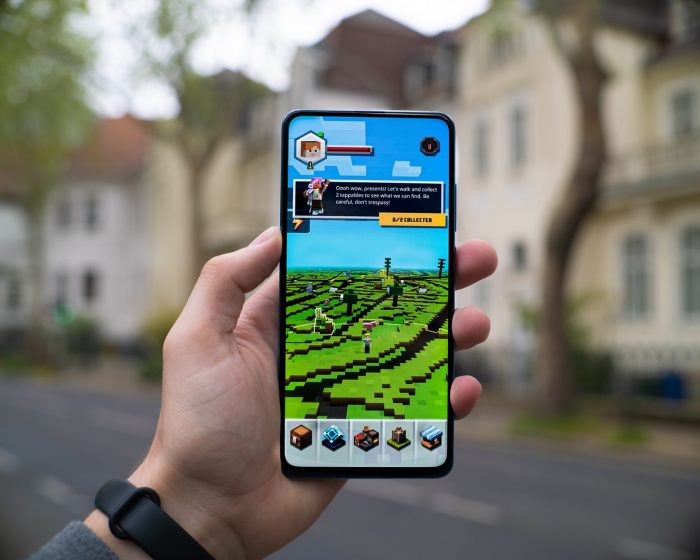
There are very few games that continue to grow in user numbers a decade after first being released, but that’s exactly what Minecraft is doing. An astonishing product that is among the most impactful in gaming history, Minecraft is iconic. First launched in 2009 by Markus ‘Notch’ Persson, the game has ratcheted up sales, taking into account all formats, of over 200 million purchases. In 2020, over 130 million people played Minecraft at least once a month. And as for revenue generated, that came to $415 million in 2020.

There’s no doubting the figures, or the cultural impact, as even people who’ve never played it are likely to know the name, and have an awareness of the distinctive, blocky visuals. But why did Minecraft reach these levels of success, and what exactly is it that sets it apart?

Not Just a Game

More than just a game in the traditional sense, Minecraft operates as a platform. The realities generated within its parameters are enormous and freely explorable. Participants can make what they want of their in-world experience and the process is open-ended and can be navigated however you like.

Nothing is scripted, and there’s no fixed conclusion at which point you can say the game is complete. And as a platform, Minecraft is incredibly open to development, expansion and innovation, resulting in both competition and co-operation. As a result, many people look into Minecraft hosting, while communities and even mini-industries have built up around the game.

It’s Simple, in the Best Way

There is a killer gaming formula, and if a developer manages to hit upon it, then they’re onto a good thing. The elusive combination is simplicity plus addictiveness, and Minecraft pulls it off expertly. If the Minecraft world looks like an environment you can just jump into and play around with, it’s because that’s exactly what it is.

Minecraft doesn’t require long instructional sessions, and you don’t need to think about complex strategies or storylines. The way it works is, primarily, through trial, error, and reward. And blocks, lots of blocks. When a game is this simple, but keeps you coming back for more, it’s incredible success starts to make sense.

An Educational Experience

Minecraft can be played by anyone, and that includes kids. For children, its immersive, safe environment, and intuitive in-game mechanics make it not just a lot of fun, but sometimes even a beneficial educational tool.

Minecraft rewards creativity, and helps to develop valuable problem-solving skills. In addition, it allows for independence and self-autonomy, while also enabling and encouraging teamwork and co-operation. In Minecraft, you have to pick the right approach at the right time. Much like real life, both personally and in business. Furthermore, Minecraft is a globally connected platform, and gets kids into an open-minded way of thinking, while familiarizing them with new technology.

Influencers and Community

Minecraft is a phenomenon among social media and gaming influencers. There are countless channels dedicated to Minecraft, and fortunes have been made by some top influencers who play Minecraft.

This, along with the nature of the game itself, has had the effect of building huge, loyal communities, all around the Minecraft platform. In the internet age, the power of this kind of social media reach, and the loyalty among the communities forged, are absolutely tremendous, going beyond the reach of traditional marketing. What developed around Minecraft was akin almost to a social movement.

Those Graphics

Minecraft’s graphics are cool. That, of course, is a subjective statement, and there are plenty of ways you might disagree, but that’s part of what’s cool: its the very things that some people might dislike that make Minecraft’s visuals so distinctive, and that give the game its unmistakable character. For a game to be iconic, it usually needs to have its own look, even if it’s a style that divides opinion.

And in Minecraft’s case, we’re talking blocks. The graphics are angular, deliberately artificial-looking, and, admittedly, sometimes overly uniform. It’s reminiscent of classic, 8-bit games from the 1980s, although expanded into a gargantuan 3-D environment that would have been just science-fiction back then. It’s a style that’s nostalgic and charming, and the game has a friendly, retro-tech atmosphere. Not for everyone, perhaps, but it’s an aesthetic that has certainly made its mark.

Versatility and Creativity

With various modes of play, and an open-ended, versatile nature, the Minecraft experience can be whatever each participant wants. The Minecraft world exists to be dived into, and from that point on, it’s the player’s own character that determines what kind of game they will play.

Minecraft rewards creativity, but in a sense, just your manner of interacting with the Minecraft world is an act of creativity in itself. And when this becomes–potentially, if you prefer—a co-operative, community experience, then you know you’re on to something special. Minecraft fully deserves its iconic status, and as both a gaming experience and a wider platform it looks here to stay for a long time yet.

Should You Get a Desktop or a Laptop?

Remember the 1980s when mobile phones were the size of water bottles and computer units looked like mini fridges? Thankfully, we have left the clunky computing devices in the past and are now upgrading to slimmer and lighter devices with each passing day. With laptops getting more and more powerful, is there still a case for the old school desktop computer?

Laptops: Here, There, and Everywhere

The portability of laptops is without a doubt their most desirable trait. Because of their compact sizes, laptops can be carried in backpacks or shoulder bags and taken from home to holiday. For college students, having a laptop means being able to take notes during lectures and do group projects in the school library. For working professionals, laptops allow them to present to clients and continue to be productive regardless of where they are. Laptops have given travel bloggers, remote workers, and independent journalists the flexibility to stay active and connected to the world.

Aside from requiring less muscle to lug around, laptops also consume much less power than their desktop counterparts. As they have smaller components, laptops require much less electricity to function, leaving a reduced carbon footprint for the environmentally conscious and a sweeter power bill for the budget conscious. Laptops also have batteries, which means that they do not require a power socket to boot up, allowing for use on the go and during emergencies. The battery acts as a safeguard, preventing a system shutdown and loss of unsaved work during sudden power fluctuations or outages.

Another great feature of laptops is that they are incredibly easy to use and set up. You can simply take it straight out of the box, press the power button, and you will have a working computer. For somebody who needs a computer for basic functions such as online classes, word processing, streaming videos, or using social media, laptops are a convenient and easy choice. Mini laptops with 11-inch screens are relatively affordable and are popular with those who are looking at a first computer for their children.

Desktop: I Have the Power

Despite the many advantages of laptops, many people are still fiercely loyal to their desktops. The ability to customize a desktop PC is its greatest benefit. Desktop computers are versatile and you can add or modify components to suit your needs. The newest and quickest processors on the market are generally released first on desktops, making them the fastest computers available. The added space on your desktop CPU tower means that you can add extra storage, multiple pieces of RAM, and a better graphics card to improve your user experience.

This flexibility extends past the initial setup of your desktop computer system. Upgrading and fixing a laptop is complicated and finicky, and often requires professional assistance. Because desktop CPU towers are much easier to take apart, users with a little computer hardware knowledge can improve their desktops, performing basic upgrades such as adding another hard disk drive or installing a better off-the-shelf graphics card.

Unlike laptops that generally peak at 17-inch screens, desktop computers can be connected to large screens or even multiple screens, creating a more immersive environment for gaming, or a more functional setup for intensive video editing work. Desktops likewise can be installed with massive cooling systems, allowing the motherboard and graphics cards to run at their top performance, delivering exceptional computing power for gaming or audiovisual work.

When comparing the prices of laptops versus desktops, a desktop would generally have a lower price tag than a laptop with the same hardware specifications. Therefore, desktops represent better value for money. And desktops need not look boring and lumpy either. With various LED light attachments, modern desktops can be just as sexy as their laptop counterparts. In fact, some gaming PCs are sleek and futuristic, with liquid-cooled PCs striking enough to be on the set of cyberpunk movies like Tron.

Finally, the weight of desktop computers can conversely become a perk because it makes them difficult to lose. We often hear of laptops being misplaced or stolen, but rarely come across the theft of an entire desktop computer system. Even in the event of theft, there is not a large market for second-hand desktop computers, as opposed to a thriving market for used laptops. Therefore, they are not very attractive to burglars and thieves, who would probably take your television instead!

Summary

For a family that has multiple uses for a computer, the desktop represents a solution that is versatile enough to suit everybody’s needs. However, if several users need to have access to a computer at the same time, then laptops would be more realistic in terms of space. Ultimately, choosing between a laptop and a desktop is a matter of personal preference and requirements. For a lightweight and fuss-free solution, laptops are the best. For a powerful and customizable machine, desktops reign supreme.

The Disruptive Potential of NFTs and Crypto

In case you hadn’t noticed, NFTs have been blowing up this year, attracting mainstream attention and causing mind-blowing sums of money to be transacted online. But despite the funds that are moving around not everyone is up to speed on exactly what NFTs are, and how they fit into the often turbulent cryptocurrency ecosystem. Bitcoin is the big-hitter that can no longer be ignored, but in what ways are NFTs likely to affect our lives, and should we be buying in?

What is an NFT?

NFT stands for non-fungible token. That makes it different from bitcoin, other cryptocurrencies, and fiat currencies, which are fungible tokens. Just to be clear on that, a fungible item means something that can be exchanged with any other identical item, because they’re all the same. So, for example, one US dollar is the same as any other US dollar, and one bitcoin can be interchanged with any other bitcoin.

An NFT, then, is a unique asset, that can be traded or collected, but not interchanged seamlessly with other, identical assets. They fit into the cryptocurrency world because they run on the same technology. They’re digital, secured on a blockchain, and are traded using cryptocurrencies.

NFTs as Art

When you learn that NFTs are unique, tradable, and sometimes highly desirable, your mind might turn to the art world. And you’d be correct to think that way. NFTs have opened up tremendous opportunities for artists and designers to put their work on the blockchain, gain exposure and direct connections with patrons and collectors, and sometimes reap substantial rewards.

Take a look at NFT auction house ART HAUS to get a sense of the direction in which the online art world is heading. And don’t be fooled into thinking this is all too niche or esoteric to garner much interest. In March of this year, an NFT by digital artist Beeple sold at Christie’s for $69 million, and that’s by no means the only transaction hitting a tremendous price.

NFTs as Collectibles

Another NFT use is in the creation of collectibles. Trading cards have been around for decades, so it makes sense that as we move increasingly online, such items would become online too. To a digital native, why would we not own a digital collection relating to our interests? Blockchain technology makes this possible, and we are already seeing bold and successful moves in the world of sports.

In September, golf superstar Tiger Woods released a 10,000 piece NFT collection through a company called Autograph. He follows in the blockchain-footsteps of other huge athletic names such as Naomi Osaka, Wayne Gretzky, and Tony Hawk, all of whom are on the Autograph advisory board, and have released their own NFTs.

NFTs are also making inroads into the comic book industry, where publishing giants Marvel and DC have both been releasing digital collections, including virtual figures and full comic books. Again, there is huge interest among fans, and sales to match.

NFTs in Gaming

The use of NFTs and cryptocurrencies in the gaming world is expanding very quickly. Unique in-game items can be minted as NFTs, and traded for real-world, transferrable value. The play-to-earn model is already allowing gamers to make an income from their in-game activities, and this is an area that looks almost certain to increase in popularity in the coming years. NFTs are set to become an integral part of the gaming experience, and native tokens are a booming, profitable economy.

You don’t even have to play the games themselves to have an interest in this, as in-game tokens are speculative crypto assets, that can be invested in and traded for profit. It’s risky, but there are significant potential gains.

Other NFT Uses

Besides art, collectibles, and gaming, NFTs have many other use cases, and significant transformative potential. One practical value is in the issuing of licenses and certification. In academia, professional training, or anything else where a personal record is necessary, blockchain technology can be utilized. This allows for a cleaner system, in which records are easily accessed, personally controlled, and secure, without the need for paper documents.

Another application is in logistics and product tracking. When manufacturing and distributing items, they can be assigned a unique NFT, with stamped metadata, allowing for the product to be tracked smoothly through the supply line on a single, highly secure tech platform, with additional timestamped data added along the way. NFTs can be used in this way to represent real-life objects, tying in with the concept of the Internet-of-Things.

Cryptocurrencies, blockchain technology, and NFTs represent an emerging technological field, that is being taken up and applied before many people have fully figured out what they are, or how they work. They will be disruptive and, for some people, highly profitable and a lot of fun. Whether your interest is in art, sports, gaming, finance, manufacturing, or something else entirely, there may be changes ahead.

The Legal Sector is Ripe for Technological Innovation

No industry has gone untouched in the face of technological change. At first, industries that rely on physical instruments tend to feel the effects first. Healthcare and education, for example, are often the first societal sectors to find use in new devices and software. However, it doesn’t take long for all industries to eventually adopt new technologies that advance various fields. The legal sector is one such field that is gradually realizing the effects of technologies such as artificial intelligence (AI), remote work, and social media.

Not only is the legal sector being changed by technology from the inside, but the very nature of the practice forces the sector to confront issues on technology from an outsider perspective. Laws and policies around emerging technologies require lawyer’s to build more profound knowledge of these subjects, and as a result, new areas of practice arise as well.

This article will take a deeper look into how the legal sector evolves at the same pace as technological change. Understanding the relationship between law and technology will reveal the legal sector’s crucial role in society.

Technology is changing the legal sector from the inside out

These days, it’s impossible to talk about societal changes without mentioning how the COVID-19 pandemic has boosted the adoption of specific technologies and behaviours surrounding them. Almost every industry on the planet has seen a shift to remote work, for example, alongside new policies set in place for those still working in the office.

In the legal industry, moving specific processes into the virtual world was not only possible but a necessity. This led to an increase in virtual hearings and court cases, with all participants interacting from home. Interestingly, the shift to remote proceedings has sped some of these processes up, as the inconveniences of travel no longer inhibited participants.

Pandemic aside, lawyers and law firms have also steadily established a presence online. To increase the visibility of their practices, lawyers have taken to social media to share their knowledge with colleagues and potential clients. Platforms such as Twitter have become a popular place for lawyers to facilitate conversations and share insight about hot topics while building a community among colleagues and clients.

Emerging technologies also have a role to play in how the inner workings of the legal sector are changing. With the massive amounts of data and information law firms have to contend with, mainly in the form of historical court cases, law facts, and client intake, it’s quite the task to have to parse it all. Where AI comes in is in the ability for these highly efficient systems to sift through massive amounts of data and draw meaningful connections between it all. Law firms are in the process of digitizing extensive archives of law information so that advanced systems can take on the task of organizing this information. No longer will lawyers need to visit massive libraries and thumb through old books to find past cases that will aid them with policy-making.

But the quick pace of technological change also invites new precedents that the legal sector will need to deal with. Moreover, policy-makers often need to be at the forefront of this change. Consequently, new fields of law are being birthed at faster rates. Cybersecurity, blockchain, and environmental technology are just a few areas of the legal sector being reshaped daily.

Challenges that the legal sector will face going forward?

Due to how technology brings rapid change to society, the legal sector has to constantly look outside of itself to keep policy up-to-date. As a result, the same technology shaping the legal industry from the inside is also what it addresses in practice.

Emerging technologies such as self-driving cars, blockchain technology, and AI will offer some of the sector’s most significant challenges in the coming years.

For instance, the legal grey areas of self-driving cars prompt discussion over how they fit within the various types of personal injury cases and insurance claims resulting from accidents. How a self-driving car decides who to protect in a complicated scenario is known as the Trolly Problem.

Furthermore, the blockchain and cryptocurrency space is currently considered the “Wild West” because the Security Exchange Commission (SEC) doesn’t know how to classify and treat all of the digital currency projects out there. Blockchain databases are a technology that could enhance the legal sector internally, but at the same time, lawyers are the ones needing to build policy around them.

Finally, AI could simultaneously pose one of the biggest threats and most significant benefits to society. Still, there is currently very little regulatory oversight regarding the development and deployment of such a powerful technology. Moreover, advanced AI is still primarily in the research phase, so it’s harder for lawmakers to anticipate the disruptions it’ll have on society.

All in all, it’s exciting to see an industry that is often associated with dusty books and bored lawmakers being coupled with technological advancement. The legal sector is arguably at the center of modern change as they must adapt and shape the use of new technology to keep everyone safe. Thus, watching how the legal sector approaches emerging technologies will inform how society progresses after that.

Reasons to Choose a Career in Insurance

The insurance industry may not be the first field that comes to mind when young people are thinking of their dream job, but in reality, it’s one of the most solid options around.

This is true if you’re embarking on the first steps of your lifelong career journey, and equally so if you’re already part way down the road and looking to make a career switch. One thing to note is that working in insurance actually covers a wide range of job types. This means that you can find a position to match your skills, preferences, and ambitions.

Roles include working in technology and data analytics, for those of you who are proficient with IT and programming. There are positions in sales and marketing, and customer service; all ideal if you’re a great communicator and skilled at putting people at ease. You can train for a property and casualty license if you want a specialized selling role. Or perhaps you’d prefer working in the legal area, claims, or finance.

Working in insurance is actually difficult to classify, because there are so many different routes you can take. But what’s certain is that it’s an industry that offers a great many benefits.

Get started with ease

At entry level, salaries in the insurance business tend to be higher on average than entry level in other sectors. You’d likely be looking at something, entry level, between $44,000 and $52,000 per year. As you climb the ladder, you can expect that your salary rises satisfactorily, allowing you to save adequately and live very comfortably.

Furthermore, there are no intimidating barriers to entry in the insurance industry. For many roles, you can get a job without higher level education or extensive experience. In other words, it’s not the type of job that calls its starter positions entry level, but then lists specialized requirements that few truly beginner level entrants are likely to have.

Secure prospects

If you’re employed in the insurance sector, then the outlook is positive. For example, predictions from the Bureau of Labor Statistics state that insurance sales agent jobs will increase in number by 7% by the year 2030.

That’s the kind of moderate but steady growth that you can rely on. No wild fluctuations, and low degrees of risk, mean such predicted outcomes are a safe bet. It’s simple really, people and communities will always continue to need insurance, so it’s an industry within which you can feel secure and make long-term plans.

Train on the job

Once you’re in, while you may feel ready to get to work, you likely need to learn more about what to do, and undertake some training. The majority of companies are forward-thinking and pragmatic, and will have you complete your training as you work. There may be in-company training courses, to make sure that new employees are confidently familiar with critical procedures, and with the laws and regulations they must comply with. You’ll almost certainly have the chance to acquire certification and professional accreditation.

Enjoy a flexible and diverse schedule

Although it’s not always possible to work from home—it depends on the company and your role within it—an increasing number of organizations are offering the opportunity for remote work, or a mixed schedule.

In terms of when you work, and what you have to do, expect flexibility and change. It’s increasingly the case that employers let staff work out their own schedules and manage their hours from week to week. The tasks you do will vary, and there’ll be plenty of opportunities to pick up fresh skills and put your mind to new kinds of tasks.

Make a difference

While income, advancement and opportunity are critical factors when deciding a job, another important requirement, sometimes overlooked, is satisfaction. You might even go further and say that a really well balanced career gives you a sense of contributing to something greater than just yourself. Being a part of the insurance industry gives you the opportunity to really help, both at an individual and a community level. Additionally, the insurance industry contributes considerably to the charity sector.

When someone suffers a serious loss, whether that’s property or losing a loved one, they contact their insurance provider, whose responsibility then is to provide support. If a disaster hits an entire community—imagine a flood or a storm ripping through a town, for example—then it’s insurance providers who must be on hand, organizing the resources to allow the repair and rebuild efforts to begin.

Shape the future

You’ve probably noticed that the world is changing significantly. We’re in a period of rapid advancement, in which technologies such as AI and Machine Learning are altering the nature of work. At the same time, though, people are wary of becoming overly automated, and often value a personal, even traditional experience.

In the insurance industry you’ll need to find a balance, and will help to define how the sector moves forward. You can be using all the latest tools for data analysis, marketing, and finance, while also helping people on a personal level, and gaining their trust.

Silicon Valley and the Military

At first glance, the world of the tech industry and the world of the military could not be any further apart.

In fact, in the eyes of the public, the two spheres seem to embody opposing ideals and management styles. Tech companies aim to be disruptive, replacing old ways of doing things with unprecedented technological solutions. The military, on the other hand, values tradition, insisting on etiquette and ceremonies that are centuries old.

The work of tech companies can be described as haphazard, as epitomized by a Mark Zuckerberg quote “Move fast and break things”. Products are released quickly, then patched hurriedly the moment users run into a problem. New features are bolted onto existing code the moment they’re thought up.

The military, on the other hand, has an emphasis on doing things right the first time. Operations are exhaustively planned and practised months before the actual thing. A strict chain-of-command is in place to ensure maximum coordination. In fact, many peculiarities of military communication (like military time, or the military alphabet) have the purpose of averting miscommunication before it happens (e.g. the military alphabet exists because of the tendency for pronunciation to get garbled over radio).

However, in our current era, there are differences between these two professions that go beyond just attitudes. In fact, they even seem to disagree on moral grounds.

A good example of this would be the reaction to Google’s involvement in Project Maven. Project Maven is a project by the Pentagon seeking to use machine learning to efficiently sift through massive amounts of data (usually gathered by spying and reconnaissance). Fellow tech giants such as Facebook and Amazon were also involved in this project. Despite this, and Google’s assurance that the work had nothing to do with frontline combat or violence, its employees still protested. A petition by Google employees with more than 3,000 signatures was sent to Google CEO Sundar Pichai, reading “Google should not be in the business of war“. In the end, Google pulled out of the project entirely.

This state of affairs wasn’t always the case, however. Indeed, for most of history, technology and warfare were closely intertwined. Advancements in technology were also used as advancements in war, no matter the creator’s intentions. Dynamite was originally intended as a tool to make mining safer, but it’s usage in war horrified its inventor (Alfred Nobel) to the point where he set up prizes rewarding achievements in peace and literature in his will.

The invention of the Internet, though, was the direct opposite of dynamite. The idea of the Internet started as a project of the US Department of Defense (DARPA) called ARPANET. Its original purpose was to be able to function as a communications system for the military that did not have a central core or headquarters. Such a network would not have any weak spots for an enemy to target, that could take down the entire network in one fell swoop.

Things didn’t actually pan out that way, though. ARPANET was used more for academic research than military command, before being replaced by dozens of other computer networks that improved on ARPANET in some way. Eventually, one of those copycat networks provided the inspiration and the technical backbone for Tim Berners-Lee to introduce the World Wide Web for civilian use in 1992. The rest, as they say, is history.

If there is any reason we can point to the modern differences between tech culture and military culture, it could be summed up in two words: “Silicon Valley”. The founders of the most iconic tech companies of the 21st century (e.g. Google, Facebook, Apple) had ideals regarding their technology that went far beyond the profit motive. They also viewed them as a moral duty, that they could genuinely change the world for the better with enough cutting-edge technology. This is a quote from Larry Page, one of the founders of Google:

“Sergey [the other founder] and I founded Google because we’re super optimistic about the potential for technology to make the world a better place.”

Similarly, this is a quote from Mark Zuckerberg, founder of Facebook:

“By giving people the power to share, we’re making the world more transparent.”

Their aspirational hopes covered the entire world. In hindsight, one could have predicted them eventually butting heads with the military, who tend to value the security and interests of their own nation over others.

Will these two divergent worldviews ever see eye-to-eye? Perhaps they already have. Research by non-profit Tech Inquiry revealed that Silicon Valley companies actually have thousands of contracts with US military and law enforcement that go under the radar everyday, mostly for services such as data management and technical support that traditional contractors are unable to provide. Despite their initial idealism (epitomised by Google’s old unofficial motto: “don’t be evil”), they might have opened themselves to more and more types of clients as they grew larger and more established.

Regardless of their motives, though, it is clear that the technology of Silicon Valley has changed the world forever. Anyone who wants to keep up on the cutting edge of technology (like the military) will have no choice but to deal with them.