Category Archives: Campaign Countdown

Gardiner Foundation Gives $3 Million to Endow History Chair

4b43fa30-785d-4b56-aa9c-4560f4be9618The Robert D.L. Gardiner Foundation has generously donated $3 million to the Columbia University Faculty of Arts and Sciences to establish the Robert Gardiner-Kenneth T. Jackson Professorship in the history department. The new chair will focus on teaching New York history. The total endowment will amount to $4 million in combination with a preexisting $1 million fund.

“This gift ensures that our mission—fostering the appreciation of New York
history—will continue to thrive at the university that calls New York home,” said Joseph R. Attonito, President of the Robert D.L. Gardiner Foundation. Established in 1987 by Robert David Lion Gardiner ’32CC, the Foundation primarily supports the study of New York State history with an emphasis on Suffolk County. The Foundation was inspired by Gardiner’s personal passion for history.

“We are extremely grateful to the Gardiner Foundation for having the vision to ensure the legacy of both its namesake, Robert David Lion Gardiner and beloved Columbia professor Kenneth T. Jackson, by endowing this chair,” said David Madigan, Executive Vice President and the Dean of the Faculty of Arts and Sciences. The Foundation’s investment ensures that Columbia will continue to be home to the finest scholarship and teaching on New York for decades to come.

Professor Jackson has served Columbia with distinction for nearly fifty years. He is currently the director of the Herbert H. Lehman Center for the Study of American History and the Jacques Barzun Professor of History and the Social Sciences. Jackson, the recipient of numerous fellowships and honorary degrees, has written notable books on American history including Crabgrass Frontier: The Suburbanization of the United States and the landmark Encyclopedia of New York City.

“Outstanding professors and teachers like Ken Jackson are one of the reasons I can say we are the greatest college in the greatest university in the greatest city in the world,” said James J. Valentini, Dean of Columbia College and Vice President for Undergraduate Education. “Ken is loved by current and former students for his creativity inside and outside the classroom, and for his enthusiasm about the material he studies and teaches.”

The most famous example of Professor Jackson’s creative teaching methods is taking his students out of the classroom and on a midnight bike ride from Manhattan to Brooklyn as part of his “History of New York” class. Along the way, he stops to explain how history was made at each spot. Decades of alumni consider the ride one of their most special Columbia memories.

“Having dedicated my entire professional life to the study of cities and, in particular, New York, it is a singular honor to have this chair established in my name, and to share it with Robert Gardiner, another proud New Yorker—and Columbian,” said Professor Jackson. “It is a real source of pride to know that Columbia will maintain its storied tradition of teaching and studying about the great city and state that we call home.”


All-Staff Retreat: Think Big, Imagine the Possibilities

2Hear from thought leaders, gain tools for collaboration, and network with peers, all before lunchtime. Learn about Columbia’s global future from President Lee C. Bollinger and former Journalism Dean Nicholas Lemann, now director of Columbia Global Reports. Professor Chris Washburne will demonstrate how jazz can help us release the power of true collaboration  and innovation in our work.
Wednesday, February 10
Roone Arledge Auditorium, Alfred Lerner Hall
8:30 a.m-noon   
Register here.


Global Columbia: Five Things to Know

1“We’re at a unique moment for the world and for the University to make a difference regarding the biggest challenges of our time,” said Ryan Carmichael, deputy vice president for development at recent Town Halls about Global Columbia with Jill Barkan, Mailman School for Public Health, and Peggy Maher, School of Engineering and Applied Science. 

Here are five takeaways.

  1. What is Global Columbia?
    Global Columbia is the vision for how the University can engage with and in the world to help solve some of the world’s biggest global challenges. It involves initiatives at all the schools, institutes, programs, and Global Centers.
  2. How is Global Columbia a Big Idea?
    How the University engages with the world and prepares our students and faculty for an increasingly globalized world is one of the most fundamental big ideas transforming higher education today. 
  3. What is the Columbia Global Centers Network? 
    Our eight “embassies” around the world, designed to create opportunities in research, scholarship, teaching, and service.
  4. What are the critical Global University Initiatives right now?
    Columbia Global Reports
    Committee on Global Thought
    Global Freedom of Expression & Information Project
  5. What’s in the future?
    A new global building, located in the new Manhattanville campus, which will house SIPA, the Global Centers, and new Institute for Solving World Problems. 

Columbia Call Center: Behind the Scenes

esther

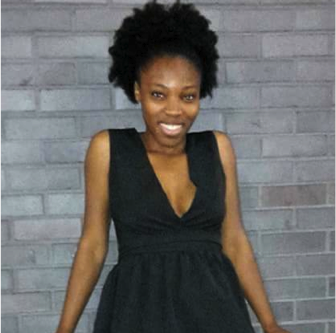
Esther Ogbuokiri ‘16CC
Major: Neuroscience and Behavior
Hometown: Riverdale, MD


Did you know? The students that work in the Columbia Call Center play a significant role in Columbia’s fundraising initiatives. We had a chat with Esther, one of the Call Center’s “star students.”

  1. What is one thing you’ve learned from working at the Columbia Call Center?
    Talking to strangers is easier than it sounds! Most of the alumni, to whom I speak, are willing to share their experience, and even ask about my aspirations and interests!
  2. What is something you’ve learned through talking to Columbia alumni, parents, and friends?
    Columbia has a strong network of supportive alumni, who are more than willing to open doors of opportunities for current students aside from the donations we request from them.
  3. How has working at the Columbia Call Center affected your personal relationship to Columbia?
    My time here has definitely allowed me to put a “face” to the individuals who were once in my shoes and who contributed to the legacy of Columbia that my classmates strive to enhance.

FY’15 By The Numbers

  • 18 schools and programs called
  • 13,000 hours of calls
  • 39,000 alumni, parents, and friends contacted
  • 15,000+ commitments
  • $2.4 million total pledged dollars

Joseph J. Jamail Donates $3 Million to the Journalism School

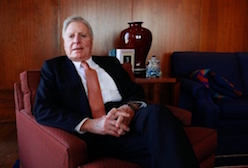
Joe Jamial photoNicknamed the “King of Torts,” Joseph Jamail was one of the most successful practicing attorneys in America, and a consummate Texan. In December, he ensured his legacy outside of the Lone Star State and made a $3 million gift to the Columbia School of Journalism. The gift will be dedicated to the renovation of the school’s main lecture hall, and establish an annual lecture devoted to justice and civil rights—themes that have run though his life and career. The refurbished space will be renamed the Joseph D. Jamail Lecture Hall.

The annual lecture will honor John Peter Zenger, a printer in 18th Century New York whose trial on libel charges established truth as a defense in such cases, a precedent that stands today.

The gift also honors Journalism School Dean Steve Coll. The two first met 30 years ago when Coll interviewed him and found him to be “brilliant, open, funny, wild, and big-hearted.”

Jamail, who passed away on December 23 at the age of 90, is perhaps best known for the 1984 case in which Pennzoil won a $10.53 billion verdict against Texaco; the settled amount totaled $3 billion. At the time, it was the largest ever handed down by a jury. Jamail’s Texas-sized demeanor won him hundreds of other cases at trial or settlement, along with an almost mythical reputation. Attorneys and law students at Columbia and beyond have passed around the Supreme Court of Delaware’s rebuke of his
“outrageous” behavior during a deposition (he told an opposing lawyer he “could gag a maggot off a meat wagon”) or the YouTube video of him in action titled simply “Texas-Style Deposition” (too colorful to quote here).

Despite earning billions of dollars through his success in the courtroom, Jamail never forgot his roots. Born in Houston to Lebanese immigrants during the Great Depression, he passionately and aggressively represented countless poor and middle class plaintiffs in lawsuits against corporations. His many generous
donations to the University of Texas, Rice University, and other schools, along with hospitals, city parks, and other causes, were transformative in his home state. The University of Texas erected two statues in his honor, and the Longhorns even play their home football games on Joe Jamail Field.

“I admired him deeply and am very pleased that Columbia University’s trustees have agreed to memorialize his life, career and values with the named lecture hall and lecture series at our school,” Coll said.