Questions about the campaign? Amelia is hosting a series of conversations about the year ahead: where we are and where we’re going. Four sessions remain. RSVP to reserve your spot.
Questions about the campaign? Amelia is hosting a series of conversations about the year ahead: where we are and where we’re going. Four sessions remain. RSVP to reserve your spot.
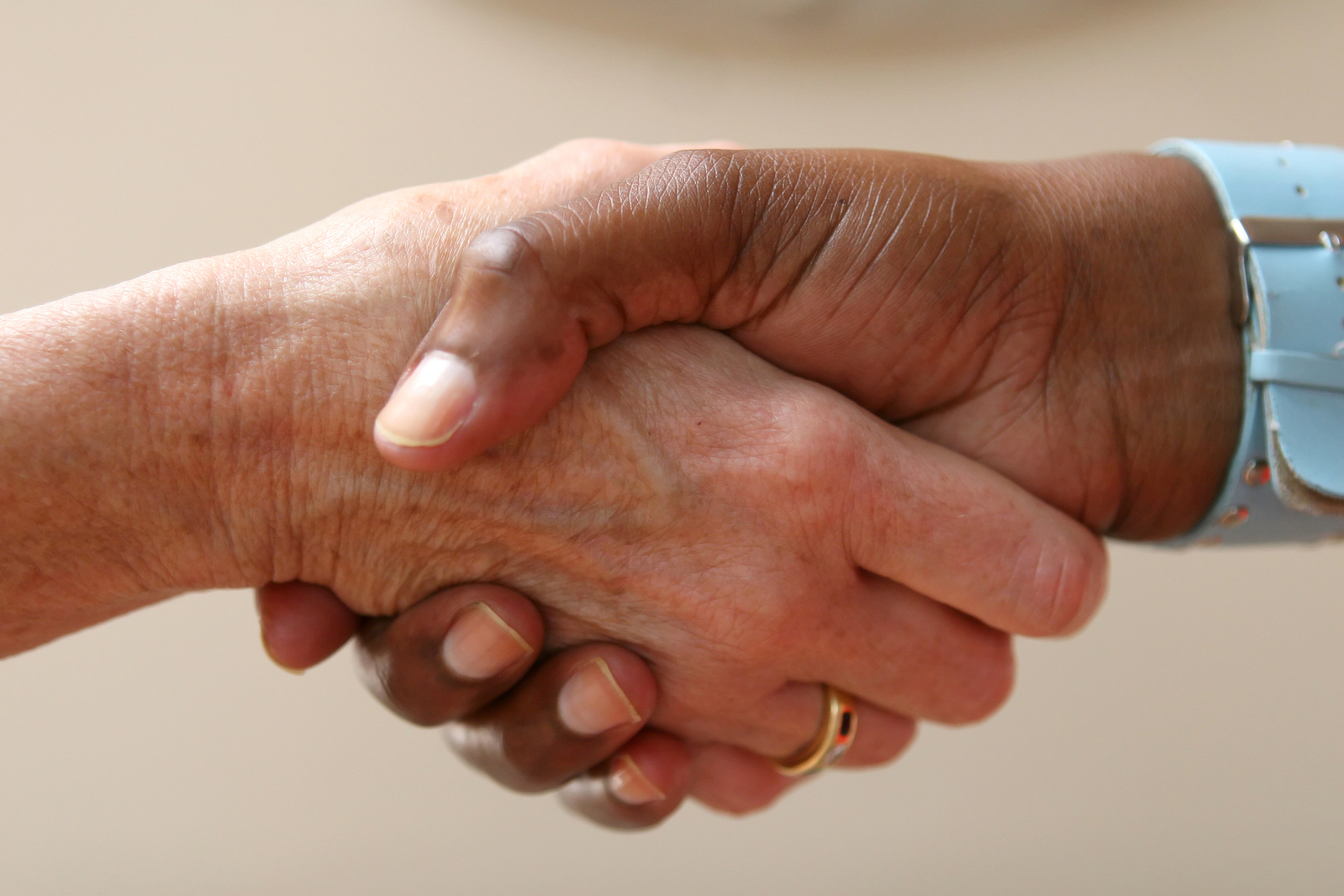
Several months ago, Kathryn Van Sickle, a gift officer in Columbia’s new Discovery Program, reached out to a GSAS alumnus who had never spoken with a Columbia development officer. Today, he is an engaged and enthused donor across a variety of areas—from the Zuckerman Institute to the Business School. How did it happen?
Kathryn has a special mission—under the guidance of Allen Rosso, she is charged with finding innovative ways to engage untapped prospects. After learning about the interests of our GSAS alum, whom we’ll call Joe, she sought input from a team of development colleagues including Meghan Fay (Zuckerman), Allison Frost (Zuckerman), Elena Piercy (Business), and Talya Westbrook (Arts and Sciences). Through this collaboration, Joe was able to meet with key faculty and leadership from all three schools. He went on to make a $45K gift to the Business School after joining its Program for Financial Studies Board. And a gift agreement has been created for a $250K endowed fellowship at the Zuckerman Institute.
Today, Joe (now managed by Talya Westbrook) wants to do even more. He has expressed a desire to support GSAS fellowships and join the ranks of Columbia Benefactors, individuals who have given $1 million or more to the University.
And Joe is not alone. In its inaugural year, the Discovery Program has assigned thirty-seven prospects to major and principal gift officers. Six have been rated to a higher level, and multiple gift conversations are in the works with schools and units across Columbia.
According to Kathryn, “It’s energizing to collaborate with partners across the University and meet new prospects—each day is an adventure!”
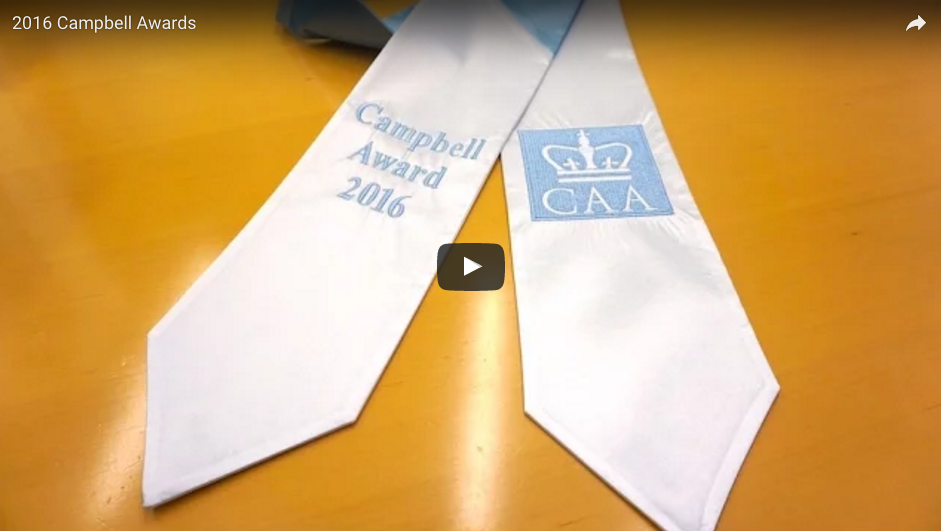
The Campbell Award is presented by the CAA to a graduating student at each school who shows exceptional leadership and Columbia spirit as exemplified by the late Bill Campbell ’62CC, ’64TC. Watch the video.
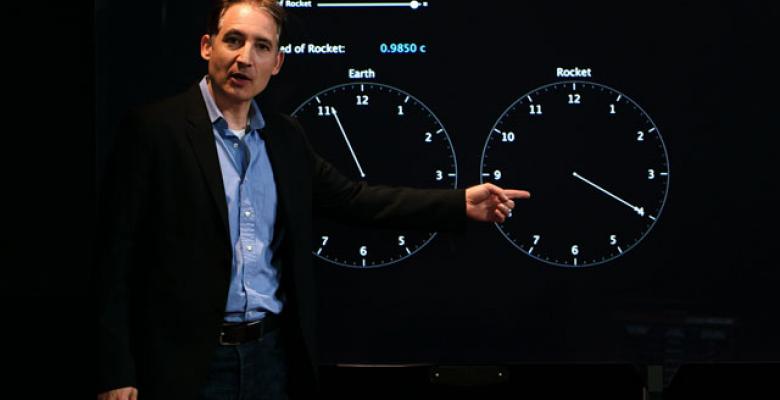
Think, imagine, act. With physicist Brian Greene (recently seen on Stephen Colbert), insights from Columbia Athletics (Peter Pilling and Megan Griffith), and reflections on the late Bill Campbell’s leadership.
Wednesday, July 20 | 9 a.m. to 1 p.m.
Roone Arledge Auditorium, Lerner Hall
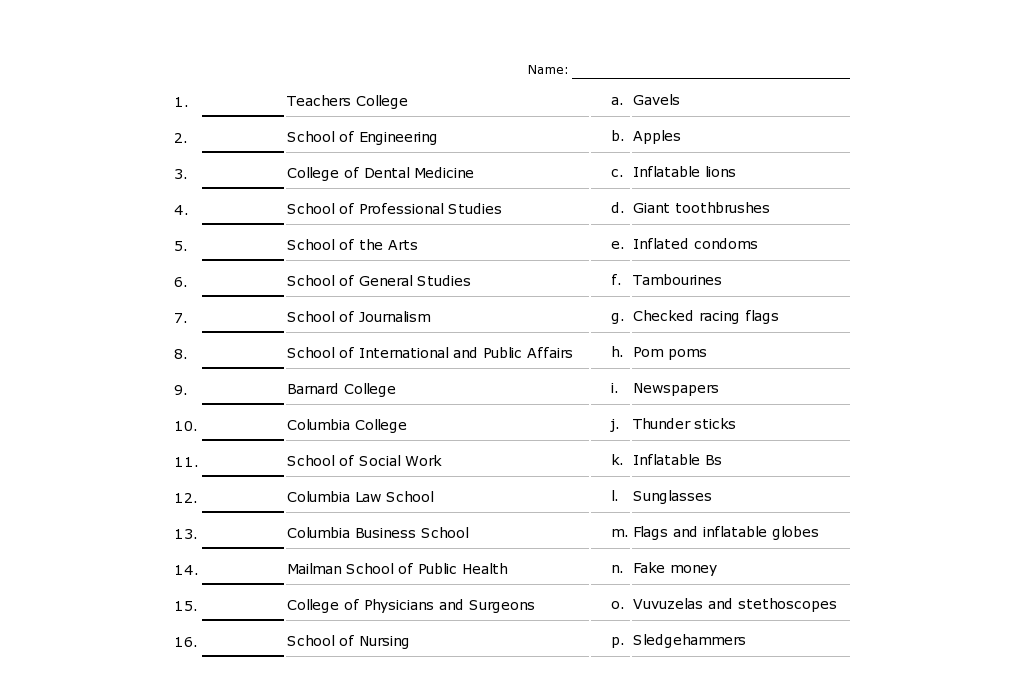
Every year at Commencement, each graduating class proudly waves an object that represents their school. Can you match the school with the swag? Bonus question: Can you spot the two schools not on the list that didn’t display an item?
E-mail your responses to [email protected] by Wednesday, July 13. Winners will be notified by e-mail.
So far, we’ve given away gift cards, Amazon gizmos and gadgets, and have thrown a pizza party for a winning team. For this month’s winners, think summer necessities.
Note: click image to enlarge.
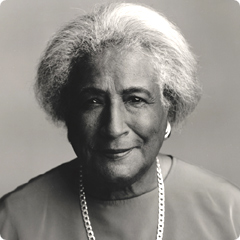 Jurist Constance Baker Motley ‘46LAW had a major impact on ending racial discrimination. As the NAACP Legal Defense Fund’s associate counsel, she helped write the briefs for Brown v. Board of Education of Topeka, Kansas, the landmark 1954 U.S. Supreme Court case that ended school segregation. From October 1961 to the end of 1964, Motley won nine of the ten civil rights cases she argued before the Court. Learn more. Fun fact: The conference room on the 5th floor of the Alumni Center is named in her honor.
 We’re climbing high! As of May 25, we have raised $635.7 million in commitments. Only $64.3 million to go!

During his Commencement address, President Bollinger said Columbia “can and should be more engaged than we are with the problems of the world, in the way that only one of the greatest universities in the world can.” See his full speech.

In theory, people speak of campaigns as having two parts: a quiet, or nucleus, phase and a public phase. In reality, we know “quiet phases” are anything but.
For the year leading up to an anticipated public launch in the fall of 2017, we can all plan to talk a great deal, embracing opportunities to mobilize various insider constituencies. Before the public balloons and fireworks, in what we are calling our activation phase, we will focus on ways to energize and equip our teams and insider audiences: campus colleagues, faculty, and top volunteers, prospects, and donors.
The activation phase will run from fall 2016 to fall 2017. We can use this time to build momentum through
The term activation phase is a reminder that the campaign is already underway and that leading up to the public launch we can kick into high gear to engage the partners we need going forward. That focus will enable us to publicly launch with inspiring anchor gifts, mobilized volunteers, strengthened storytelling, systems for tracking and using data, and other sources of momentum.
If you have questions or thoughts, please write campaignplanning.columbia.edu.