The Presentation Place

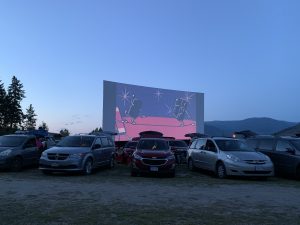
Cars gathered at the drive-in movie theater. Photo Credit: Isabel Wong.

Before this semester, I always thought of presentations as research’s final hurrah. Paper written, edits made, the presentation is simply the bow, the final flourish completing the package. As I’ve learned from this semester, that isn’t always, or even often, the case. 

A couple of weeks ago, I found myself needing to give a presentation on a paper I hadn’t yet finished. Perhaps this is a typical predicament, but it was new to me. While I figured I’d limit my presentation to the portion of the paper I had done the most research and work on, I couldn’t simply read aloud those couple of pages. Despite being the most thoroughly researched part of my paper, the pages hadn’t exactly reached clarity nor coherency. Quotes from scholars, while there, were simply plunked in between paragraphs of my own writing, unattached and unanalyzed. I hadn’t gone back and edited the section, which sprawled across the page, repetitious and unnecessarily detailed. 

Continue reading

Posted in courses, Uncategorized | Comments Off on The Presentation Place

An Interview with Professor Emmanuelle Saada, Chair of CC

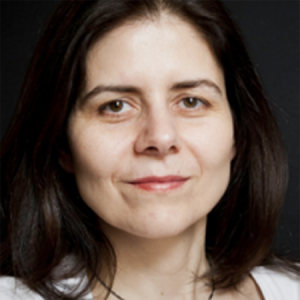
Professor Emmanuelle Saada (Photo credit: Columbia University)

Professor Emmanuelle Saada is the Chair of Contemporary Civilization and Professor of French and of History at Columbia. She spoke with me in October about adapting to teaching the Core online, the direction in which Contemporary Civilization is headed, and connections between the Core and research skills. (This interview has been edited and condensed for clarity.) 

On the Core, online:  We have thought long and hard about what it means for students to study and learn online. The first priority was to lighten the reading load because we know that many students are in difficult situations and that it’s difficult to study [during remote learning]. 

A second adjustment we’ve made regards the balance between the work that students do outside of class and the work that they do in class. Because Zoom can be frustrating, and because less can happen in the Zoom room than in a traditional classroom, we have developed forms of collaborative work that can happen outside of the Zoom room context: forms of collaborative work, like annotating passages or chapters of books together; preparing readings in small groups, in collaboration with the instructor. For the students to have a meaningful experience, more things need to happen outside of class. 

We think about the Core as a community building experience. We want to create a sense of intellectual community beyond the classroom. We want students to be able to discuss Plato, Aristotle, all these important texts together, and in a normal year those conversations might take place over breakfast, outside of Butler, playing Frisbee on a Sunday afternoon. We really want the texts to continue to be part of students’ common experience. We don’t have this online, so we have created spaces for the students to collaborate together outside of class. 

Continue reading

Posted in courses, COVID-19, Interviews, The Core, Uncategorized | Comments Off on An Interview with Professor Emmanuelle Saada, Chair of CC

Scared of the Core Because You’re not a Humanities Person?

Days on Campus, April 2017. Photo credit: Teresa Brown.

A professor recently asked me if, when I was applying to Columbia as a prospective math major, the Core scared me. His assumption, a common one, was that as someone who prefers math and science, the idea of committing a significant amount of my undergraduate experience to courses in the humanities was not something I would be inclined to want.

Truth be told, I don’t quite remember what I thought of the Core before I arrived at Columbia. It’s one of those things that is hard to fully grasp until you’re immersed in it. Looking back at my application to Columbia College, I seem to have been most interested in the discussion based aspect of several of the required Core classes. Even if mathematics lectures were where I envisioned myself, I was intrigued by discussion based learning. Beyond broad characterizations of the Core, however, I don’t seem to have known much about which specific classes were required or what exactly I would learn. But, clearly, the idea of a required Core did not deter me from applying to or committing to Columbia.

Continue reading

Posted in courses, STEM research, The Core | Comments Off on Scared of the Core Because You’re not a Humanities Person?

Notes, Notes, and More Notes

photo credit: creative commons.

Isabel recently posted an excellent blog post about flowcharts: what they are, and why you should be using them. (I’m definitely trying that method out on my next long paper—thanks Isabel!) I’ve been thinking these days about something related, which came up at the first meeting of my department’s senior thesis cohort: when you’re doing a lot of reading, how should you take notes? 

I think it’s worth being mindful of your note-taking methods even in a project that is shorter than a thesis. Taking notes may seem rote (couplet unintended), but it’s a skill like anything else, and it might take some practice to help you hit your stride. Earlier in college, I took notes exclusively in the margins of my papers. Even in in-class discussion, I would record my thoughts by continuing to annotate, rather than writing in my usual notebooks. I figured I was going to be looking back at the text I was writing about anyways, and it was too laborious to try to copy everything important out of the texts and into a separate notebook. 

Continue reading

Posted in courses, Senior Thesis | Comments Off on Notes, Notes, and More Notes

Outlining a Future (Essay)

Finding one’s path. Photo Credit: Teresa Brown.

It’s the end of the semester. That point where it feels like the end is in sight, and yet there is still so much to complete before we can say we’re really finished. And, for a lot of us finals season means long essays and research papers.

In writing my final assignment for my thesis class this semester, a chapter of my thesis, I found myself completely stuck. I had some ideas, I had all of my primary and secondary sources, but I just didn’t know how to put words to my thoughts. I forced myself to get 6 pages of writing down, and turned in a preliminary draft. But I was unsatisfied.

Continue reading

Posted in courses, Senior Thesis | Comments Off on Outlining a Future (Essay)

The Core, Explained

Photo Credit: Columbia University, Eileen Barroso

One of the primary things Columbia College is known for is its “Core.” A set of requirements that all CC students must complete before graduation, parts of the Core resemble what might be described as general education requirements while other parts are courses specific to CC. How does the Core work and how much say do students have in deciding what courses they will take to complete the Core?

Continue reading

Posted in courses, The Core, University Writing | Comments Off on The Core, Explained

Reading for Research

Photo credit: Sara Bell

One of the most daunting parts of research papers—and, admittedly, of college humanities courses at large—has been secondary reading. I had read journal articles for some classes in high school, but mostly for science classes: academic papers in the humanities were new to me, in particular highly theoretical ones. If you’re just starting out in college, or maybe taking an intense class in the humanities for the first time, you’ll benefit from being strategic about how you read. These tips carry through to humanities research, where secondary reading abounds. 

Continue reading

Posted in courses, Uncategorized | Comments Off on Reading for Research

Let Your Thinking Flow

A progression of flowcharts. Photo credit: Isabel Wong

It’s the middle of November, which means I’m anxiously awaiting the three days we’re given off from school during which I become more mashed potatoes and apple crisp than human. I say “anxiously” because while I cannot wait to wake up after the sun for consecutive days in a row, I’m also stressed about all the work due before and after the break. If you’re a first-year in UWriting, a part of your stress is probably over P3. When I was a first-year, my November weekends were largely devoted to P3, which, for those first-years in Fro Sci, stands for Progression 3 and not, unfortunately, potatoes and pumpkin pie. I remember going over the syllabus on the first day of UWriting and thinking there was no way I could write a 10- to 12-page research paper. However, as all Columbia students, including you soon enough, will attest to, it is possible! 

Continue reading

Posted in courses, The Core, Uncategorized, University Writing | Comments Off on Let Your Thinking Flow

Pacing Your Papers

Photo credit: Sara Bell

If the start to your November has been anything like mine, every item on your to-do list has had something to do with the word “essay”: whether a five-page paper for my intro-level lecture class, a ten-page paper for my graduate-level seminar, or a proposal for the Senior Essay (the English department’s name for a thesis), I’m up to my elbows in double-spaced Times New Roman. But in everything except font, no two essay assignments are created equal. My approach to that five-page paper is going to have to be different from the semester-long, 20-page paper I’m writing for one of my seminars. Over the course of college, I’ve grown into someone who doesn’t start anything the night before (first-years, quashing this habit is one of the best gifts you can give yourself) but the timeline of a paper I write in a week just won’t work for a long research paper or a thesis. So how do you pace yourself on a semester-long self-driven research project, while also trying to keep up with the rest of the semester’s assignments? 

Continue reading

Posted in courses, Uncategorized | Comments Off on Pacing Your Papers

Circular Process, Linear Result

Photo Credit: Kristian Woerner.

It recently occurred to me that I have an entire chapter of my thesis due next week, and yet I have only done a little over half of the reading and research that I will eventually complete for my entire thesis. Rather than finishing all of my research and then sitting down to write my paper, I will essentially be doing both at the same time.

Continue reading

Posted in courses, Senior Thesis, Uncategorized | Comments Off on Circular Process, Linear Result