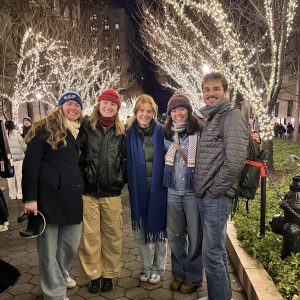
Image of the author (far right) and friends at Tree Lighting, Fall 2024 (photo courtesy of the author)
Nearing the end of my college experience, it is easy to identify the things that I have enjoyed most while here at Columbia. Harder, though, is articulating the different paths I would have taken, topics I would have explored, and academic journey I would have traversed if given a second change to do it all over again. Of course, there are several things that I would have changed, and even more things that I would endeavor to repeat because I have such fond memories and experiences doing them. But looking back on my time at Columbia, and staring down the small handful of months that I have remaining, I think I have a few important insights to offer when it comes to deciding how you should—and more importantly want—spend your time here at Columbia.
When I first began as a first year at Columbia, I was determined to pursue a career in medicine. I was already enrolled in a multivariable calculus class and general chemistry lecture course before I arrived on campus back in September of 2022. In the first few days of classes, my advisor let me know that an accelerated general chemistry course was open to new students who did well on AP Chemistry. I attended the first class and was eager to continue but realized—quite quickly—that it conflicted with my first semester section of Literature Humanities. To the misfortune of my interest in accelerated general chemistry, my Literature Humanities teacher was Professor Nicholas Dames; the first seminar of our class completely captivated my attention, and I decided to let my accelerated chemistry class fall to the wayside. That year, I committed to staying in my same section of Lit Hum the entire year and completely scrapped my plans to do intensive chemistry courses, choosing the regularly paced general chemistry lectures instead. That curiosity and deep love of the humanities is my first year of college is something I remember fondly and would not replace; in fact, that choice helped me find, quite quickly, the intellectual discipline that would become my passion: public policy.
But I was equally quick to delve into other topics before landing on political science and public sector politics. I took courses in urban studies, architecture, art history, and world languages before I settled on political science as my primary academic field of interest. From that experience alone, I learned that having a plan of study is equally as important as having a willingness to let your preconceptions about college go after your first year. Give yourself the time and space to find the things that you truly enjoy, the disciplines that ignite your interests, and the topics that keep your mind engaged seemingly without effort. Then, once you find that passion and the interests that keep your mind engaged, fully pursue them. Graduate seminars, upper-level lecture courses, and independent study classes alongside leading professors were things I gradually integrated into my course schedule over time as I found more footing and investment in my majors. It can feel hard when large programs, the preprofessional atmosphere, and Core requirements all compete for your interest when you register for courses and pick a major field of study. Yet, the detours I took, from calculus and chemistry to urban studies and international politics, and more assured choices later have determined—equally—my long-term career interests and passion in public policy.
If I could do it all over again, I would tell myself that the most important thing you can do in college is to hold fast to what genuinely moves you. Ignore what you think looks impressive on a transcript and what seems practical in the abstract; invest in the subjects and questions that make you want to stay after class, read beyond the syllabus, and seek out the people doing the work you admire. College is short, and it is easy to spend it responding to external pressures rather than listening to your own intellectual instincts. But the students who leave with the clearest sense of direction are often the ones who gave themselves permission to explore early and then committed fully once they found their footing. The detours matter. They teach you what you are not, which is its own form of clarity and time well spent. Clarity, too, arrives when you stop wandering and decide to go deep. Ground yourself in the disciplines that keep you honest, that challenge you in ways that feel productive rather than performative, and that make you want to show up (over)prepared. That is the foundation that carries you well beyond graduation, and is the one thing I would never do differently.