
 We’ve all been in that room. Maybe it was your closest class friend. Maybe it was your unspoken class nemesis. Or maybe it was even you. But we’ve all been there when the professor cold calls someone in LitHum or CC to discuss the reading, and instead they launch into a five-minute spiel about their life. Perhaps it was a Marxian reading of Flex Dollars. Perhaps a Vindication on the Rights of Boarding Schools. Maybe even what their Biology class has to say today about Darwin’s theory of evolution and how that makes people in STEM overqualified for the Core.
Chances are, if you’re reading this blog, when you were in that room, you probably rolled your eyes, highlighted a new quote, and mentally prepared to shoot your hand up first with your rehearsed points in tow. For many of us in the humanities who enter a Core classroom, we assume we have it locked down with CC and LitHum analysis. You might have watched your friends struggle over a GenChem problem set, but reading the entire Leviathan in one night was a breeze. And while I do agree it can be quite frustrating to feel like the only one doing the reading or who knows what’s going on in the class, unfortunately, we are not.
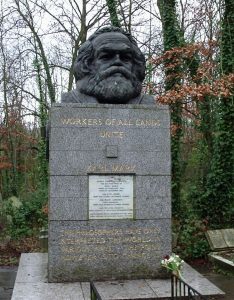
One day, when we were discussing Marx in CC, I launched into a long-winded point about dialectical materialism versus his theory of alienation. I could point to all the spots in the book where he had referred to these and knew how to explain the historical significance and origins. I showed up to class that day ready to out-Communism all of my other Ivy League classmates. Somewhere between petit bourgeoisie and praxis, one of my classmates stepped in to ask why this mattered to Marx’s main idea. Sure, I could have given a random quote to explain myself, but I could not answer that question with my own words. I thought back to the preparation work I’d done for class. A lot of reading, not much thinking. Instead of critically analyzing the text (the entire shtick of the Core), I’d performed fluency.
I’m not saying the classroom may have been better that day had I discussed my experience growing up in the world of the private school and what Marx would have thought of that. And I’m certainly not telling anyone not to read for CC. However, just because I sound like I know what I’m talking about, doesn’t mean I understand any of it or prompt any less of an eye roll from my classmates or teachers.
What I’ve come to appreciate, begrudgingly, is that the point of CC isn’t to win. It’s to think. And sometimes the person rambling about their job at the campus café or their family’s experience with religious institutions isn’t derailing the conversation. Rather, they’re doing the assignment better than I am. They’re thinking about what Hobbes means for their social world. They’re making it make sense. And while sure, sometimes the tangent stays a tangent, there’s also a version of that same story that could be something more: a real reflection that’s been sharpened through analysis. The point isn’t to pour your heart out for participation credit. But if we are willing to take our lived experiences seriously, treat them as worthy of academic attention, and sit with the tension between the personal and the theoretical, then we’d be doing the Core exactly right.
And truthfully, those moments when someone says, “I’m not sure this is relevant, but…” are when class usually gets good. When we finally stop pretending to be walking JSTOR citations and instead let ourselves be people who read books and are changed by them. It’s impossible to really read Crime and Punishment and not let that take a personal effect. Or to discuss Tocqueville’s Democracy in America without sitting back and asking the class, “Democracy… in this America?” It takes work to turn experience into an argument. But if the Core asks us what it means to build a just society, then we’d be missing the whole point if we didn’t bring our full selves into the room.
So next time someone says something “too personal” in class, maybe don’t roll your eyes just yet. I know, I’m working on it too. Instead, I ask where it fits in the text. By pushing yourself to understand, you are also pushing your classmates and becoming more engaged. Class isn’t a competition (there’s really no curve!). It’s not a memorization battle. It’s just a collection of moments to make the readings matter. How else can we decide how to build the best through CC if we can’t even let our society be part of the conversation?
Julia Sherman, CC’26