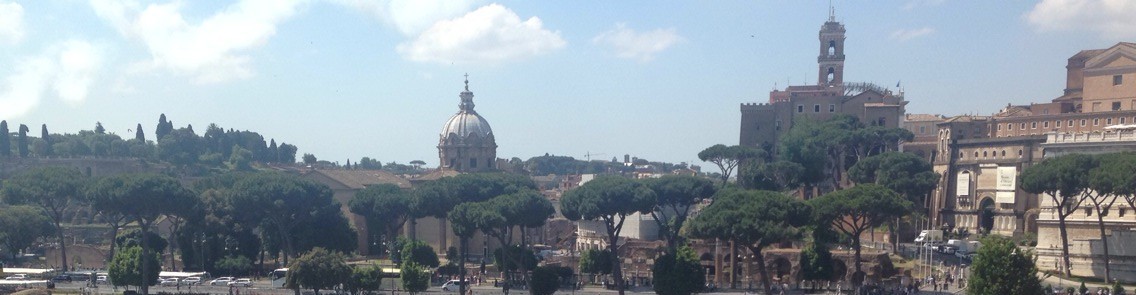
North and South: A ceremonial procession is depicted on a freize on the North and South sides of the Ara Pacis. The ceremony depicted is believed to be a celebratory procession given to Augustus and Agrippa after they returned home from their foreign conquests. The frieze on the North side is particularly interesting, due to the manner in which Augustus is depicted, as well as the debate regarding what the two children represent. Augustus and Agrippa are both depicted within the crowd, portraying them as men of the people. This is particularly important, due to Augstus’s emphasis on being a princeps, or first citizen, during his rule and creating an image of modesty for himself. Augustus is also dressed as a priest, further emphasizing his image of modesty. However, both he and Agrippa are carved out to beslightly taller than everyone else, emphasizing their leadership within the crowd. Also, the procession culminates around Augustus, defining him as the central figure within the frieze. The two barbarian children depicted on the frieze make a further statement regarding their establishment of the Pax Augusta. Initially, these children were thought to be Augustus’s heirs, but given their starkly foreign dress (the torque, shoes) and curly hair, it is now believed they represent the regions Augustus and Agrippa conquered and brought into the Roman Empire. Thus, the barbarian children represent that Pax Augusta is a legacy that Augustus will leave for the generations to come.
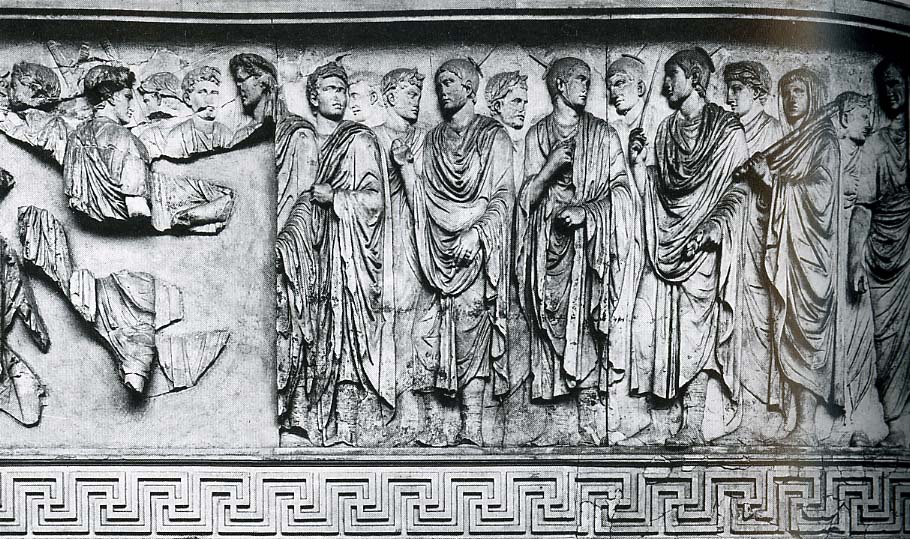
Augustus is pictured in the relief wearing a laurel and is engaging with the people.
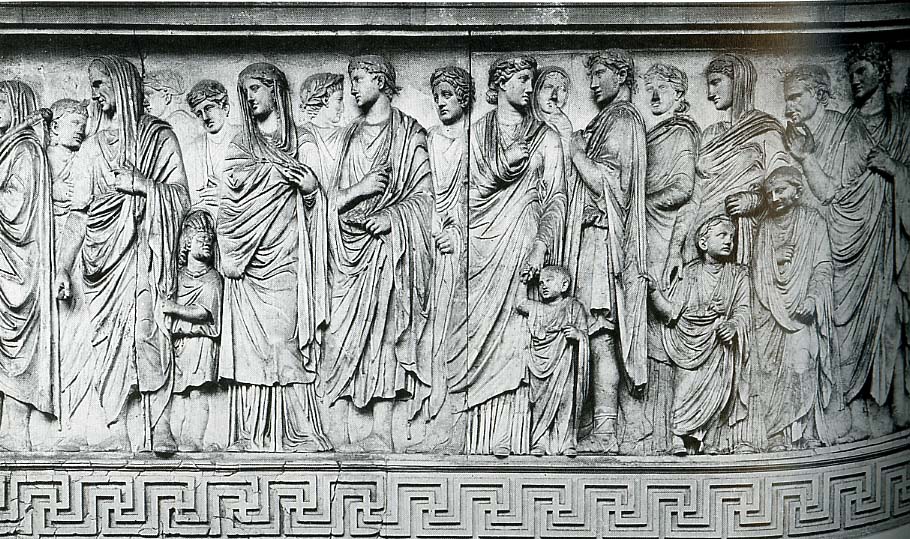
Agrippa is depicted slightly taller as well, with one of the Barbarian children holding on to his robes.
Image taken from
http://employees.oneonta.edu/farberas/arth/arth200/politics/roman_imp_sculpt.html