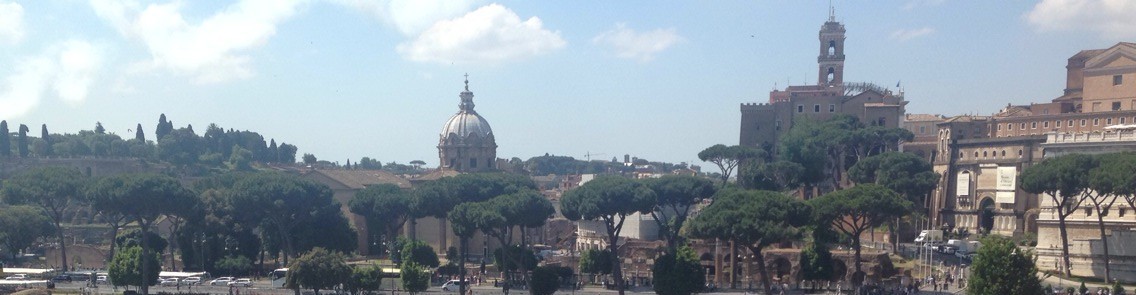
Through the palace, it can be seen that Domitian continuously stressed that he was above the common people. He distanced himself in a number of ways and emphasized that he was of a divine stature by frequently emphasizing his affinity with the Goddess Minerva. Experiencing the emperor reclining in an apse surrounded by statues of the mythic Gods along with the exceedingly expensive and lavish surroundings and heightened ceilings created the image of the emperor as majestically exalted regent of the Gods. His desire to emphasize his divinity and extra-ordinariness was a dangerous shift from his predecessors, who strove after the Augustan titles of princeps. Domitian’s tyrannical tendencies and attempts to buttress his power were too strong and created a lot of resentment against his rule, culminating to his being assassinated and not given the divine honors that a Roman emperor would usually receive upon death. Ultimately, he left behind a reputation of being a dictator who used excessive amounts of expenses for his own personal gain, such as the building of the Palatine, rather than benefiting the general public.
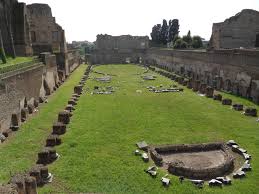
Remnants of the Dining Hall, with the aspe where Domitian supposedly reclined in during dinner. Image taken from http://utahtoitaly.blogspot.com/2010/04/cultural-week-ie-museum-discovery-week.html