Machining on the Fadal
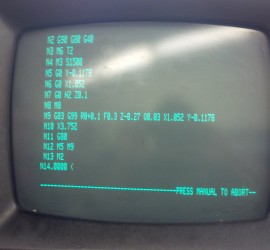
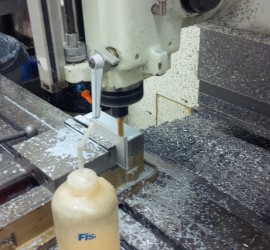
The shop was a bit crowded today, so we have to machine on the old school Fadal machine. Using this machine is a test of skill has it uses pure Gcode as opposed to the conversational language the Fryer mills use.
The shop was a bit crowded today, so we have to machine on the old school Fadal machine. Using this machine is a test of skill has it uses pure Gcode as opposed to the conversational language the Fryer mills use.
We’ve competed assembly on one of the three Motor and Spool Sub-assemblies and we’ve discovered a few problems in the design. 1) The set screws are not holding onto the main shaft and are likely to be striped since the thread are made of plastic. Solution: Drive a pin […]
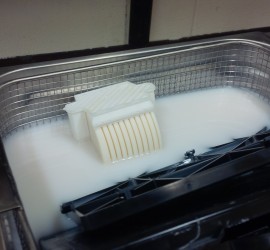
We 3D printed our first spool today. It’s amazing that the spool comes out of the machine ready to use, no filling required. To remove the support material, we must soak the part in a base bath for 24 hours.
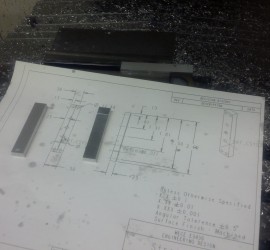
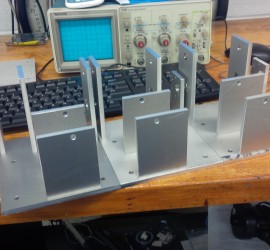
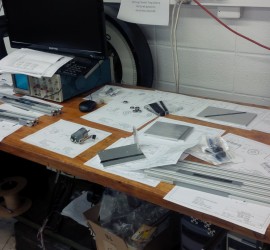
This is one of the last pieces. The plate goes between the two eyelet plates to support the strain gauge system. We are almost done! Woot! Also, 1 to 1 scale drawings are cool because one can put the part on top of the drawing and have them match up.
We have a lot of milling to do today, so we zero the vice instead of each individual part. The Y axis is zeroed, then the X axis. Now we have (0,0) on on corner of the vice. We use a straight edge to line up material […]
We spend the first half of the day on the manual Acer mill roughing the outer dimensions of the eyelet plates. One of the skills we learn in the department is how to read a vernier caliper. The technology is old, but vernier tend to produce more consistent measurements than digital […]
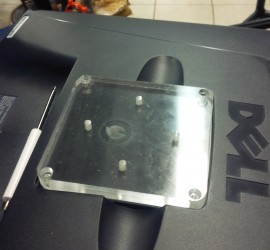
We spend the day tapping the 8020 parts of our design. The monitor did not quiet meet our expectations of its dimensions. Luckily, we added extra space around the monitor, so this issue can be addressed. Speaking about the monitor, we had to mill the VESA mounting plate smaller […]
We’ve found two really great books on our topic in our amazing library (we have everything really, haptics is an obscure field). The first is Engineering Haptic Devices: a Beginner’s Guide for Engineers. Everything is broken down, the design criteria for the physical plant is laid out, making designing a haptic […]
We had the CAD review today. We gained valuable insight into tolerancing drawings and working with drawings from vendors. Here is a picture of our table. We were required to place the finished parts on top of the drawings for the inspection by the faculty.