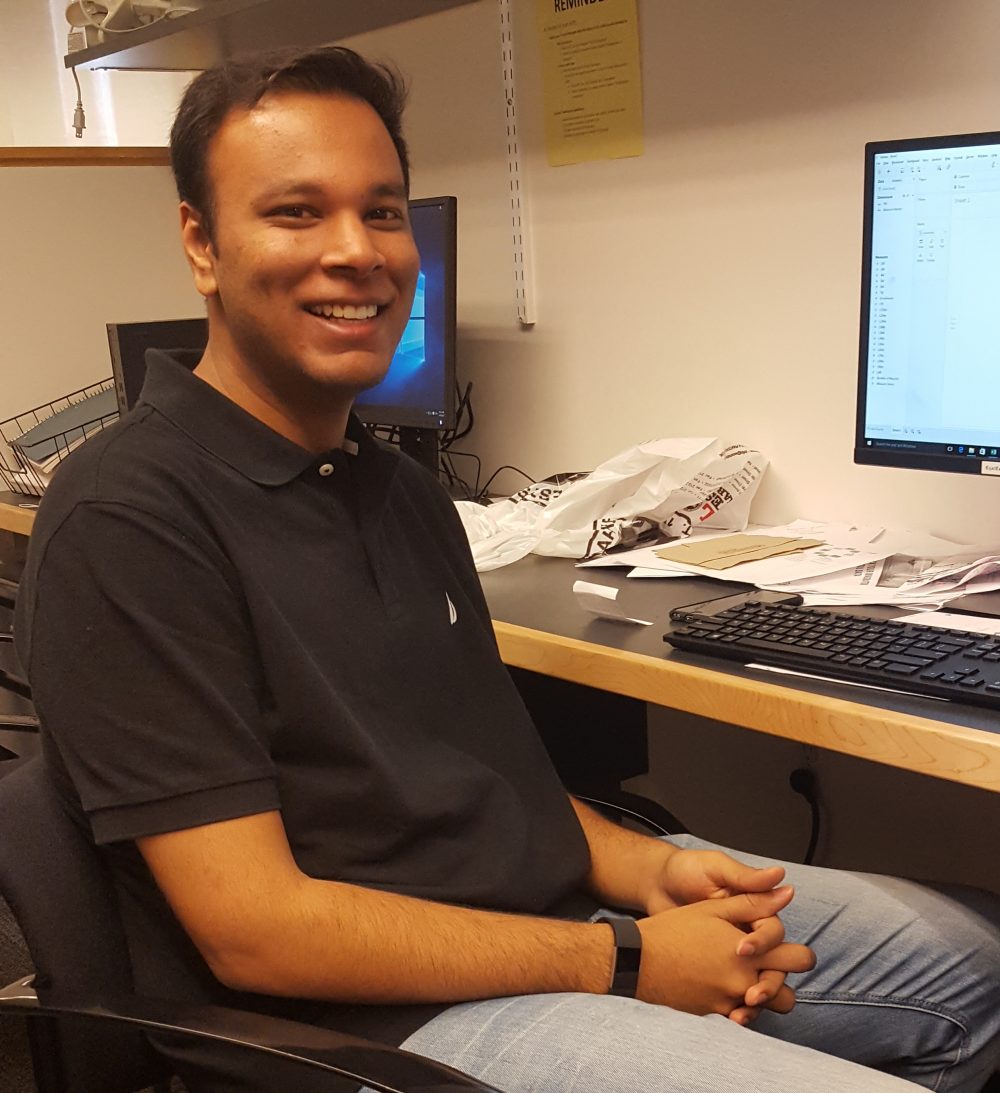
Researcher Intro Series: Parul Kaushik

My past research assignments include studying ‘Lies & Detection of Lies’ at Columbia University and I continue to use facial coding system and neuro-linguistic psychology of lying in my ongoing assignments.  My research assignment at United Nations Development Program on behaviour assessments was a national initiative for public service officials with a view to strengthen leadership in government’s top positions.
My current assignment with Columbia Business School allows me to bring my expertise to academia in the United States. I work in the Organisational learning and research team to translate cutting-edge neuroscience and cognitive psychology research to transform business outcomes for the Columbia Business school executive education.
I am currently interested in exploring millennial personality and inter-generational workforce, paradoxes of  narcissistic behavior in positions of power and unconscious group dynamics. My work as an Organisation learning and change consultant also includes Leadership learning in institutional set ups, psychometric assessment and testing.
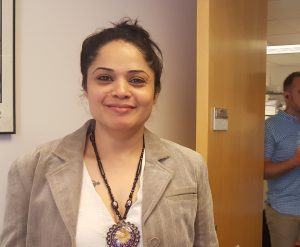
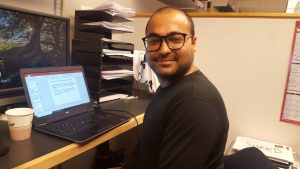
Researcher Intro Series: Rehan Rehman

As a research assistant in the Return on Learning Laboratory, I am interested in examining how the fields of neuroscience and business intersect with each other, particularly with respect to how mindsets affect learning within organizations. Recently, I have also developed an interest in the neuroscience of leadership, decision making and cognitive biases. Ultimately, I aim to develop strategies that would equip learners with the tools to maximize their return on learning within an organizational framework.

The brain is a complex organ and understanding its structure and function requires sophisticated technology. Only until recently have we been able to develop such tools to answer multifaceted questions about the brain. Answering these complex questions about the brain and understanding how resulting insights about this organ can be put to practical use in the areas of education and business is what I am passionate about. There is still a lot that needs to be explored and done regarding the brain, and it is this very prospect that fascinates me, as a student, as a teacher and as a researcher.

As fascinating as neuroscience is, it has the potential to lure us into thinking that it can provide solutions to all our questions or problems. While neuroscience can certainly help us get one step closer to understanding the complexity of human behavior, we should use findings from the field with caution and know what kinds of questions neuroscience can and cannot answer. Thus, the biggest challenge that I face in this field is to describe research findings in a way that enables people to become responsible and educated consumers of neuroscience. This has several implications for policy making in our schools and workplace environments, to just name a few.

Researcher Intro Series: Huiying Zhang

I am a new graduate research assistant at the Return on Learning Lab and joined the data analytics team in December 2017. My day-to-day tasks include finishing up cleaning data gathered in the past and looking into our data from Pardot.

As an applied math student, I am interested in using both data driven models and mathematical models to simplify and understand the real world. One of the most exciting aspects of data analytics is the never ending wealth of problems data can be used to solve.

Researcher Intro Series: Han Sun

It is such an honor of working with brilliant friends. I am primarily focusing on improving the objective-based recommendation system and analyzing online user behavior for growth hack. Based on the previous version of recommendation system, I am looking for more powerful machine learning algorithms and natural language tool kits.

My passion for data analytics stems from the effect of my analysis, which can do or change something. When I was a kid, I dreamed about being a detective like Holmes or Quain. Now, data analytics allows me to be the detective, instead focusing on data. I love to dive deep into an algorithm and perform deep learning and/or reinforcement learning. Ultimately, I’d like to create an AI based on big data.

Basically, we can only focus on one specific field while integrating different problems is beyond our ability. Just like a more complicated algorithm describing data well would more likely be over-fitting, improving an algorithm is a two-sided coin. We have to sacrifice something when we apply an algorithm to practical problem.

Researcher Intro Series: TaeYoung Choi

I will be analyzing online data that stores user behavior on the web in order to gain insights and possibly improve their experience.

As a student with a statistics background who has faith in the power of data, I have studied how to optimize various systems through algorithms, and data science has triggered my curiosity.

I know that data science will not always provide the answer, but the process of constantly searching for the best possible answers hidden in data will be intellectually engaging and inspires me as the potential of data science is limitless. 

Researcher Intro Series: Yiqi

As a graduate research assistant with ExecEd’s Data Science team, I am primarily focusing on improving the recommendation system and analyzing online user behavior for growth hack. I am trying to improve the efficiency and accuracy of the current recommendation algorithm through natural language processing and machine learning techniques.

Solving real-world problems by way of scientific data analytics is the most exciting thing to me. Due to the increasing data size, many statistical theorems can be applied to help people see insights on the data and leverage this analysis to improve human beings’ lives.

But there are still many challenges. We have many unsolved problems – there is no single model that is powerful in every place. Besides the difficulty of training data and building the algorithm, considering how we manipulate the data and what we want from the data is the challenge I face.

Researcher Intro Series: Rohan

Analytics means being one with data. And working with data gives one a thorough and extensive understanding of the entire business and all related processes. My experience at the lab has taught me immensely – from learning the internal processes in the education industry to learning new software and analytical techniques for various analyses. Yoshie’s guidance has proven to be immensely useful throughout the journey.

A British economist once said that if one tortures data enough, it will confess. These confessions jumping onto us teach us a lot about the consumer’s thought process and how he interacts on various fronts before making an important decision. It is such insights derived from data and building a story connecting them that really excite me and drag me to work every morning.

There is an ocean of data surrounding us and various things can be explored if data is viewed from various angles. It is a challenge to not lose sight of the task at hand. Data pouring over from many different sources adds to the challenge.

Xiaoxiao’s Reflection

During the past six months, the most important thing I have learned is the importance of translation from scientific idea to the findings or explanations that the general public can easily understand. The biggest challenge throughout has been the lack of desired data and imperfection of the collected data. Most of the time, it takes longer to clean the data than to actually do the analysis. However, the result was always exciting. Being able to extract information from the raw data and being able to see the impact of the findings are the most important motivation that I would keep me doing this work every day.2-13-17-cbsee-rol-lab-8