Credit: Sofia Encarnación | UPR Recinto de Ciencias Médicas
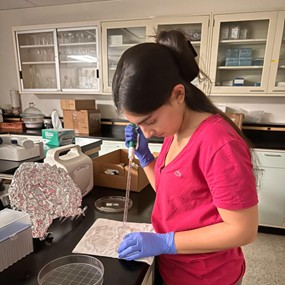
At the University of Puerto Rico’s Medical Sciences Campus, I ventured into a Neurobiology and Biochemistry Lab. There, I studied alcohol-induced Wnt/β-Catenin signaling and miR-9 regulation across two BK Channel isoforms: ethanol-sensitive BK Zero and ethanol-resistant BK STREX. Through Western blot and immunocytochemistry, we observed ethanol and miR-9’s differential regulation of β-Catenin abundance across these variants and quantified BK Zero membrane redistribution (a translocation that BK STREX is exempt from) to better understand the TCF/LEF-dependent transcription/gene expression. Yet, in the midst of these meticulous procedures, I realized that the most unpredictable variable in our protocols wasn’t just the microRNA: it was the power grid.
On a routine cell inventory day, while changing the cell’s medium under the hood, that reality hit when the electricity went out. All I could think was to keep my hand as stable as possible, hoping not to contaminate the pipette tip filled with DMEM medium for our cell lines. The emergency back-up batteries for our deep freezers were already wired, but I waited 5 long minutes, holding onto the pipette with my life until the power was restored.
Credit: Mia Gavilanes | UPR Recinto de Ciencias Médicas
This wasn’t the first time the lights had gone out mid-experiment protocols. One night, while our membranes were being washed with TBS-T and placed on the “belly dancer,” the lights cut out mid-protocol, forcing me to manually rock the membranes until the ten minute timer went off to repeat the next cycle wash.
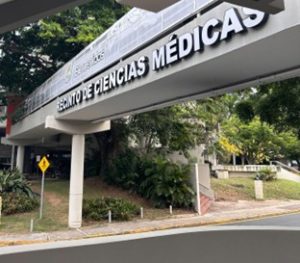
Behind these procedures and endless trials, there are students salvaging materials, conscious of every cent that secondary antibodies cost, and worried about such materials when the electricity goes out. At UPR’s prestigious Medical Sciences Campus, infrastructural failures seem to be the main hurdle for conducting research. A worsening electricity crisis and rising water service concerns have forced medical research to depend on back-up batteries and cisterns, creating a deeper divide between scientific research and the island’s unreliable infrastructure. It’s not enough to master pipetting, cell culture protocols, and Western blots; resistance and adaptability are competencies that this scientific community in particular seeks out in students to ensure their projects thrive.
At institutions like Columbia University, water supply, electricity, and functional equipment are often taken for granted. Conducting research at the Medical Sciences Campus reminds me that the research project is not the only priority on our mind: it’s also looking for ways to minimize costs, salvage materials, and organize protocols around water rationing times or always having back-up cells in case mistakes, beyond our control, affect the experiment’s timeline. Research in Puerto Rico trains students to think of every possible circumstance, building researchers ready to face budget cuts, energy insecurity, and dry seasons.
It’s an honor to contribute to both institutions’ academic environment; however, Columbia University cannot provide the vivid reality check that the Recinto de Ciencias Médicas instills. As a Puerto Rican, contributing to science on the island is both a privilege and an inherent act of advocacy. Every day, the institution proved to me that quality world-class biomedical research does not require perfect conditions. Instead, it depends on resilient students with an adaptive mindset. In a general sense, I’ve come to understand that scientific merit is not strictly tied to state-of-the-art equipment, but the hands and minds able to navigate crises without compromising caliber.
By: Mia Gavilanes, CC’29