Research in Your Own Backyard: Using Archives at Columbia and in NYC

Queens Museum in Flushing Meadows (used during the Fair as the “New York City Building”). Photo credit: Teresa Brown

My first experience making use of a historical archive was spring of my sophomore year. I was taking a course called Making of the Modern American Landscape and we were assigned a final paper with little in terms of a prompt other than being instructed to use themes we learned about in class to research and write about some aspect of the history of the American built environment. I’ve always been intrigued by World’s Fairs, so I chose to write about the symbol of the 1939-1940 World’s Fair, a large, modernistic structure exhibited at the Fair that consisted of the spire-shaped Trylon and spherical Perisphere.

Continue reading

Posted in Archives, courses, New York City | Comments Off on Research in Your Own Backyard: Using Archives at Columbia and in NYC

How to Prepare for a Hurricane, How to Prepare for Research

Coolers, jugs, gallons, bowls holding water. Photo credit: Isabel Wong.

I am waiting for Douglas. I am waiting for a hurricane.

A few days ago, around the time COVID-19 cases began spiking in the islands, news of a hurricane surfaced. As the storm barrelled across the Pacific Ocean, my family began preparations, bringing home cans of Spam and beans and scraping leaves out of gutters.

This morning, I woke to the sound of my father locking windows. In the kitchen, my mother rinsed old containers with watered-down bleach, instructing me to download a hurricane emergency guide onto my phone.

Continue reading

Posted in Senior Thesis, Summer Research | Comments Off on How to Prepare for a Hurricane, How to Prepare for Research

The Core and the Libraries

Photo Credit: Sara Bell

My previous post betrays it: at risk of being nerdy even for a Columbia student, I’m a big fan of the Butler Library sixth floor reading rooms, the Avery Library folio shelves, the stacks in the Burke Library at Union Theological Seminary. I could (and do!) rapturize about the specifics, but if you’re reading a blog about undergraduate research, you’re probably on the same page. What you might not be fully clued into, particularly if you’re a new student, are the number of ways you can use the libraries to help your academic work in Core Curriculum classes. Using the libraries in your Core classes in particular can help set you up to make better use of them as you move through your undergraduate work.

Continue reading

Posted in Libraries, The Core | Comments Off on The Core and the Libraries

Finding the Intersections in All Subjects

Photo Credit: https://unsplash.com/@justjohnl

The summer before I got to Columbia as a freshman, I decided that I wanted to go to medical school. Looking back, the nine seasons of Grey’s Anatomy I watched that summer played no small part in that decision—Patrick Dempsey’s hair is the reason that thousands of pre-med students are suffering through organic chemistry at this very moment. But truly, medicine seemed like the perfect career for me. I knew that I wanted to go into a career that was STEM-related and I also knew that I wanted to have a positive impact. And ours is a society that paints doctors not just as people who have a positive impact, but as real-life heroes. It wasn’t until I took the class Marginalization in Medicine, with Professor Samuel Roberts, that my view of medicine changed. The more I learned about higher rates of maternal mortality in Black mothers, the more I learned about people dying from treatable diseases due to lack of healthcare, the more I learned about ways that access to medicine is used as a form of subjugation, the more obvious it became that health is both a biological and a political phenomenon. Health is at its core an intersectional subject, which is why we need an understanding of both science and humanities to deal with it.

Continue reading

Posted in STEM research, The Core, Uncategorized | Comments Off on Finding the Intersections in All Subjects

Research and the Polis

Photo Credit: Sara Bell

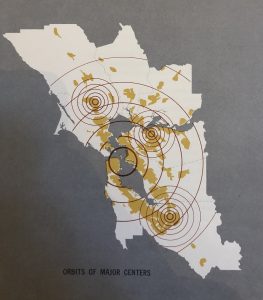
Last autumn, I was about to fall off of the stepping stool in the Avery Library stacks when I found the report. Titled Morningside Heights: A Sketch Plan, the slim volume from 1958 detailed the then-confidential neighborhood strategy of Morningside Heights, Inc., a coalition of local educational and religious institutions known today as the Morningside Area Alliance, or the MAA. I was doing research for a feature in The Eye, Spectator’s magazine, on the history of housing activists’ relationship to institutions in Morningside Heights.

Continue reading

Posted in Libraries, The Core | Comments Off on Research and the Polis

HU OSA 300-60-1: Finding What You Are(n’t) Looking For

Archival boxes at the OSA. Photo credit: Teresa Brown

While in Budapest and working at the Open Society Archives, I was paired with a junior researcher who works primarily on the history of cybernetics (the science of communications and control systems in both machines and living things) during the Cold War. I was given a project to investigate how the archive catalogs materials relating to the history of science, specifically within their collection of documents from Radio Free Europe’s Research Institute.

Continue reading

Posted in Archives, Senior Thesis | Comments Off on HU OSA 300-60-1: Finding What You Are(n’t) Looking For

Research as Reimagining

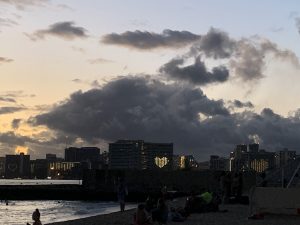
2019 Morningside Lights: Island procession on College Walk. Photo Credit: Isabel Wong.

I attended my first thesis presentation sitting on the couch. The university had sent many of us home in March. Now it was May. Instead of facing the blank page, commencing battle with my final papers, I opened Zoom, settled into the cushions. A couple weeks prior, I had decided to conduct thesis research, enrolling in Senior Seminar. Uncertainty is an unending prickle though, and I hoped the presentations would reassure me.

Continue reading

Posted in Senior Thesis, The Core | Comments Off on Research as Reimagining

Novelty in Undergraduate Research

Regent’s Park. Photo Credit: Sara Bell

“As a woman I have no country,” Virginia Woolf wrote in Three Guineas, and also in the Passage Identification section of my spring Contemporary Civilizations final exam. She continued: “As a woman I want no country. As a woman, my country is the whole world.”

I’d bet that passage IDs rarely make top-ten lists of best moments from the Core. Most of my favorite memories of CC are the kind of experience for which students come to Columbia: debates about Aristotle lively enough to bring my classmates and I out of our seats, long afternoons outside reading Hegel during that one sunny week in March. But that passage was striking enough to make me go home that summer and reread Three Guineas. In fact, it was striking enough to make me decide to study abroad. What better way to test this proposition than to move another 3,000 miles further from home?

Continue reading

Posted in Study Abroad, The Core | Comments Off on Novelty in Undergraduate Research

Digital and Physical Archives: An Exploration of Budapest through Research

Statue of Stalin, torn down during the 1956 October Revolution, and now part of the Memento Park in Budapest. Photo Credit: Teresa Brown

At times, the internet creates the illusion that the whole world is available at our fingertips, the illusion that anyone can become an expert in anything. Other times, its many shortcomings are far more obvious. Take for example a side effect of the current global pandemic: employers and universities are scrambling to move as much of their businesses and services as possible online. The process has been a hectic one, driven by immediate necessity and exposing shortcomings in businesses and services that were not prepared to make the transition. But the general trend towards offering an increasing number of services online is nothing new. One example is historical archives. In an effort to increase accessibility and reduce the wear and tear from physical document handling, many archives have begun uploading some of their material onto their websites. A well-intentioned project, the digitization of archival documents raises questions about the modern role of historical archives.

Continue reading

Posted in Archives, Study Abroad, Uncategorized | Comments Off on Digital and Physical Archives: An Exploration of Budapest through Research

Using the Words of the Past to Define the Future

Photo Credit: Araelf / Adobe Stock

At the beginning of my second semester of CC, my professor asked us all to write down a response on an index card to the question “What do you hope to get out of this class?” My response was, “The books we are reading have been used for centuries to justify cruelty against people of color, like me. I want to read and analyze these books so that I can better understand the dangerous arguments these books were used to support.” When I read John Stuart Mill’s work On Liberty, I focused on the aspects of his text that would later be used to justify the stripping of liberty and freedom from Indian bodies. When I read Nietzche’s The Genealogy of Morals, I focused on how this book was used to argue that some were just born innately with a “slave morality.” The reason I studied these books was solely due to the ways they had been used in the past.

Continue reading

Posted in The Core, Uncategorized | Comments Off on Using the Words of the Past to Define the Future