
Photo credit: Sara Bell
If the start to your November has been anything like mine, every item on your to-do list has had something to do with the word “essay”: whether a five-page paper for my intro-level lecture class, a ten-page paper for my graduate-level seminar, or a proposal for the Senior Essay (the English department’s name for a thesis), I’m up to my elbows in double-spaced Times New Roman. But in everything except font, no two essay assignments are created equal. My approach to that five-page paper is going to have to be different from the semester-long, 20-page paper I’m writing for one of my seminars. Over the course of college, I’ve grown into someone who doesn’t start anything the night before (first-years, quashing this habit is one of the best gifts you can give yourself) but the timeline of a paper I write in a week just won’t work for a long research paper or a thesis. So how do you pace yourself on a semester-long self-driven research project, while also trying to keep up with the rest of the semester’s assignments?
Planning out what time you’re going to spend on what is particularly helpful for acing yourself on a long-term project. In this vein, one of my fellow CC Research Ambassadors mentioned a book that had been suggested to them, Write Your Dissertation in Fifteen Minutes A Day. You could also set aside a certain time on a weekly basis to work on a specific project. I find—especially in a world where I can’t go to a library to get myself into the right headspace—that this tactic is especially useful for making myself actually focus when I sit down to work. When all of your research is online, it’s easy to go down a rabbit hole without realizing it, but having time set aside helps you keep yourself on track.
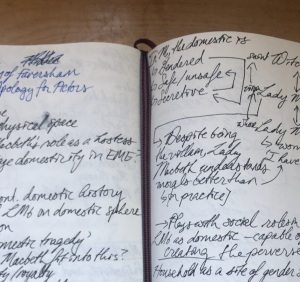
On a similar note, you can try placing yourself in a certain headspace for long-term projects. Whether that means using a different notebook or always sitting in the same section of your living space, I’ve found it helpful to create pseudo-‘library rooms’ in the same way I might go to a certain floor of Butler to work on a certain project, were I in New York. This helps me create a routine, and keeps my mind temporarily off of short-term endeavors so I can focus on long-term work without stress.
Watch how you’re organizing your research. Pacing yourself isn’t just about when you work, but also how you work. Bear in mind that a bullet-point list of JSTOR links might work perfectly well for a short paper, but you probably need a better organizational structure to write a semester-long project. Your pace towards the end of your project will benefit from clarity in your initial work, as you’ll be able to better navigate the information you’ve collected. Even if now, in November, you’ve accrued that messy bulleted list, it could still be worth setting aside some time now to reorganize, even amid a busy midterms season.
When it (finally) comes to writing, make a commitment to getting words on the paper before getting perfectionistic. Pay attention to not just how your writing occurs on the page, but how you are writing: do you write one sentence, and then edit and re-edit? This approach might be the best option for a poem, where you need to artfully craft each word and phrase, but it will take you a while to get through a 20-page essay in this way. A very rough but technically completed draft will usually help your overall process become more efficient than a piecemeal write-edit-write method. Done is better than perfect, and this truism especially holds when it comes to first drafts. Additionally, having a draft helps you see what portions of your research aren’t quite fleshed out yet, or what questions you meant to explore but forgot to—or raises new, important questions altogether.