Blog #6

https://arcg.is/189WXm

For this blog post, I created a map that features major US cities that are in close proximity to interstate highways. In creating this map, I clipped the US interstate shapefile to the Major US cities shapefile. I set the parameters so that the US cities remaining on the map were within 20 miles of an interstate. As the interstate highway system is extensive in the US, there are numerous cities that fall within 20 miles of an interstate. The interstate highway system appears to be densest in the midwest and northeast, and there are many cities that fall within close proximity to highways in this area. Interstates are most dispersed in the middle of the country, and cities in this area are also less concentrated.

In addition to the US major cities shapefile and the US interstates shapefile, I also added a layer to this map from the Living Atlas called “2018 USA Population Density.” By looking at interstates in relation to population density in the US, it is noteworthy that the areas with the highest population density appear to be the areas where the greatest number of interstates intersect. Based on this map, it appears that the areas with the highest population density, the largest US cities, have the greatest demand and require the greatest flexibility in terms of transportation, and consequently these areas have the greatest number of interstate highways.

One main question arose when looking at this map: did the interstate connect these cities, or where there cities established because of the need for breaks in transportation along the interstate? If I were to work with this data more, this is what I would be interested in exploring.


Blog #5

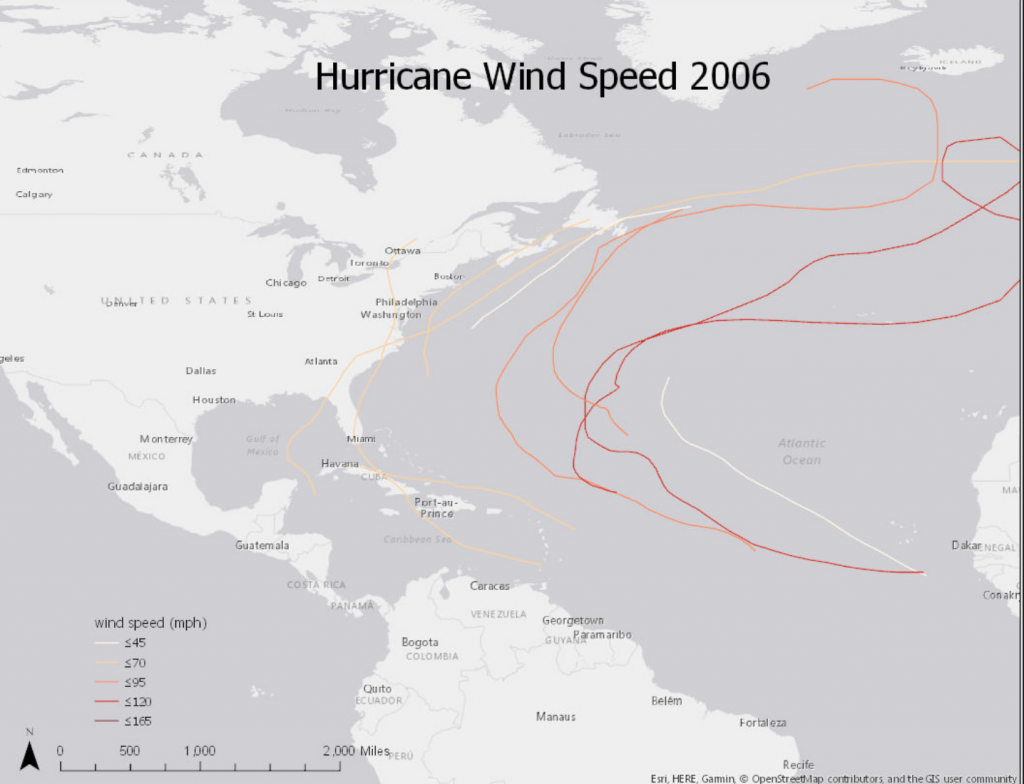
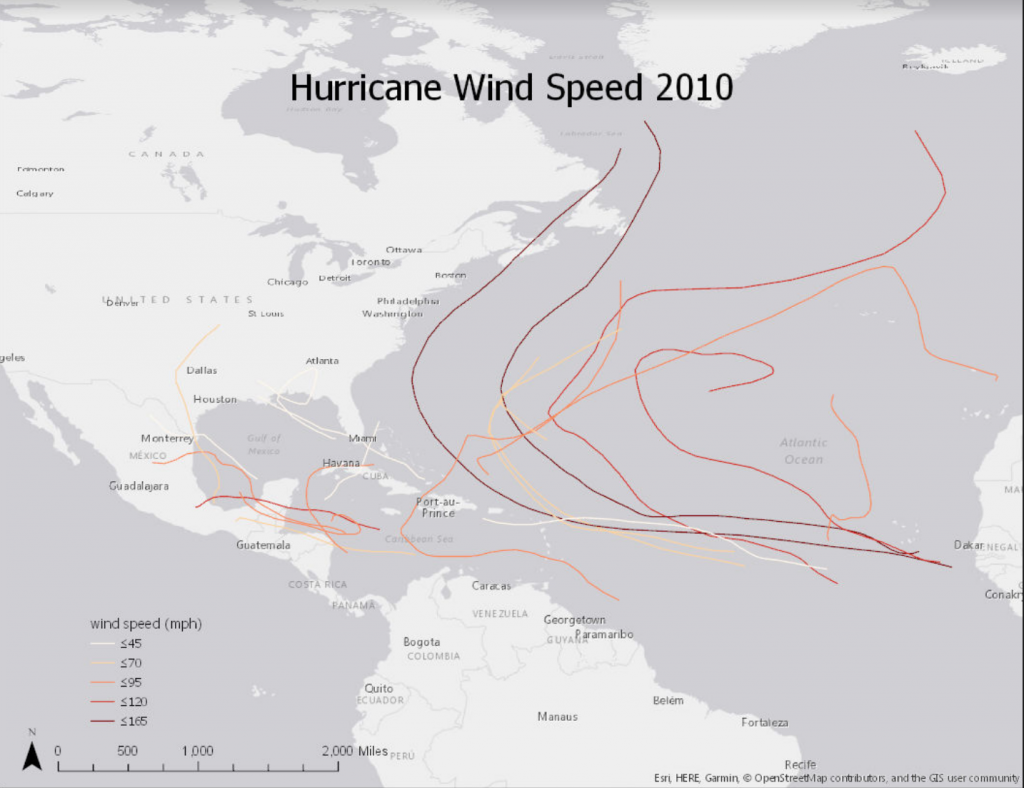
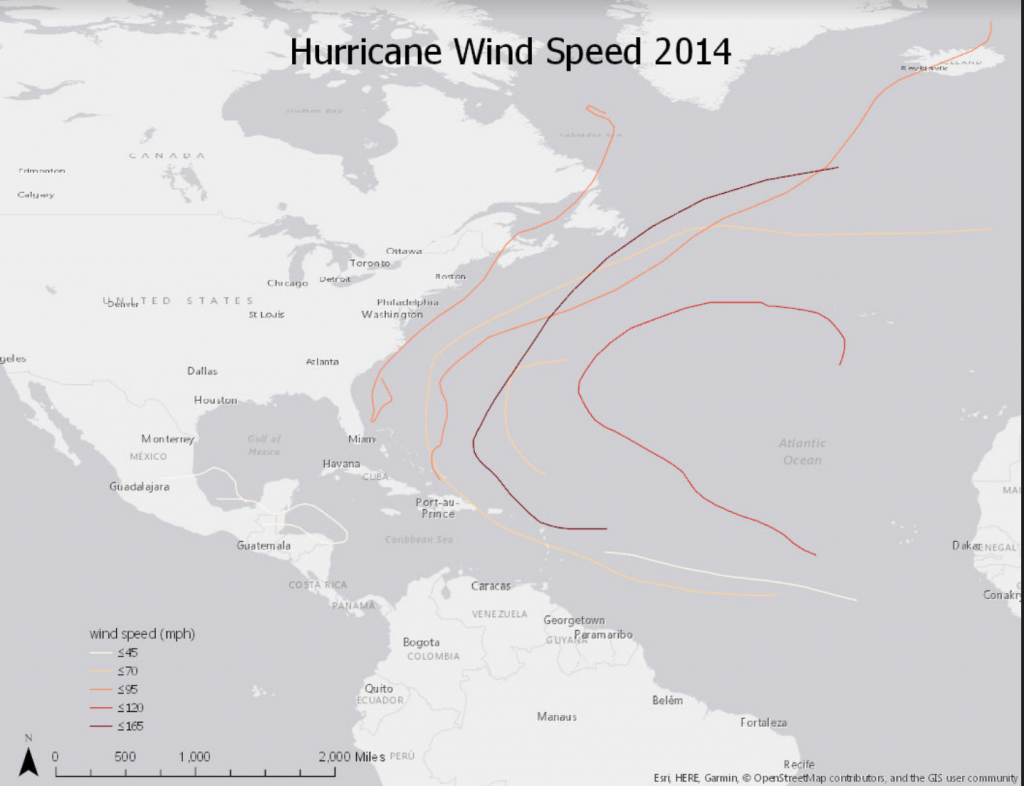
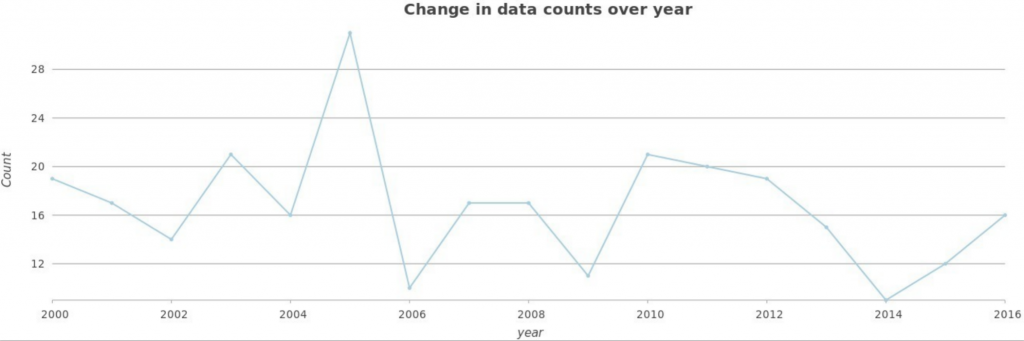
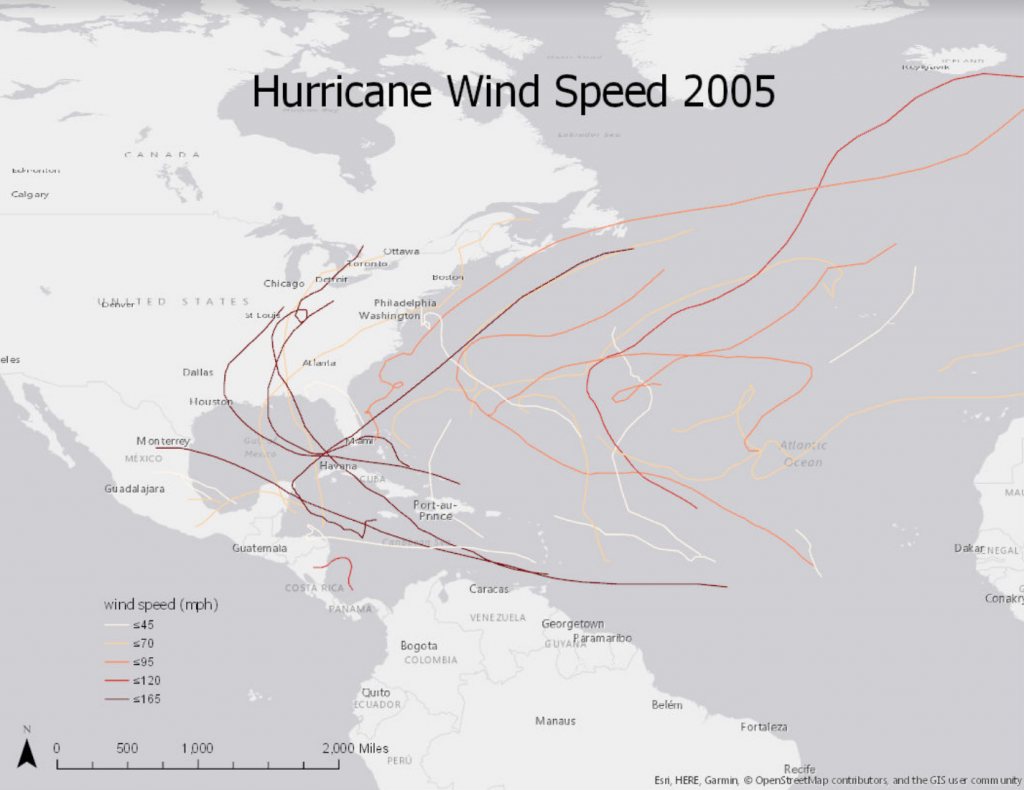
For this assignment, I decided to look at hurricanes since the year 2000. I wanted to see what years were most severe in terms of number of hurricanes since the start of the 21st century. Using the hurricane tract data, I created a line graph that depicted the number of hurricanes per year between 2000-2016. This graph revealed that 2005 and 2010 had the most hurricanes, and 2006 and 2014 had the fewest hurricanes. Based on this information, I mapped hurricane tracts and wind speed for each of these years (2005, 2006, 2010 and 2014) .

The maps I made for the years 2005, 2006, 2010 and 2014 indicate that the more hurricanes there are, the greater the disorder both visually and in reality. Based on these maps, it appears that during the years when there were the most hurricanes overall (2005 and 2010), many of these hurricanes had a high wind speed of 165mph or more. During 2006 and 2014 when there were the fewest hurricanes, there were also fewer hurricanes with high wind speed. In addition, based on these maps it appears that the more hurricanes there are in a year, the more the hurricane tracks intersect. During years when there were fewer hurricanes, hurricane tracts almost appear to line up or run parallel to one another. In contrast, the more hurricanes there are in a year, the more erratic the hurricane tracts appear and the more the hurricane tracks cross and intersect on the map. From a visual standpoint, these maps indicate that more hurricanes equate greater disorder. And I would expect the reality of this one the ground to be one in the same.

Blog #4


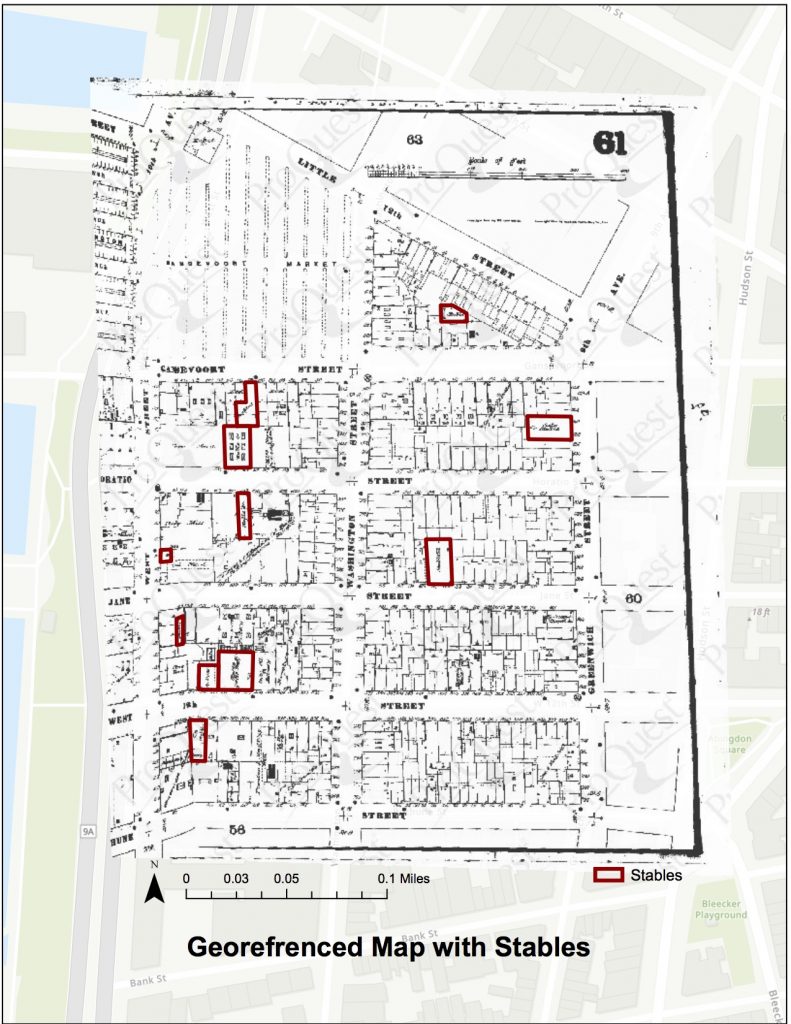
For this assignment, I georeferenced sheet 00129 from the 1895 Sanborn Fire Insurance Map. This sheet depicts the portion of the West Village neighborhood in Manhattan bound by Little 12th Street, Greenwich Street, Bethune Street and West Street. The map appears to have georeferenced successfully, and with seemingly little error. There are a number of features on the historical map that are particularly notable. Prominent on the map is Gansevoort Market, which dominates the upper portion of the map. In addition, the historical map features what appears to be a fairly industrial area. There are numerous factories and mills labeled on the map, including a plaster mill, a paint factory and a furniture factory. After georeferencing this map, I noticed that in addition to the numerous factories, there were also a large number of stables labeled on the map. Consequently, I decided to digitalized all the buildings listed as stables. Tracing the stables revealed that there is a stable on almost every city block featured on this map. The high number of stables in this area is likely due to the heavy industrial presence; due to the quantity of production that occurs in this area, a consistent source of transportation would be necessary to move goods, and in 1895 horses would play a heavy role in the transportation of these goods. In addition, Gansevoort Market would also require the use of horses to move around goods. By digitizing stables, I also noticed that there are more stables located on the blocks closer to the Hudson River. This is perhaps because of the wharfs located along the river, and the need for horses to move goods to and from the piers.

When making this map I couldn’t remember how to remove the background white from the historical map. If I were to do this again, I would remove the background white or make the georeferenced map more transparent.